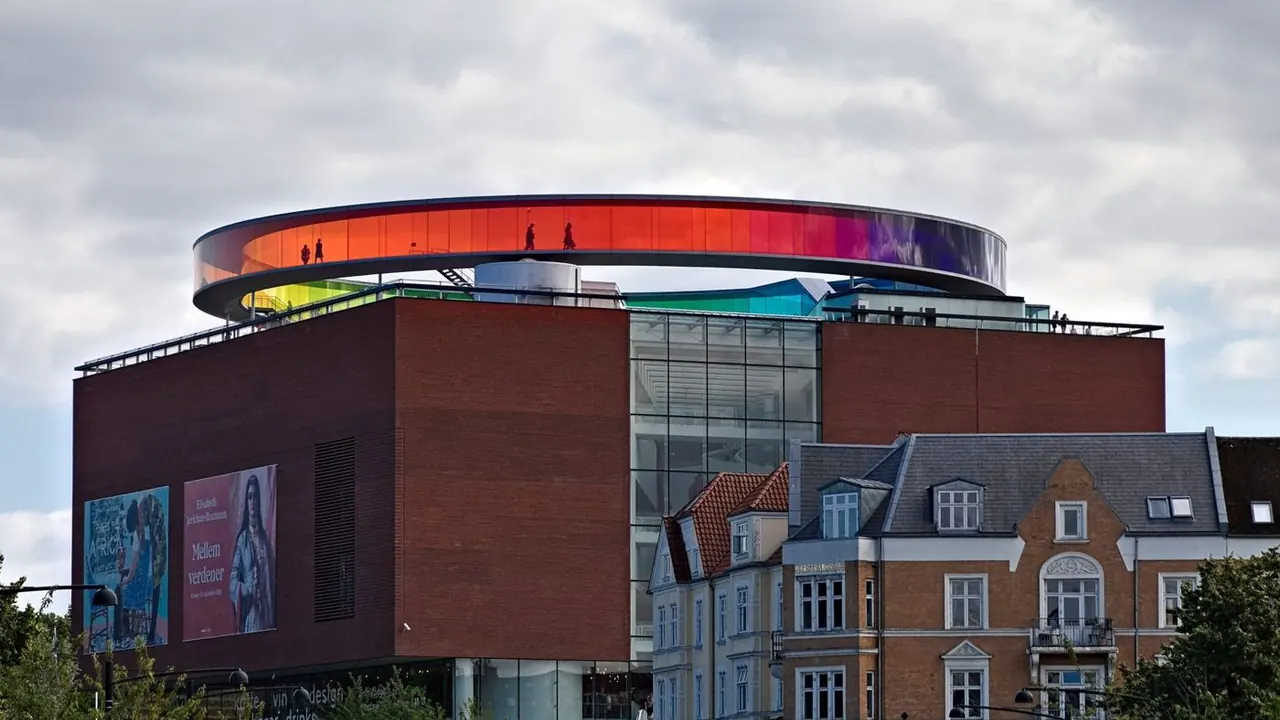
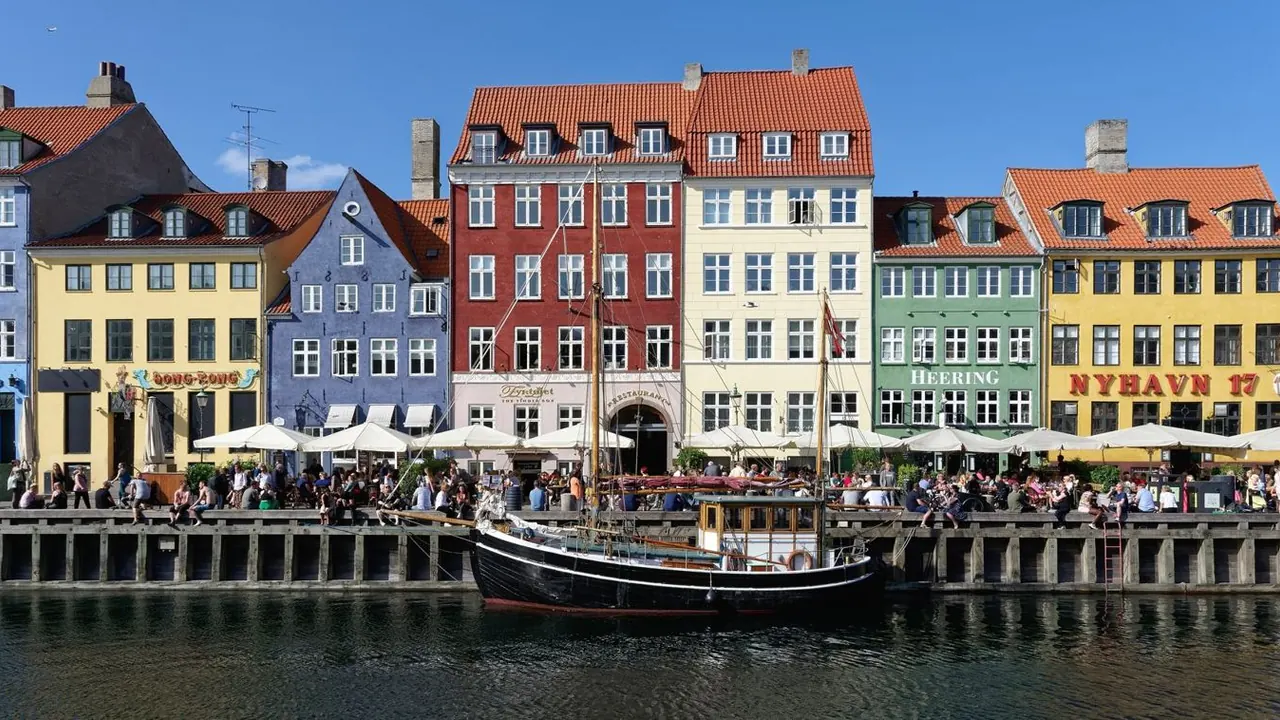
Photos: Aarhus by Mozzihh, CC BY-SA 4.0, cropped; Copenhagen by Jakub Hałun, CC BY-SA 4.0, cropped.
Aarhus or Copenhagen?
Our verdict in twelve categories, each scored against the same fixed benchmark cities, and the climate month by month, so you can choose for your trip.
Choose Aarhus for
- nature and the outdoors
- prices
Aarhus suits a traveller who has already seen Copenhagen, or who wants a smaller, slower Danish city with the forest and the bay at its edge. Its three big museums, ARoS, Den Gamle By and Moesgaard, can fill two days on their own. The beech woods, Mols Bjerge and the Silkeborg lakes are all close, and so are the Jutland outings to Legoland, Jelling and Ribe. It is the better base if your time is split between the city and the countryside.
Choose Copenhagen for
- shopping
- food and drink
- nightlife
For a first trip to Denmark, Copenhagen is the stronger choice. The royal palaces and the canals give it more to see, it eats better at every level and stays up later at the weekend, and it has the deeper calendar of music, ballet and opera. Children are well catered for right in the centre, the metro does the work of a car, and Kronborg, Louisiana and a day in Sweden are all within easy reach.
Scoreboard
Twelve categories on one fixed scale from 0 to 100. The shaded stretch is the gap between the two.
Your match
Pick a travel style or drag the sliders, and both match scores follow your weighting.
Wins on nature and the outdoors and prices with your weighting.
Wins on shopping and food and drink with your weighting.
What matters to you?
Category by category
What the scores mean for a trip.
Beaches & swimming
Both cities have short, cool swimming seasons, and both even have a beach called Bellevue. Copenhagen has the edge because swimming is part of the city itself. You can jump in at the wooden harbour baths at Islands Brygge, and Amager Strandpark's long beach and lagoon are a few metro stops away.
In Aarhus, the beaches lie at the edge of the woods: Den Permanente and Bellevue in Risskov to the north, Moesgaard Strand to the south. You reach them by bike or bus rather than on foot. The water is calm and shallow, which suits small children, but it is no warmer than Copenhagen's.
Food & drink
Copenhagen eats well at every level, not just at the top. Below its famous tasting-menu kitchens there is smørrebrød at lunch, the market stalls of Torvehallerne, a bakery on almost every corner, and the natural wine and coffee culture of Vesterbro and Nørrebro.
Aarhus has fine Nordic cooking based on Jutland produce and fish from the bay, and good coffee in the Latin Quarter. Once you step below the tasting menus, though, the choice quickly runs thin, and the covered street-food halls do most of the work for a cheaper meal.
Culture & sights
Aarhus relies on its museums more than its streets. ARoS with its rainbow walkway, the open-air Den Gamle By and Moesgaard with the Grauballe Man would each stand out in a much bigger city. The old core around the Latin Quarter and the cathedral is small, though, and two or three days covers the city.
Copenhagen gives you more to see. It is a royal capital you can explore on foot: Rosenborg and the crown jewels, the four palaces of Amalienborg, Christiansborg on Slotsholmen and the gabled houses of Nyhavn. The National Museum, SMK and the Glyptotek are strong rather than famous, and the city as a whole fills three or four days well.
Nightlife
Copenhagen has the bigger and later weekend. You can choose between the converted butchers' halls of Kødbyen, the scruffier bars of Nørrebro and a good cocktail scene, and in summer people drink by the canals at Nyhavn and Christianshavn.
Aarhus nightlife is shaped by its students. On Fridays and Saturdays the riverside bars of Åboulevarden and the cellar bars of the Latin Quarter fill up, but midweek the city goes quiet. In both cities drinks are expensive.
Nature & outdoors
Here Aarhus comes out ahead. The Marselisborg woods run straight down to the bay, with tame deer and coastal paths only a short ride from the centre. Further out are the heath-covered hills of Mols Bjerge, and the Silkeborg lakes, where you can canoe on the Gudenå and climb Himmelbjerget.
Copenhagen has Dyrehaven's oaks and deer, the open common of Amager Fælled, and paddling in the harbour. Its nearest dramatic scenery, the chalk cliffs of Møns Klint, is about two hours away. Neither landscape has any real height.
Day trips
Copenhagen's outings are the stronger set. Kronborg, Frederiksborg and the Louisiana museum all lie along the North Zealand line, Roskilde has its royal cathedral and Viking ships, and you can cross the Øresund Bridge to Malmö and Lund in Sweden.
From Aarhus the choice is wider but quieter. It includes the Tollund Man in Silkeborg, the runestones at Jelling, cobbled Ebeltoft, Andersen's Odense and Lego House in Billund. Most of these are rewarding small towns rather than headline sights.
Good for families
In Copenhagen the best attractions for children are in the city itself. Tivoli sits beside the central station, Den Blå Planet aquarium and the zoo are close by, and the Experimentarium science centre and the Bakken fairground are a short train ride north.
Aarhus has gentler things to do in town: the old kitchens of Den Gamle By, hand-feeding the deer at Marselisborg, and the small Tivoli Friheden. It is closer to the big theme parks, Djurs Sommerland and Legoland, but you need a car or a long bus ride to reach them.
Getting around
Both centres are flat and easy to walk, and both are made for cycling, with separated bike lanes. In Aarhus, buses and the light rail reach Moesgaard, the beaches and the coast towards Djursland. You need a car only for the scattered sights in the countryside.
Copenhagen's network is the more complete. Its driverless metro runs around the clock and reaches the airport in about a quarter of an hour. S-trains, buses and the yellow harbour buses all use one ticket system, so a late night or an early flight takes no planning and you never need a car.
Shopping & style
Copenhagen is a real destination for shoppers who love design. It has Royal Copenhagen's flagship on Amagertorv, the old department stores Illum and Magasin du Nord, and Strøget, which runs from chain stores to luxury labels. Jægersborggade and the Latin Quarter add independent fashion and vintage.
Aarhus has one long pedestrian street of Scandinavian chains, and its own Latin Quarter has a few good design and vintage shops. It has almost no luxury shopping, so a morning is usually enough.
Affordability
Both are among the expensive places to visit in Europe, and the gap between them is small. Copenhagen hotels cost a little more, but many of its best moments cost nothing: walking along Nyhavn, a dip at a harbour bath, an afternoon by the lakes.
The ways to save are the same in both cities: bakeries, supermarket picnics and a bike instead of taxis. In Aarhus the street-food halls help too, and a city pass is worth it if you plan a full museum run in Copenhagen.
Live music & performing arts
In Aarhus, most performances take place at Musikhuset, home of the symphony orchestra and the Danish National Opera. Aarhus Teater stages drama in Danish, and the music academy and its students feed a circuit of rock, indie and jazz venues. The calendar is busiest during the summer jazz festival and Festuge, and smaller outside those weeks.
Copenhagen has more on stage all year round. The Royal Danish Theatre has three stages, including the Opera House on the harbour front. The Royal Danish Ballet keeps the Bournonville tradition alive, and DR Koncerthuset is an outstanding concert hall. In July the jazz festival fills the city's squares and courtyards.
Wellness & relaxation
Neither city has thermal baths. Both offer the Nordic routine of a wood-fired sauna followed by a plunge into cold water. Copenhagen has more places to do it, with saunas floating in the harbour, sea baths at Kastrup and Amager, and more day spas. Its lakes and palace gardens are also good for a slow afternoon.
In Aarhus, the public saunas by the harbour and at Den Permanente are open all year, but there are only a few hotel spas beyond them.
When should you go?
Pick your month. The climate figures are measured averages, not a forecast.
Aarhus in July
Copenhagen in July
Daytime high, °C
Rainfall in the month, mm
Where the figures come from
Aarhus's temperatures are measured 30 km from the centre, at Tirstrup.
Aarhus has no rain gauge within 25 km of the centre, so its rainfall comes from a gridded climate dataset read at the city rather than from a gauge further away.
Temperature and rainfall are climate normals, averaged over the years shown. Aarhus: 1991-2020 normals, Tirstrup (29.8 km from centre). Copenhagen: 1991-2020 normals, Koebenhavn / Landbohoejskolen (2.4 km from centre).
Aarhus and Copenhagen have almost the same climate, so choosing one over the other will not change your weather. Both are at their best from late May to early September. Afternoons then reach about 22°C in Aarhus and a degree more in Copenhagen, and the long light evenings suit eating and drinking outside. The sea is only warm enough to swim in during July and August, when it reaches about 18°C at best in both cities, and even then a swim is bracing.
Rain picks up through summer and autumn and peaks in August, at about 74mm in each city. Aarhus is slightly the wetter of the two in most months. January and February are the coldest months, with highs of about 4°C. From November to March the short grey days make both cities better for museums, concerts and saunas than for long walks. Neither ever gets too hot to explore on foot.
Which traveller are you?
On an outdoors trip, Aarhus is the better base. Its beech forest runs right down to the bay, with coastal paths and a deer park on the edge of town. Mols Bjerge's heathland hills and canoeing on the Gudenå near Silkeborg are both under an hour away.
For a food and nightlife trip, choose Copenhagen. It eats well at every level, from tasting menus to Torvehallerne and the natural wine bars of Vesterbro, and at the weekend Kødbyen's clubs run until morning. Aarhus's whole scene fits into two nights.
On a shopping trip, Copenhagen gives you far more to work with. Design lovers can spend days among its furniture, lighting and porcelain shops, and Strøget ends in luxury labels. Aarhus has a handful of good design shops in its Latin Quarter and almost no luxury.
Before you go
| Measure | Aarhus | Copenhagen |
|---|---|---|
| Official language | Danish | Danish |
| Currency | Danish Krone (DKK) | Danish Krone (DKK) |
| Sockets | CEFK230 V, 50 Hz | CEFK230 V, 50 Hz |
| Driving side | Right | Right |
| Time zone | UTC+1, UTC+2 in summer | UTC+1, UTC+2 in summer |
| Emergency number | 112 | 112 |
| Elevation | 6 m | 14 m |
| Main airport | Aarhus Airport (AAR)30 km from centre15 non-stop destinations | Copenhagen Kastrup Airport (CPH)8 km from centre196 non-stop destinations |
| Public holidays this year | 14 days | 14 days |
By the numbers
| Measure | Aarhus | Copenhagen |
|---|---|---|
| City population | 290,598 | 667,099 |
| People per km² | 3,193 | 7,339 |
| Museums within 10 km | 17 | 72 |
| UNESCO World Heritage sites within 50 km | 0 | 5 |
| Swim season, months above 21 °C | None | None |
Where else could you go?
Every comparison below shares a destination with this one, so you can follow Aarhus or Copenhagen somewhere new.