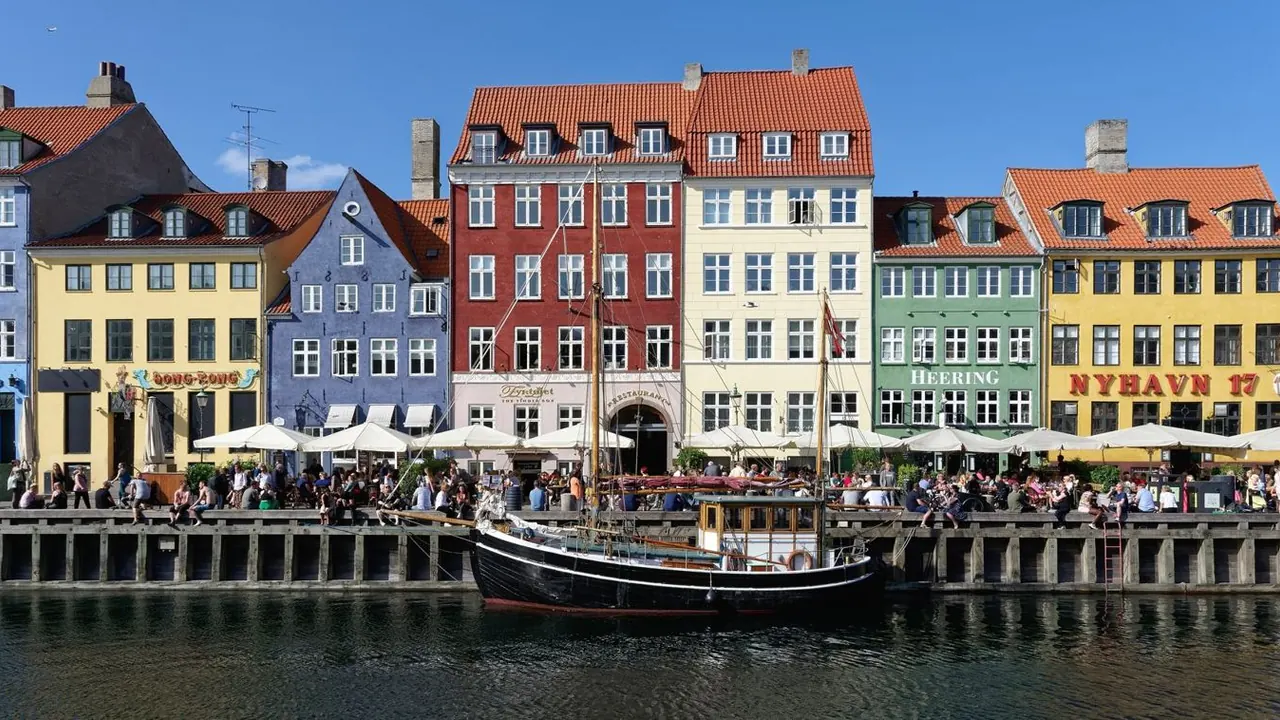
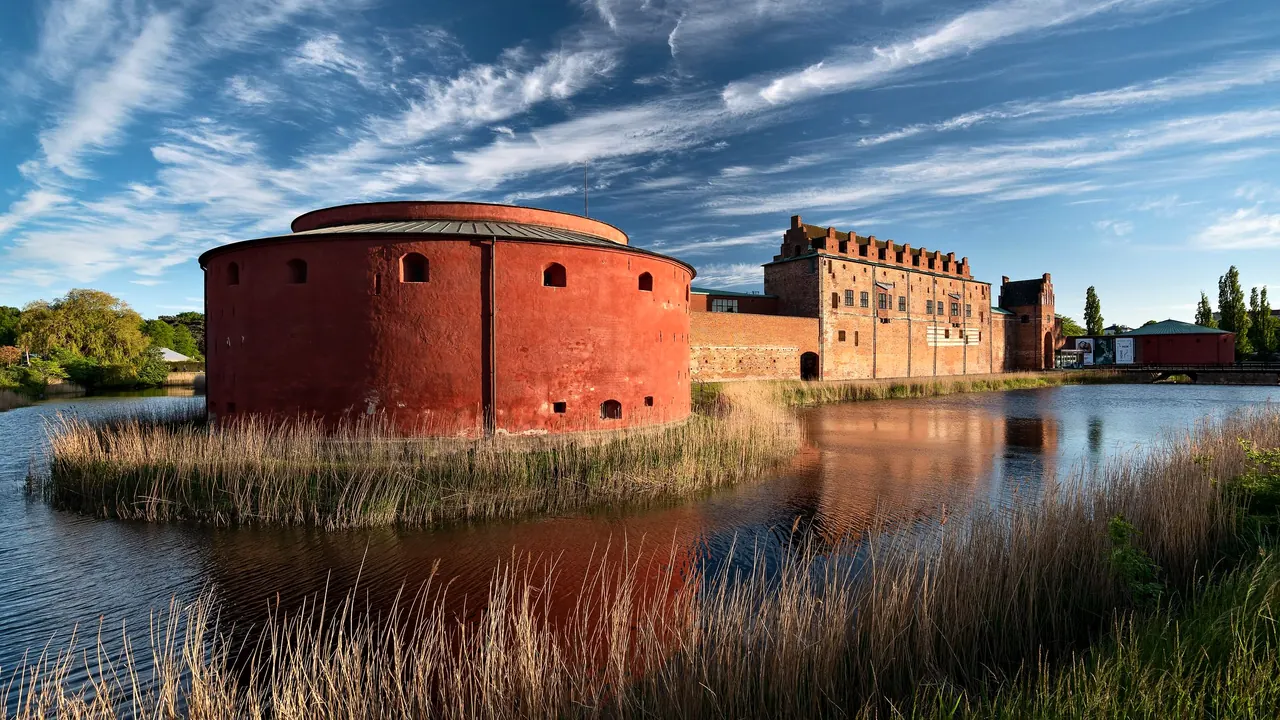
Photos: Copenhagen by Jakub Hałun, CC BY-SA 4.0, cropped; Malmo by Kateryna Baiduzha, CC BY-SA 4.0, cropped.
Copenhagen or Malmo?
Our verdict in twelve categories, each scored against the same fixed benchmark cities, and the climate month by month, so you can choose for your trip.
Choose Copenhagen for
- culture and sights
- families
- shopping
Copenhagen is the better choice for a first Scandinavian city break with plenty to fill the days. It has the royal palaces and museums, the stronger restaurant and bar scene, the opera and ballet, and enough for children to see and do that families rarely run out of plans. Getting around is effortless too. The catch is the cost, which is steep at every level.
Choose Malmo for
- prices
- nature and the outdoors
- day trips
Malmo suits a slower, cheaper trip, especially as a base. Its own sights take a couple of days, but Copenhagen, Lund and the coast and castles of Skåne are all a short train ride away, and its countryside and coast have more to offer outdoors. Hotels and everyday meals cost noticeably less, so travellers who want Nordic calm without Copenhagen's prices, and who don't mind crossing the bridge for a big night or a major museum, will do well here.
Scoreboard
Twelve categories on one fixed scale from 0 to 100. The shaded stretch is the gap between the two.
Your match
Pick a travel style or drag the sliders, and both match scores follow your weighting.
Wins on culture and sights and families with your weighting.
Wins on prices and nature and the outdoors with your weighting.
What matters to you?
Category by category
What the scores mean for a trip.
Beaches & swimming
Neither city is a beach destination, and both treat swimming as a summer extra in a sound that rarely gets much above 20°C. The difference is in style. Copenhagen's highlight is jumping into the clean harbour from wooden baths at Islands Brygge, with Amager Strandpark's lagoon a few metro stops away and Bellevue's lifeguard towers to the north.
Malmo has a more traditional city beach. Ribersborg's sand and dunes start close to the centre, and its shallow, calm water suits small children. For a quieter day, Skanör and Falsterbo, about half an hour south, have finer and emptier sand than Ribersborg itself.
Food & drink
Copenhagen is the serious food destination. Its foraging-led fine dining draws travellers in its own right, and below that there are smørrebrød lunches, cardamom buns, the Torvehallerne market halls and the natural wine bars and roasteries of Vesterbro and Nørrebro.
Malmo eats more modestly but with its own character. Falafel around Möllevångstorget, Skåne dishes such as smoked eel and spettekaka, and fika near Lilla Torg make for good, honest meals. There are only a handful of ambitious kitchens, though, and much less depth overall.
Culture & sights
The gap here is wide. Copenhagen has royal palaces, the crown jewels at Rosenborg, parliament on Slotsholmen above medieval ruins, Nyhavn's gabled houses and solid national museums, enough for three or four full days.
Malmo's historic core is pleasant but small: Stortorget, the half-timbered houses of Lilla Torg, St Petri Church and the moated Malmöhus with its combined museums. The Turning Torso is its most memorable sight, and most culture-minded visitors end up treating the city as a base for Lund and Copenhagen.
Nightlife
Copenhagen offers the bigger night out. Kødbyen's converted butchers' halls hold bars and clubs that run until morning at weekends, Nørrebro has scruffier bar streets, and the cocktail bars in the centre are good. In summer, people drink along the canals late into the light evenings.
Malmo is quieter and more controlled. Möllevången has a loose, studenty mix of bars and small clubs, and Lilla Torg's terraces suit relaxed summer drinks. Many locals cross to Copenhagen when they want a proper big night.
Nature & outdoors
Both sit in flat, gentle country, but Malmo has more within reach. Söderåsen's forested ravine has steep trails, Kullaberg has sea cliffs and coastal kayaking, and Falsterbo is one of Europe's great spots for watching migrating raptors in autumn.
Copenhagen's outdoors is closer to home: deer among the oaks of Dyrehaven, the coastal cycle north towards Helsingør and paddling in the harbour. Its nearest dramatic scenery, Møns Klint, is about two hours away.
Day trips
The two share many of the same outings, including Kronborg, Louisiana and Roskilde, but Malmo has the edge as a base. Copenhagen itself is a day out from Malmo, Lund is ten minutes away, and Ystad, Ales Stenar and the manor houses of Skåne add a Swedish side that Copenhagen visitors seldom reach.
From Copenhagen the classic route runs up the North Zealand line to Frederiksborg and Helsingør, with Malmo and Lund an easy hop across the bridge and Dragør for a quiet half day.
Good for families
Copenhagen is far better stocked for children. Tivoli, Den Blå Planet, the Frederiksberg zoo, Experimentarium and the old fairground at Bakken add up to several days of outings, and cargo bikes and pram-friendly transport make it all easy.
Malmo is just as relaxed and child-friendly in daily life, with playgrounds, free bus travel with a pram and a shallow beach. Its attractions are modest, though: a small aquarium at Malmöhus and a submarine to climb inside next door. Older children may run out of things to do within a few days.
Getting around
Both have compact, flat centres made for cycling. Copenhagen adds a driverless metro that runs around the clock and reaches the airport in about a quarter of an hour, plus harbour buses, all on one ticket.
Malmo has no metro or tram, so buses fill the gaps. Its strength is the underground rail link through the centre, which connects quickly to Lund, the airport and Copenhagen. Walking and bike-share cover most of what a visitor needs.
Shopping & style
Copenhagen is the place to shop. Design is the draw: furniture, lighting and Royal Copenhagen porcelain on Amagertorv, the long Strøget pedestrian street, the old department stores Illum and Magasin du Nord, and independent fashion in the Latin Quarter and Jægersborggade.
Malmo is practical rather than a destination, with high-street chains along Södergatan, small homeware boutiques around Lilla Torg and a big mall at Hyllie. Its open-air market at Möllevångstorget is livelier than anything Copenhagen offers in that line.
Affordability
Neither is cheap, but Malmo is the easier on the wallet. Its hotels are reasonable by Nordic standards, and the weekday set lunch and Möllevången's falafel counters make eating cheaply simple. Evenings, with heavily taxed alcohol, are where costs climb.
In Copenhagen, rooms, meals and bar drinks are costly at every level. Saving money there means bakery breakfasts, supermarket picnics by the lakes and leaning on free sights like Nyhavn and the harbour baths.
Live music & performing arts
Copenhagen has the deeper programme. The Royal Danish Theatre's harbourfront Opera House, the Royal Danish Ballet with its Bournonville heritage, DR Koncerthuset's outstanding acoustics and a long jazz tradition, culminating in July's festival, give visitors plenty that needs no Danish.
Malmo does well for its size. Malmö Opera is one of Scandinavia's largest stages, the symphony orchestra plays at Malmö Live, and the August festival brings free street concerts. Much of the stage work is in Swedish, though, and many enthusiasts simply cross to Copenhagen.
Wellness & relaxation
Both offer the same Nordic ritual of wood-fired sauna followed by a cold sea plunge, with no thermal springs in either. The setting differs. Malmo's version centres on one atmospheric institution, the 1890s Ribersborgs Kallbadhus on its pier, which locals use year round.
Copenhagen spreads the experience around, with floating saunas in the harbour and sea baths at Kastrup and Amager Strandpark, and quiet lakes and palace gardens for slow afternoons.
When should you go?
Pick your month. The climate figures are measured averages, not a forecast.
Copenhagen in July
Malmo in July
Daytime high, °C
Rainfall in the month, mm
Where the figures come from
Malmo's temperatures are measured 27 km from the centre, at Falsterbo.
Malmo has no rain gauge within 25 km of the centre, so its rainfall comes from a gridded climate dataset read at the city rather than from a gauge further away.
Temperature and rainfall are climate normals, averaged over the years shown. Copenhagen: 1991-2020 normals, Koebenhavn / Landbohoejskolen (2.4 km from centre). Malmo: 1991-2020 normals, Falsterbo (27.3 km from centre).
The two cities sit either side of the same strait and share almost the same climate. June to August is the only stretch warm enough for swimming. Copenhagen's July highs reach about 23°C and Malmo's stay a couple of degrees lower, while the sea peaks at around 18°C in August. Late spring and September are the most pleasant months for walking and cycling: mild, with enough light and drier weather in May than later in the summer.
Rain picks up from June and stays steady into autumn, peaking in Copenhagen at about 74mm in August, so even midsummer brings showers. From November to March daytime highs sit only a few degrees above freezing in both cities, with Malmo slightly the colder. That is sauna and museum weather rather than time for long days outside.
Which traveller are you?
On a culture and arts trip, Copenhagen is the clear pick. Palaces, national collections, ballet and concerts that need no Danish easily fill three or four days, while Malmo's own sights run out in two and send you across the bridge.
For a family trip with children, Copenhagen means less planning. The big outings are a short ride from the centre, many are indoors for grey days, and there are enough to fill a longer stay. Malmo is just as relaxed but runs short of variety.
On a tight budget, Malmo is the better base. What you save on a room and on daytime meals covers the train to Copenhagen, so you still see the Danish capital and give up only its late nights and fine dining.
Before you go
| Measure | Copenhagen | Malmo |
|---|---|---|
| Official language | Danish | Swedish |
| Currency | Danish Krone (DKK) | Swedish Krona (SEK) |
| Sockets | CEFK230 V, 50 Hz | CF230 V, 50 Hz |
| Driving side | Right | Right |
| Time zone | UTC+1, UTC+2 in summer | UTC+1, UTC+2 in summer |
| Emergency number | 112 | 112 |
| Elevation | 14 m | 12 m |
| Main airport | Copenhagen Kastrup Airport (CPH)8 km from centre196 non-stop destinations | Copenhagen Kastrup Airport (CPH)22 km from centre196 non-stop destinations |
| Public holidays this year | 14 days | 16 days |
By the numbers
| Measure | Copenhagen | Malmo |
|---|---|---|
| City population | 667,099 | 339,316 |
| People per km² | 7,339 | 4,205 |
| Museums within 10 km | 72 | 24 |
| UNESCO World Heritage sites within 50 km | 5 | 2 |
| Swim season, months above 21 °C | None | None |
Where else could you go?
Every comparison below shares a destination with this one, so you can follow Copenhagen or Malmo somewhere new.
- Aarhusvs Copenhagen
- Aarhusvs Malmo
- Gothenburgvs Copenhagen
- Gothenburgvs Malmo
- Hamburgvs Copenhagen
- Hamburgvs Malmo