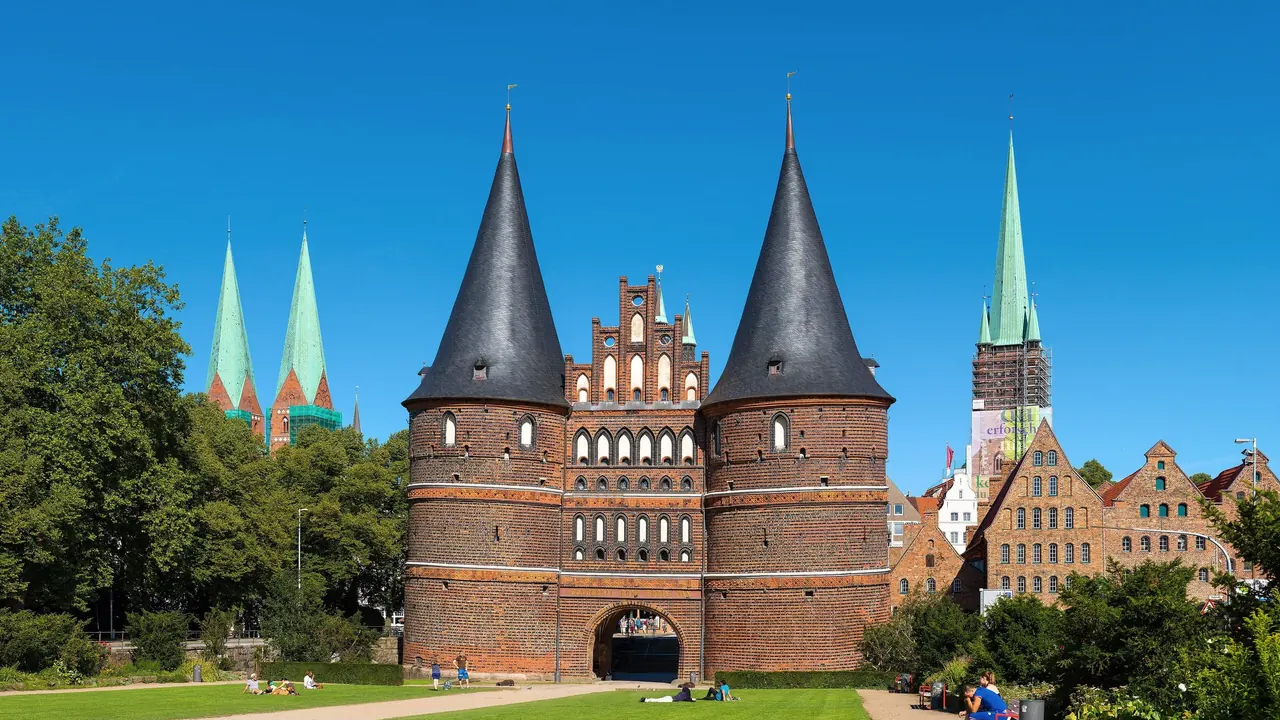
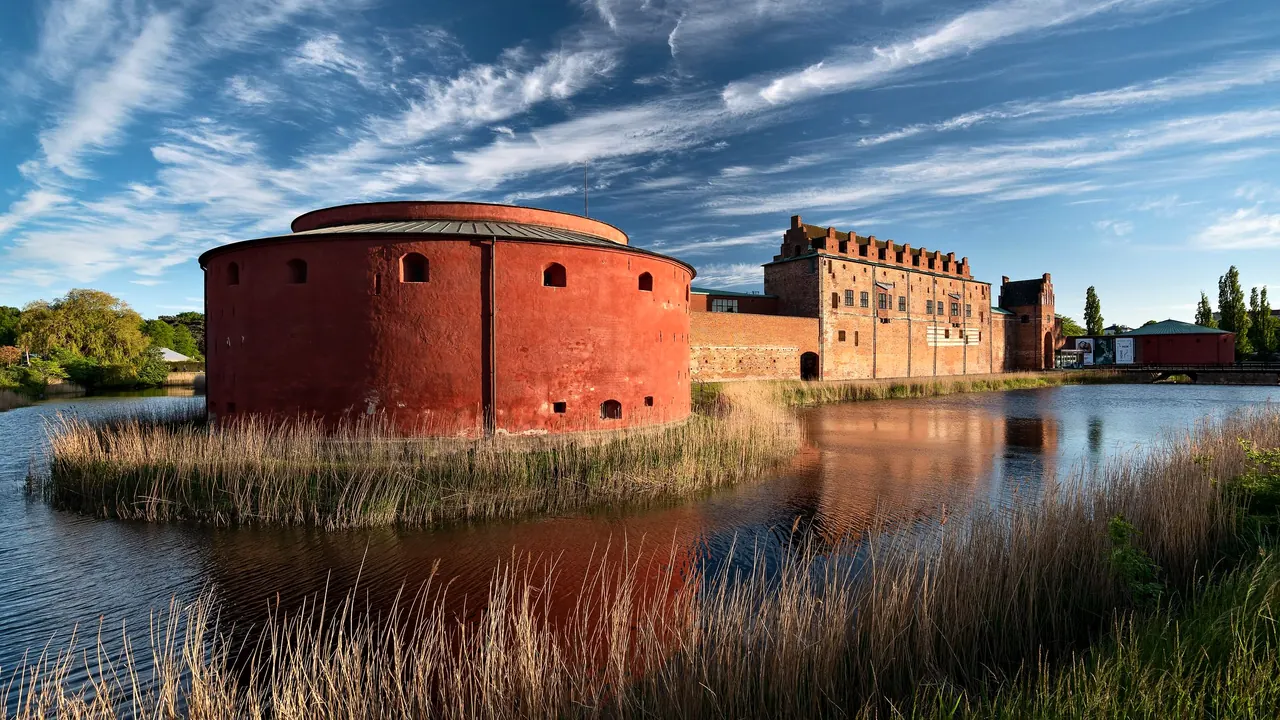
Photos: Lubeck by Christian Wolf (www.c-w-design.de), CC BY-SA 3.0 DE, cropped; Malmo by Kateryna Baiduzha, CC BY-SA 4.0, cropped.
Lubeck or Malmo?
Our verdict in twelve categories, each scored against the same fixed benchmark cities, and the climate month by month, so you can choose for your trip.
Choose Lubeck for
- culture and sights
- prices
Lübeck suits travellers who want the place itself to be the point. Its island old town of brick Gothic churches, gabled merchants' houses and courtyard passages holds far more history than anything in Malmo. It costs less day to day, and Travemünde puts a real seaside resort twenty minutes down the line. Choose it for an unhurried few days of walking, museums and marzipan, with Hamburg saved for one big outing.
Choose Malmo for
- day trips
- wellness
- food and drink
Malmo works best as a base, and that is its strength. Copenhagen is just across the bridge and Lund is next door. The city also eats and drinks more interestingly than Lübeck, from the falafel counters and bars of Möllevången to the old sea bathhouse at Ribersborg. Pick it for a varied trip that mixes Swedish and Danish days, and accept that evenings out will cost more.
Scoreboard
Twelve categories on one fixed scale from 0 to 100. The shaded stretch is the gap between the two.
Your match
Pick a travel style or drag the sliders, and both match scores follow your weighting.
Wins on culture and sights and prices with your weighting.
Wins on day trips and wellness with your weighting.
What matters to you?
Category by category
What the scores mean for a trip.
Beaches & swimming
Both offer a pleasant summer extra in cool, shallow water rather than a beach vacation. Lübeck's version is a proper resort: Travemünde, with its hooded wicker beach chairs and a chain of seaside towns along the bay, is twenty minutes away by train, and its season runs into early September.
Malmo's Ribersborg is a city beach you can cycle to, with dunes, swimming piers and the Öresund Bridge on the horizon. The finer, emptier sand is half an hour south at Skanör and Falsterbo.
Food & drink
Malmo has the wider range of food. Its international population has filled Möllevångstorget with falafel counters and Middle Eastern bakeries, the market hall brings together Skåne cheese, fish and bread, and a few modern Nordic kitchens cook with the region's vegetables, eel and goose.
Lübeck's food is narrower but has a character of its own: marzipan in the old confectioners, herring and fish sandwiches from the harbour kiosks, Rotspon from the cellars, and a meal under the ship models in the Schiffergesellschaft. Beyond those it is mostly solid taverns, so food lovers will find more to explore in Malmo, though dinners there cost more.
Culture & sights
On culture, Lübeck is far ahead. Almost the whole island old town is a World Heritage site: seven brick spires, the leaning Holstentor, the Marienkirche that served as the model for brick Gothic churches around the Baltic, and stepped-gabled merchants' houses with courtyards behind them. The Hansemuseum and the houses devoted to Thomas Mann, Günter Grass and Willy Brandt add real depth.
Malmo shares the brick Gothic heritage in St Petri Church but has a much smaller historic core around Stortorget, Lilla Torg and the moated Malmöhus castle, and the sight most visitors remember is modern, the Turning Torso. It is agreeable rather than absorbing, and history lovers based there tend to look to Lund and Copenhagen.
Nightlife
Neither is a party city, and locals in both go elsewhere for a big night: Lübeck to Hamburg, Malmo over the bridge to Copenhagen. Malmo still has more going on at home, with bars, small clubs and late kitchens in Möllevången at weekends, and terraces on Lilla Torg where summer after-work drinks run on into the night.
Lübeck's evenings mean pubs and wine bars in the old town and along the Obertrave, with Travemünde's promenade livelier in summer, and most of the city is asleep by midnight. The one point in its favour is cost, because drinks in Malmo are heavily taxed.
Nature & outdoors
Both sit in gentle, flat country made for cycling, and neither has mountains. Lübeck's strength is water and woods close at hand: canoeing on the Wakenitz towards the Lauenburg lakes, walks along the clay cliffs of the Brodtener Steilufer, and the Holstein Switzerland lakes within an hour.
Malmo's best outdoor places are further out but a little wilder. There is the forested ravine of Söderåsen National Park, there are sea cliffs and kayaking on Kullaberg, and birds of prey pass over Falsterbo on their autumn migration. In town, the Ribersborg promenade is a fine place to cycle at sunset.
Day trips
Malmo is the better base, mainly because a whole capital lies thirty-five minutes away. Copenhagen leads on to Kronborg, the Louisiana museum and Roskilde's cathedral and Viking ships, Lund is ten minutes up the line, and Ystad and Ales Stenar are an hour east. Being able to see two countries on one trip is a real advantage.
Lübeck has its own big city in Hamburg, under an hour by train, and a good ring of smaller places around it: Wismar, Schwerin's island castle, Ratzeburg and Eutin. After a few days, though, its choices run out sooner than Malmo's.
Good for families
Both are calm, flat and easy with children, and both rely on a shallow summer beach. Lübeck has more seaside entertainment, with Travemünde's resorts, an aquarium along the bay and the Hansa-Park amusement park half an hour up the coast.
Malmo has no theme park or zoo, but everyday life with children is easy there: there are playgrounds in nearly every park, prams ride free on buses, and children can cycle on separate lanes. The maritime museum has a real submarine to climb inside. Outside summer there is less to do in both, and museums have to fill the wet days.
Getting around
Both are compact enough to explore on foot, and neither needs a car except for the countryside. Lübeck's sights are packed onto an island old town about 2km long, with the station just across the river and a regional train to Travemünde.
Malmo spreads a little wider, out to the Western Harbour and the beach, so it is best seen by bike on its dense network of separate lanes. Its rail tunnel under the centre also makes Lund, Copenhagen Airport and Copenhagen itself very simple to reach.
Shopping & style
Lübeck's shopping is modest. Breite Strasse and Königstrasse have German chains and a department store, and you will find galleries, craft shops and independents in the courtyard streets around Hüxstrasse and Fleischhauerstrasse. Marzipan is the souvenir to carry home, and anyone after fashion in depth takes the train to Hamburg.
Malmo is the better place to browse, mainly for Swedish design. The lanes around Lilla Torg and Gamla Väster hold homeware and interiors shops and small boutiques, Möllevångstorget has its open-air market, and Hyllie has a large mall. Even so, serious shoppers there save their time for Copenhagen.
Affordability
Lübeck is easier on the wallet, with the moderate prices of a Western European provincial city: reasonable rooms in the old town, inexpensive tavern meals and fish kiosks, and cheap trains to the coast. Only the beach resorts in July and August push costs up.
Malmo is mild by Scandinavian standards but still dearer, above all after dark, when dinners, drinks and taxis add up quickly. The weekday set lunch, the falafel counters and the many museums that cost little narrow the gap for travellers who eat their main meal at midday.
Live music & performing arts
Lübeck's music is more intimate. Theater Lübeck, in an Art Nouveau building, stages opera and drama, and the Philharmonic plays by the river. There are organ concerts in the Marienkirche, where Buxtehude played, and well-known performers come for the Schleswig-Holstein Music Festival in summer. Rock, pop and jazz are limited to a few small venues, so for those you go to Hamburg.
Malmo has the bigger stages and the stronger contemporary scene. Malmö Opera is one of the largest houses in Scandinavia, and the symphony orchestra plays at Malmö Live. The Moriska Paviljongen and the stages around Möllevången bring in touring bands, and the Malmö Festival fills the streets with free concerts in August. Much of the theatre is in Swedish, though, and Copenhagen is close by for a deeper programme.
Wellness & relaxation
Malmo has one ritual worth travelling for: Ribersborgs Kallbadhus, a wooden bathhouse from the 1890s standing on a pier, where locals move between wood-fired saunas and the sea all year, even in January. It is a sociable, unfussy way to see how the city lives.
Lübeck's equivalent is Travemünde's long tradition as a seaside spa, kept up by wellness hotels, saunas and the seawater pool complex at Scharbeutz, while courtyards and riverside benches set a slow pace in the old town. Neither is made for a dedicated spa trip, but Malmo gives you the more memorable reason to unwind.
When should you go?
Pick your month. The climate figures are measured averages, not a forecast.
Lubeck in July
Malmo in July
Daytime high, °C
Rainfall in the month, mm
Where the figures come from
Malmo's temperatures are measured 27 km from the centre, at Falsterbo.
Malmo has no rain gauge within 25 km of the centre, so its rainfall comes from a gridded climate dataset read at the city rather than from a gauge further away.
Temperature and rainfall are climate normals, averaged over the years shown. Lubeck: 1991-2020 normals, Luebeck-Blankensee (6 km from centre). Malmo: 1991-2020 normals, Falsterbo (27.3 km from centre).
Lübeck has the warmer summer of the two, with July and August afternoons around 24°C against Malmo's 21°C. Its swimming season runs from late June into early September, and the sea reaches about 19°C in August. The summer months are also Lübeck's wettest, close to 71mm in August, so expect showers between the fine days, though May to August each bring more than 200 hours of sunshine.
Malmo's sea follows almost the same curve, a degree cooler, and its swimming season is shorter, from late June to about mid August. For walking the streets, May, June and September suit both, and neither ever gets too hot. Autumn is where they part: September and October are noticeably wetter in Malmo than in Lübeck. From November to February both are cold, grey and dark, and Malmo is the rawer, with afternoons barely above freezing early in the year.
Which traveller are you?
On a culture and arts trip, Lübeck is the clear pick. Its World Heritage island old town, the Marienkirche, the Holstentor and the Hansemuseum fill two rich days. Malmo's old squares and castle museum are pleasant but slight beside it.
For a food and nightlife trip, Malmo has more to offer. Möllevången has cheap Middle Eastern kitchens, falafel counters and late bars, and Lilla Torg's terraces fill on summer evenings. In Lübeck, after the marzipan cafés and herring kiosks, the town is asleep by midnight.
On a trip with a tight budget, Lübeck makes the money go further. Rooms, tavern meals and the train to the coast are moderately priced. In Malmo the set lunch and falafel help by day, but dinners and drinks quickly eat into a budget.
Before you go
| Measure | Lubeck | Malmo |
|---|---|---|
| Official language | German | Swedish |
| Currency | Euro (EUR) | Swedish Krona (SEK) |
| Sockets | CF230 V, 50 Hz | CF230 V, 50 Hz |
| Driving side | Right | Right |
| Time zone | UTC+1, UTC+2 in summer | UTC+1, UTC+2 in summer |
| Emergency number | 112 | 112 |
| Elevation | 13 m | 12 m |
| Main airport | Hamburg Helmut Schmidt Airport (HAM)53 km from centre120 non-stop destinations | Copenhagen Kastrup Airport (CPH)22 km from centre195 non-stop destinations |
| Public holidays this year | 10 days | 16 days |
By the numbers
| Measure | Lubeck | Malmo |
|---|---|---|
| City population | 217,061 | 339,316 |
| People per km² | 1,013 | 4,205 |
| Museums within 10 km | 23 | 24 |
| UNESCO World Heritage sites within 50 km | 1 | 2 |
| Swim season, months above 21 °C | None | None |
Where else could you go?
Every comparison below shares a destination with this one, so you can follow Lubeck or Malmo somewhere new.
- Copenhagenvs Malmo
- Hamburgvs Lubeck
- Aarhusvs Malmo
- Copenhagenvs Lubeck
- Berlinvs Lubeck
- Gothenburgvs Malmo