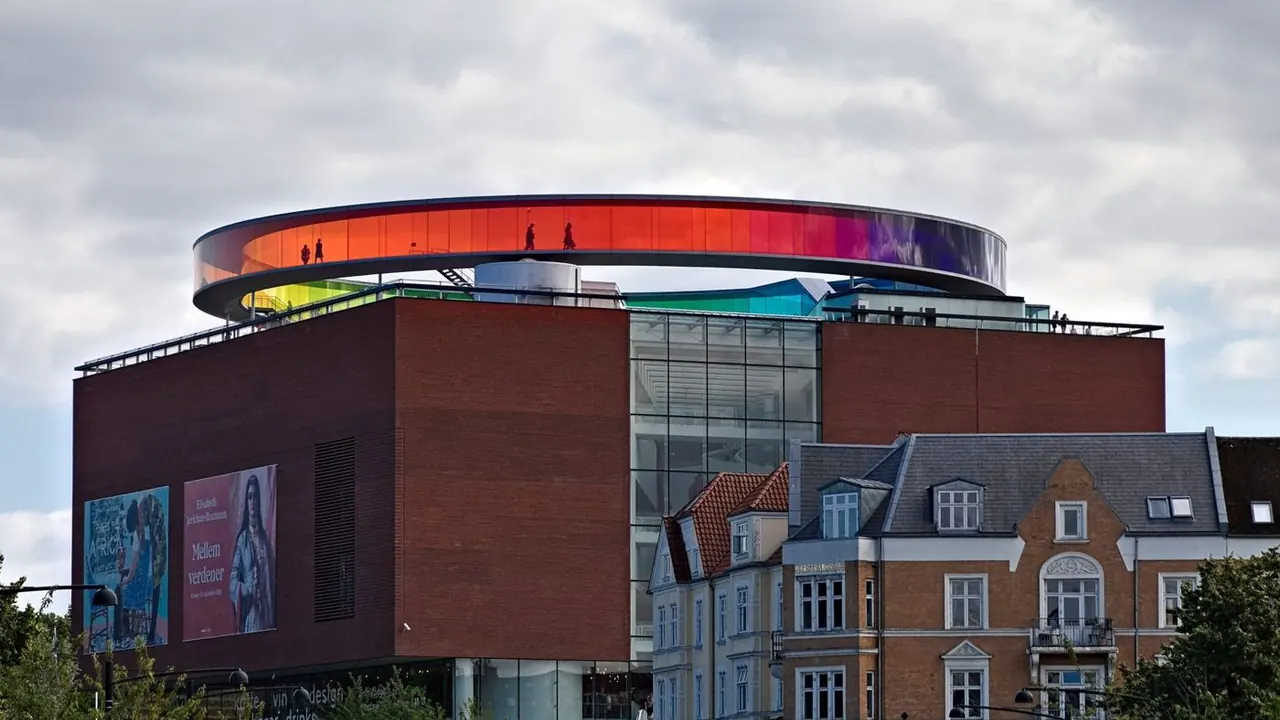
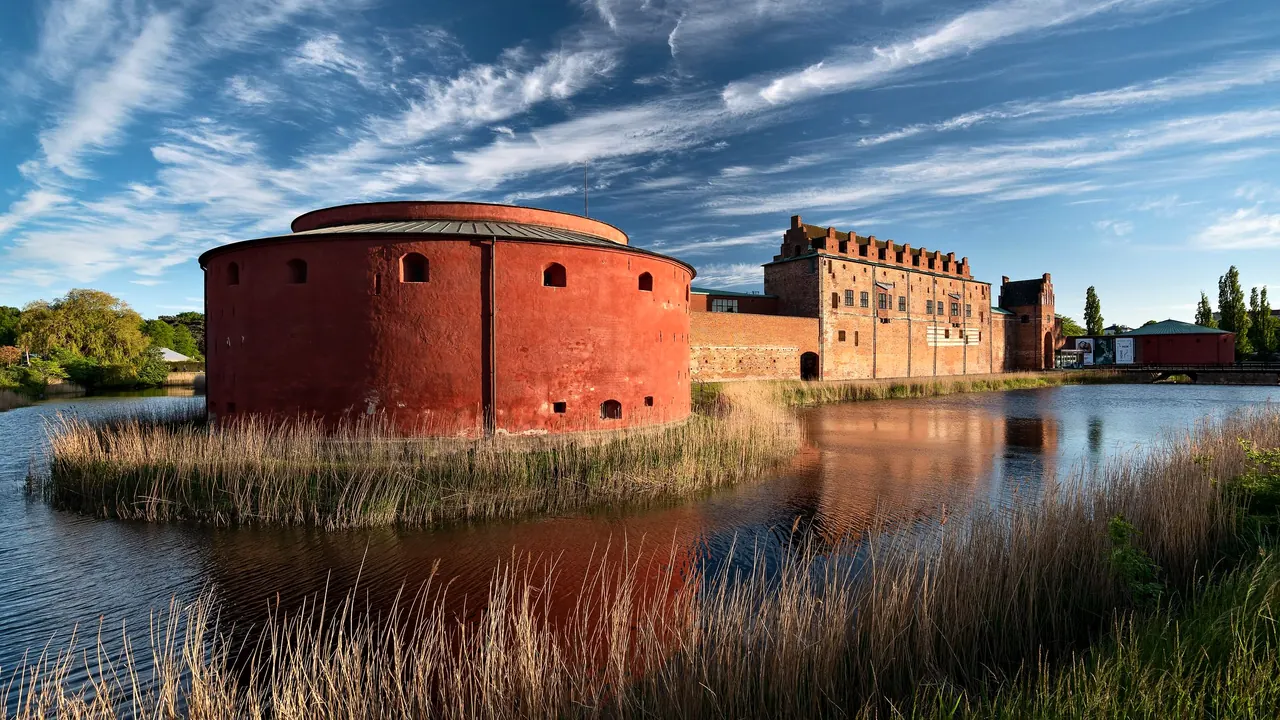
Photos: Aarhus by Mozzihh, CC BY-SA 4.0, cropped; Malmo by Kateryna Baiduzha, CC BY-SA 4.0, cropped.
Aarhus or Malmo?
Our verdict in twelve categories, each scored against the same fixed benchmark cities, and the climate month by month, so you can choose for your trip.
Choose Aarhus for
- culture and sights
- families
- nightlife
Aarhus is the better pick if you want a city that is worth exploring in its own right. ARoS, Den Gamle By and Moesgaard make two or three full days of first-class museums, and the beech woods and deer park sit right on the edge of town. It is an easy city with children, with buggy-friendly museums and separate bike paths, and Djurs Sommerland and Legoland are within reach for the big days out. It suits travellers who want to stay put with plenty to see, and who don't mind Danish prices.
Choose Malmo for
- prices
- day trips
- wellness
Malmo works best as a base. With Copenhagen half an hour across the bridge and Lund ten minutes up the line, the region gives you more than the city does. It is also kinder to the wallet, with falafel counters and set lunches, and Ribersborgs Kallbadhus gives you a sauna and sea plunge that people remember. Choose it if you want to see the whole Öresund area rather than one city in depth.
Scoreboard
Twelve categories on one fixed scale from 0 to 100. The shaded stretch is the gap between the two.
Your match
Pick a travel style or drag the sliders, and both match scores follow your weighting.
Too close to call, 1 point apart
Wins on culture and sights and families with your weighting.
Wins on prices and day trips with your weighting.
What matters to you?
Category by category
What the scores mean for a trip.
Beaches & swimming
Neither city is a beach destination. Both look onto cool, shallow water that only suits a swim for a few weeks in high summer. The difference is in the setting. Aarhus has several small beaches tucked below beech woods, Den Permanente and Bellevue to the north and Moesgaard Strand to the south, with the wider sands of Djursland further out.
Malmo has one long city beach, Ribersborg, with dunes and a view of the bridge, a short walk or cycle from the centre. For emptier, finer sand, Skanör and Falsterbo are about half an hour away.
Food & drink
The two eat about equally well, but in different directions. Aarhus is strongest at the top, with tasting-menu kitchens cooking modern Nordic food from Jutland produce and the bay, plus rye sandwiches and good bakeries for everyday meals.
Malmo has more variety at the cheap end. The falafel counters and Middle Eastern grocers around Möllevångstorget reflect its international population, while Skåne traditions such as smoked eel and November goose dinners give it a regional flavour of its own.
Culture & sights
Aarhus gives you a lot more to see. Its three big museums would hold their own in a capital: ARoS with its rainbow walkway, the open-air streets of Den Gamle By, and Moesgaard's Viking finds and Grauballe Man. The Latin Quarter and the cathedral add a small but pleasant old core.
Malmo's sights take a day or two: Stortorget, the half-timbered houses of Lilla Torg, St Petri and the museums inside moated Malmöhus. The Turning Torso is the image most visitors take home, but culture lovers usually end up crossing to Copenhagen.
Nightlife
Both have small, student-driven weekend scenes and quiet weeknights, so it comes down to the mood of the night. In Aarhus it means riverside bars on Åboulevarden, cellar bars in the Latin Quarter and a few clubs that keep going past midnight.
Malmo is looser and more multicultural, with late kitchens and small clubs in Möllevången and terrace drinks on Lilla Torg in summer. For a really big night, locals take the train to Copenhagen.
Nature & outdoors
Both sit in gentle, low-lying country without hills of any height, but Aarhus has woods on its doorstep. Beech forest runs down to the bay, the Marselisborg deer park is a short ride out, and Mols Bjerge's heathland and the Silkeborg lakes, good for canoeing, are within an hour.
Malmo is surrounded by open farmland, and its outdoor highlights are further out: the ravine trails of Söderåsen, the sea cliffs and kayaking at Kullaberg, and the autumn bird-of-prey migration over Falsterbo.
Day trips
Malmo wins clearly here, because a whole capital is half an hour away. Copenhagen, Kronborg Castle, Louisiana and Roskilde's Viking ships are all easy Danish days out, and Lund, Ystad and Ales Stenar fill the Swedish side.
Aarhus has a good spread of Jutland towns: the Tollund Man at Silkeborg, the runestones at Jelling, cobbled Ebeltoft and, a little further, Odense and Ribe. They are rewarding but smaller in scale, with nothing that matches a day in Copenhagen.
Good for families
Aarhus gives children more to do. Den Gamle By lets them wander into old kitchens and shops, Tivoli Friheden suits younger children, and they can feed deer by hand in Marselisborg. Djurs Sommerland, the Grenaa aquarium and Legoland are all within reach for bigger days out.
Malmo is just as relaxed with prams and small children, but has less to fill the days. Folkets Park, the submarine at the technology museum and a beach afternoon are the main outings, so families staying longer may run short of ideas.
Getting around
Both are compact, flat cycling cities where you hardly need a car, so the difference is in the transport beyond your feet and a bike. Aarhus has a light rail line that runs out to the university and along the coast towards Djursland.
Malmo has no tram and relies on buses in town, but its underground rail link puts Lund, Copenhagen Airport and Copenhagen itself only a short ride away.
Shopping & style
Neither is a shopping destination, and both are best for Scandinavian design. In Aarhus the best of it is in the Latin Quarter's independent ceramics, lighting and vintage shops, at the end of one long chain-store street.
Malmo adds a little more variety: Möllevångstorget's open-air market, design shops around Gamla Väster, and a large mall at Hyllie. Serious shoppers in either city tend to look to Copenhagen.
Affordability
Malmo is the cheaper of the two, though neither is a bargain. Swedish set lunches, falafel counters and low-cost museums make the daytime affordable, and only evening drinks really eat into a budget.
Aarhus charges high Danish prices all day, for coffee, meals and full museum entry alike. Bakeries, street-food halls and supermarket picnics are the main ways to keep a stay there in check.
Live music & performing arts
Both have more on stage than their size would suggest, but the programmes are built differently. Aarhus brings everything together at Musikhuset, home to the symphony orchestra and the Danish National Opera, and its summer jazz festival and Festuge arts week fill the late-summer calendar.
Malmo splits its offer between Malmö Opera, one of Scandinavia's largest stages and strong on big musicals, and the orchestra at Malmö Live. Its August festival puts free concerts in the streets. In both cities most drama is not in English.
Wellness & relaxation
Malmo has the more memorable ritual. Ribersborgs Kallbadhus, an 1890s wooden bathhouse on a pier, is where locals take a wood-fired sauna and climb down into the sea all year round, and it works well as an experience for visitors too.
Aarhus has the same Nordic habit of a sauna followed by a plunge in the bay, at Den Permanente and the harbour saunas. What it lacks is one landmark place, and beyond that you are left with a few hotel spas.
When should you go?
Pick your month. The climate figures are measured averages, not a forecast.
Aarhus in July
Malmo in July
Daytime high, °C
Rainfall in the month, mm
Where the figures come from
Aarhus's temperatures are measured 30 km from the centre, at Tirstrup.
Aarhus has no rain gauge within 25 km of the centre, so its rainfall comes from a gridded climate dataset read at the city rather than from a gauge further away.
Malmo's temperatures are measured 27 km from the centre, at Falsterbo.
Malmo has no rain gauge within 25 km of the centre, so its rainfall comes from a gridded climate dataset read at the city rather than from a gauge further away.
Temperature and rainfall are climate normals, averaged over the years shown. Aarhus: 1991-2020 normals, Tirstrup (29.8 km from centre). Malmo: 1991-2020 normals, Falsterbo (27.3 km from centre).
The two cities have almost the same climate, so the season matters more than which one you pick. Both are at their best from late May to early September. July and August are the only months warm enough for a swim, with daytime highs around 21°C to 22°C and the sea reaching about 18°C in August. In both cities the driest stretch is February to April, but those months are still cold. May brings milder days and only moderate rain, which makes it a good month for walking and cycling before the summer showers build.
From June the rain picks up in both, and Aarhus is the wetter of the two through late summer and autumn, with about 77mm in August against a little less in Malmo. October stays damp in both. From November to March both are cold, grey and short of daylight, with highs of only a few degrees. That is fine for museums and a sauna, but not for long days outdoors.
Which traveller are you?
For a culture and arts trip, Aarhus is the stronger choice. ARoS, Den Gamle By and Moesgaard with its bog body are museums of real weight. Malmo's own sights are a pleasant old core and the Turning Torso, and its best culture is mostly across the bridge.
On a family trip with children, Aarhus offers more. Children can feed the deer by hand, walk through old workshops and ride at Tivoli Friheden, and Djurs Sommerland and Legoland are within reach. Malmo has no zoo, large aquarium or theme park.
On a trip on a tight budget, Malmo goes easier on your money. Falafel counters, cheap Möllevången kitchens, weekday set lunches and low-cost museums keep the days affordable. Aarhus charges full Danish prices for meals, coffee and museum entry, so it is the dearer place to stay.
Before you go
| Measure | Aarhus | Malmo |
|---|---|---|
| Official language | Danish | Swedish |
| Currency | Danish Krone (DKK) | Swedish Krona (SEK) |
| Sockets | CEFK230 V, 50 Hz | CF230 V, 50 Hz |
| Driving side | Right | Right |
| Time zone | UTC+1, UTC+2 in summer | UTC+1, UTC+2 in summer |
| Emergency number | 112 | 112 |
| Elevation | 6 m | 12 m |
| Main airport | Aarhus Airport (AAR)30 km from centre15 non-stop destinations | Copenhagen Kastrup Airport (CPH)22 km from centre196 non-stop destinations |
| Public holidays this year | 14 days | 16 days |
By the numbers
| Measure | Aarhus | Malmo |
|---|---|---|
| City population | 290,598 | 339,316 |
| People per km² | 3,193 | 4,205 |
| Museums within 10 km | 17 | 24 |
| UNESCO World Heritage sites within 50 km | 0 | 2 |
| Swim season, months above 21 °C | None | None |
Where else could you go?
Every comparison below shares a destination with this one, so you can follow Aarhus or Malmo somewhere new.
- Copenhagenvs Malmo
- Copenhagenvs Aarhus
- Gothenburgvs Aarhus
- Gothenburgvs Malmo
- Hamburgvs Aarhus
- Hamburgvs Malmo