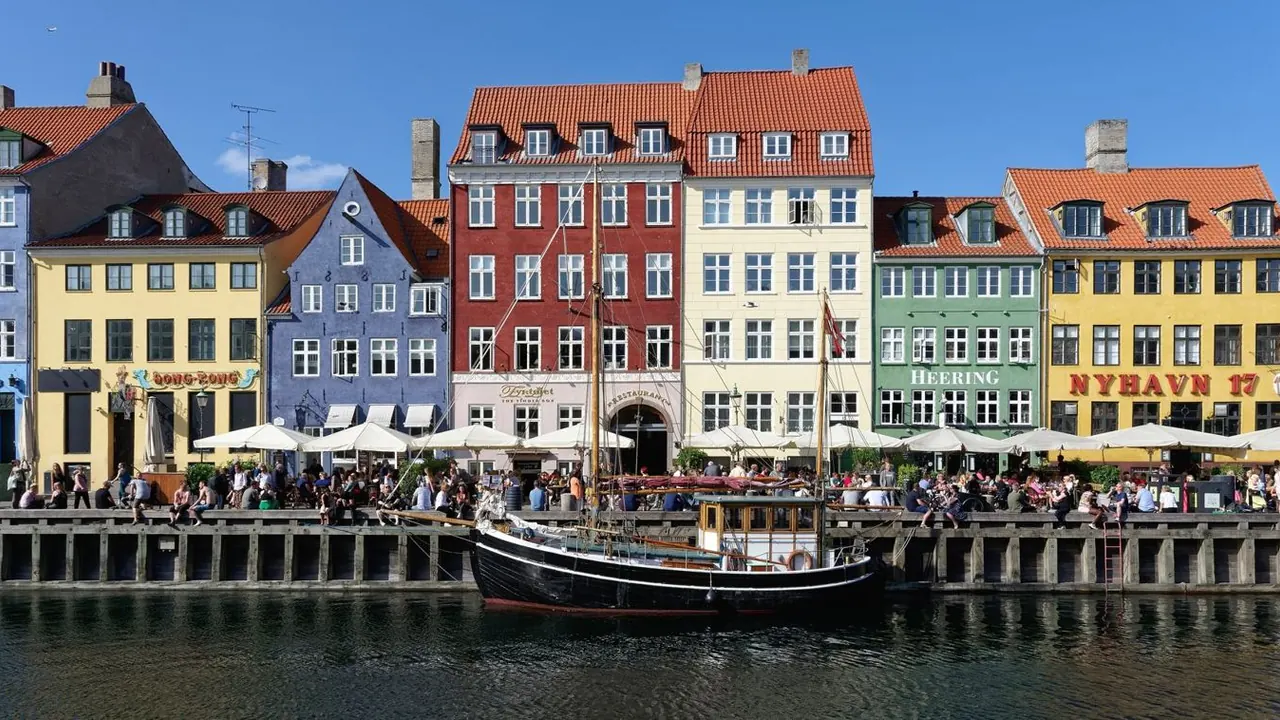
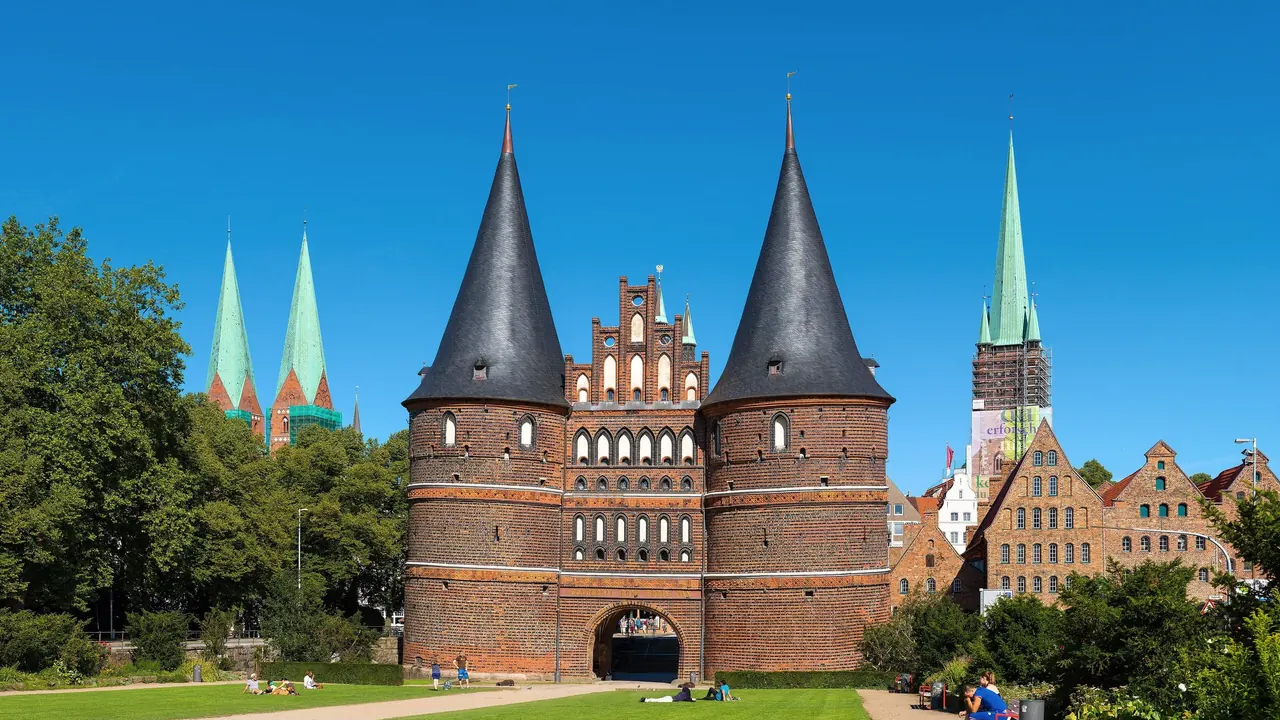
Photos: Copenhagen by Jakub Hałun, CC BY-SA 4.0, cropped; Lubeck by Christian Wolf (www.c-w-design.de), CC BY-SA 3.0 DE, cropped.
Copenhagen or Lubeck?
Our verdict in twelve categories, each scored against the same fixed benchmark cities, and the climate month by month, so you can choose for your trip.
Choose Copenhagen for
- food and drink
- nightlife
- shopping
Copenhagen suits travellers who want a full capital on their trip. It has a serious food scene from smørrebrød lunches to Nordic fine dining, late weekend nights in Vesterbro and Nørrebro, design shops, ballet and jazz, and a metro and bike network that makes all of it easy. It is also the stronger choice with children, thanks to Tivoli, the aquarium and a city built around family life. The price is the main drawback, because few places in Europe cost more.
Choose Lubeck for
- prices
- nature and the outdoors
Lübeck is for a slower, cheaper few days built around one remarkably intact Hanseatic old town. Its brick churches, merchants' houses and courtyards fill two unhurried days, and a quiet evening with marzipan and Rotspon is the local idea of a night out. Travemünde's beach is twenty minutes away by train, so it works best for a walking-and-seaside stay in summer, with Hamburg close by when you want a big city.
Scoreboard
Twelve categories on one fixed scale from 0 to 100. The shaded stretch is the gap between the two.
Your match
Pick a travel style or drag the sliders, and both match scores follow your weighting.
Wins on food and drink and nightlife with your weighting.
Wins on prices and nature and the outdoors with your weighting.
What matters to you?
Category by category
What the scores mean for a trip.
Beaches & swimming
Neither city is a beach destination, and both have the same cool water and short swimming season. The difference is in how you swim. In Copenhagen the water is part of the city itself: you jump off the wooden harbour baths at Islands Brygge, or take the metro out to the lagoon at Amager Strandpark.
Lübeck has a proper seaside resort of its own. Travemünde has a long sandy beach with hooded wicker chairs, and a string of resorts such as Timmendorfer Strand and Scharbeutz runs along the calm, shallow bay. That makes it a better choice for a lazy beach afternoon with small children.
Food & drink
This is one of the widest gaps between the two. Copenhagen helped redefine Nordic cooking, and its strength runs right through from foraging-led fine dining to smørrebrød on rye, cardamom buns, Torvehallerne's stalls and the wine bars of Vesterbro and Nørrebro.
Lübeck's table is narrower and more traditional: marzipan from the old confectioners, smoked herring, labskaus and cellar-aged Rotspon, best eaten under the ship models at the Schiffergesellschaft. Beyond that it is the solid fare of a provincial town. It is a pleasant part of a visit, but not the reason to come.
Culture & sights
The two are evenly matched, but in different ways. Copenhagen's heritage is royal and spread across a capital. It has the crown jewels at Rosenborg, the guard at Amalienborg and parliament on Slotsholmen, plus the National Museum, the Glyptotek and modern harbourside architecture, and it needs three or four days.
Lübeck's strength is the townscape as a whole. Almost its entire island old town is a World Heritage site, with the Holstentor, the Marienkirche that set the pattern for brick Gothic, and gabled merchants' houses with hidden courtyards. The Hansemuseum and the Buddenbrookhaus round it off, and two days is enough to see it well.
Nightlife
Copenhagen offers a real night out, and Lübeck does not. In Copenhagen the converted butchers' halls of Kødbyen, the scruffier bars of Nørrebro and a strong cocktail scene keep weekends going until morning, and in summer people drink along the canals at Nyhavn and Christianshavn in the long evenings.
Lübeck's evenings are a glass of wine in the old town or a drink on the Obertrave waterfront, with Travemünde's promenade a little livelier in summer. Clubbers take the train to Hamburg.
Nature & outdoors
Both cities sit in flat, gentle country with grey winters, so the difference is in what lies close at hand. Copenhagen's outdoors is mostly urban: deer among the oaks of Dyrehaven, an easy cycle up the Øresund coast and kayaking in the harbour canals. Its only dramatic scenery, the cliffs of Møns Klint, is about two hours away.
Lübeck has more countryside on its doorstep. You can canoe the reed-lined Wakenitz towards the Lauenburg lakes, walk the crumbling clay cliff of the Brodtener Steilufer above the Baltic, or reach the Holstein Switzerland lakes within an hour.
Day trips
Copenhagen has the richer choice on one train line: Kronborg at Helsingør, moated Frederiksborg, the Louisiana art museum on the coast and the Viking ships at Roskilde. Crossing the Øresund Bridge adds a second country, with Malmö and Lund each an easy day.
Lübeck's best outing is Hamburg, with its harbour, Speicherstadt and Elbphilharmonie. After that come smaller pleasures: Wismar's Hanseatic streets, Schwerin's island castle and Ratzeburg's lakeside cathedral, after which the options thin out.
Good for families
Copenhagen is far better set up for children, and in every season. Tivoli's old wooden rides sit beside the central station, and Den Blå Planet, the Frederiksberg zoo and Experimentarium fill wet days. Everyday life suits families too, with prams on the trains, playgrounds in every park and children riding in cargo bikes.
Lübeck works well with children in summer, when Travemünde's calm, shallow beach and Hansa-Park along the bay do the heavy lifting. Outside the warm months there is little made for children beyond the museums.
Getting around
Copenhagen is the smoother city to move around. Its driverless metro runs around the clock and reaches the airport in about a quarter of an hour, and renting a bike on its separated lanes is the way locals travel.
In Lübeck you mostly walk. The old town island is about 2km long, partly cobbled and right next to the station, with buses and a short train ride to Travemünde for everything else. A car only helps for the lakes and small villages.
Shopping & style
For shopping, Copenhagen is the clear winner, especially for design. It has furniture, lighting and ceramics shops, the Royal Copenhagen flagship on Amagertorv, Illum and Magasin du Nord, and independent Scandinavian labels in the Latin Quarter and on Jægersborggade.
Lübeck's high streets are mostly German chains, with galleries and craft shops tucked into the side streets around Hüxstrasse. Marzipan is the one thing everyone brings home, and serious shoppers go to Hamburg.
Affordability
Lübeck costs far less. Copenhagen is among Europe's most expensive cities, and hotels, meals and bar drinks all add up at every level. Free harbour baths and parks only soften the bill.
Lübeck has the moderate prices of a mid-sized German city: affordable guesthouses, cheap fish kiosks and inexpensive trains to the coast. The exception is Travemünde and the bay resorts in July and August, when beach rooms cost more and book up early.
Live music & performing arts
Copenhagen has the bigger stage. The Royal Danish Ballet keeps the Bournonville tradition alive at the Royal Danish Theatre, the harbourfront Opera House and DR Koncerthuset are first-rate venues, and the July jazz festival fills squares and courtyards.
Lübeck's highlights are more intimate. Theater Lübeck stages opera in its Art Nouveau house, organ concerts at the Marienkirche continue the tradition of Buxtehude, who was organist there, and the Schleswig-Holstein Music Festival brings well-known performers in summer. For rock and jazz, people head to Hamburg.
Wellness & relaxation
Copenhagen has a living bathing ritual that Lübeck lacks. Wood-fired saunas float in the harbour and stand on the beaches, and locals follow them with a cold plunge even in midwinter.
Lübeck's relaxation is gentler and comes from the seaside. Travemünde has been a spa resort since the early nineteenth century, there are wellness hotels around the bay and a seawater pool complex at Scharbeutz, and the old town's courtyards and riverside benches are made for slow afternoons. Neither city suits a pampering spa trip.
When should you go?
Pick your month. The climate figures are measured averages, not a forecast.
Copenhagen in July
Lubeck in July
Daytime high, °C
Rainfall in the month, mm
Temperature and rainfall are climate normals, averaged over the years shown. Copenhagen: 1991-2020 normals, Koebenhavn / Landbohoejskolen (2.4 km from centre). Lubeck: 1991-2020 normals, Luebeck-Blankensee (6 km from centre).
The two cities share a short northern summer. In Copenhagen it peaks in July at about 23°C, and Lübeck runs a degree or so warmer through July and August. Those two months are the only time the Baltic is warm enough for a proper swim, reaching around 18°C at best, a little milder off Travemünde than in the Øresund. Late summer is also the wettest stretch in both cities, and August brings Copenhagen's heaviest rain at 74mm. Neither city ever gets too hot for walking the streets.
May is the best month for sightseeing on foot. It is mild, fairly dry and has long days, and in Lübeck it is the sunniest month of the year. September is still pleasant for walking but wetter, especially in Copenhagen. From December to February both cities are cold, grey and short of light, with highs of around 4°C, and November and March are only a little milder. Copenhagen is noticeably dry from February to April, while Lübeck stays damper through the winter.
Which traveller are you?
On a trip on a tight budget, Lübeck lets the money go further. A frugal day there can mean the gabled lanes of the old town, a bakery lunch on a riverside bench and a cliff walk along the Brodtener Steilufer. In Copenhagen, saving money takes constant effort.
For a food and nightlife trip, Copenhagen wins easily. By day there are Nordic tasting menus, smørrebrød, Torvehallerne, natural wine bars and craft breweries, and at weekends Kødbyen's bars and clubs run until morning. Lübeck offers marzipan and herring, and most of the town is asleep by midnight.
On a family trip with children, Copenhagen is the safer bet. The old Bakken fairground is a short train ride north, and child-friendly cafés make grey days easier. Lübeck works best as a summer mix of old town and seaside.
Before you go
| Measure | Copenhagen | Lubeck |
|---|---|---|
| Official language | Danish | German |
| Currency | Danish Krone (DKK) | Euro (EUR) |
| Sockets | CEFK230 V, 50 Hz | CF230 V, 50 Hz |
| Driving side | Right | Right |
| Time zone | UTC+1, UTC+2 in summer | UTC+1, UTC+2 in summer |
| Emergency number | 112 | 112 |
| Elevation | 14 m | 13 m |
| Main airport | Copenhagen Kastrup Airport (CPH)8 km from centre195 non-stop destinations | Hamburg Helmut Schmidt Airport (HAM)53 km from centre120 non-stop destinations |
| Public holidays this year | 14 days | 10 days |
By the numbers
| Measure | Copenhagen | Lubeck |
|---|---|---|
| City population | 667,099 | 217,061 |
| People per km² | 7,339 | 1,013 |
| Museums within 10 km | 72 | 23 |
| UNESCO World Heritage sites within 50 km | 5 | 1 |
| Swim season, months above 21 °C | None | None |
Where else could you go?
Every comparison below shares a destination with this one, so you can follow Copenhagen or Lubeck somewhere new.
- Malmovs Copenhagen
- Hamburgvs Lubeck
- Aarhusvs Copenhagen
- Gothenburgvs Copenhagen
- Berlinvs Lubeck
- Malmovs Lubeck