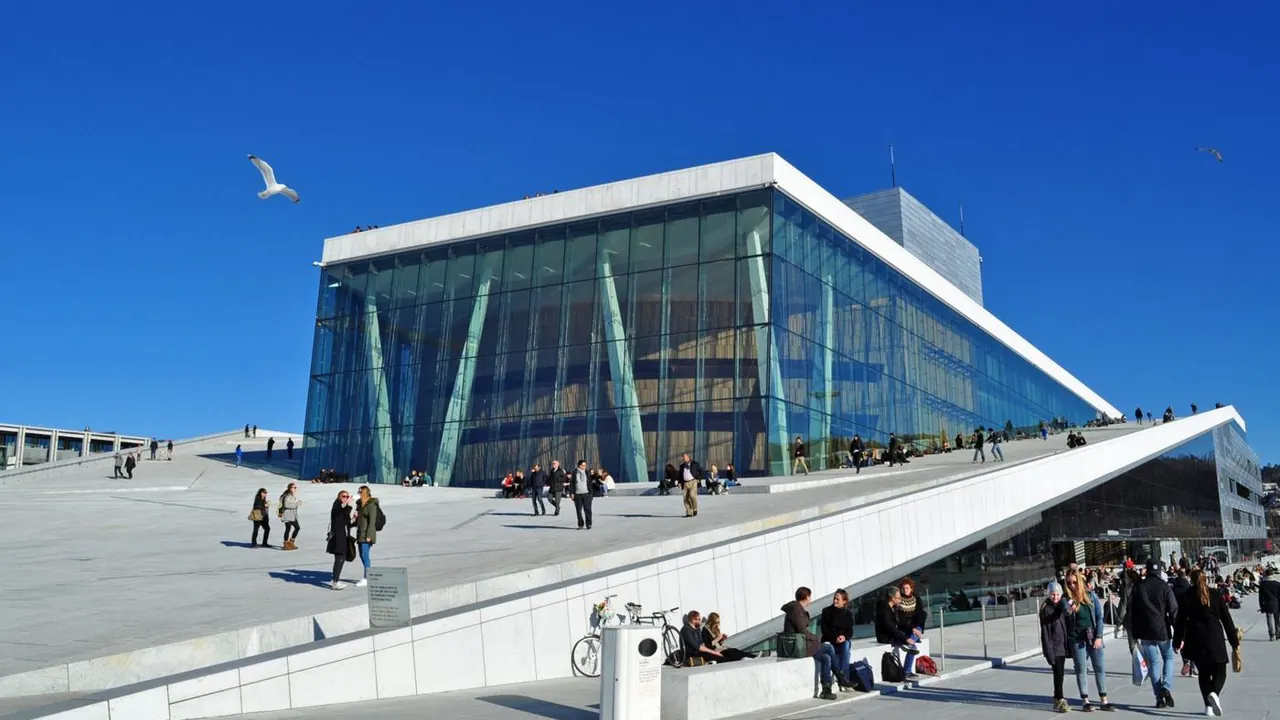
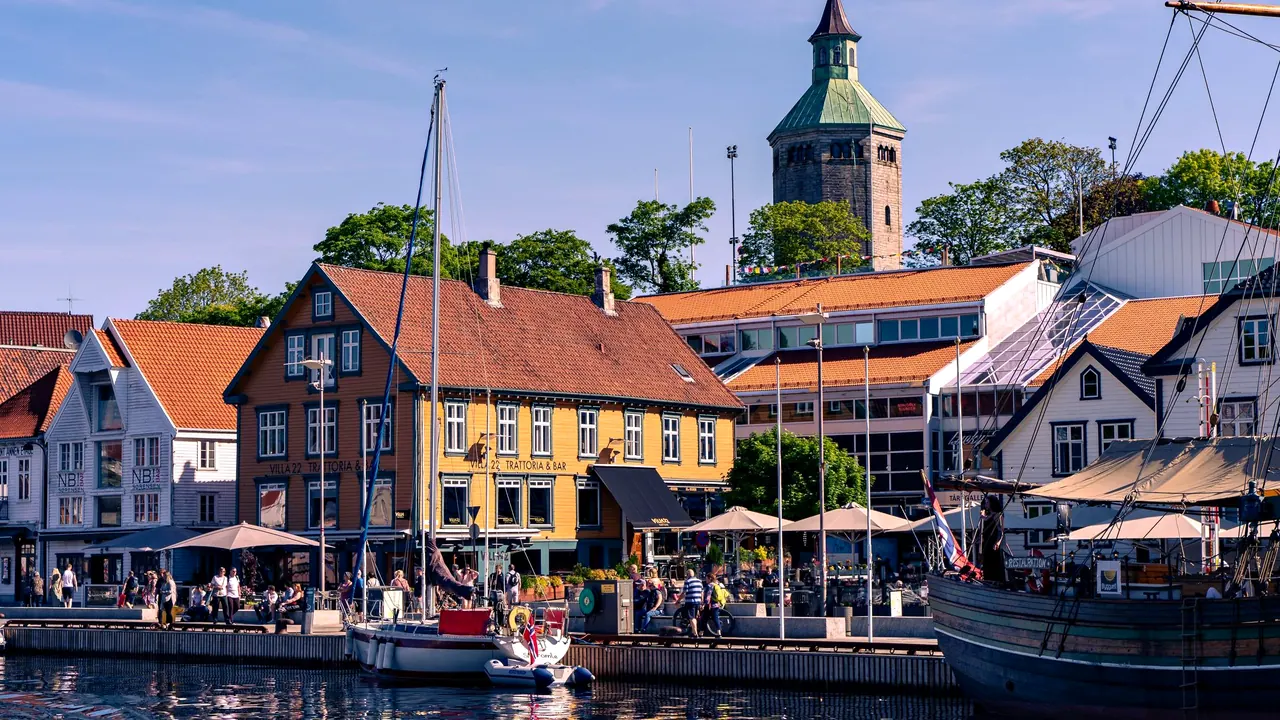
Photos: Oslo by Beata May, CC BY-SA 4.0, cropped; Stavanger by Adam Cole, Pexels License.
Oslo or Stavanger?
Our verdict in twelve categories, each scored against the same fixed benchmark cities, and the climate month by month, so you can choose for your trip.
Choose Oslo for
- culture and sights
- wellness
- day trips
Oslo is the better choice for most city trips. It has the national art collections, the opera, a wider spread of bars and places to eat, and a public transport network that takes you from the harbour into the forest without a car. Culture lovers, first-time visitors to Norway and anyone who wants a few easy days of museums, saunas and fjord ferries will find more to do here.
Choose Stavanger for
- nature and the outdoors
Stavanger is for travellers who come for the landscape. The Lysefjord and Preikestolen lie close by, and the city is a small, pleasant base with a well-preserved wooden old town. It has less to offer in museums, nightlife and shopping, and you will probably want a hire car. If the trip is built around one or two big hikes and a boat up the fjord, though, nothing near Oslo matches it.
Scoreboard
Twelve categories on one fixed scale from 0 to 100. The shaded stretch is the gap between the two.
Your match
Pick a travel style or drag the sliders, and both match scores follow your weighting.
Wins on culture and sights and wellness with your weighting.
Wins on nature and the outdoors with your weighting.
What matters to you?
Category by category
What the scores mean for a trip.
Beaches & swimming
Neither city is for a beach vacation, but Oslo makes swimming easier. Ferries run to Hovedøya and Langøyene, there are diving platforms at Sørenga and the lake at Sognsvann is a metro ride away, and in July the sheltered fjord water is a few degrees warmer.
Stavanger has the more handsome sand. The long dune-backed beaches of the Jæren coast are open and quiet, and surfers use them when the swell builds. The North Sea is colder and windier, though, so a day there is often a walk rather than a swim.
Food & drink
Oslo offers more range. Nordic tasting menus sit at the top, Mathallen and the streets of Grünerløkka cover everyday eating, and specialty coffee is part of daily life. Stavanger's top restaurants are ambitious for a small city, and the Gladmat festival makes the summer quays a feast of seafood, Ryfylke lamb and Jæren strawberries. Below the fine-dining level, though, the choice narrows quickly, so you will find less variety over several evenings.
Culture & sights
Oslo has far more to see. Its art collections hold The Scream, the Fram and Kon-Tiki museums cover the great voyages, and Vigeland Park and the walkable Opera House roof make memorable free sights. What Oslo lacks is an old townscape.
That is exactly where Stavanger is strong. Gamle Stavanger's slope of white timber houses and the medieval cathedral give it a historic core, and the Petroleum and Canning museums explain how the city made its money. Even so, the list is short and easily seen in two days.
Nightlife
The two going-out scenes are similar in style and differ mainly in breadth. In Oslo you can move between neighbourhoods, from the craft beer and natural wine bars of Grünerløkka to the cocktail rooms and electronic clubs around Youngstorget and Grønland, and in summer the Aker Brygge waterfront fills with people drinking in the long light.
Stavanger's evenings stay within a few streets: the painted bars of Øvre Holmegate and the pubs along Vågen and Skagenkaien. A few clubs run late at weekends, when oil workers and students fill the centre, but the rest of the week is quiet. In both cities high alcohol prices mean locals drink at home before going out.
Nature & outdoors
The two are close, but the landscapes are very different. Oslo's outdoors is right on the doorstep. The metro climbs into the Nordmarka forest, with its lakes, trails and floodlit ski tracks, and ferries reach the gentle skerries of the inner fjord. It is ideal for easy days and a winter visit.
Stavanger has the drama. The granite walls of the Lysefjord, the walk to Preikestolen and the harder climb to Kjerag are the real mountain-and-fjord scenery that lies far beyond reach of Oslo. The cost is more rain and a shorter season on the high trails.
Day trips
Oslo has the better choice of towns within reach. The star-shaped fortress town of Fredrikstad is an hour south by train, wooden Drøbak can be reached by boat, and Lillehammer and Tønsberg are within reach too.
Stavanger's town outings are fewer. Utstein Abbey and Egersund make good half days, and Avaldsnes needs a long day with a ferry. Its best excursions are into the landscape rather than to other towns.
Good for families
Both are safe, calm and welcoming to children, so the difference lies in what fills the days. Oslo has the Bygdøy museums, where children can board a polar ship, as well as the hands-on technology museum, Tusenfryd and winter sledding near Holmenkollen.
Stavanger has a playground built from oil equipment, a children's museum, Kongeparken and sandy Jæren beaches. Preikestolen also makes a proud day out for children who are used to walking. Neither city has a large zoo or aquarium, and both are costly for a family.
Getting around
Oslo is noticeably easier. Trams, metro, buses and the island ferries form one network that reaches from the harbour to the ski hills, and an express train links the airport, so a car is never needed. Stavanger's centre is just as easy to cover on foot, and fast boats serve the islands. Beyond Preikestolen's seasonal buses, though, reaching Kjerag, the outer beaches or the fjord villages on your own schedule usually means hiring a car and paying tunnel tolls.
Shopping & style
Oslo has several distinct shopping areas, where Stavanger has a few central streets. In the capital, the chains line Karl Johans gate, the historic Steen & Strøm department store gathers the luxury and Nordic brands, Bogstadveien is where locals shop, and Grünerløkka adds vintage, records and small design shops.
Stavanger offers some pedestrian streets around the cathedral, a handful of independents near Øvre Holmegate and malls out in the suburbs, enough for an hour or two rather than a day. In both cities knitwear and outdoor gear are the things worth buying, and prices are high everywhere.
Affordability
Both cities are among the most expensive places to travel, and there is little to choose between them. Oslo gives budget travellers more for nothing: Vigeland Park, the Opera House roof, the forest trails, and harbour ferries covered by a transport pass. In Stavanger the landscape is free once you are there, but fjord cruises and car hire add up. Its business hotels are sometimes cheaper at weekends and in high summer.
Live music & performing arts
Oslo is the stronger stage. The national opera and ballet perform at the Opera House, the Oslo Philharmonic plays at the Konserthus, the National Theatre stages Ibsen, and the city has a long jazz tradition plus a large August festival in Tøyen park.
Stavanger's concert hall at Bjergsted is excellent, and its symphony orchestra plays a full season. MaiJazz and the late-summer chamber festival are worth timing a visit around, but otherwise the programme is that of a good regional city.
Wellness & relaxation
Both cities share the Nordic habit of sweating in a sauna and then plunging into cold water, but Oslo has made more of it. Floating wood-fired saunas line the harbour by the Opera House and at Sørenga, and they are public, sociable and used all year. Stavanger has a few harbour saunas and Gamlingen, its much-loved heated outdoor pool, while spas are mostly in hotels. It is a pleasant place to slow down, but not one to plan a wellness trip around.
When should you go?
Pick your month. The climate figures are measured averages, not a forecast.
Oslo in July
Stavanger in July
Daytime high, °C
Rainfall in the month, mm
Where the figures come from
Stavanger has no rain gauge within 25 km of the centre, so its rainfall comes from a gridded climate dataset read at the city rather than from a gauge further away.
Temperature and rainfall are climate normals, averaged over the years shown. Oslo: 1991-2020 normals, Oslo-Blindern (4.3 km from centre). Stavanger: 2008-2020 (rainfall 1991-2020) normals, Stavanger Vaaland / Ullandhaug (1.5 km from centre).
Both cities are at their best from June to August, but their years run differently. Oslo has proper seasons: cold, snowy winters around freezing that suit skiing more than walking the streets, a quick spring, and summers that reach about 23°C in July, when the fjord warms to around 18°C and makes a swim inviting. May and July are the sunniest months, and late spring is fairly dry, while rain builds through late summer and autumn.
Stavanger is milder and wetter. Winters seldom freeze, but summers are cooler, rarely above 19°C, and the North Sea stays fresh even in August. Rain falls in every month and is heaviest in autumn, with October bringing about 164mm. April and May are the driest spell, though the high trails are best left until June, once the summer settles in.
Which traveller are you?
On a culture and arts trip, Oslo is the clear choice. The Munch Museum, the National Museum and the Bygdøy exploration museums give it real depth, and an evening at the Opera House adds performing arts that Stavanger cannot match.
For an outdoors trip, Stavanger is the better base. Preikestolen, Kjerag and the sheer walls of the Lysefjord are close by. Oslo's forests and ski tracks are lovely and easier to reach, but they offer nothing as dramatic.
On a relaxing and wellness trip, Oslo has the edge. Its floating wood-fired saunas along the harbour are many, public and easy to join, and quiet green spaces sit all over the city. In Stavanger the sauna routine is smaller and the spas are mostly in hotels.
Before you go
| Measure | Oslo | Stavanger |
|---|---|---|
| Official language | Norwegian, Nynorsk, Bokmål, Sámi | Norwegian, Nynorsk, Bokmål, Sámi |
| Currency | Norwegian Krone (NOK) | Norwegian Krone (NOK) |
| Sockets | CF230 V, 50 Hz | CF230 V, 50 Hz |
| Driving side | Right | Right |
| Time zone | UTC+1, UTC+2 in summer | UTC+1, UTC+2 in summer |
| Emergency number | Police 112, ambulance 113, fire 110 | Police 112, ambulance 113, fire 110 |
| Elevation | 23 m | 15 m |
| Main airport | Oslo-Gardermoen International Airport (OSL)37 km from centre147 non-stop destinations | Stavanger Airport, Sola (SVG)12 km from centre32 non-stop destinations |
| Public holidays this year | 13 days | 13 days |
By the numbers
| Measure | Oslo | Stavanger |
|---|---|---|
| City population | 717,710 | 129,300 |
| People per km² | - | 3,131 |
| Museums within 10 km | 60 | 13 |
| UNESCO World Heritage sites within 50 km | 0 | 0 |
| Swim season, months above 21 °C | None | None |
Where else could you go?
Every comparison below shares a destination with this one, so you can follow Oslo or Stavanger somewhere new.
- Bergenvs Stavanger
- Gothenburgvs Oslo
- Bergenvs Oslo
- Gothenburgvs Stavanger
- Aarhusvs Stavanger
- Stockholmvs Oslo