Norway
Norwegian Fjords
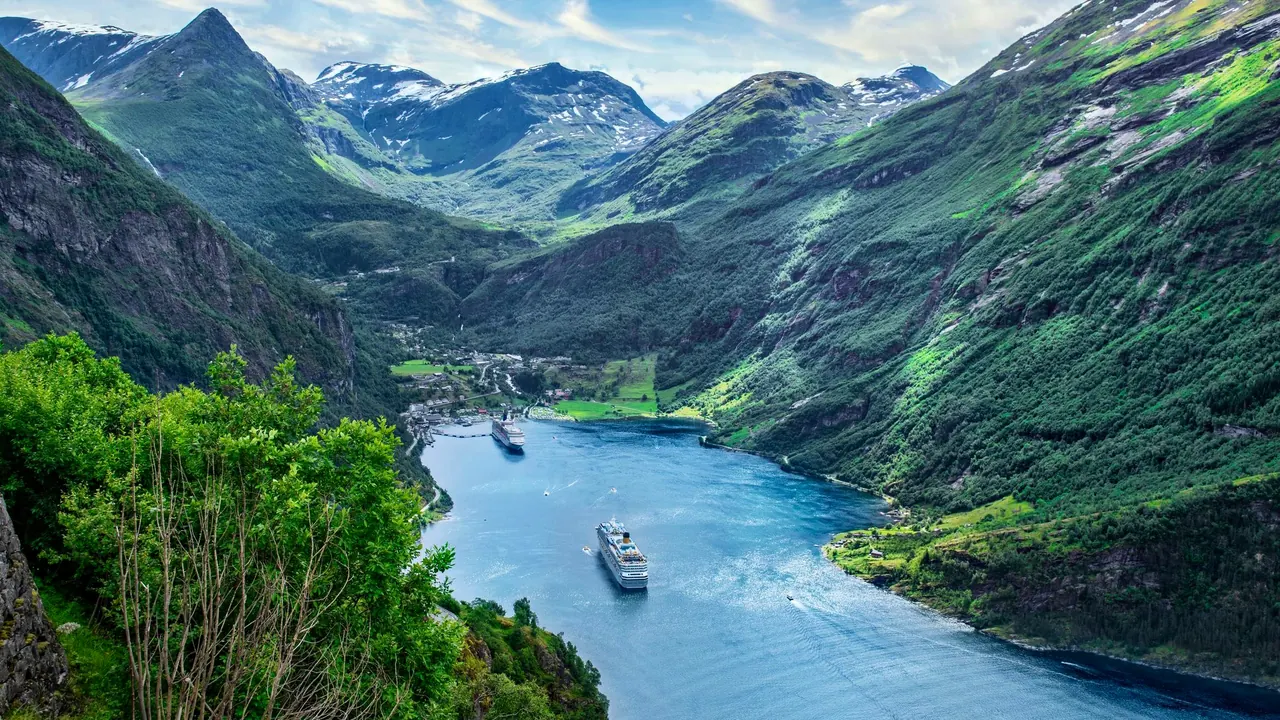
Cruise ships in the Geirangerfjord from a viewpoint
- Nature & outdoors97
- Culture & sights58
- Families58
Photo: Enrique, Pexels License
Match
45
Every category weighted equally
- Beach & sun42
- Culture & arts46
- Food & nightlife40
- Family trip46
- Outdoors51
- Relax & unwind46
- Shopping & style43
- On a budget41
Norwegian Fjords in twelve categories
Our verdict on each, scored 0 to 100 against the same fixed benchmark cities, so a score means the same thing on every page.
Beaches & swimming. Scores 20 out of 100.
Food & drink. Scores 46 out of 100.
Culture & sights. Scores 58 out of 100.
Nightlife. Scores 32 out of 100.
Nature & outdoors. Scores 97 out of 100.
Day trips. Scores 50 out of 100.
Good for families. Scores 58 out of 100.
Getting around. Scores 45 out of 100.
Shopping & style. Scores 28 out of 100.
Affordability. Scores 10 out of 100.
Live music & performing arts. Scores 48 out of 100.
Wellness & relaxation. Scores 48 out of 100.
Norwegian Fjords category by category
Beaches & swimming
20This is not beach country. The fjords are deep, dark and cold, and the shoreline is mostly rock, quays and steep wooded slopes rather than sand. In a warm spell in July and August the sheltered inner fjords can warm to about 17-20°C at the surface, and Norwegians swim happily from rocks, jetties and small pebble coves, but you take your chances with the weather.
The best sand is on the open coast near Stavanger, where the long dune beaches of Jæren face the North Sea, and on a few island beaches outside Bergen and Ålesund. Treat a swim as a bracing interlude on a sunny afternoon, not the reason for the trip.
Food & drink
46The region eats from the sea and the orchard. Cold water gives exceptional shellfish, salmon, cod and halibut, and the coast around Ålesund and Kristiansund has a long tradition of klippfisk, dried and salted cod. Along the Hardangerfjord, apple orchards and cider farms line the shore, and cherries and summer berries are sold from roadside stalls in July.
For depth, stay in Bergen or Stavanger, which have the region's best restaurants, from fish soup counters to ambitious Nordic tasting menus, plus the Bergen fish market by the harbour. Out in the fjord villages the choice narrows to a hotel dining room and a café or two, with lamb, trout and brown cheese on the menu and early kitchen closing times.
Culture & sights
58The heritage here is modest in quantity but distinctive. Bergen holds most of it: the timbered Hanseatic wharf of Bryggen, the medieval Håkon's Hall and Rosenkrantz Tower, the art collections of KODE with a strong Munch holding, and Edvard Grieg's lakeside villa at Troldhaugen. Ålesund, rebuilt after the fire of 1904, is a compact town of turreted Art Nouveau facades.
The rest is spread along the fjords: the stave churches at Urnes on the Lustrafjord, Borgund and Hopperstad, carved wooden buildings that are among the oldest in the country, plus open-air museums of old farmsteads and the glacier and fjord museums of Sogn. It rewards a visitor who likes small, specific places, but you will not fill many days with sights alone.
Nightlife
32Going out happens almost entirely in Bergen and, to a lesser degree, Stavanger. Bergen's students keep a run of pubs, cocktail bars and a few clubs busy around the harbour and the streets behind it on Friday and Saturday nights, and Stavanger's old town waterfront fills up on summer evenings.
In the fjord villages, nightlife means a drink on a hotel terrace in the long summer light. Midweek is quiet everywhere, and the high cost of alcohol keeps most nights short.
Nature & outdoors
97This is one of the great landscapes of the world. Sheer walls of rock drop hundreds of metres into narrow arms of the sea, waterfalls pour off the cliffs in early summer, and snowfields and glaciers sit above it all. The Geirangerfjord and the Nærøyfjord are the most dramatic; the Hardangerfjord is softer, with orchards under the mountains; the Lysefjord near Stavanger has the cliff-top walks to Preikestolen and Kjeragbolten.
The outdoor life is as good as the scenery: the long hike to Trolltunga above Odda, guided walks on arms of the Jostedalsbreen glacier, kayaking in still water under the cliffs, cycling the old navvy road down from the mountains, and boats past seal colonies. The season for hiking runs roughly from June to September; outside it, snow closes the high trails and roads.
Day trips
50Outings here are mostly to small places. From Bergen, the train runs to the lakeside town of Voss and on to Flåm, where boats continue to Undredal, a tiny wooden village with its own church and goat-cheese farms. Express boats up the Sognefjord reach Balestrand and its painters' villas, and closer in, Ole Bull's fanciful island villa at Lysøen makes a half-day out. In Hardanger, the orchard villages of Lofthus, Utne and Ulvik are a gentle day by car and ferry.
Stavanger has the medieval Utstein Abbey on an island just north of the city, and the white wooden harbour town of Skudeneshavn and the Viking-age sites around Avaldsnes on Karmøy further up the coast. From Ålesund, the low islands of Giske and Godøy are an easy drive. Bergen, Stavanger and Ålesund are separate bases, each a long journey from the others, so plan the trip around one or two of them. The best of the region is its scenery, so expect outings to be more about getting there than about the places at the end.
Good for families
58Norway is relaxed and safe with children, and the fjords give them boats, trains and waterfalls they can stand close to. Bergen is the easiest base, with its aquarium, the VilVite science centre and the funicular up Fløyen to a hilltop playground and woods. Ålesund has a large sea aquarium on the shore, and near Stavanger there is an amusement park and the petroleum museum with its hands-on displays.
The Flåm railway and fjord boat trips work well for most ages, and farm stays with animals suit younger children. The harder parts are long days in the car on winding roads, frequent rain and famous hikes that are too long and exposed for small legs, so plan short walks and build in rest days.
Getting around
45Moving around is slow but never dull. Bergen and Ålesund have walkable centres, and a classic car-free route links Bergen to the fjords by train to Myrdal, the steep Flåm railway down to the Aurlandsfjord, a boat along the Nærøyfjord and a bus back. Express boats run from Bergen up the Sognefjord, and buses connect the larger villages.
Beyond those set routes, a car gives much more freedom, but expect narrow roads, long tunnels, hairpin mountain passes and car ferries across the fjords, so short distances on the map take hours. Some high roads close from autumn to late spring, and outside summer, boats and buses thin out sharply.
Shopping & style
28Shopping is a minor part of a trip. Bergen offers a compact central shopping area and craft and gallery workshops in the old wooden buildings of Bryggen, and Stavanger has a pleasant pedestrian centre. Elsewhere it comes down to wool sweaters in traditional patterns, pewter, knives, woodwork and Hardanger embroidery in village shops, and goat cheese and cider bought from farms. Prices are high and the choice is narrow.
Affordability
10This is one of the most expensive places in Europe to travel. Hotels in Flåm, Geiranger and the other famous villages are costly in the summer season, a simple restaurant meal costs far more than a visitor from most countries expects, and alcohol is heavily taxed. Boat trips, scenic railways and car ferries add up quickly.
The ways to soften it are Norwegian ones: rent a cabin or camp, self-cater from supermarkets, picnic on the trail and lean on hiking, which costs nothing.
Live music & performing arts
48Live music centres on Bergen, which has one of the world's oldest orchestras, the Bergen Philharmonic, playing in Grieghallen, and the Bergen International Festival of music and theatre in late spring. In summer, lunchtime piano recitals of Grieg's music are held at his villa at Troldhaugen.
Stavanger has a fine concert hall and its own symphony orchestra, and Molde's long-running jazz festival takes over the town each July, with folk music festivals in the smaller fjord towns. Theatre is mostly in Norwegian. Away from these towns and festivals, there is little to attend.
Wellness & relaxation
48There are no hot springs or historic bathhouses here. What the region offers is quiet: a room above still water in a fjord village, long evening light in summer and very little noise. Wood-fired saunas on jetties and floating platforms, in Bergen and in some fjord villages, let you sweat and then drop into cold water, which is as close as it comes to a bathing ritual.
A few historic fjord hotels and mountain lodges have spas, but they are hotel facilities rather than a culture. Come to slow down, not to be pampered.
Where to stay in Norwegian Fjords
Bergen is the natural first base. It has most of the region's sights, its best restaurants and nearly all of its nightlife, all within a walkable centre, and it is the easiest place to stay with children. The train to Voss and Flåm and the express boats up the Sognefjord bring the fjords within reach without a car. Stavanger suits a stay built around walking: the Lysefjord hikes to Preikestolen and Kjeragbolten are close, the food is good and the old town waterfront fills on summer evenings.
To wake up above still water, spend a night or two in a fjord village. Flåm sits where the mountain railway meets the Aurlandsfjord. It is handy for boats and trains but busy and costly in summer. The Hardanger orchard villages such as Lofthus and Ulvik are gentler and suit a slow stay, especially with a car. In both, expect early dinners and quiet evenings.
Ålesund, with the Geirangerfjord a long drive inland, makes a good second trip, pairing Art Nouveau streets with the most dramatic scenery in the region. Bergen, Stavanger and Ålesund are each a long journey from the others, so most visits pair one city with one fjord base rather than trying to cover the whole coast.
When should you go?
Pick a month to see what it is like. The climate figures are measured averages, not a forecast.
Norwegian Fjords in July
Daytime high, °C
Rainfall in the month, mm
The whole year
Shaded against this destination’s own year: the deepest cell is its best month for that figure and the palest its weakest.
Where the figures come from
Norwegian Fjords's temperatures are measured 27 km from the centre, at Fjaerland Bremuseet Bøyum.
Norwegian Fjords has no rain gauge within 25 km of the centre, so its rainfall comes from a gridded climate dataset read at the destination rather than from a gauge further away.
Temperature and rainfall are climate normals, averaged over the years shown. Norwegian Fjords: 2006-2020 (rainfall 1991-2020) normals, Fjaerland Bremuseet Bøyum (27.2 km from centre).
Before you go
| Measure | Norwegian Fjords |
|---|---|
| Official language | Norwegian, Nynorsk, Bokmål, Sámi |
| Currency | Norwegian Krone (NOK) |
| Sockets | CF230 V, 50 Hz |
| Driving side | Right |
| Time zone | UTC+1, UTC+2 in summer |
| Emergency number | Police 112, ambulance 113, fire 110 |
| Main airport | Bergen Airport, Flesland (BGO)64 non-stop destinations |
| Public holidays this year | 13 days |
Compare Norwegian Fjords with
Every comparison with a written verdict behind it.