Norway
Bergen
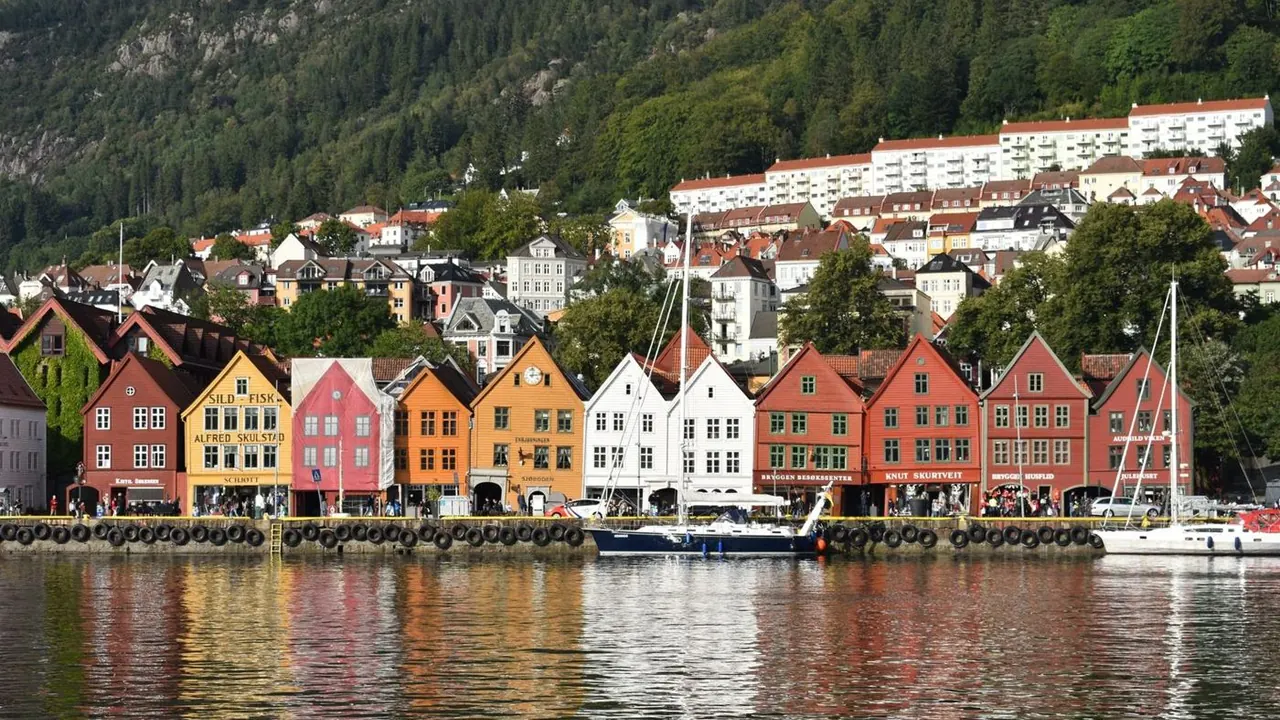
Bryggen across Vågen
- Nature & outdoors88
- Getting around74
- Families60
Photo: Abdullah Guc, Pexels License
Match
46
Every category weighted equally
- Beach & sun41
- Culture & arts49
- Food & nightlife45
- Family trip47
- Outdoors49
- Relax & unwind44
- Shopping & style47
- On a budget43
Bergen in twelve categories
Our verdict on each, scored 0 to 100 against the same fixed benchmark cities, so a score means the same thing on every page.
Beaches & swimming. Scores 20 out of 100.
Food & drink. Scores 47 out of 100.
Culture & sights. Scores 55 out of 100.
Nightlife. Scores 40 out of 100.
Nature & outdoors. Scores 88 out of 100.
Day trips. Scores 38 out of 100.
Good for families. Scores 60 out of 100.
Getting around. Scores 74 out of 100.
Shopping & style. Scores 33 out of 100.
Affordability. Scores 12 out of 100.
Live music & performing arts. Scores 58 out of 100.
Wellness & relaxation. Scores 32 out of 100.
Bergen category by category
Beaches & swimming
20Bergen sits on salt water, but this is no beach destination. The sea around the city peaks at about 15-17°C in a good summer, and the shore is rock, jetty and small pebble coves, not sand. Locals swim anyway. They jump off the bathing piers at Nordnes, swim from smooth rocks at spots along the fjord, and use the freshwater lakes in the hills behind the city on warm days.
A few bright weeks in July and August are the only real season, and even then the rain can come back. Treat a swim as a bracing Norwegian ritual, not the point of the trip. The heated outdoor seawater pool at Nordnes is the most comfortable way in.
Food & drink
47Seafood is the core of eating in Bergen: cod, salmon, shellfish, king crab, and the creamy Bergen fish soup that nearly every traditional kitchen serves. The fish market on the harbour is the obvious first stop, though it's more theatre than bargain. Better cooking is found in the small dining rooms around the old centre, where a few ambitious chefs build menus around fjord fish, mountain lamb and foraged produce. The local pastry is the skillingsbolle, a large cinnamon bun eaten with coffee.
The range is narrow beyond the Norwegian kitchen. The city is small, there's little street food, and eating out costs a lot at every level. Coffee is taken seriously, and craft beer is easy to find.
Culture & sights
55The defining sight is Bryggen, the row of steep-gabled timber merchant houses on the harbour that recalls the Hanseatic League. Its narrow wooden passages behind the facades are the most atmospheric part of the city. Next to it stand Bergenhus Fortress, the medieval Haakon's Hall and the Rosenkrantz Tower. The Hanseatic Museum and the Bryggens Museum explain the trading centuries.
Around the lake in the centre, the KODE art museums hold a fine collection of Norwegian painting, including major works by Munch and the landscape painters. On the southern edge of the city are Troldhaugen, Edvard Grieg's villa by the water, and the reconstructed Fantoft stave church. The wooden lanes of Nordnes and Sandviken are pleasant for a stroll. The whole set fits comfortably into two days.
Nightlife
40As a university city with a strong music identity, Bergen goes out more than its size suggests, mostly on Friday and Saturday. The bars cluster around the old centre, the streets behind the harbour and the area near the university. There are craft beer pubs, cocktail bars, cosy wooden-walled drinking rooms and a handful of clubs that stay open into the small hours.
Weeknights are quiet. Very high drink prices mean many locals start the evening at home, so places fill late. It's a friendly, informal scene, not a reason to visit.
Nature & outdoors
88Bergen is ringed by seven mountains, and the hiking starts in the streets above the harbour. The Fløibanen funicular climbs to Fløyen, with its forest trails and lakes, and the cable car rises to Ulriken. Between the two runs the Vidden ridge, a classic full-day walk over open mountain with views across the islands and out to the sea. The coast beyond the city breaks into skerries that are good for kayaking and boat trips.
The great fjord country lies to the east and north. Hardangerfjord, with its orchards and waterfalls, is within easy reach. The Sognefjord arms and the Nærøyfjord can be done as a long day by train and boat. The price is rain. Bergen is one of Europe's wettest cities, so pack proper waterproofs in any season.
Day trips
38Most outings from Bergen are journeys through scenery, not visits to other towns. The places themselves are small. Voss is a mountain town with a medieval stone church, about an hour and a quarter by train. The Hardangerfjord villages, such as Norheimsund and Utne, are known for cider farms and orchards. Rosendal has a 17th-century barony manor and gardens, reached by boat. Flåm is a tiny village at the head of the fjord with its famous mountain railway, and it makes a long day.
There is no second city within easy reach. Stavanger and Oslo are both too far for a comfortable return trip. Visitors interested in towns and heritage will find the list short.
Good for families
60Bergen is easy with children. The centre is safe and compact, and Norwegian culture is built around family life outdoors. The Bergen Aquarium at the tip of Nordnes has seals, penguins and sea life from the coast. VilVite is a hands-on science centre. The funicular ride up Fløyen is a treat in itself, and at the top there are playgrounds, a lake for canoeing and forest trails with wooden troll figures.
The main difficulty is the weather. Rain is frequent, so plan indoor options, and pack waterproof clothing for small children as locals do. Steep streets make pushchairs hard work in places. There are no theme parks, and the attractions can be covered in a few days.
Getting around
74The sights of central Bergen sit within walking distance of the harbour: Bryggen, the fish market, the museums around the lake and the Nordnes peninsula. The Bybanen light rail runs from the centre south to the airport and past Troldhaugen. Buses fill in the rest. The Fløibanen funicular and the Ulriken cable car do the climbing.
The steep lanes above the centre and frequent rain make walking slower than the distances suggest. For fjord trips, trains run east to Voss and express boats leave from the harbour, so a car is optional but makes the smaller villages easier to reach.
Shopping & style
33Shopping in Bergen is modest. The best finds are Norwegian: patterned wool sweaters, outdoor clothing, Scandinavian homeware and design, and handmade goods from the small craft workshops tucked into Bryggen's wooden passages. The main streets and a couple of shopping centres around the central square cover everyday fashion, and the harbour front has plenty of souvenirs. There's little luxury and few markets beyond the fish market, and prices are high.
Affordability
12Bergen is a very expensive place to visit. Restaurant meals, beer and wine, hotels and fjord excursions all cost well above most of Europe, and alcohol is especially dear. Budget travellers use supermarket meals, hostels or self-catering flats, and free hiking straight from town. The funicular, the museums and a day on the fjord add up quickly.
Live music & performing arts
58Music is part of Bergen's identity. The Bergen Philharmonic, whose roots go back to the 18th century, plays a full season in Grieghallen. In summer, Grieg's music is performed in the concert hall at Troldhaugen, his lakeside home. Den Nationale Scene is one of Norway's oldest theatres, where the young Ibsen once worked, and Bergen also has an opera company.
The calendar peaks in late spring with the Bergen International Festival of music, theatre and dance, followed by a jazz festival and a big outdoor rock and pop festival at the fortress. The city has produced a steady stream of indie and pop musicians, and there are small live venues around the centre. Outside the festivals, there's less going on.
Wellness & relaxation
32Bergen has no thermal springs and no historic bathing tradition. Relaxing here means the Nordic routine of a wood-fired sauna on the harbour followed by a plunge into the cold fjord, or a swim in the heated seawater pool at Nordnes. Beyond that, there are hotel spas and a few day spas.
The pace of the city helps more than its facilities. It's small and unhurried, with quiet wooden lanes, cafés where people linger and hill paths a short walk from the centre. Visitors should not expect a spa break.
When should you go?
Pick a month to see what it is like. The climate figures are measured averages, not a forecast.
Bergen in July
Daytime high, °C
Rainfall in the month, mm
The whole year
Shaded against this city’s own year: the deepest cell is its best month for that figure and the palest its weakest.
Temperature and rainfall are climate normals, averaged over the years shown. Bergen: 1991-2020 normals, Bergen / Florida (1.2 km from centre).
Before you go
| Measure | Bergen |
|---|---|
| Official language | Norwegian, Nynorsk, Bokmål, Sámi |
| Currency | Norwegian Krone (NOK) |
| Sockets | CF230 V, 50 Hz |
| Driving side | Right |
| Time zone | UTC+1, UTC+2 in summer |
| Emergency number | Police 112, ambulance 113, fire 110 |
| Elevation | 5 m |
| Main airport | Bergen Airport, Flesland (BGO)12 km from centre64 non-stop destinations |
| Public holidays this year | 13 days |
By the numbers
| Measure | Bergen |
|---|---|
| City population | 291,189 |
| People per km² | 3,339 |
| Museums within 10 km | 31 |
| UNESCO World Heritage sites within 50 km | 1 |
| Swim season, months above 21 °C | None |
Compare Bergen with
Every comparison with a written verdict behind it.