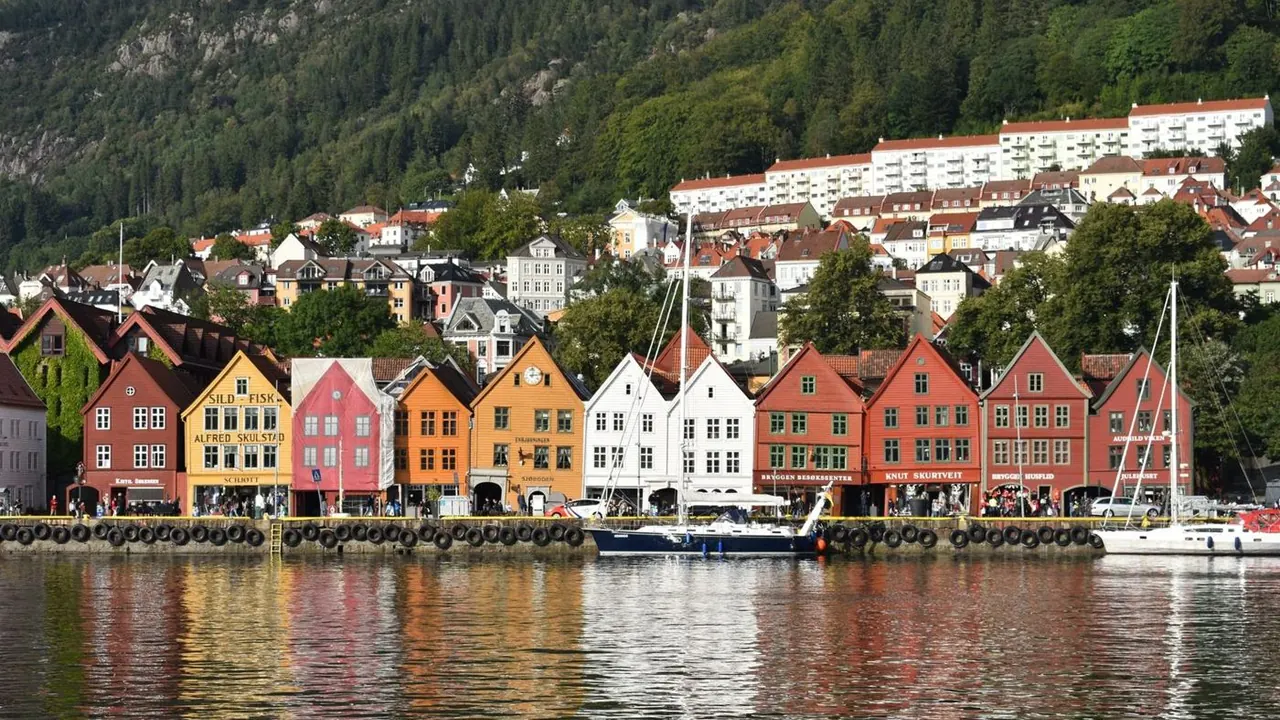
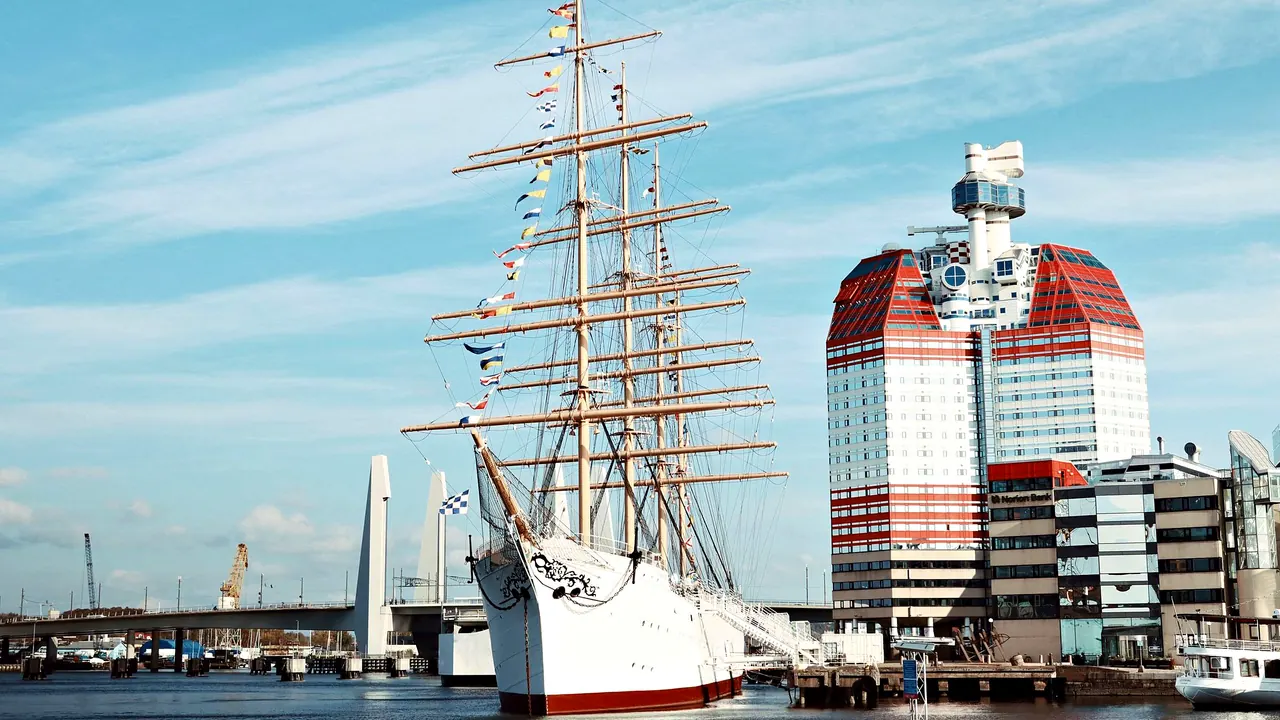
Photos: Bergen by Abdullah Guc, Pexels License; Gothenburg by Efrem Efre, Pexels License.
Bergen or Gothenburg?
Our verdict in twelve categories, each scored against the same fixed benchmark cities, and the climate month by month, so you can choose for your trip.
Choose Bergen for
- nature and the outdoors
- culture and sights
Bergen is the pick for travellers who want mountains and fjords on the doorstep. You can walk from the timber wharf at Bryggen to the funicular and be up on an open ridge by mid-morning, and the Hardangerfjord and Nærøyfjord are within a long day. It suits walkers and lovers of big landscapes who will put up with heavy rain and steep prices for that scenery, and who also want a compact dose of Hanseatic and Grieg heritage.
Choose Gothenburg for
- prices
- day trips
- families
Gothenburg makes the easier, broader city stay. It is flatter, drier, somewhat less costly and much better set up for children, with Liseberg and Universeum close to the centre. Its seafood halls, island ferries and coastal outings to places like Marstrand or Varberg also give more variety over a week. Families, food lovers and anyone who prefers sea and islands to mountain trails will get more out of it.
Scoreboard
Twelve categories on one fixed scale from 0 to 100. The shaded stretch is the gap between the two.
Your match
Pick a travel style or drag the sliders, and both match scores follow your weighting.
Wins on nature and the outdoors and culture and sights with your weighting.
Wins on prices and day trips with your weighting.
What matters to you?
Category by category
What the scores mean for a trip.
Beaches & swimming
Neither city is a beach destination, but Gothenburg gives a swimmer more. Its southern shore at Askim and Hovås and car-free islands such as Styrsö and Vrångö mix granite slabs with small sandy coves, and the Kattegat gets a couple of degrees warmer in high summer.
In Bergen you swim from rocks, jetties and pebble coves. The bathing piers and heated seawater pool at Nordnes are the main draw, the sea is colder and rain often follows. A swim in Bergen is a bracing ritual, while a sunny afternoon on Gothenburg's islands can be a real pleasure.
Food & drink
Both cities eat from the sea, but Gothenburg has more depth. Shrimp, langoustines, oysters and the autumn lobster come in off the Bohuslän coast, and Feskekôrka and Stora Saluhallen show what is in season. Its fine dining is unusually strong for a city of its size, and the cafés of Haga and Linnéstaden keep up a serious fika culture.
Bergen's table is narrower: fish soup, cod, king crab and a handful of ambitious dining rooms cooking fjord fish and mountain lamb, with a skillingsbolle alongside your coffee. The harbour fish market is more spectacle than everyday eating, and there is little beyond the Norwegian kitchen.
Culture & sights
Bergen has the more memorable sights. The wooden Hanseatic wharf at Bryggen, with its narrow passages, is a UNESCO World Heritage site. Bergenhus Fortress, Haakon's Hall, the KODE museums with their Munch works and Grieg's villa at Troldhaugen round out two coherent days.
Gothenburg is pleasant rather than famous. You get a 17th-century canal grid laid out by Dutch engineers, a good Nordic collection at the Museum of Art, the City Museum in the old East India Company building and the wooden houses of Haga. It rewards wandering more than a sightseeing list does.
Nightlife
Nights out are on a similar scale in both cities: friendly, mostly at weekends, expensive and quiet midweek. Gothenburg spreads a little wider, with the bigger bars and clubs on Avenyn, student pubs and dive bars around Järntorget and Andra Långgatan, and terraces on summer evenings. Bergen is smaller and cosier, with wooden-walled drinking rooms and craft beer pubs behind the harbour that fill late because locals start the evening at home.
Nature & outdoors
This is where Bergen pulls well ahead. The hiking starts above the harbour, with the Fløibanen funicular up to Fløyen, the cable car to Ulriken and the open Vidden ridge between them. Beyond lie the orchards of the Hardangerfjord and the Nærøyfjord, some of Norway's best-known scenery.
Gothenburg's outdoors is flatter and shaped by the sea: bare granite islands with heather and coastal paths, sea kayaking and sailing, the Delsjön lakes for woodland walks and the start of the Bohusleden trail. It is lovely and easy going, but there are no mountains. The price of Bergen's grandeur is near-constant rain.
Day trips
Gothenburg has more places to visit for a day. Marstrand's wooden villas under Carlsten fortress, Varberg's seaside fortress, the Bohus ruins at Kungälv and the canal locks at Trollhättan are all close. With a car, the Bohuslän fishing villages and the Tanum rock carvings come within reach too.
From Bergen, outings are mostly journeys through scenery to small places: Voss by train, the cider orchards of the Hardangerfjord, the Rosendal barony by boat, or a long day to Flåm and its mountain railway. The scenery is beautiful, but the list is short on towns and heritage.
Good for families
Gothenburg is the better family base by some distance. Liseberg, Scandinavia's largest amusement park, sits beside Universeum with its aquarium and indoor rainforest. Slottsskogen has a free animal park, and at the ship museum children can climb through a submarine.
Bergen is safe and welcoming for children too, with its aquarium, the VilVite science centre, and the troll trails and canoeing lake at the top of Fløyen. But it has no theme park, rain often sends you indoors, and the steep lanes make pushchairs hard work.
Getting around
Both cities are easy without a car, but you get around them differently. Gothenburg's centre is flat, and its large tram network reaches almost everything on one ticket, which also covers the buses and the archipelago ferries.
Bergen's sights cluster round the harbour within a short walk. The Bybanen light rail runs to the airport, and the funicular and cable car do the climbing, though hills and rain slow you down on foot. For fjord trips you can rely on trains and express boats, whereas in Gothenburg a car only helps for the remote villages up the coast.
Shopping & style
Gothenburg is the better place to shop. Kungsgatan gives a long pedestrian run of Swedish and Nordic labels and Nordstan has the chains. Haga, Linnéstaden, Majorna and Andra Långgatan are good for browsing vintage, records and independent design.
Bergen is modest. The best finds are Norwegian wool sweaters, outdoor gear, Scandinavian homeware and pieces from the craft workshops in Bryggen's passages, while the harbour front is mostly souvenirs. Neither city has much luxury.
Affordability
Both are expensive, but Bergen is harder on the wallet. Meals, alcohol, hotels and fjord excursions there cost well above most of Europe, and budget travellers rely on supermarkets, hostels and the free hiking straight from town.
Gothenburg is dear rather than punishing. Picnics on the rocks and the fact that the transport ticket covers the island ferries make money go further. Hotel rates can drop at weekends and in the Swedish summer, when business travel falls away.
Live music & performing arts
The two are evenly matched, but their strengths differ. Bergen leans on heritage and festivals: the Bergen Philharmonic in Grieghallen, summer Grieg concerts at Troldhaugen, Den Nationale Scene where the young Ibsen worked, and a festival season peaking in late spring, with quieter months outside it.
Gothenburg's programme is steadier through the year. It rests on the Gothenburg Symphony Orchestra at Konserthuset and on opera and contemporary dance at GöteborgsOperan, with a deep indie and metal club circuit and the Way Out West festival in August.
Wellness & relaxation
Neither city offers a real spa break, but Gothenburg has a little more. Valhallabadet has pools and saunas in a large public bath, the sauna-and-sea-plunge habit runs along its jetties, and fika, big parks and a slow ferry to the islands do the rest.
In Bergen, relaxing means a wood-fired sauna on the harbour followed by a plunge into the fjord, the seawater pool at Nordnes, or a hotel spa. Its quiet wooden lanes are calming, but there are fewer facilities.
When should you go?
Pick your month. The climate figures are measured averages, not a forecast.
Bergen in July
Gothenburg in July
Daytime high, °C
Rainfall in the month, mm
Temperature and rainfall are climate normals, averaged over the years shown. Bergen: 1991-2020 normals, Bergen / Florida (1.2 km from centre). Gothenburg: 1991-2020 normals, Goteborg Save Airport (9.8 km from centre).
Both cities have a short northern summer from June to August, when daytime highs reach about 20°C and swimming becomes possible for the hardy. The real difference is rain. Bergen is wet all year and very wet from late summer through winter, with autumn and early winter months bringing well over 250mm each. May and June are its driest and most reliable months for hiking, though nothing is guaranteed. The sea stays cool and peaks around 16°C in August.
Gothenburg gets a fraction of that rain in every month and is the sunnier choice in summer, with July bringing around 239 hours of sunshine. The Kattegat warms to about 18°C in July and August, which is enough for a dip off the rocks. Its winters are a little colder than Bergen's and very dark, with little sun from November to January, so May to September is the best window for both.
Which traveller are you?
For an outdoors trip, Bergen is the stronger choice. Seven mountains rise straight from the streets, the Vidden ridge makes a classic day walk, and the great fjords are reachable by train and boat. Gothenburg has gentler island paths and kayaking, but no mountains.
On a family trip with children, Gothenburg wins clearly. Liseberg amusement park and Universeum are a short walk from the centre, the Slottsskogen animal park is free, and the flat streets suit buggies. Bergen's aquarium and the Fløyen playgrounds fill only a few days.
On a tight budget, Gothenburg is the easier city, though neither is cheap. Weekday set lunches, a single transport ticket that includes the island ferries, and good-value museums all help. Bergen ranks among Europe's dearest places, where meals, drinks and fjord trips add up fast.
Before you go
| Measure | Bergen | Gothenburg |
|---|---|---|
| Official language | Norwegian, Nynorsk, Bokmål, Sámi | Swedish |
| Currency | Norwegian Krone (NOK) | Swedish Krona (SEK) |
| Sockets | CF230 V, 50 Hz | CF230 V, 50 Hz |
| Driving side | Right | Right |
| Time zone | UTC+1, UTC+2 in summer | UTC+1, UTC+2 in summer |
| Emergency number | Police 112, ambulance 113, fire 110 | 112 |
| Elevation | 5 m | 12 m |
| Main airport | Bergen Airport, Flesland (BGO)12 km from centre64 non-stop destinations | Göteborg Landvetter Airport (GOT)19 km from centre79 non-stop destinations |
| Public holidays this year | 13 days | 16 days |
By the numbers
| Measure | Bergen | Gothenburg |
|---|---|---|
| City population | 291,189 | 674,529 |
| People per km² | 3,339 | 2,484 |
| Museums within 10 km | 31 | 39 |
| UNESCO World Heritage sites within 50 km | 1 | 0 |
| Swim season, months above 21 °C | None | None |
Where else could you go?
Every comparison below shares a destination with this one, so you can follow Bergen or Gothenburg somewhere new.
- Stavangervs Bergen
- Aarhusvs Gothenburg
- Copenhagenvs Gothenburg
- Malmovs Gothenburg
- Oslovs Gothenburg
- Oslovs Bergen