Norway
Stavanger
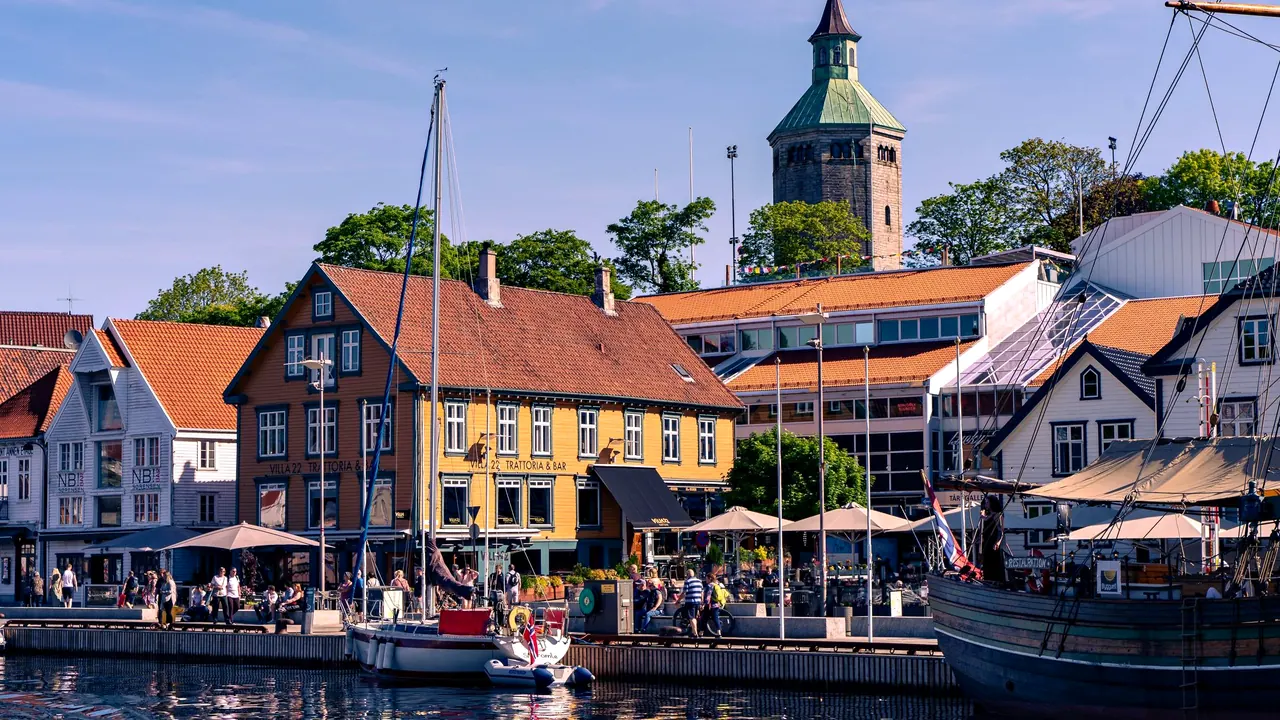
Vågen harbour with its coloured warehouses on a summer day
- Nature & outdoors85
- Getting around64
- Families60
Photo: Adam Cole, Pexels License
Match
42
Every category weighted equally
- Beach & sun40
- Culture & arts42
- Food & nightlife40
- Family trip45
- Outdoors46
- Relax & unwind42
- Shopping & style41
- On a budget39
Stavanger in twelve categories
Our verdict on each, scored 0 to 100 against the same fixed benchmark cities, so a score means the same thing on every page.
Beaches & swimming. Scores 28 out of 100.
Food & drink. Scores 45 out of 100.
Culture & sights. Scores 40 out of 100.
Nightlife. Scores 35 out of 100.
Nature & outdoors. Scores 85 out of 100.
Day trips. Scores 30 out of 100.
Good for families. Scores 60 out of 100.
Getting around. Scores 64 out of 100.
Shopping & style. Scores 30 out of 100.
Affordability. Scores 12 out of 100.
Live music & performing arts. Scores 42 out of 100.
Wellness & relaxation. Scores 35 out of 100.
Stavanger category by category
Beaches & swimming
28South of the city the flat Jæren coast is lined with long sandy beaches backed by dunes and grassland. Sola, Hellestø, Orre and Brusand are between twenty minutes and an hour away. They are handsome, open and rarely crowded, and the surfers come when the westerly swell builds. The water is the North Sea, though, and even in a warm July it seldom gets above about 17°C. Wind often makes a beach day a walk rather than a swim.
Locals take quick dips from rocks and jetties around the fjord, and families sunbathe on warm days. Beach life is a pleasant extra in high summer, not a reason to come.
Food & drink
45Stavanger eats from the sea and the farmland around it. Expect shrimp, cod, mackerel and fish soup by the harbour, lamb from the Ryfylke hills, and Jæren strawberries and vegetables in summer. The fine-dining tier is ambitious for a city this size, with tasting menus built on local produce. Every summer the Gladmat food festival fills the quays around Vågen with stalls.
Below that top level the choice narrows quickly. Much of the harbourfront is solid but predictable, and eating out is expensive at every level. Coffee culture is good in the Norwegian way, with careful light roasts and cinnamon buns. Beer is mostly drunk as craft ales in small bars.
Culture & sights
40The heart of the city is Gamle Stavanger, a slope of white wooden houses from the 18th and 19th centuries running down to the harbour. It is one of the best-preserved timber quarters in northern Europe, and the Norwegian Canning Museum in one of its old factories tells the story of the sardine trade that built it. Stavanger Cathedral, begun in the early 12th century, is the oldest Norwegian cathedral to keep its medieval character.
The Norwegian Petroleum Museum, on the waterfront, explains the industry that made the modern city rich. At Hafrsfjord, three giant bronze swords set in the rock mark the Viking battle of 872. The art museum, the archaeological museum and a pair of merchant villas round out a compact list that takes two days.
Nightlife
35Going out is concentrated in a few streets. There is Øvre Holmegate, the painted lane of small bars, plus the quays around Vågen and Skagenkaien, where pubs and cocktail bars spill outdoors on light summer evenings. On Friday and Saturday nights the oil-industry crowd and students fill the centre, and a handful of clubs keep going into the small hours.
The rest of the week is subdued. Alcohol prices make a long night costly, and many locals drink at home before heading out. It suits a relaxed evening of harbour bars rather than a clubbing trip.
Nature & outdoors
85This is the main reason to come. The Lysefjord cuts deep into the mountains just east of the city, its granite walls rising almost a kilometre from the water. Preikestolen, the flat-topped cliff above it, is about an hour away by road through the tunnels under the fjord, and the walk up takes a couple of hours. Kjerag, with its boulder wedged in a crevice high above the water, is a longer and harder day. Sightseeing boats run up the fjord from the harbour beneath waterfalls and sheer rock.
Closer in, Dalsnuten gives an easy summit view over the city and the islands. The Jæren coast offers long walks through dunes, lighthouses and birdlife, and kayaking and island-hopping by boat are easy in the sheltered waters of Ryfylke. Rain is frequent at any time of year, and the high trails are best from June to September.
Day trips
30Most excursions from Stavanger are into landscape, and the list of towns and heritage sites is short. Utstein Abbey, Norway's best-preserved medieval monastery, sits on an island about half an hour north by road. Egersund, a white wooden town with a faience-pottery museum, is about an hour south by train along the Jæren coast.
Haugesund and nearby Avaldsnes, with its medieval church and reconstructed Viking farm, make a fuller day about two hours north, including a ferry. Fast boats also reach the small island communities of Ryfylke, pleasant for a quiet wander rather than for sightseeing.
Good for families
60Stavanger is calm, safe and easy with children, and Norwegian culture makes room for them everywhere. On the waterfront, the Petroleum Museum has a playground built from salvaged oil equipment, and there is a dedicated children's museum in the city. The hands-on science centre in neighbouring Sandnes is good for a rainy day. Kongeparken, a family amusement park, lies about twenty minutes' drive south.
In summer the Jæren beaches offer sand and dunes to run about in. Preikestolen is a classic hike for school-age children who are used to walking. Rainy spells and the cost of everything are the main drawbacks.
Getting around
64The centre is small enough to cross on foot in a quarter of an hour, with the old town, the cathedral and the museums clustered around the harbour. Buses cover the suburbs and the airport, a local train runs south through Sandnes along the Jæren coast, and fast boats link the islands and fjord villages.
The catch is the countryside. Seasonal buses go to the Preikestolen trailhead, but for Kjerag, the outer beaches or any flexibility on the fjord side most visitors hire a car. Expect road tolls and tunnels rather than traffic.
Shopping & style
30Shopping is modest. A few pedestrian streets around the cathedral and the harbour hold Norwegian chains, outdoor clothing, knitwear and some design and homeware shops. The painted streets near Øvre Holmegate add a few small independents. Large malls sit out in the suburbs, and prices are high across the board. Good wool sweaters and outdoor gear are the things worth buying.
Affordability
12Stavanger is expensive in the way Norway is expensive. Restaurant meals, a beer, a taxi or a fjord cruise all cost well above European norms, and wealth from the oil industry keeps local prices high. Hotels aimed at business travellers are sometimes cheaper at weekends and in high summer. Supermarket picnics and free hikes are how most visitors keep the bill down, and the landscape itself costs nothing.
Live music & performing arts
42The Stavanger Konserthus by the water at Bjergsted is an excellent hall and home to the Stavanger Symphony Orchestra, which gives a regular season of concerts. Rogaland Teater stages Norwegian-language drama, and the same Bjergsted area hosts smaller concerts and music schools.
The calendar peaks with two long-running festivals, MaiJazz in spring and a chamber-music festival in late summer. Outside those, the offer is that of a well-funded regional city: good evenings out, but not a reason to plan a trip.
Wellness & relaxation
35Stavanger offers the Nordic routine of sauna and cold sea. Public saunas on the harbour and around the fjord let visitors heat up and plunge into water that rarely passes 17°C, and Gamlingen, a heated outdoor pool near the centre, is a local institution in all weathers. Beyond that, spas are mostly found in hotels. The city's unhurried pace and long summer evenings by the water make it easy to slow down, but it has no wider spa or bathing culture to plan a trip around.
When should you go?
Pick a month to see what it is like. The climate figures are measured averages, not a forecast.
Stavanger in July
Daytime high, °C
Rainfall in the month, mm
The whole year
Shaded against this city’s own year: the deepest cell is its best month for that figure and the palest its weakest.
Where the figures come from
Stavanger has no rain gauge within 25 km of the centre, so its rainfall comes from a gridded climate dataset read at the city rather than from a gauge further away.
Temperature and rainfall are climate normals, averaged over the years shown. Stavanger: 2008-2020 (rainfall 1991-2020) normals, Stavanger Vaaland / Ullandhaug (1.5 km from centre).
Before you go
| Measure | Stavanger |
|---|---|
| Official language | Norwegian, Nynorsk, Bokmål, Sámi |
| Currency | Norwegian Krone (NOK) |
| Sockets | CF230 V, 50 Hz |
| Driving side | Right |
| Time zone | UTC+1, UTC+2 in summer |
| Emergency number | Police 112, ambulance 113, fire 110 |
| Elevation | 15 m |
| Main airport | Stavanger Airport, Sola (SVG)12 km from centre32 non-stop destinations |
| Public holidays this year | 13 days |
By the numbers
| Measure | Stavanger |
|---|---|
| City population | 129,300 |
| People per km² | 3,131 |
| Museums within 10 km | 13 |
| UNESCO World Heritage sites within 50 km | 0 |
| Swim season, months above 21 °C | None |
Compare Stavanger with
Every comparison with a written verdict behind it.