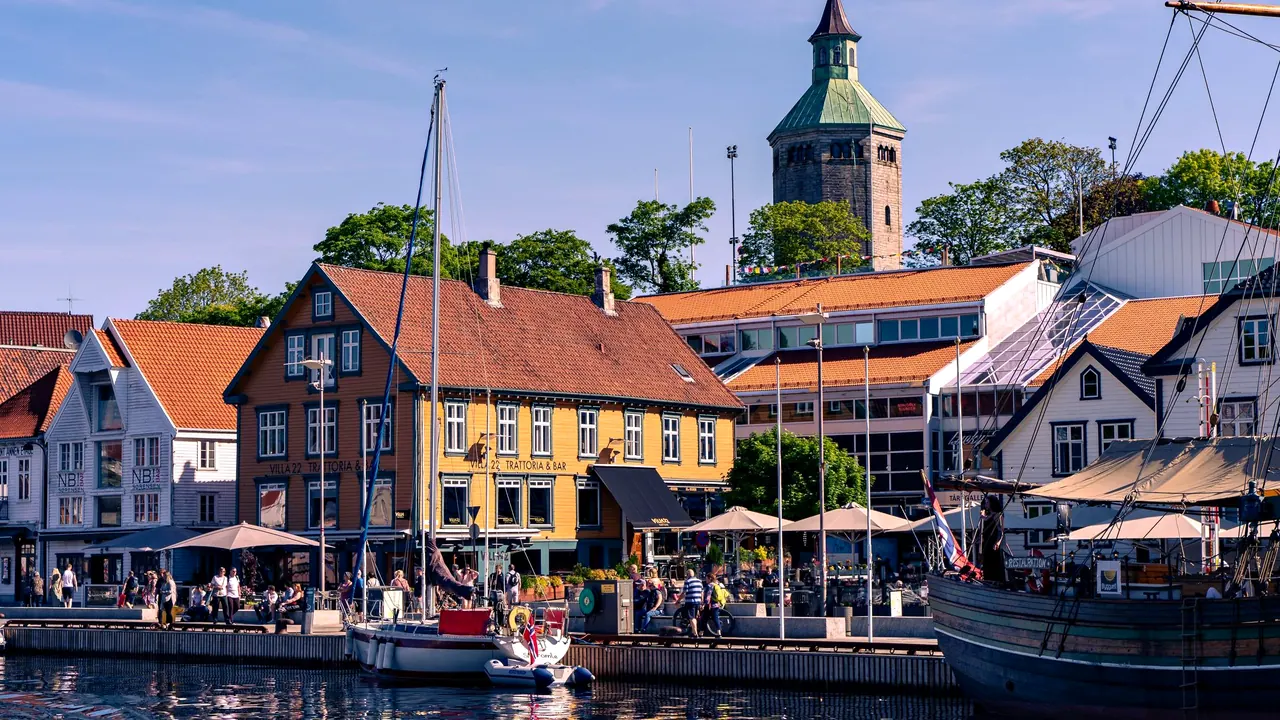
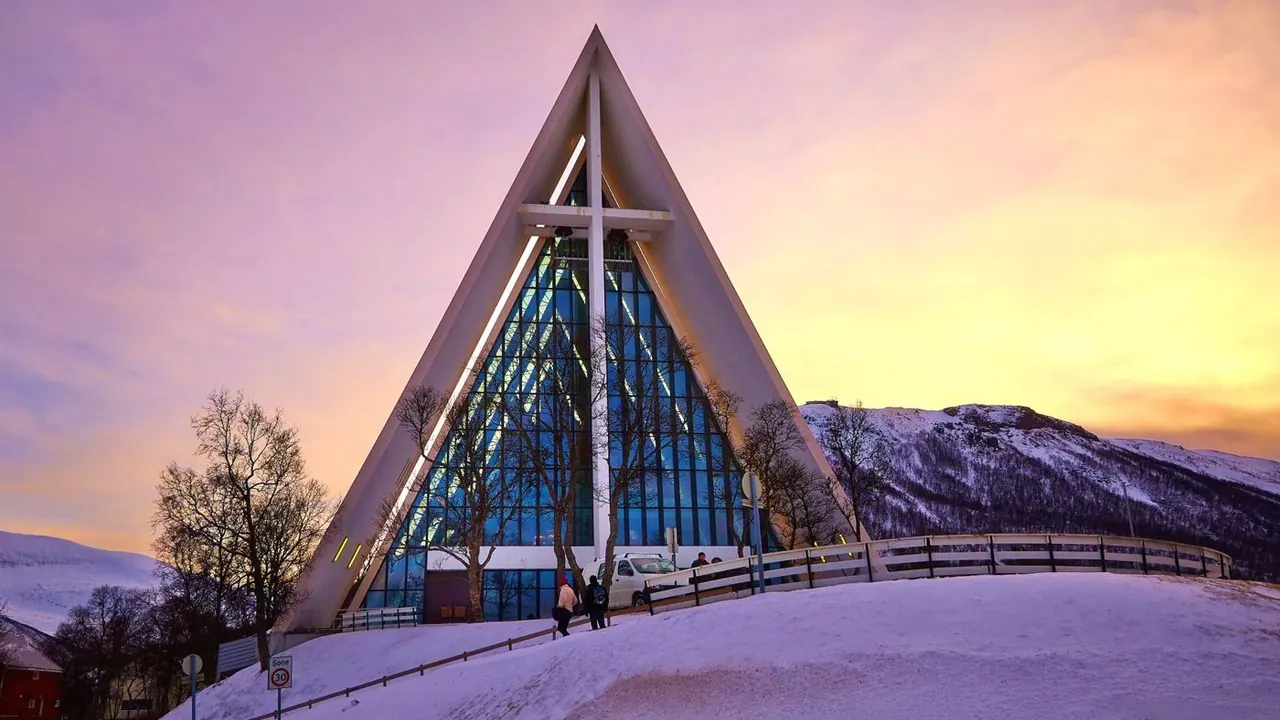
Photos: Stavanger by Adam Cole, Pexels License; Tromso by Moyan Brenn, CC BY 2.0, cropped.
Stavanger or Tromso?
Our verdict in twelve categories, each scored against the same fixed benchmark cities, and the climate month by month, so you can choose for your trip.
Choose Stavanger for
- beaches
- day trips
- families
Stavanger suits a summer trip that mixes a real town with fjord country. It has a well-kept old timber quarter, a cathedral that still feels medieval, better restaurants and concerts, and Preikestolen about an hour away by road. It is also the easier choice with children, and it gives you more to do on a wet day.
Choose Tromso for
- nature and the outdoors
- nightlife
- wellness
Pick Tromso if the Arctic itself is the point. You get northern lights from late autumn to early spring, whales and dog sledding in winter, and midnight-sun hikes in summer. The landscape is wilder than Stavanger's and the experiences are rarer, while the town has little beyond a few museums and the Arctic Cathedral. Plan your days around tours rather than streets.
Scoreboard
Twelve categories on one fixed scale from 0 to 100. The shaded stretch is the gap between the two.
Your match
Pick a travel style or drag the sliders, and both match scores follow your weighting.
Wins on beaches and day trips with your weighting.
Wins on nature and the outdoors and nightlife with your weighting.
What matters to you?
Category by category
What the scores mean for a trip.
Beaches & swimming
Neither city is a beach destination, but Stavanger does have proper beaches. The long sandy strands of Jæren, at Sola, Orre and Brusand, are backed by dunes and get surf when the westerly swell builds. On a warm July day a cold swim is possible.
Tromso's sea stays several degrees colder. Telegrafbukta and the white sands of Sommaroy are places to look at, or for a quick plunge between sauna rounds, not for an afternoon on a towel.
Food & drink
Both cities cook from the sea, but Stavanger has the wider table. Its farmland adds Ryfylke lamb and Jæren strawberries to the shrimp and cod, its fine-dining kitchens aim higher, and the Gladmat festival turns the Vågen quays into a summer food market.
Tromso's draw is the Arctic larder: skrei cod in late winter, king crab, reindeer and cloudberries, eaten along the old wooden quays, with a nineteenth-century brewery at the centre of local drinking. Below that the choice thins out faster than in Stavanger, and both cities are costly to eat in.
Culture & sights
Stavanger has more history to walk through. Gamle Stavanger's slope of white wooden houses, a cathedral that keeps its medieval character and the Viking swords at Hafrsfjord give it real depth, and the Canning and Petroleum museums tell how the city made its money.
Tromso is a mostly modern town, and its one great landmark is the Arctic Cathedral across the bridge. The Polar Museum's story of Amundsen and Nansen and the Sami collections at Tromso Museum are worth a morning, but there is less to see overall.
Nightlife
Both are small scenes that come alive mainly at weekends, and both are expensive. Stavanger's evenings lean towards bars: the painted lane of Øvre Holmegate and the quayside terraces on Vågen and Skagenkaien, filled by oil workers and students.
Tromso's student crowd pushes a little harder on the late dance floors around Storgata. In midsummer the light never fades, which gives its weekend nights an odd, sleepless feel that Stavanger can't match.
Nature & outdoors
Both are outdoor destinations first, and Tromso comes out ahead. Stavanger has the Lysefjord's granite walls, which rise almost a kilometre from the water, the Preikestolen and Kjerag hikes, and gentle coastal walks on Jæren, all best from June to September.
Tromso offers things no southern fjord can. Winter brings the northern lights, orcas and humpbacks, dog sledding, and ski touring in the Lyngen Alps, while summer brings midnight-sun hikes and kayaking among the skerries. In effect it is two different trips depending on the season.
Day trips
Stavanger has a handful of real places to visit. Utstein Abbey, Norway's best-preserved medieval monastery, is half an hour north. Egersund's wooden streets and pottery museum are an hour away by train, and Avaldsnes with its Viking farm makes a fuller day.
From Tromso the only outings to somewhere are fishing hamlets such as Sommaroy and the old trading post at Hillesoy. A spare day there usually goes on another fjord or aurora tour instead.
Good for families
Both cities are safe and relaxed with children, but Stavanger gives them more to do. Kongeparken, the children's museum, the playground at the Petroleum Museum and the science centre in Sandnes cover both sunny and rainy days, and the Jæren dunes make a summer playground.
In Tromso, the Polaria aquarium and the husky rides are what children remember. Even so, the winter cold, the midwinter darkness and the late-night aurora tours make it harder going with young children.
Getting around
There is little to choose between them. You can cross either centre on foot in a quarter of an hour, and in both you need a car or a tour to reach the landscape. Stavanger has more options, with a local train down the Jæren coast, fast boats to Ryfylke and seasonal buses to Preikestolen, while Tromso's steep streets turn icy in winter and its fjords are mostly reached on organised tours.
Shopping & style
Neither is a place to shop, but Stavanger has a little more on offer. Its pedestrian streets around the cathedral hold Norwegian chains and design and homeware shops, with small independents near Øvre Holmegate. Tromso's Storgata is practical: thermal layers, Sami crafts, knitwear and little else. In both, a good wool sweater or outdoor gear is the thing worth buying.
Affordability
Both cost what Norway costs, so neither is the cheaper choice. In Stavanger, oil wealth keeps restaurants, drinks and taxis expensive, though business hotels can be cheaper at weekends and in high summer.
In Tromso the bill climbs with the excursions: whale safaris, sledding and aurora tours add up quickly, and hotels charge more in the aurora season. Picnics and free hikes help in Stavanger, and a self-catering flat plus hunting the lights yourself from the hills helps in Tromso.
Live music & performing arts
Stavanger has the stronger music life. The Konserthus at Bjergsted is an excellent hall and home to the symphony orchestra, and the year peaks with MaiJazz in spring and a chamber-music festival in late summer.
Tromso's programme is smaller but has its own character: the Arctic Philharmonic, the Northern Lights Festival in midwinter, a film festival each January, and midnight concerts in the Arctic Cathedral in summer.
Wellness & relaxation
Both cities unwind the Nordic way, with a sauna and a cold plunge, and neither has much spa life beyond hotels. Tromso's floating saunas in the harbour look across to snowy peaks, and a large swimming hall helps on dark afternoons, though aurora nights and early tours leave little time for rest. Stavanger has Gamlingen, its heated outdoor pool, and long summer evenings by the water that make slowing down easier.
When should you go?
Pick your month. The climate figures are measured averages, not a forecast.
Stavanger in July
Tromso in July
Daytime high, °C
Rainfall in the month, mm
Where the figures come from
Stavanger has no rain gauge within 25 km of the centre, so its rainfall comes from a gridded climate dataset read at the city rather than from a gauge further away.
Temperature and rainfall are climate normals, averaged over the years shown. Stavanger: 2008-2020 (rainfall 1991-2020) normals, Stavanger Vaaland / Ullandhaug (1.5 km from centre). Tromso: 1991-2020 normals, Tromso (0.9 km from centre).
Stavanger has the milder climate all year. Summer days reach about 19°C in July and August, pleasant for the streets and the high trails, but the North Sea stays chilly and any swim is a brisk one. April and May are the driest months, with June close behind. From August the rain builds to a peak of 164mm in October, and winter is grey and wet rather than truly cold.
Tromso swings to extremes. Daytime highs stay below freezing from December to February, and December gets no sunshine at all, the long dark that the aurora trips depend on. Summer is cool, topping out near 16°C in July, but May to July is bright, with about 257 hours of sun in June, and the sea barely reaches 10°C. Early summer is the driest time in both cities, but only Tromso makes sense for a deep-winter trip.
Which traveller are you?
On a culture and arts trip, choose Stavanger. The medieval cathedral, the timber lanes of Gamle Stavanger and a symphony orchestra with a regular season give it real depth. Tromso has the striking Arctic Cathedral and its polar history, but in a mostly modern town with less to see.
On a family trip with young children, Stavanger is the gentler choice. It has a milder climate and attractions built for children, whatever the weather. Tromso's snow adventures thrill older children, but its winter asks a lot of small ones.
For an outdoors trip, Tromso is the bolder choice. Stavanger has the Lysefjord and the classic Preikestolen hike, but its high trails are best from June to September. Tromso works in every season, with northern lights, whales and sledding you cannot find further south.
Before you go
| Measure | Stavanger | Tromso |
|---|---|---|
| Official language | Norwegian, Nynorsk, Bokmål, Sámi | Norwegian, Nynorsk, Bokmål, Sámi |
| Currency | Norwegian Krone (NOK) | Norwegian Krone (NOK) |
| Sockets | CF230 V, 50 Hz | CF230 V, 50 Hz |
| Driving side | Right | Right |
| Time zone | UTC+1, UTC+2 in summer | UTC+1, UTC+2 in summer |
| Emergency number | Police 112, ambulance 113, fire 110 | Police 112, ambulance 113, fire 110 |
| Elevation | 15 m | 20 m |
| Main airport | Stavanger Airport, Sola (SVG)12 km from centre32 non-stop destinations | Tromsø Airport (TOS)4 km from centre49 non-stop destinations |
| Public holidays this year | 13 days | 13 days |
By the numbers
| Measure | Stavanger | Tromso |
|---|---|---|
| City population | 129,300 | 79,943 |
| People per km² | 3,131 | 32 |
| Museums within 10 km | 13 | 8 |
| UNESCO World Heritage sites within 50 km | 0 | 0 |
| Swim season, months above 21 °C | None | None |
Where else could you go?
Every comparison below shares a destination with this one, so you can follow Stavanger or Tromso somewhere new.
- Bergenvs Stavanger
- Oslovs Stavanger
- Gothenburgvs Stavanger
- Aarhusvs Stavanger
- Rovaniemivs Tromso
- Aberdeenvs Stavanger