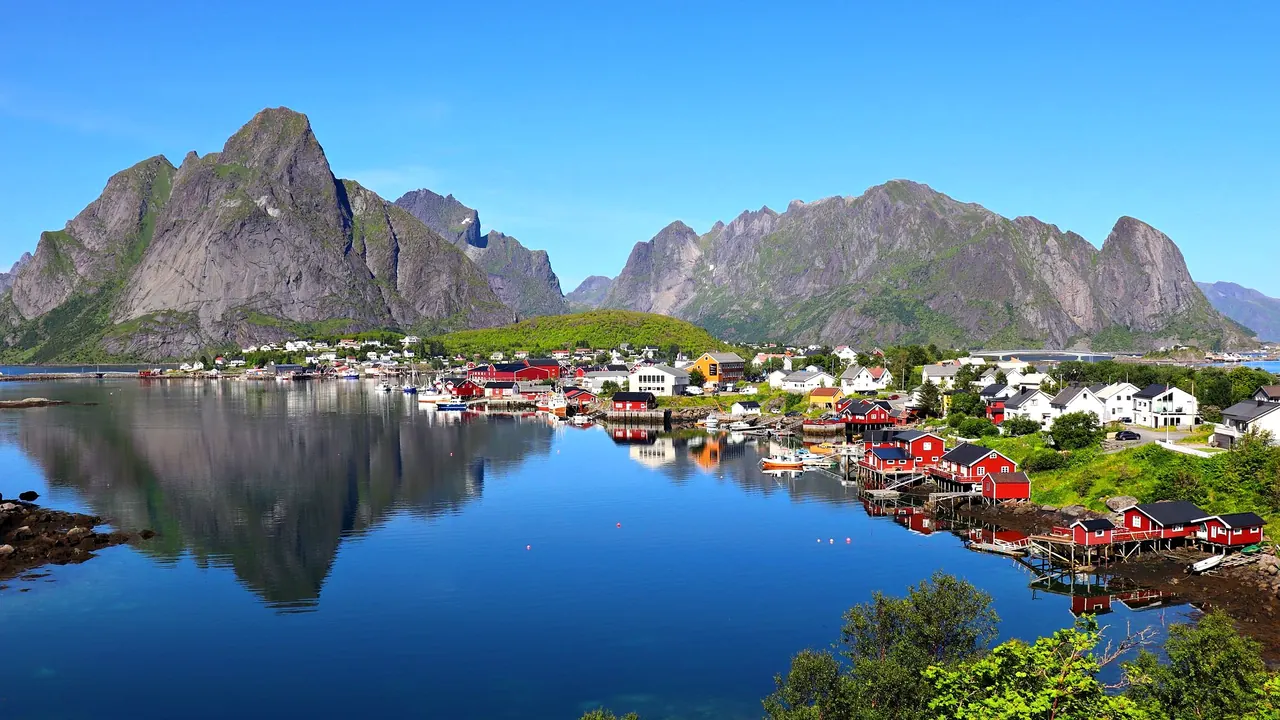
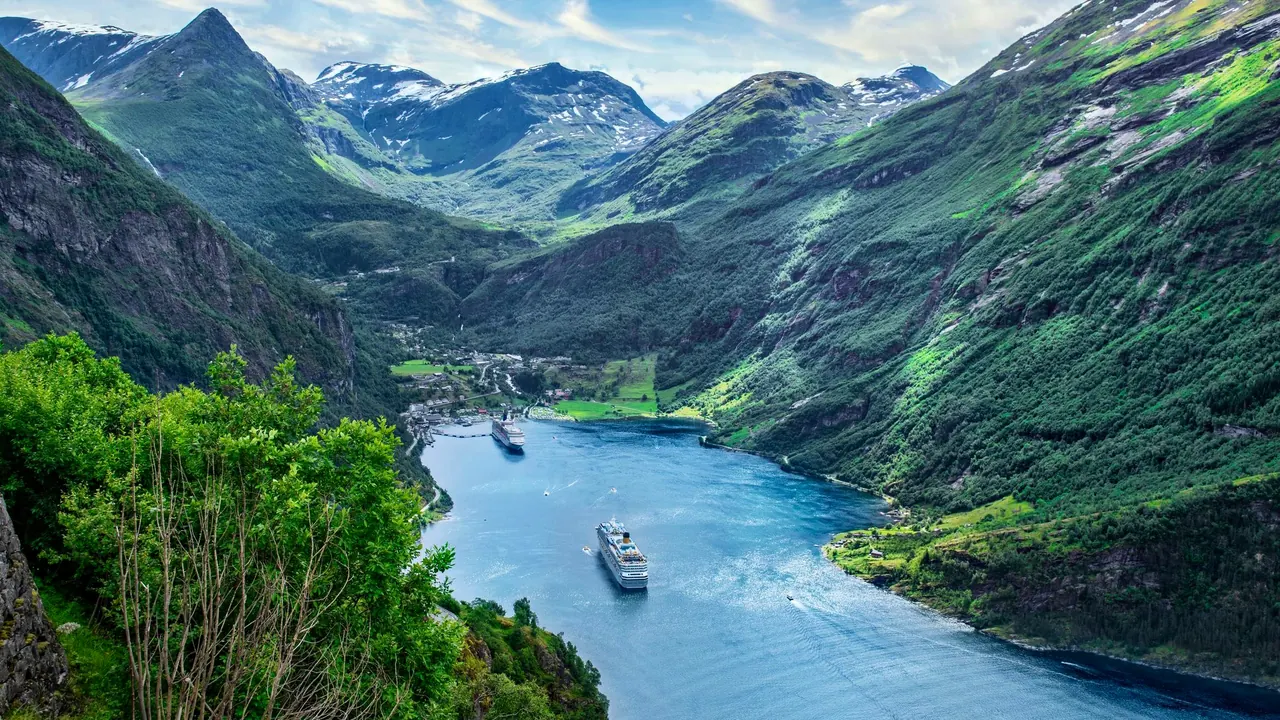
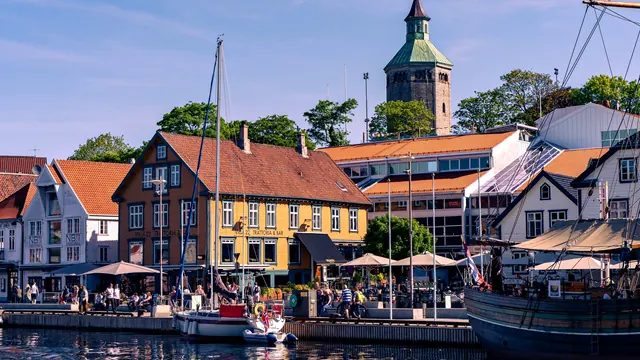
Photos: Lofoten by Mario Vogt, Pexels License; Norwegian Fjords by Enrique, Pexels License.
Lofoten or Norwegian Fjords?
Our verdict in twelve categories, each scored against the same fixed benchmark cities, and the climate month by month, so you can choose for your trip.
Choose Lofoten for
- beaches
Lofoten suits travellers who want a single landscape and want to be in it all day: granite peaks rising straight from the sea, pale beaches under the ridges, short steep hikes from the village door and, in winter, the northern lights over the harbours. It is a compact island chain you can drive end to end in an afternoon, but it gives you very little to do apart from the outdoors, so it works best for active couples and hikers who are happy to cook in a rorbu cabin and go to bed early.
Choose Norwegian Fjords for
- live music and the arts
- nightlife
- day trips
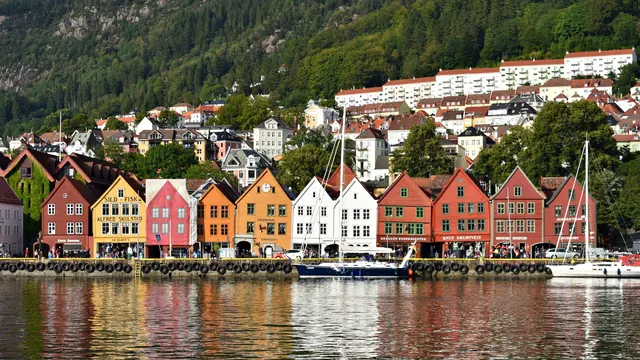
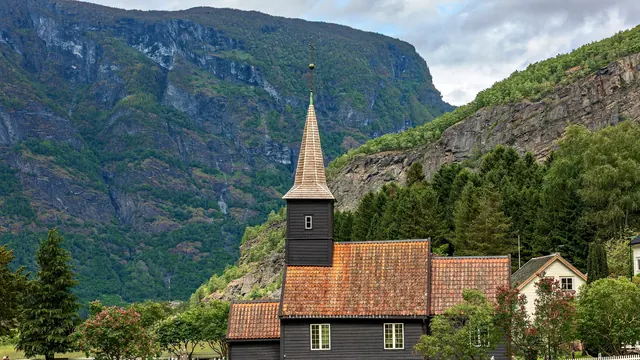
The Norwegian Fjords make a broader and more varied trip. The scenery is just as overwhelming, with glaciers, waterfalls and sheer walls of rock, and Bergen adds what Lofoten lacks: Bryggen, galleries, a great orchestra, proper restaurants and a few nights out. With train and boat routes, aquariums and stave churches, it is the easier choice for families, first-time visitors to Norway and anyone who wants culture between the hikes.
Scoreboard
Twelve categories on one fixed scale from 0 to 100. The shaded stretch is the gap between the two.
Your match
Pick a travel style or drag the sliders, and both match scores follow your weighting.
Wins on beaches with your weighting.
Wins on live music and the arts and nightlife with your weighting.
What matters to you?
Category by category
What the scores mean for a trip.
Beaches & swimming
Lofoten has the better beaches, as places at least. Haukland, Uttakleiv, Ramberg and Skagsanden are wide curves of pale sand with turquoise water and peaks behind, and Kvalvika rewards the walk in. The sea stays cold all summer, so they suit picnics, photographs and a plunge rather than a day of swimming.
The fjords themselves are rock, quays and wooded slopes, and the real sand is on the open coast at Jæren near Stavanger, far from the dramatic scenery. In a warm spell, though, the sheltered inner fjords can feel less harsh than Lofoten's open sea for a swim off a jetty.
Food & drink
The fjords eat better, mainly because they have Bergen and Stavanger, with fish soup counters, Nordic tasting menus and the harbour fish market. Hardanger adds cider farms, orchards and roadside cherries in July, so the food is about more than fish.
Lofoten's cooking is narrower but deeply rooted: stockfish dried on wooden racks, cod tongues, fish soup and, in late winter, the skrei catch at its best. Restaurants are few and scattered, so many visitors buy fish straight off the quay and cook it in their cabin.
Culture & sights
Lofoten tells one story, and tells it well: the winter cod fishery, which you can see in the rorbuer lining every harbour, the preserved trading post at Nusfjord and the fishing village and stockfish museums at Å. The Lofotr longhouse at Borg adds a Viking chapter. Beyond that, Vågan Church at Kabelvåg and a few galleries fill a rainy afternoon or two.
Across the fjords the past comes in many more layers. In Bergen, Håkon's Hall and the Rosenkrantz Tower date from its medieval days as a royal seat and trading port. Ålesund's turreted Art Nouveau streets show how the town was rebuilt after the fire of 1904, and the old farmsteads in the open-air museums and the glacier museum in Sogn add country life and landscape. It is still a list of small, particular places, but it holds your interest over a longer trip.
Nightlife
Neither is a night-out destination, but the fjords at least have Bergen, where students fill pubs, cocktail bars and a few clubs around the harbour at weekends, and Stavanger's waterfront is busy on summer evenings. In Lofoten an evening means a beer in a Svolvær pub or a drink on a Henningsvær quay, with no clubs and nothing open late, and the real night-time activity is a midnight hike or waiting outside for the aurora.
Nature & outdoors
Both are among the finest landscapes in Europe, so the choice is about kind. Lofoten is a jagged granite wall standing in the open sea, compact enough that short, steep climbs such as Reinebringen or Ryten are a short drive from your door. Surfing at Unstad, climbing near Svolvær and winter ski touring down to the shore give it a year-round range.
The fjords are deeper and grander in scale: sheer cliffs above the Geirangerfjord and Nærøyfjord, waterfalls, glacier walks on Jostedalsbreen and long set-piece hikes to Trolltunga and Preikestolen. Those classics are spread far apart, though, and snow closes the high trails outside summer.
Day trips
In Lofoten an outing usually means driving the E10 to the next fishing village. After Henningsvær, Reine and Hamnøy, the harbours, red cabins and racks of fish start to repeat. The ferry to the seabird islands of Værøy and Røst is the main change from that pattern, so spare days tend to go on hikes and boat trips.
Each fjord base opens up something different. From Bergen, one day can be the train to Voss and Flåm with a boat on to the goat-cheese village of Undredal, and another an express boat to Balestrand and its painters' villas. Stavanger adds the medieval Utstein Abbey and the Viking-age sites on Karmøy. The bases lie far apart, though, so which outings you can take depends on where you stay.
Good for families
Lofoten is safe and uncrowded, and it suits children who are happy outdoors. They can explore rock pools on the sand at Ramberg and Haukland, fish from a quay and dress up at the Lofotr longhouse at Borg, which is usually the best day of the trip for them. Rainy days are the weak spot. Apart from the small seal and otter aquarium at Kabelvåg there is almost nothing indoors, and the drives between villages feel long from the back seat.
The fjords have the same cold, wet spells and the same hours on twisting roads, but there is much more to do when the weather turns. Ålesund's big aquarium sits on the shore, and near Stavanger an amusement park and a petroleum museum where children can try things themselves make a good day apart. A night or two on a farm with animals gives younger children a break from sightseeing. The famous hikes are too long and exposed for small legs in both places, so plan on short walks wherever you go.
Getting around
The fjords are easier without a car. A classic route links Bergen by train to Myrdal, down the steep Flåm railway, by boat along the Nærøyfjord and back by bus, and express boats serve the Sognefjord. Driving is still slow, with hairpins, tunnels and ferries turning short distances into hours.
Lofoten is simpler in shape but needs a car: one road, the E10, runs the whole chain in about two hours, with sparse buses and tight parking at the trailheads. Getting there also takes planning, by small airport, ferry from Bodø or coastal ship.
Shopping & style
The fjords have a little more, with a compact shopping centre in Bergen, workshops inside the wooden buildings of Bryggen and Stavanger's pedestrian streets, plus pewter, knives and Hardanger embroidery in the villages. Lofoten has no shopping street at all, and what it offers is art: galleries in Henningsvær and Svolvær, village glassblowers and ceramicists, wool sweaters and stockfish to take home.
Affordability
Both are among the most expensive places in Europe to travel, with Norwegian prices for meals, alcohol and fuel. The pressure points differ. In Lofoten, rooms are scarce and sell out early in summer and the aurora season, while in the fjords the boat trips, scenic railways and car ferries add up day after day. The remedy is the same in both: a cabin with a kitchen, supermarket picnics and hikes that cost nothing.
Live music & performing arts
The fjords have a real music life, while Lofoten has very little. Bergen's Philharmonic, one of the world's oldest orchestras, plays in Grieghallen, the Bergen International Festival brings music and theatre in late spring, and there are Grieg recitals at Troldhaugen and Molde's July jazz festival.
Lofoten's offering is seasonal and small: summer festivals, concerts in churches and old fish-processing halls, and the odd band in a Svolvær pub, with almost nothing for most of the year.
Wellness & relaxation
Neither has hot springs, and both build their bathing around a wood-fired sauna followed by a plunge into cold water. The fjords go further for a restful stay, with historic fjord hotels and mountain lodges with spas and rooms above water that is completely still.
Lofoten's calm is wilder: a rorbu cabin on stilts over the harbour, a floating sauna and the open sea, which suits a restorative trip built around hiking more than pampering.
When should you go?
Pick your month. The climate figures are measured averages, not a forecast.
Lofoten in July
Norwegian Fjords in July
Daytime high, °C
Rainfall in the month, mm
Where the figures come from
Lofoten has no rain gauge within 25 km of the centre, so its rainfall comes from a gridded climate dataset read at the destination rather than from a gauge further away.
Norwegian Fjords's temperatures are measured 27 km from the centre, at Fjaerland Bremuseet Bøyum.
Norwegian Fjords has no rain gauge within 25 km of the centre, so its rainfall comes from a gridded climate dataset read at the destination rather than from a gauge further away.
Temperature and rainfall are climate normals, averaged over the years shown. Lofoten: 2011-2025 (rainfall 1991-2020) normals, Svolvaer Airport (4.4 km from centre). Norwegian Fjords: 2006-2020 (rainfall 1991-2020) normals, Fjaerland Bremuseet Bøyum (27.2 km from centre).
Both are summer places, and summer is short. In Lofoten, July and August are the only properly mild months, with highs around 17°C, and June is the driest month of the year. The sea peaks at about 13°C in August, which is cold enough that a swim is only ever a quick plunge. From October the islands turn wet and dark, with highs in single figures, though winter is milder than the latitude suggests and this is the season people come for the northern lights.
The fjords are a little warmer in summer, around 20°C in July, which makes long days on the trails and the water more comfortable. They are also much wetter. May and June are the driest window, rain builds again from August, and from September to February the region is soaked, with December rainfall around 184mm against roughly half that in Lofoten. June to early September is the best time for both, with the fjords slightly better for warmth and Lofoten slightly better for dry days.
Which traveller are you?
For a culture and arts trip, the Norwegian Fjords win clearly. Bergen alone has Bryggen, the KODE collections, Grieg's villa at Troldhaugen and a famous orchestra, and the stave churches lie along the fjords. In Lofoten the sights are mostly fishing museums and one Viking longhouse.
On a family trip with children, the fjords are the easier choice. Bergen's aquarium, science centre and Fløyen funicular, the Flåm railway and fjord boats fill the days with variety. Lofoten has rock pools and the Lofotr museum, but little else built for children.
For a winter trip to see the northern lights, Lofoten has the edge. It lies well inside the Arctic, the aurora often shows above the peaks from September to March, and late winter adds ski touring that runs down to the sea. The fjords offer nothing comparable in the dark months.
Before you go
| Measure | Lofoten | Norwegian Fjords |
|---|---|---|
| Official language | Norwegian, Nynorsk, Bokmål, Sámi | Norwegian, Nynorsk, Bokmål, Sámi |
| Currency | Norwegian Krone (NOK) | Norwegian Krone (NOK) |
| Sockets | CF230 V, 50 Hz | CF230 V, 50 Hz |
| Driving side | Right | Right |
| Time zone | UTC+1, UTC+2 in summer | UTC+1, UTC+2 in summer |
| Emergency number | Police 112, ambulance 113, fire 110 | Police 112, ambulance 113, fire 110 |
| Main airport | Svolvær Airport, Helle (SVJ)3 non-stop destinations | Bergen Airport, Flesland (BGO)64 non-stop destinations |
| Public holidays this year | 13 days | 13 days |
By the numbers
| Measure | Lofoten | Norwegian Fjords |
|---|---|---|
| Swim season, months above 21 °C | None | - |
Where else could you go?
Every comparison below shares a destination with this one, so you can follow Lofoten or Norwegian Fjords somewhere new.
- Tromsovs Lofoten
- Laplandvs Lofoten
- Scottish Highlandsvs Norwegian Fjords
- Laplandvs Norwegian Fjords
- Isle of Skyevs Lofoten
- Alaskavs Norwegian Fjords