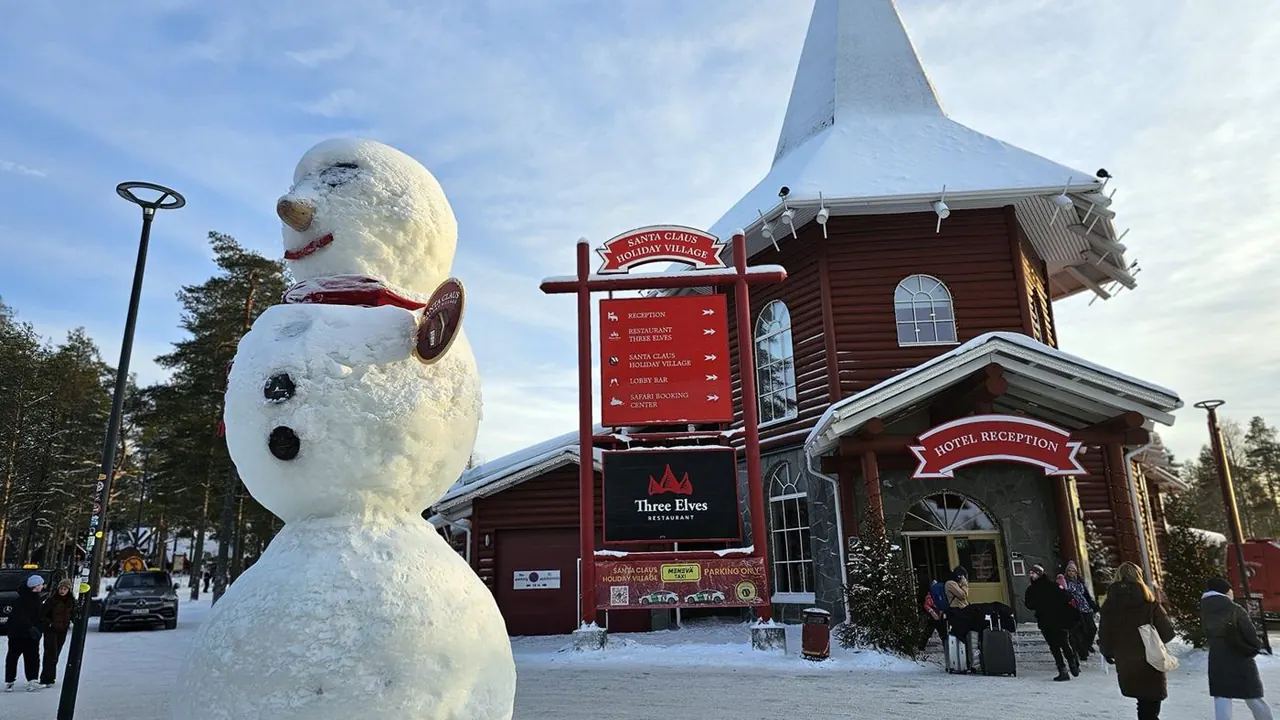
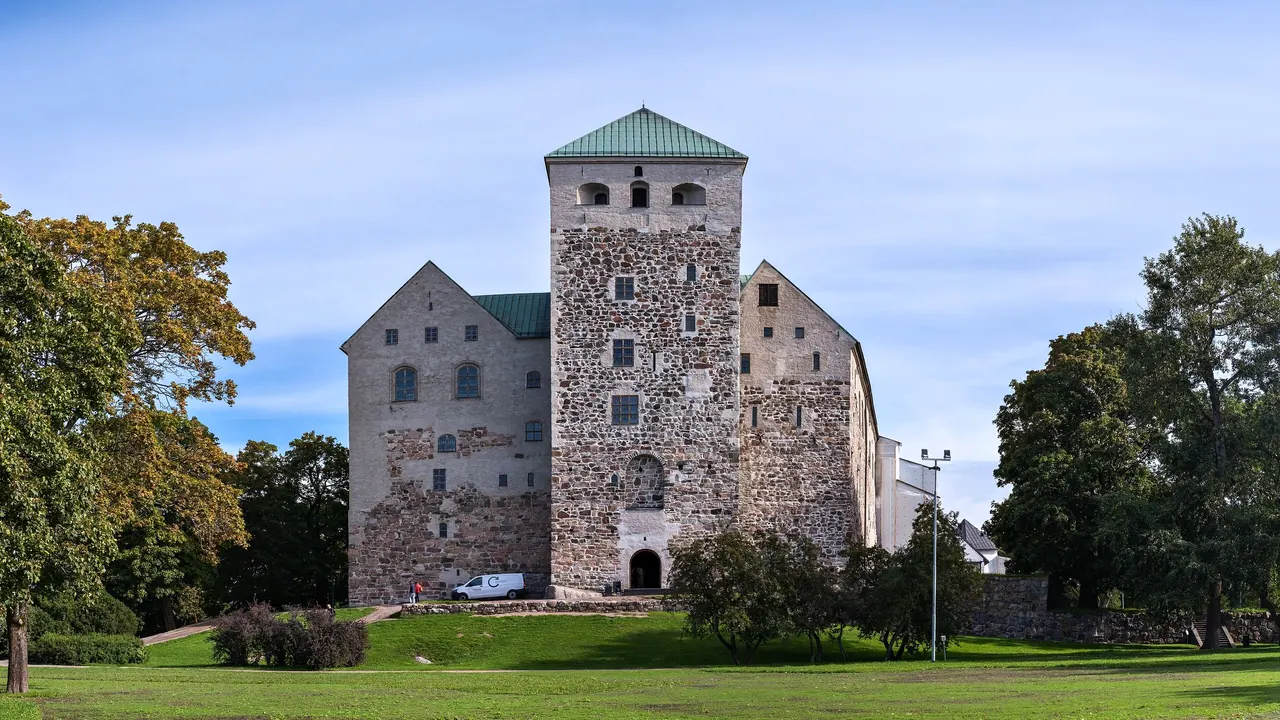
Photos: Rovaniemi by Moskenes, CC BY-SA 4.0, cropped; Turku by Christian David, CC BY-SA 4.0, cropped.
Rovaniemi or Turku?
Our verdict in twelve categories, each scored against the same fixed benchmark cities, and the climate month by month, so you can choose for your trip.
Choose Rovaniemi for
- nature and the outdoors
- families
Rovaniemi is the choice for a trip built around snow, light and landscape: husky and reindeer sledding, snowmobiles, the northern lights over frozen rivers and, for young children, a Christmas visit to Santa Claus Village on the Arctic Circle. It costs more and has little to offer in museums, restaurants or evenings out. Turku has nothing to match an Arctic winter.
Choose Turku for
- day trips
- getting around
- culture and sights
Travellers who want a proper small city with history behind it will be happier in Turku. It has a medieval cathedral and castle, a market hall, more going on in the evenings and easy outings to Naantali and Old Rauma. It is cheaper and easier to get around without a car or a tour. It is at its best in summer, when the Archipelago Sea opens up for boats, bikes and swimming.
Scoreboard
Twelve categories on one fixed scale from 0 to 100. The shaded stretch is the gap between the two.
Your match
Pick a travel style or drag the sliders, and both match scores follow your weighting.
Wins on nature and the outdoors and families with your weighting.
Wins on day trips and getting around with your weighting.
What matters to you?
Category by category
What the scores mean for a trip.
Beaches & swimming
Neither city is a beach destination, but Turku at least has a real beach. Saaronniemi on Ruissalo is a shallow, sandy Baltic beach a short bus ride from the centre, and in the archipelago you can swim off granite rocks and jetties for a few weeks in high summer.
In Rovaniemi, swimming means a quick dip in July from a river shore on the Kemijoki or Ounasjoki, or in a forest lake. For most of the year the water is frozen, and the usual way in is through a hole in the ice after a sauna.
Food & drink
Turku gives food lovers more to do. The 1896 market hall has wooden stalls of smoked fish, cheese and pastries. Add the summer market square and the terraces and moored boats along the Aura, and eating becomes part of the day, built around archipelago fish, herring and dark sweet bread.
Rovaniemi's food is more limited but more distinctive: sautéed reindeer with lingonberries, Arctic char, cloudberries and squeaky baked cheese, often eaten in a log cabin or Lappish tent as part of a tour. Beyond a few careful restaurants, though, the choice is mostly hotel dining and pizza.
Culture & sights
Turku still has the history that Rovaniemi lost. Finland's oldest city and former capital has a cathedral consecrated around 1300, a castle at the river mouth and Luostarinmäki, the wooden district that survived the fire. Add a run of museums from Aboa Vetus & Ars Nova to Forum Marinum, and there is enough for two days.
Rovaniemi was burned in 1944, so what it offers is modern. Alvar Aalto designed its library, city hall and Lappia Hall, and Arktikum is the best place in either city to learn about Arctic nature and the Sámi. With Korundi and Pilke added, there is about a day of sightseeing.
Nightlife
An evening in Rovaniemi usually ends early or happens outside town. Apart from a short burst in the centre on term-time Fridays and Saturdays, there is little to stay up for, and on a winter trip you are more likely to spend the night on a frozen lake waiting for the aurora than at a bar.
Turku has a real university-town weekend, with enough pubs and clubs within a few streets to move between them and bars that keep going well past midnight. Its best season is the opposite of Rovaniemi's: on light summer nights the drinking moves outdoors along the Aura, while a dark midweek evening in winter is almost as quiet as Lapland. It is good for a night out, but not for a trip built around going out.
Nature & outdoors
Nature is where Rovaniemi pulls ahead. It sits in snow-covered taiga on the Arctic Circle, with husky and reindeer sledding, cross-country skiing on Ounasvaara and the northern lights, a winter season Turku cannot match. In summer the light never fully fades, and the Korouoma canyon and the fells of Pyhä-Luosto offer hiking and canoeing.
Turku's outdoors is about the water and mostly runs from May to September. You can kayak, sail or hop between islands in the Archipelago Sea, cycle the Archipelago Trail by bike and ferry, and walk in Ruissalo's oak woods. The land is flat and gentle, and in winter there is little to do outside.
Day trips
Turku makes a useful base and Rovaniemi does not. From Turku, the wooden spa town of Naantali is twenty minutes away, the UNESCO-listed painted houses of Old Rauma make an easy outing, and Helsinki or Tampere are a long but workable day by train.
From Rovaniemi, the nearest towns are Kemi, Tornio and Haparanda across the Swedish border, and they are ordinary places. The real outings are activities in the forest around the town, not trips to other towns.
Good for families
Both cities work well with children, but in different seasons. Rovaniemi has the edge thanks to one big draw: Santa Claus Village on the Arctic Circle, with Santa's office and post office. Husky rides, sledging and the polar bears at the Ranua zoo add to it, though the December dark and cold mean short outings and proper clothing.
Turku is a summer choice for families. Moomin World is at Naantali, Forum Marinum has ships to climb aboard, Kurala Kylämäki has farm animals and Ruissalo has a shallow beach. The city is calm and easy to manage with a pushchair.
Getting around
Turku is much easier to explore on your own. Its flat centre along the Aura puts the cathedral, market hall and most museums within walking distance, the free Föri ferry crosses the river, and a single bus network reaches Ruissalo and Naantali.
Rovaniemi's centre is also walkable but much smaller. Santa Claus Village is a bus ride away, but beyond that you rely on tour operators collecting you from your hotel, or on a hired car. In winter the icy pavements make good boots essential.
Shopping & style
If you want something made in Lapland, buy it in Rovaniemi. That means Sámi silver, a traditional knife or a birch-wood cup, plus the warm boots and layers the trip itself may call for. Beyond crafts, outdoor gear and Christmas trinkets, there is little to browse.
Turku is the better place for an afternoon of browsing, though the choice is still that of a regional city, with no luxury street. Go there for Finnish glass, ceramics and textiles, handmade woollens from the old craft workshops at Luostarinmäki, and food to take home from the market hall. Neither city is worth choosing for its shops.
Affordability
Both have Nordic prices, but Rovaniemi is clearly the more expensive trip. The things people come for, such as husky safaris, snowmobile rides and aurora tours, are all guided and priced to match, and rooms are hard to find around Christmas. Visiting in summer and staying in a self-catering cabin help.
In Turku the main expense is dinner and drinks. The weekday lunch buffet, the walkable centre, the free ferry and food from the market hall keep the cost of a stay manageable.
Live music & performing arts
Turku has a proper programme, while in Rovaniemi a performance is something you come across by luck. Turku has Finland's oldest orchestra, the Turku Philharmonic, and the country's oldest working theatre building, the 1839 Swedish theatre on the market square. In summer it adds the Turku Music Festival in the cathedral and castle and Ruisrock on Ruissalo.
In Rovaniemi the highlight is the Lapland Chamber Orchestra, the world's northernmost professional orchestra, which plays in the Korundi building. The regional theatre in Lappia Hall performs almost entirely in Finnish.
Wellness & relaxation
The sauna is central in both cities, but the setting differs. In Rovaniemi it means a wood-heated or smoke sauna in a lakeside cabin or your own lodge, with a cool-down in the open air or a plunge through the ice. The surroundings are quiet, under the winter twilight or the summer light.
Turku is more of a city and has more spas. There are public saunas by the water and in swimming halls, Naantali has a long spa tradition and Ruissalo has a spa by the sea, so it suits anyone who wants some pampering as well as the sauna.
When should you go?
Pick your month. The climate figures are measured averages, not a forecast.
Rovaniemi in July
Turku in July
Daytime high, °C
Rainfall in the month, mm
Where the figures come from
Rovaniemi has no rain gauge within 25 km of the centre, so its rainfall comes from a gridded climate dataset read at the city rather than from a gauge further away.
Temperature and rainfall are climate normals, averaged over the years shown. Rovaniemi: 2008-2020 (rainfall 1991-2020) normals, Rovaniemi Rautatieasema / Kuusela (0.6 km from centre). Turku: 1991-2020 (sunshine 1961-1990) normals, Turku (7.2 km from centre).
The two cities have opposite seasons. Rovaniemi is a winter destination. From November to March the days stay below freezing and January highs are around -8°C, which brings the snow that sledding, skiing and aurora trips need. From June to August it turns mild, reaching about 21°C in July, and this is the time for hiking and canoeing. July and August are also the wettest months.
Turku is milder all year and is at its best from late May to early September. It is sunniest from May to July. The sea is warmest in August at about 17°C, so it is only good for a short swim. Autumn brings the rain, peaking at about 79mm in October. By November and December there is very little sunshine and the streets are grey and damp rather than snowy.
Which traveller are you?
For an outdoors trip, Rovaniemi is the clear choice. You can go sledding, ski cross-country on Ounasvaara and watch for the northern lights in winter, or hike in the summer light around Korouoma and Pyhä-Luosto. Turku's flat archipelago is gentler and is mostly a summer option.
On a culture and arts trip, choose Turku. It has Finland's mother church, a medieval castle, the wooden workshops of Luostarinmäki, several museums and a proper concert and theatre programme. Rovaniemi's Aalto buildings and Arktikum fill about one day.
On a family trip with young children, Rovaniemi has the edge, especially around Christmas. Santa Claus Village, reindeer sleighs, sledging and the polar bears at Ranua are hard to beat. Turku's Moomin World is a good alternative for families who travel in summer.
Before you go
| Measure | Rovaniemi | Turku |
|---|---|---|
| Official language | Finnish, Swedish | Finnish, Swedish |
| Currency | Euro (EUR) | Euro (EUR) |
| Sockets | CF230 V, 50 Hz | CF230 V, 50 Hz |
| Driving side | Right | Right |
| Time zone | UTC+2, UTC+3 in summer | UTC+2, UTC+3 in summer |
| Emergency number | 112 | 112 |
| Elevation | 88 m | 0 m |
| Main airport | Rovaniemi Airport (RVN)8 km from centre44 non-stop destinations | Turku Airport (TKU)7 km from centre8 non-stop destinations |
| Public holidays this year | 15 days | 15 days |
By the numbers
| Measure | Rovaniemi | Turku |
|---|---|---|
| City population | 65,329 | 209,633 |
| People per km² | 9 | 854 |
| Museums within 10 km | 6 | 27 |
| UNESCO World Heritage sites within 50 km | 0 | 0 |
| Swim season, months above 21 °C | - | None |
Where else could you go?
Every comparison below shares a destination with this one, so you can follow Rovaniemi or Turku somewhere new.