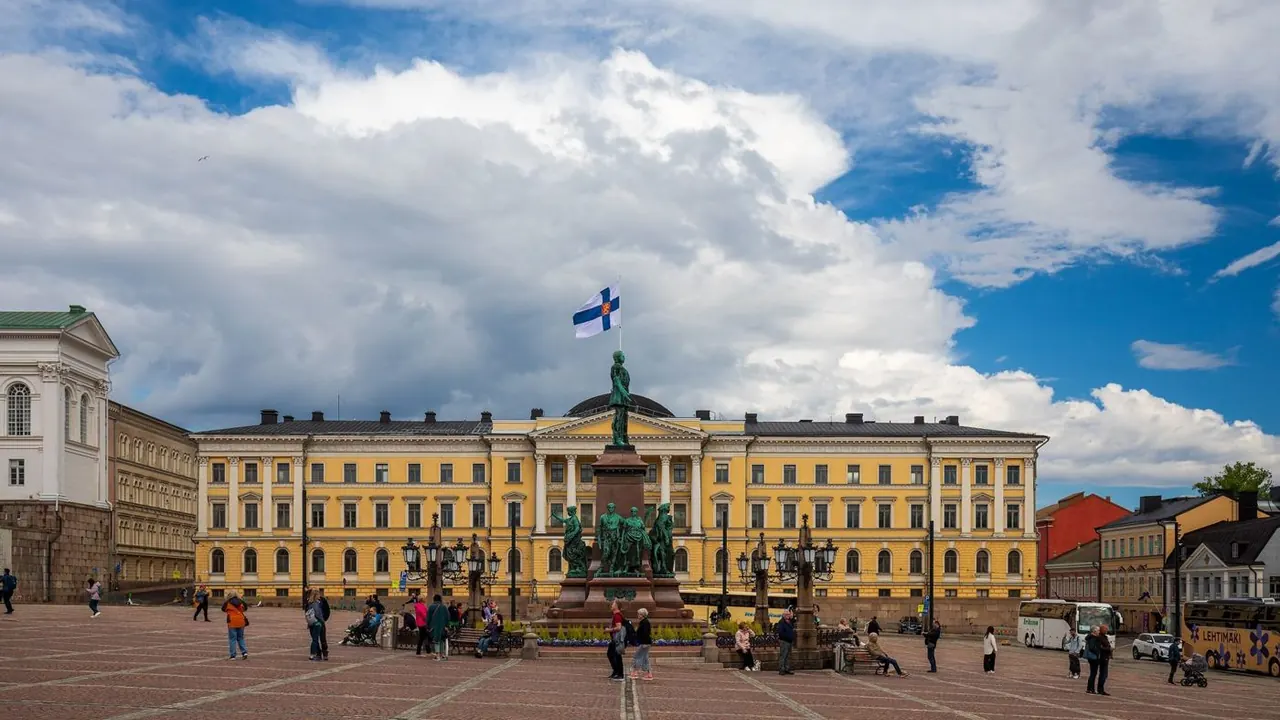
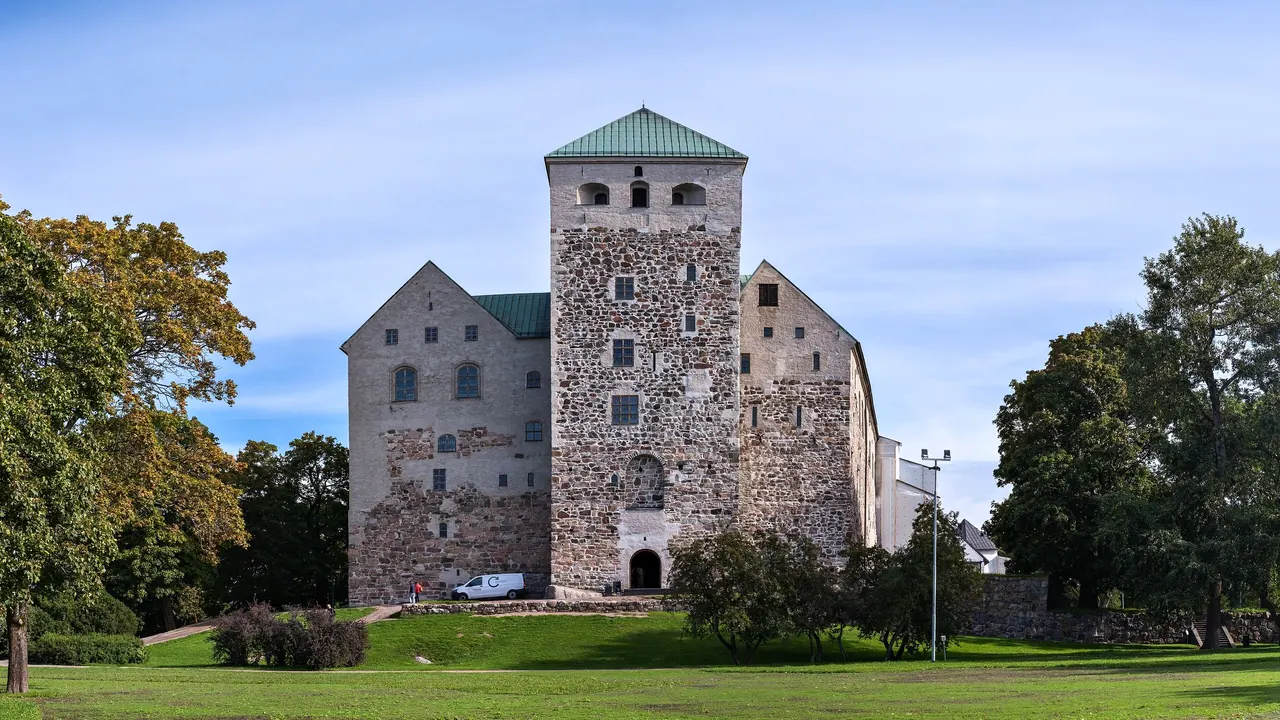
Photos: Helsinki by Ximonic (Simo Räsänen), CC BY-SA 4.0, cropped; Turku by Christian David, CC BY-SA 4.0, cropped.
Helsinki or Turku?
Our verdict in twelve categories, each scored against the same fixed benchmark cities, and the climate month by month, so you can choose for your trip.
Choose Helsinki for
- shopping
- getting around
- wellness
Helsinki is the better pick for a full city trip. It has Aalto and Jugend architecture, Suomenlinna across the harbour, an opera house and two major orchestras, and design shopping in Punavuori. It also has a far wider range of public saunas than Turku, from old wood-heated bathhouses to harbourside complexes. Trams, metro and ferries all run on one ticket, so a few days are easy, and the capital still works in winter, when its indoor attractions keep children busy.
Choose Turku for
- prices
- nature and the outdoors
- beaches
Travellers who want a slower, smaller trip built around summer and the sea will feel more at home in Turku. Its medieval cathedral and castle, the riverside along the Aura and the Archipelago Sea at the edge of town suit people who would rather cycle, kayak or hop between islands than tick off sights. Young Moomin fans have Naantali close by, and costs run a little lower than in the capital, though prices are still Nordic.
Scoreboard
Twelve categories on one fixed scale from 0 to 100. The shaded stretch is the gap between the two.
Your match
Pick a travel style or drag the sliders, and both match scores follow your weighting.
Wins on shopping and getting around with your weighting.
Wins on prices and nature and the outdoors with your weighting.
What matters to you?
Category by category
What the scores mean for a trip.
Beaches & swimming
Neither city is a beach destination. Both swim in the same brackish Baltic, which is warm enough for only a few weeks of high summer. Where they differ is the setting. Helsinki has Hietaniemi, a sandy city beach close to the centre, and small island beaches such as Pihlajasaari a short boat ride away.
Turku's sand is at Saaronniemi, at the far tip of Ruissalo and a bus ride out. The water there is shallow and the beach is backed by pines, which suits small children. Elsewhere people swim from granite rocks and jetties in the archipelago, and algae can cloud the water late in the summer.
Food & drink
Helsinki has more to choose from. The Old Market Hall has salmon soup, herring and Karelian pies, and above those sits a modern Nordic tier cooking with foraged produce. Coffee and cinnamon buns are part of everyday life in its cafés.
Turku covers the same Nordic ground on a smaller scale. There is smoked fish and dark archipelago bread in the 1896 market hall, a few ambitious kitchens, and summer dining on the boats moored along the Aura. It is good for a relaxed lunch, but you have fewer places to choose from.
Culture & sights
Helsinki's sights are broader and more varied. You get Engel's Senate Square, the red-brick Uspenski Cathedral and whole streets of Jugend in Katajanokka and Eira. The modern chapter includes Finlandia Hall and the rock church. Beyond those are the Suomenlinna sea fortress and serious galleries at the Ateneum and Kiasma.
Turku tells an older story. Its medieval cathedral and castle go back to Finland's beginnings, and Luostarinmäki keeps the wooden district that survived the fire of 1827. The museums are pleasant and low-key, and two days are enough for them, where Helsinki can fill three.
Nightlife
Helsinki is the better choice for a night out because it has more of everything and it stays up later. In Kallio, north of the centre, you can wander from one plain, unfussy bar or karaoke room to the next without dressing up. The centre adds cocktail bars and the clubs for dancing, and at weekends many places stay open long after midnight. In summer the waterside terraces carry the evenings on into the light.
Turku's scene is smaller and depends on the students and the season. What it does have is the river. On a light summer evening the terraces and old boats moored along the Aura make an easy night that you can walk between, though there are only a few clubs. Outside term time and the summer it goes much quieter, so it suits a relaxed beer by the water better than a big night out.
Nature & outdoors
Both cities sit in flat landscapes of water, granite and pine, but the emphasis differs. Helsinki pairs its offshore islands with forest. Central Park reaches almost into the centre, and Nuuksio National Park, with its lakes and marked trails, is under an hour away by bus. In a cold winter you can go cross-country skiing too.
Turku is the gateway to the Archipelago Sea. Its strengths are cycling the Archipelago Trail over several days, sailing and hopping between islands, with Ruissalo's old oak forest at the edge of town. This is mainly a landscape for May to September.
Day trips
Helsinki's big advantage is the ferry to Tallinn, a medieval walled town in another country about two hours across the sea. Porvoo's riverside storehouses are an easy hour away by bus, and Turku's castle and cathedral make a long but workable day by train.
Turku's outings are smaller and closer to home. Wooden Naantali is twenty minutes away, Old Rauma has its UNESCO-listed painted houses, and archipelago villages such as Nagu and Korpo are easier with a car. Helsinki is the same two-hour train ride in reverse, so it is just as long a day from this end.
Good for families
Helsinki keeps children busy all year. It has the Linnanmäki amusement park on its hill, the zoo on Korkeasaari island, the Heureka science centre and the tunnels of Suomenlinna. When winter drives everyone indoors, there are swimming halls and library play areas.
Turku's big draw is Moomin World on its island at Naantali, which young fans love but which opens mainly in summer. In town there are ships to board at Forum Marinum and animals at the Kurala farm. Both cities are safe and easy with a pushchair, but outside summer Turku has much less for children.
Getting around
Helsinki has the fuller network. Trams run through the inner districts, and a metro line, commuter trains and island ferries all share one ticket system. The airport is about half an hour away by train.
Turku is simpler and smaller. Its centre along the Aura is easy on foot, and the free Föri ferry takes you across the river. Beyond the centre, buses do all the work, reaching Ruissalo and Naantali, and you need a car only for the outer archipelago.
Shopping & style
Helsinki is the place to buy Finnish design at its source. Aalto glass, bold printed textiles and modernist furniture fill the studios and vintage shops of the Design District and the flagship stores along the Esplanadi, and the Hietalahti flea market adds a summer browse.
Turku's choice is that of a regional city: chains, a department store and a handful of shops selling glass and ceramics. Its most distinctive buys are the wool and wooden goods made in the old workshops at Luostarinmäki.
Affordability
Both cities have Nordic prices, so the difference is one of degree. Turku is somewhat easier on the wallet: hotels are moderately priced outside the summer festival weekends, and the river ferry is free. In Helsinki, summer hotel rates and alcohol cost more.
In both cities, weekday lunch deals and market food are the way to eat well for less. The free pleasures differ: Helsinki has its shoreline, churches and islands, and Turku has walks along the river.
Live music & performing arts
Helsinki has the bigger stage. The Music Centre is home to two major orchestras, the National Opera and Ballet runs a full season by Töölö Bay, and a rock and metal club circuit keeps going through the year.
Turku offers history rather than scale. It has Finland's oldest orchestra, the country's oldest working theatre building on the market square, and summer highlights in the Turku Music Festival and the Ruisrock weekend. Outside those, live music means small gigs and pub stages.
Wellness & relaxation
Both cities make the sauna easy to join, but Helsinki gives you much more to choose from. There are old wood-heated public saunas in Kallio, harbourside complexes where bathers plunge into the Baltic even when there is ice on the sea, and the classical Yrjönkatu swimming hall with its own ritual.
Turku's saunas, by the water and in its swimming halls, follow the same routine of heat and then a cold plunge, and Naantali adds a spa tradition a short ride away. It is calm and pleasant, with fewer places to try.
When should you go?
Pick your month. The climate figures are measured averages, not a forecast.
Helsinki in July
Turku in July
Daytime high, °C
Rainfall in the month, mm
Temperature and rainfall are climate normals, averaged over the years shown. Helsinki: 1991-2020 normals, Helsinki Kaisaniemi / Harju (1.6 km from centre). Turku: 1991-2020 (sunshine 1961-1990) normals, Turku (7.2 km from centre).
The two cities have almost the same climate, as they sit on the same coast about two hours apart. Summer is short. From June to August daytime highs reach about 20-22°C, the best weather for walking, terraces and the islands. The sea is warmest in July and August at about 17°C, so in both cities swimming only works for a few weeks in high summer. May and September are cool but pleasant for sightseeing. From November to March the days are short and near freezing, and in January and February highs stay below zero.
The differences are small. Helsinki is the sunnier of the two in high summer, with about 283 hours of sunshine in July, while Turku gets more rain that month, about 78mm. In both cities, late summer and autumn are the wettest part of the year.
Which traveller are you?
On a shopping trip, Helsinki wins clearly. Finnish design is made and sold there, and it fills whole streets of studios and stores. Turku's shopping covers a few streets around the market square, with crafts from its handicrafts museum the most memorable buy.
For a relaxing and wellness trip, Helsinki is the better base. It has far more saunas to choose from, from old neighbourhood bathhouses to sea-plunge complexes on the harbour, and the capital still moves at an unhurried pace beside parks and water.
On an outdoors trip, Turku has the edge. One of the world's largest archipelagos starts at the city's edge, and you can cycle a multi-day island trail, kayak or sail. Helsinki answers with forest trails at Nuuksio, but it has fewer islands.
Before you go
| Measure | Helsinki | Turku |
|---|---|---|
| Official language | Finnish, Swedish | Finnish, Swedish |
| Currency | Euro (EUR) | Euro (EUR) |
| Sockets | CF230 V, 50 Hz | CF230 V, 50 Hz |
| Driving side | Right | Right |
| Time zone | UTC+2, UTC+3 in summer | UTC+2, UTC+3 in summer |
| Emergency number | 112 | 112 |
| Elevation | 17 m | 0 m |
| Main airport | Helsinki Vantaa Airport (HEL)16 km from centre136 non-stop destinations | Turku Airport (TKU)7 km from centre8 non-stop destinations |
| Public holidays this year | 15 days | 15 days |
By the numbers
| Measure | Helsinki | Turku |
|---|---|---|
| City population | 694,392 | 209,633 |
| People per km² | 3,239 | 854 |
| Museums within 10 km | 74 | 27 |
| UNESCO World Heritage sites within 50 km | 1 | 0 |
| Swim season, months above 21 °C | None | None |
Where else could you go?
Every comparison below shares a destination with this one, so you can follow Helsinki or Turku somewhere new.