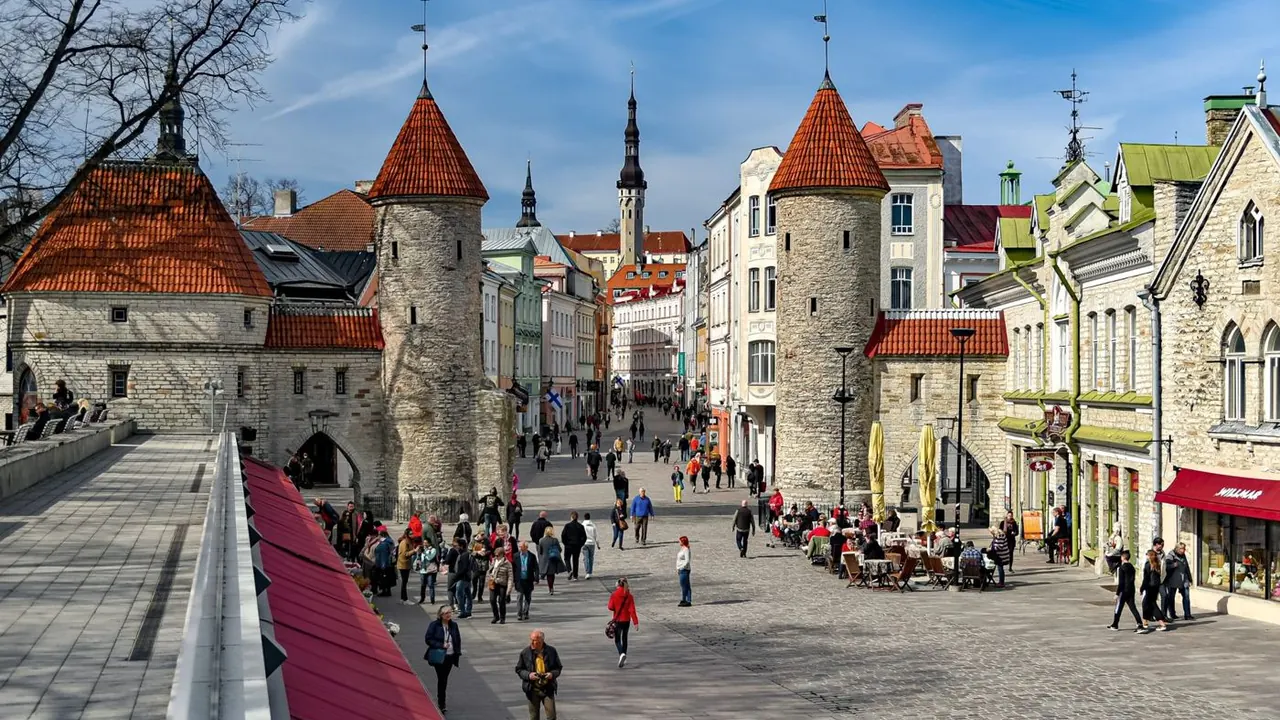
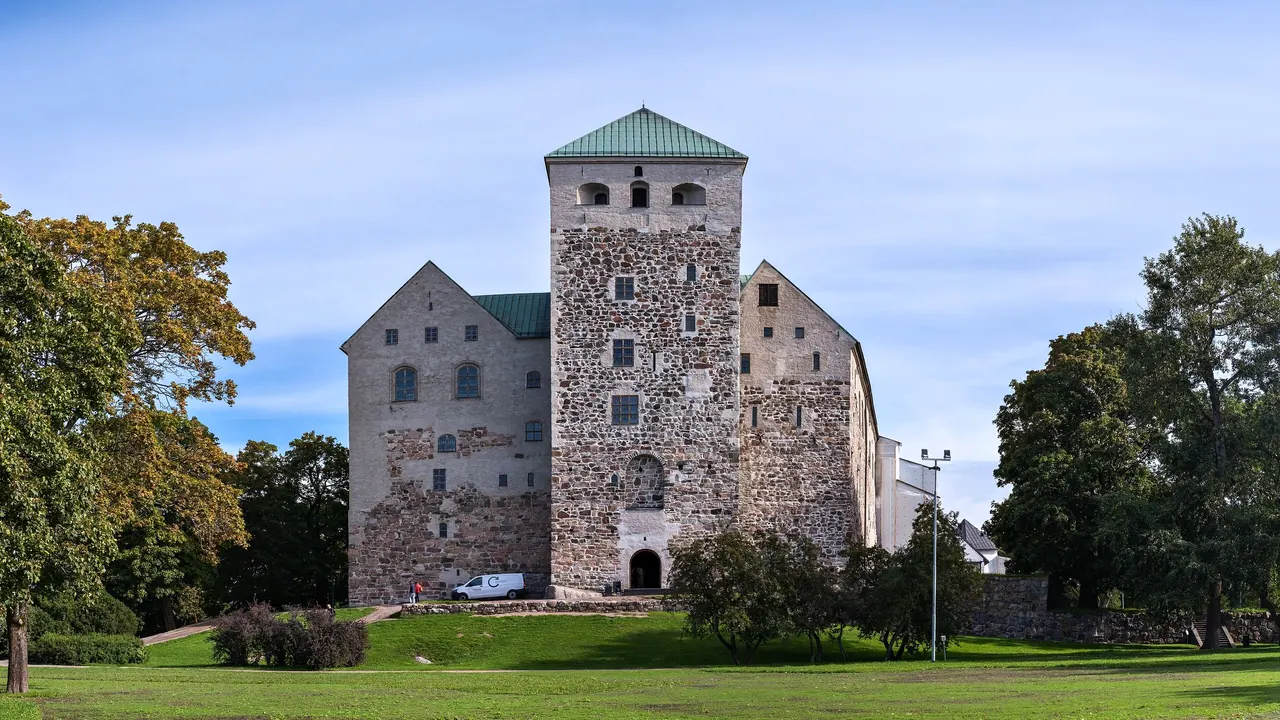
Photos: Tallinn by Jorge Franganillo, CC BY 2.0, cropped; Turku by Christian David, CC BY-SA 4.0, cropped.
Tallinn or Turku?
Our verdict in twelve categories, each scored against the same fixed benchmark cities, and the climate month by month, so you can choose for your trip.
Choose Tallinn for
- culture and sights
- prices
- food and drink
Tallinn is the stronger choice for a first visit to the Baltic or a short break built around sightseeing. Its walled Hanseatic Old Town and Toompea hill give it far more to see than Turku. It also eats better, has more going on in the evenings, packs everything into a walkable core and costs noticeably less once you sit down to eat and drink. With Helsinki a ferry ride away, it also works well as one half of a two-capital trip.
Choose Turku for
- wellness
- nature and the outdoors
- families
Turku suits a slower summer trip where the water matters more than the monuments. The Archipelago Sea begins at the edge of town, the sauna-and-plunge routine is woven into ordinary life, and Moomin World at Naantali is a real draw for young families. Choose it for island-hopping, cycling and long light evenings by the Aura, not for a packed sightseeing list.
Scoreboard
Twelve categories on one fixed scale from 0 to 100. The shaded stretch is the gap between the two.
Your match
Pick a travel style or drag the sliders, and both match scores follow your weighting.
Wins on culture and sights and prices with your weighting.
Wins on wellness and nature and the outdoors with your weighting.
What matters to you?
Category by category
What the scores mean for a trip.
Beaches & swimming
Neither is a beach destination, and the sea is just as cool and the season just as short at both. The difference is in the setting. Tallinn's Pirita is a long sandy beach backed by pines within the city, with Stroomi and Pikakari closer to the centre. Turku's one main sandy beach, Saaronniemi on Ruissalo, is a short bus ride out, and the more typical swim is off smooth granite rocks or a jetty in the archipelago, often straight out of a sauna.
Food & drink
Tallinn has more good places to eat and more variety. Modern Estonian kitchens cook Baltic fish, forest mushrooms, rye and game, from casual bistros to tasting menus, and they cluster in Telliskivi, Rotermann and Kalamaja. That makes it easy to eat well if you step outside the themed restaurants of the Old Town.
Turku's food is honest archipelago produce: cured fish, herring, dark sweet bread and summer berries, best explored in the 1896 market hall. Beyond that the choice of serious restaurants is thin, so meals here are a pleasant part of the day rather than its main event.
Culture & sights
This is where the two differ most. Tallinn kept its medieval core: walls and towers, the Gothic Town Hall, merchant houses and Toompea's castle and cathedrals above the red roofs. Outside the walls, Kadriorg's palace, KUMU and the Seaplane Harbour make two or three full days of sightseeing.
Turku lost most of its old town in the Great Fire of 1827. What remains is concentrated in a few places: the national cathedral, the castle at the river mouth, the surviving wooden quarter at Luostarinmäki and the underground ruins at Aboa Vetus & Ars Nova. It makes a quieter, more scattered history lesson than a walk through Tallinn's lanes.
Nightlife
Tallinn has a bit more choice and two distinct scenes. There are cellar pubs and cocktail bars in medieval buildings in the Old Town, and craft beer bars in old factories around Telliskivi, plus a few clubs that run until morning at weekends. Turku's going out is shaped by its students, with pubs and late bars around the market square and, in summer, drinks on the boats moored along the Aura. Out of term it goes very quiet.
Nature & outdoors
Turku has the more distinctive outdoors, because the Archipelago Sea starts at the city limits. Thousands of granite islands, the multi-day Archipelago Trail by bike and ferry, kayaking, sailing and an island national park make it a real outdoor base in summer. Ruissalo's oak woods are right on the doorstep.
Tallinn's nature takes more travel. The klint cliffs and Keila-Joa waterfall are west of town, and Lahemaa's forests, boulder peninsulas and bog boardwalks are about an hour away. They are rewarding, but they are day outings rather than something you step into from the centre.
Day trips
Tallinn has the better list, led by Helsinki, a second capital about two hours away by fast ferry. Lahemaa's manor houses and fishing villages, Rakvere castle and Haapsalu add variety. From Turku, Naantali is the easy half-day and Old Rauma's painted wooden houses are worth the bus ride. Helsinki is reachable by train, but it makes a long day, and most other outings are to quiet small towns.
Good for families
Turku has the edge in summer, thanks to Moomin World on its island at Naantali, which young children tend to love. Forum Marinum's ships and the living-history farm at Kurala add to it, and the flat centre is easy with a pushchair. Out of season, though, there is much less to do.
Tallinn holds up better year-round. The submarine at the Seaplane Harbour, Proto's invention halls, the zoo and the open-air museum's windmills work in any month. The Old Town's cobbles and the climb to Toompea are the main nuisance for parents.
Getting around
Tallinn is the easier base. The Old Town, harbour, Rotermann, Telliskivi and Kalamaja are all walkable from one another, trams reach Kadriorg and the airport sits unusually close, and the Helsinki ferries leave a short walk from the walls. Turku's centre is flatter and gentler on the legs, with the free Föri ferry crossing the Aura. But Ruissalo, Naantali and the archipelago all mean a bus or a bike, so more of a stay involves getting somewhere.
Shopping & style
Neither is a shopping destination, and in both the best buys are crafts rather than fashion. Tallinn has a little more to browse, with glass, leather and knitwear workshops around St Catherine's Passage and independent Estonian designers in Telliskivi and Rotermann. Turku's highlights are the old market hall stalls and the traditional woollens and woodwork made at Luostarinmäki. Beyond those, it is mostly chains around the market square.
Affordability
Tallinn is the cheaper of the two, though it is closer to Western European prices than many visitors expect, and the Old Town's tourist restaurants charge for the setting. Eating at lunch spots beyond the walls keeps costs reasonable.
Turku has full Nordic prices, and dinner and alcohol are where the budget goes. The weekday lunch buffet, the free river ferry and picnics from the market hall are the ways to soften it.
Live music & performing arts
Tallinn offers more for a non-Estonian speaker on any given night. The Estonia Theatre stages national opera and ballet, the Old Town's churches host organ and choral concerts, and Arvo Pärt's music is often on the programme. Behind it all sits a deep choral tradition that peaks at the Song Festival.
Turku's year is quieter but has real heritage. Its Philharmonic is Finland's oldest orchestra, and its Swedish-language theatre building from 1839 is the oldest working one in the country. Summer is the time to go for music, with classical concerts in the cathedral and castle and Ruisrock on Ruissalo.
Wellness & relaxation
Both have a strong sauna culture, but Turku makes more of it. Public saunas by the water, plunges into the sea or a winter ice hole, Naantali's long spa tradition and a seaside spa on Ruissalo make relaxation a natural reason to stay. Tallinn's equivalents are the old neighbourhood saunas of Kalamaja, a few seaside saunas and spa hotels by the harbour. They are good for an evening's sweat, but they are not much of a draw on their own.
When should you go?
Pick your month. The climate figures are measured averages, not a forecast.
Tallinn in July
Turku in July
Daytime high, °C
Rainfall in the month, mm
Temperature and rainfall are climate normals, averaged over the years shown. Tallinn: 1991-2020 normals, Tallin / Harku (10.9 km from centre). Turku: 1991-2020 (sunshine 1961-1990) normals, Turku (7.2 km from centre).
The two cities share almost the same climate, so the season matters more than the choice between them. June to August is the time to go, with daytime highs around 22°C and long, light evenings. The Baltic is only warm enough for a swim from about mid-July to mid-August, when it reaches about 17°C off both coasts. Those summer months are also among the wetter ones, so expect showers between sunny spells. May and early September are pleasant for walking but too cool for the sea.
The real difference is light. Tallinn gets more summer sun, about 305 hours in July against 248 in Turku, which helps a beach afternoon. From November to February both sit around freezing, with highs near -1°C in midwinter and barely any daylight. In those months Tallinn's compact Old Town and indoor museums cope with the cold better than Turku, which is at its best outdoors.
Which traveller are you?
On a culture and arts trip, Tallinn is the clear choice. Its intact medieval Old Town, Toompea's cathedrals, KUMU and the Seaplane Harbour outclass Turku's cathedral and castle, and evenings of opera, ballet and church choral concerts round off the days.
For a relaxing and wellness trip, Turku fits better. Waterside public saunas with sea or ice-hole plunges, the old spa town of Naantali next door and an unhurried riverside pace make the slower rhythm the point of the stay.
On a trip on a tight budget, Tallinn goes further. Neither city is cheap, but Turku's Nordic prices for dinner and especially alcohol add up fast, while Tallinn's lunch menus beyond the walls, cheap public transport and inexpensive museums keep a stay more manageable.
Before you go
| Measure | Tallinn | Turku |
|---|---|---|
| Official language | Estonian | Finnish, Swedish |
| Currency | Euro (EUR) | Euro (EUR) |
| Sockets | CF230 V, 50 Hz | CF230 V, 50 Hz |
| Driving side | Right | Right |
| Time zone | UTC+2, UTC+3 in summer | UTC+2, UTC+3 in summer |
| Emergency number | 112 | 112 |
| Elevation | 28 m | 0 m |
| Main airport | Lennart Meri Tallinn Airport (TLL)6 km from centre56 non-stop destinations | Turku Airport (TKU)7 km from centre8 non-stop destinations |
| Public holidays this year | 12 days | 15 days |
By the numbers
| Measure | Tallinn | Turku |
|---|---|---|
| City population | 457,572 | 209,633 |
| People per km² | 2,871 | 854 |
| Museums within 10 km | 15 | 27 |
| UNESCO World Heritage sites within 50 km | 1 | 0 |
| Swim season, months above 21 °C | None | None |
Where else could you go?
Every comparison below shares a destination with this one, so you can follow Tallinn or Turku somewhere new.