Photos: Tallinn by Jorge Franganillo, CC BY 2.0, cropped; Riga by Diliff, CC BY-SA 3.0, cropped.
Tallinn or Riga?
Our verdict in twelve categories, each scored against the same fixed benchmark cities, and the climate month by month, so you can choose for your trip.
Choose Tallinn for
- families
- getting around
- culture and sights
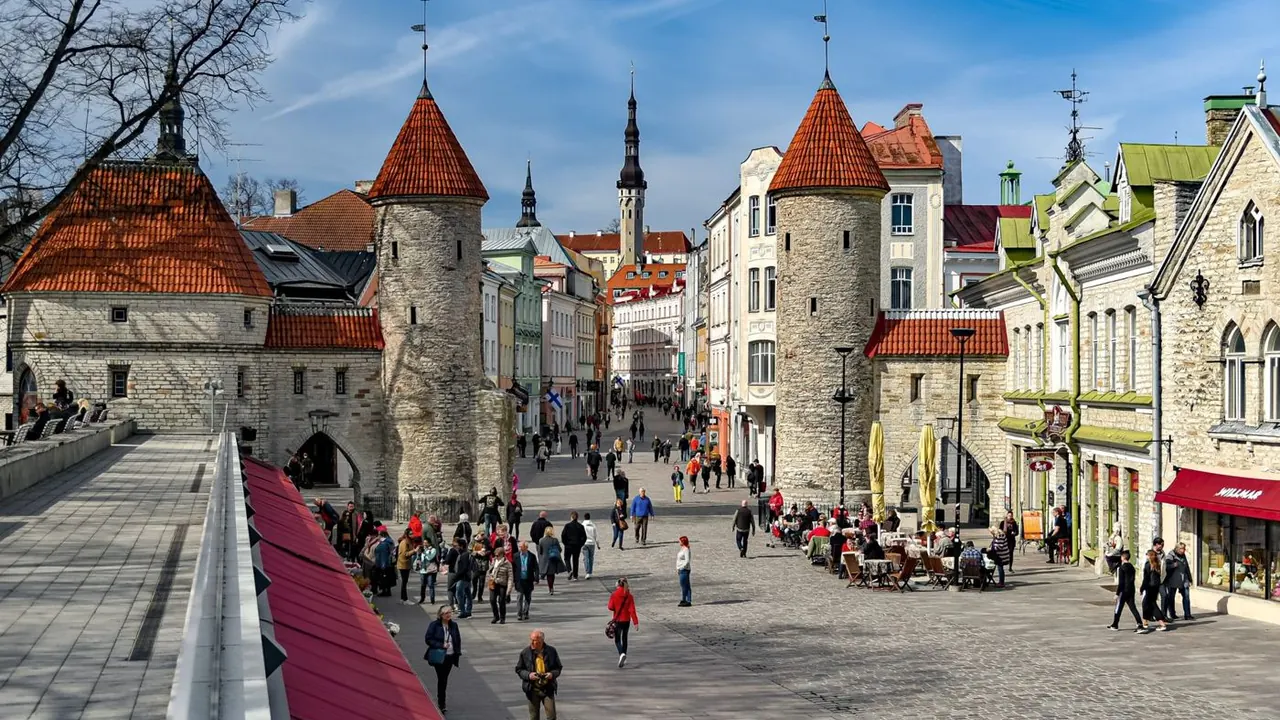
Tallinn is the pick for a storybook medieval town and an easier trip with children. Its walls, towers and Toompea hill make the more complete picture of a Hanseatic city, and the Seaplane Harbour and the science centres give families more to do. The walkable centre, the airport close to town and the ferry to Helsinki make it a neat short break, provided you accept prices nearer those of Western Europe.
Choose Riga for
- prices
- live music and the arts
- beaches
Riga suits travellers who want more trip for their money and a few evenings of music. Day-to-day costs are clearly lower, the opera and the Dom Cathedral's organ give it the richer classical calendar, and the long sands of Jurmala are a short train ride away. A summer stay can mix the Art Nouveau streets with a day by the sea and a couple of lively nights out.
Scoreboard
Twelve categories on one fixed scale from 0 to 100. The shaded stretch is the gap between the two.
Your match
Pick a travel style or drag the sliders, and both match scores follow your weighting.
Wins on families and getting around with your weighting.
Wins on prices and live music and the arts with your weighting.
What matters to you?
Category by category
What the scores mean for a trip.
Beaches & swimming
Neither city is a beach destination, but Riga has the better shore by some way. Jurmala's fine sand runs for more than 30km between pine dunes and wooden villas, the water stays shallow far out, and the suburban train gets you there in about half an hour.
Tallinn's beaches are closer to hand, at Pirita and Stroomi by bus, but they are shorter strips on a slightly colder gulf. They are good for a picnic and a quick dip on a hot day, not for a whole day on the sand.
Food & drink
The two eat equally well, but they suit different eaters. In Riga the high point is the Central Market in its zeppelin hangars, with smoked eel, sauerkraut and honey, along with cheap bakeries and a foraging-minded kitchen in the Quiet Centre.
Tallinn is the better city for a modern Nordic dinner, with small chef-run kitchens in Telliskivi, Rotermann and Kalamaja. In both places the medieval-themed restaurants inside the old walls are best skipped.
Culture & sights
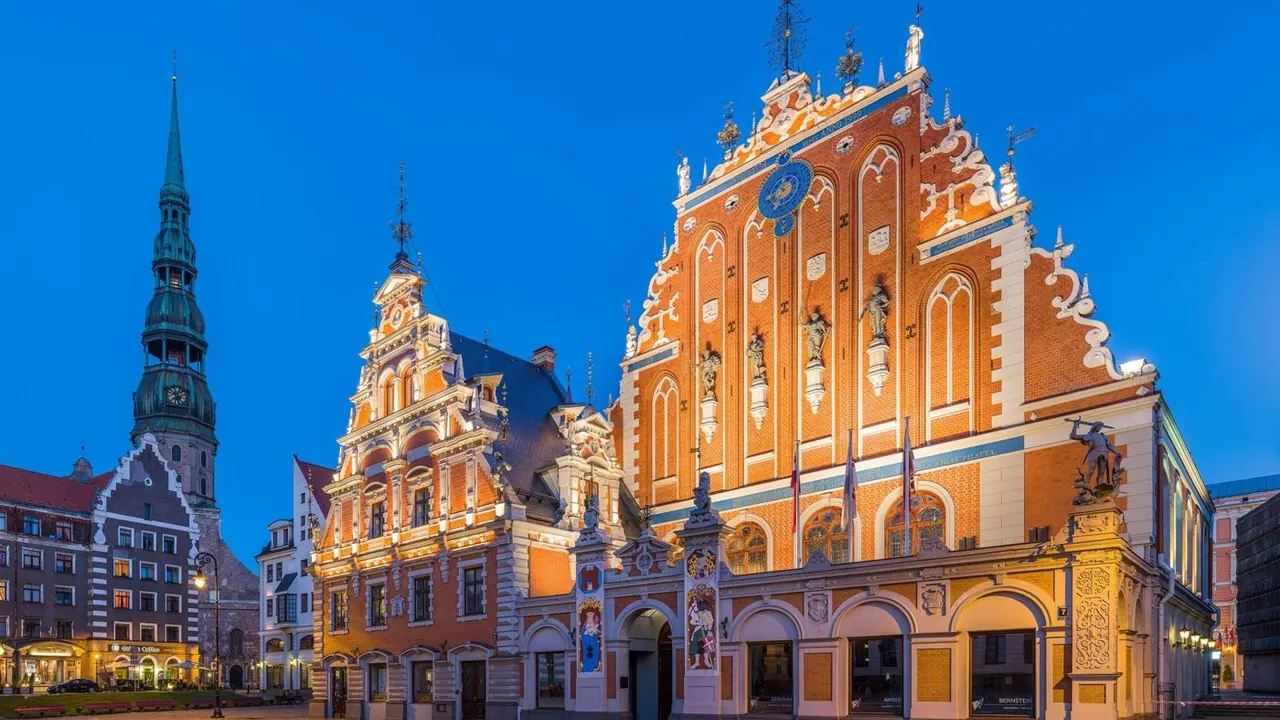
These two are close, and they differ in what they show. Riga's medieval core is small and much rebuilt. Its real draw is the streets of Art Nouveau facades around Alberta iela, carved with faces and sphinxes, and the Museum of the Occupation tells the country's twentieth-century story.
Tallinn keeps the more complete medieval town, with long runs of wall, the Gothic Town Hall and the view from Toompea over red roofs. Its museums include more surprises, from the baroque Kadriorg palace and KUMU to the seaplanes and submarine in a 1917 hangar.
Nightlife
Riga has more going on after dark. Its Old Town cellar bars and late clubs fill at weekends, and there is a second, more local scene in the relaxed bars around Miera iela, on the canal terraces in summer and in the old warehouse quarter by the market.
Tallinn's scene is smaller and more seasonal. The craft beer bars in Kalamaja's former factories are good, and the white nights of June bring the city outdoors, but on weekdays and through winter it goes quiet.
Nature & outdoors
Riga's best scenery is inland, along a river, while Tallinn's runs along the sea. About an hour from Riga, the Gauja cuts through red sandstone cliffs and caves at Sigulda. You can canoe, cycle the marked trails or ride the cable car across the gorge, and the valley is at its best in autumn colour. Nearer the coast, the boardwalks of Kemeri lead out over a raised bog, finest at dawn or in mist.
Tallinn looks out to the water. The limestone cliffs of the klint rise at Rannamõisa, Keila-Joa's waterfall is a short way beyond, and an hour east, Lahemaa has forest, boulder-strewn peninsulas and coastal trails, with the Viru bog close by. Without leaving the city, you can walk in Pirita's pine forest and river valley.
Day trips
From Riga the best days out go by road to palaces and castles. Rastrelli's Rundale, with its French gardens, is about an hour and a quarter south and pairs well with Bauska castle. To the north-east lie Turaida's red-brick castle above Sigulda and the small medieval town of Cesis.
From Tallinn, the outing that stands out crosses the water. The fast ferry reaches Helsinki in about two hours, which gives you a second capital in a single day. On land the trips are quieter: the Palmse and Sagadi manors in Lahemaa with the fishing villages nearby, the castle ruins at Rakvere, or Haapsalu and its bishop's castle by the sea.
Good for families
Tallinn is the better city to bring children to. The Seaplane Harbour lets them climb inside a submarine, the Energy Discovery Centre and Proto keep older children busy, and there are a puppet museum and a children's museum for younger ones.
Riga is just as safe and calm, and the zoo in the Mezaparks forest and the open-air farm museum make good half days. Its strongest card for young families is Jurmala, with an indoor water park and a sea shallow enough for toddlers, but little in the city itself is designed for children.
Getting around
Both are walking cities with no metro, and you will rarely need a tram. Riga's sights are flat and close together along the canal parks, and suburban trains give it easy car-free trips to Jurmala and Sigulda, though bus and tram routes take some working out.
Tallinn's network is simpler. A tram runs to the airport, which sits unusually close to the centre, and the Helsinki ferries leave a short walk from the Old Town. The one drawback is the steep climb over cobbles to Toompea.
Shopping & style
Both are craft towns rather than fashion destinations, and Riga is slightly the richer for it. Latvian linen, patterned knitted mittens and wooden kitchenware make good gifts, the Central Market covers food, and the June craft fair at the open-air museum is the best shopping day of the year.
In Tallinn you can watch the makers at work in the glass, ceramics and leather workshops around St Catherine's Passage, and Estonian designers sell from studios in Telliskivi and Rotermann.
Affordability
Riga is clearly the cheaper of the two. Hotels, transport, museums and café lunches are moderately priced, and opera seats are among the most affordable in Europe.
Tallinn costs about what an average Western European capital does, and more than many visitors expect. Hotel rates also rise in summer and when cruise ships are in. In both cities the Old Town squares charge extra for the setting, so eating a few streets beyond the walls saves the most money.
Live music & performing arts
Music is a bigger reason to visit Riga. The National Opera and Ballet performs most nights from autumn to spring with seats that are easy to get, the national orchestra plays in the Great Guild hall, and the Dom Cathedral's great organ has regular concerts.
Tallinn has the Estonia Theatre for opera, ballet and symphony, church concerts where Arvo Pärt's music is often played, and a long-running spring jazz festival, but there is less on most evenings. Both cities hold vast song festivals every few years, and in both the theatre is in the local language.
Wellness & relaxation
Riga's spa culture is half an hour away on the coast. Jurmala has been a resort since the nineteenth century, and there you can take Kemeri's sulphur springs and peat mud treatments, or spend a day in a spa hotel among the pines. The Latvian pirts, with its birch-branch whisking and cold plunges, is best found at sauna houses in the countryside.
In Tallinn the sauna is part of the city itself. Kalamaja still has old public saunas, and at the seaside saunas the cold plunge is straight into the Baltic. There are no springs, and the spa hotels near the harbour are ordinary ones, but you can try the ritual without leaving town.
When should you go?
Pick your month. The climate figures are measured averages, not a forecast.
Tallinn in July
Riga in July
Daytime high, °C
Rainfall in the month, mm
Temperature and rainfall are climate normals, averaged over the years shown. Tallinn: 1991-2020 normals, Tallin / Harku (10.9 km from centre). Riga: 1991-2020 normals, Riga (4.1 km from centre).
Both cities have the same northern year: short, warm summers, long dark winters hovering around freezing, and spring and autumn that are mild enough for walking but rarely warm. Riga runs a little warmer, with July highs near 24°C against 22°C in Tallinn, and its shallow water at Jurmala reaches about 19°C in August, while Tallinn's bay stays nearer 17°C. That makes July and August the only real swimming weeks, and Riga is the better bet for them.
The catch is that high summer is also the wettest stretch in both cities. Rain peaks in July, at up to 87mm in Riga, and comes back in October. Tallinn's sunniest months are May, June and July, so late spring and early summer suit sightseeing there well, with long light evenings and fewer showers. From November to March the days are short and icy in both cities, which suits concerts and saunas more than walking the streets.
Which traveller are you?
On a tight budget, Riga is the easier choice. Hotels, cafés and museums cost noticeably less than in Tallinn, opera seats are within reach, and the market and lunch menus beyond the Old Town keep the daily spend down.
On a family trip with children, Tallinn has more made for them. Children can climb inside a real submarine at the Seaplane Harbour, there are hands-on science centres in Noblessner, and the walled Old Town feels like a storybook. Riga's attractions for children are fewer and more scattered.
For a beach and sun trip, Riga is the one that delivers. Jurmala's long, soft beach and shallow, slightly warmer water make a proper summer day by the sea, while Tallinn's city beaches suit a picnic and a short swim on a hot afternoon.
Before you go
| Measure | Tallinn | Riga |
|---|---|---|
| Official language | Estonian | Latvian |
| Currency | Euro (EUR) | Euro (EUR) |
| Sockets | CF230 V, 50 Hz | CF230 V, 50 Hz |
| Driving side | Right | Right |
| Time zone | UTC+2, UTC+3 in summer | UTC+2, UTC+3 in summer |
| Emergency number | 112 | 112 |
| Elevation | 28 m | 6 m |
| Main airport | Lennart Meri Tallinn Airport (TLL)6 km from centre56 non-stop destinations | Riga International Airport (RIX)9 km from centre93 non-stop destinations |
| Public holidays this year | 12 days | - |
By the numbers
| Measure | Tallinn | Riga |
|---|---|---|
| Population | 457,572 | 588,911 |
| People per km² | 2,871 | - |
| Museums within 10 km | 15 | 12 |
| UNESCO World Heritage sites within 50 km | 1 | 1 |
| Swim season, months above 21 °C | None | None |
Where else could you go?
Every comparison below shares a destination with this one, so you can follow Tallinn or Riga somewhere new.