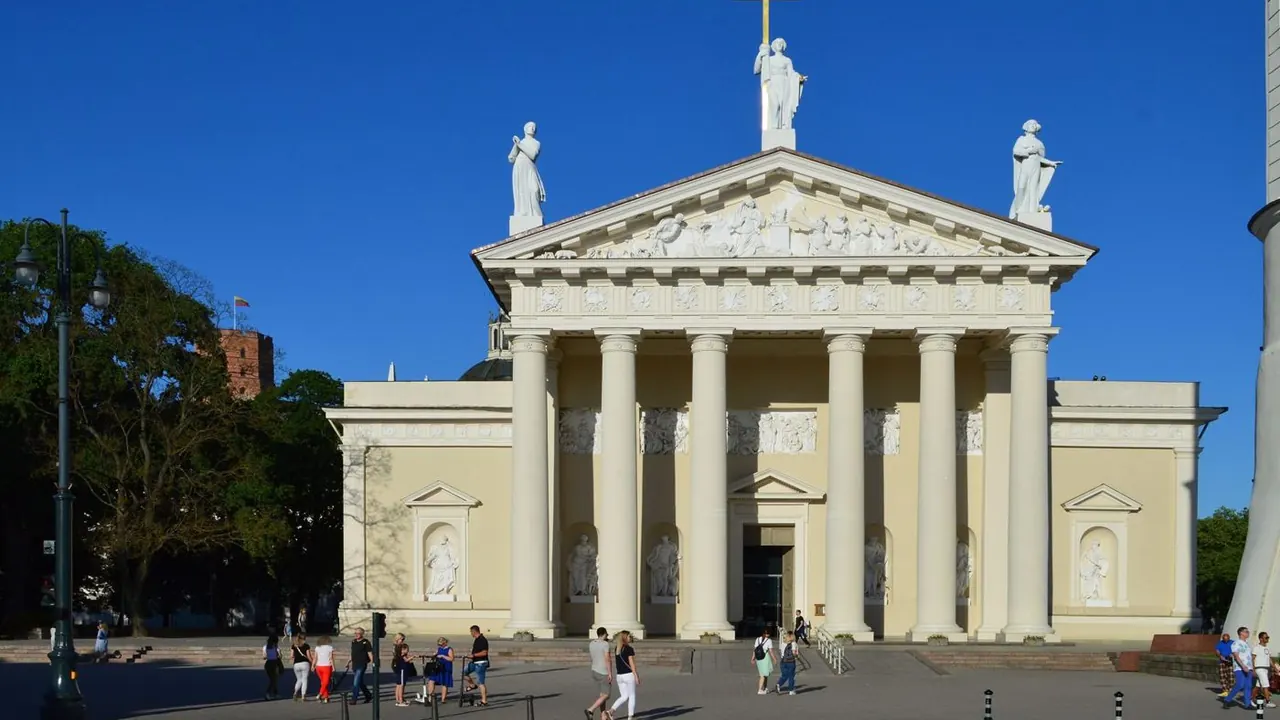
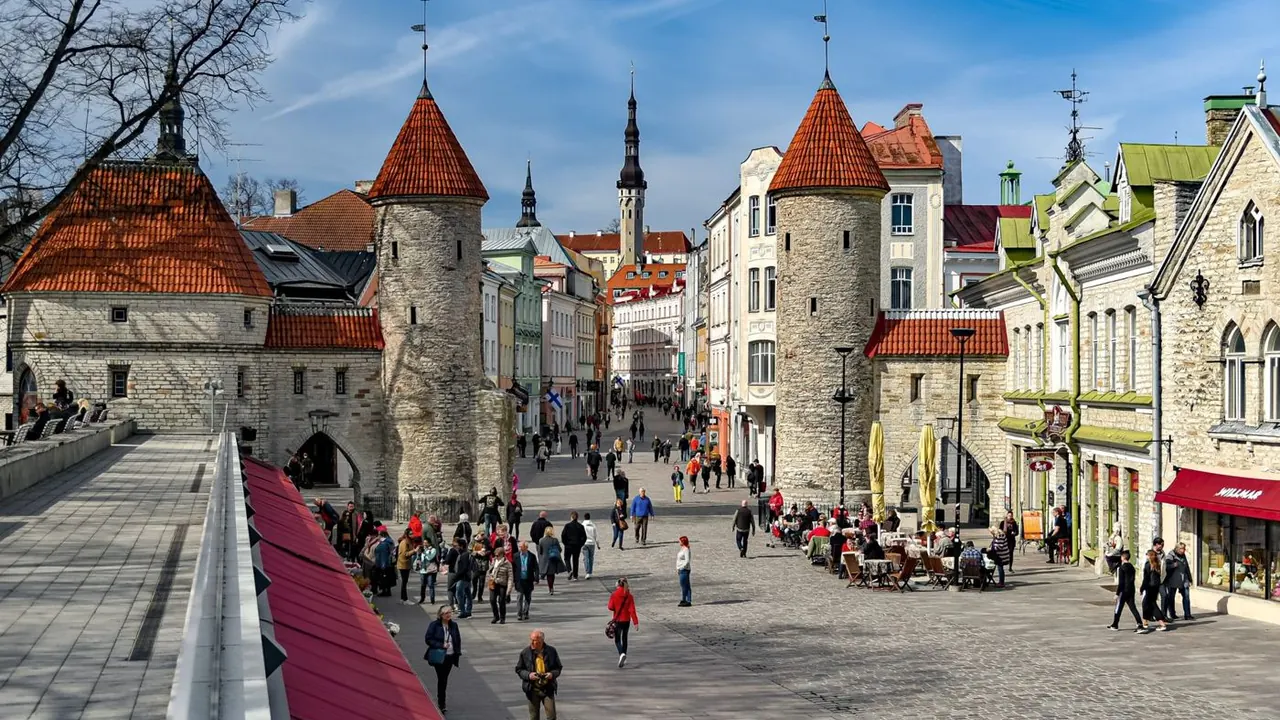
Photos: Vilnius by Scotch Mist, CC BY-SA 4.0, cropped; Tallinn by Jorge Franganillo, CC BY 2.0, cropped.
Vilnius or Tallinn?
Our verdict in twelve categories, each scored against the same fixed benchmark cities, and the climate month by month, so you can choose for your trip.
Choose Vilnius for
- prices
- live music and the arts
- nightlife
For the money, Vilnius goes further. Its baroque Old Town is larger and looser, its twentieth-century history is told with more weight, and hotels, lunches and nights at the opera cost noticeably less. Choose it for a city break with friends or a partner, with a day at Trakai's island castle, and accept that the sea is hours away and there is less laid on for children.
Choose Tallinn for
- families
- wellness
- beaches
Tallinn suits travellers who want a compact, storybook walled town by the sea, with sandy city beaches, a sauna culture you can try without leaving town, and the better museums for children. It is the pick for families and for anyone who likes a slightly Nordic feel with Helsinki across the water, as long as the budget can take Western European prices.
Scoreboard
Twelve categories on one fixed scale from 0 to 100. The shaded stretch is the gap between the two.
Your match
Pick a travel style or drag the sliders, and both match scores follow your weighting.
Wins on prices and live music and the arts with your weighting.
Wins on families and wellness with your weighting.
What matters to you?
Category by category
What the scores mean for a trip.
Beaches & swimming
Tallinn at least has the sea. Pirita's sandy strip under the pines and the bay beaches at Stroomi and Pikakari are a bus ride from the centre, and on a warm summer afternoon a swim in the shallow, cool Gulf is a real option, though it adds up to a few hours on the sand rather than a beach vacation.
Vilnius has no coast within a day's reach, so swimming means lakes: the Green Lakes and Balžis in the pine woods at the city's edge, or the shores around Trakai. Lake swimming here is a freshwater summer extra and nothing more.
Food & drink
Neither city is a food destination and they are evenly matched, but you eat differently in each. Tallinn's best cooking is modern and Nordic, found in small kitchens in Telliskivi, Rotermann and Kalamaja that work with Baltic fish, mushrooms and berries. The medieval-themed places inside the walls are best skipped.
Vilnius is the place for traditional dishes: cepelinai, cold pink beetroot soup in summer, garlic fried bread with beer, and Karaim kibinai on a trip to Trakai. Both have a good market for lunch, Halės for smoked meats and honey, the Baltic Station Market for smoked fish and black bread.
Culture & sights
Each city is built around a medieval old town and rewards two or three days, but they feel different. Tallinn's is compact and Hanseatic, with its walls and towers intact and Toompea's viewpoints over the red roofs, and its museums lean towards art and the sea: Kadriorg Palace, KUMU and the Seaplane Harbour.
Vilnius has a larger, more baroque centre of church towers and crooked lanes, and it goes deeper into history. The Palace of the Grand Dukes, the Museum of Occupations and Freedom Fights in the former KGB building and the old ghetto streets of the "Jerusalem of the North" give a stay more weight.
Nightlife
Both make for a good night or two out, and both go quiet midweek and through the winter. Tallinn splits between Old Town cellar pubs, popular with groups from abroad, and craft beer bars in Telliskivi's old factories, and the white nights of June are its best time. Vilnius feels more student-driven at weekends, with bars spreading out from Vokiečių and Pylimo streets and a small, serious electronic scene in converted industrial spaces.
Nature & outdoors
They are equally green, but the ground is different. Tallinn's outdoors are flat and coastal: the seaside promenade, Pirita's pine forest, the limestone klint at Rannamõisa and the Keila-Joa waterfall, with Lahemaa's bog boardwalks and boulder-strewn peninsulas about an hour out.
Vilnius is hillier and more wooded, with forest trails in Pavilniai and Verkiai a short bus ride away and balloons over the Old Town on summer evenings. Its strength is lakes, from kayaking around Trakai to the canoe routes of Aukštaitija, where Tallinn's is the sea and the bogs.
Day trips
Each has one standout outing, and they could hardly be more different. From Tallinn it is a whole second capital, Helsinki, about two hours away by fast ferry. From Vilnius it is Trakai's red-brick island castle, only half an hour away.
Vilnius has more within an easy hour, with Kaunas and its interwar modernist streets and the hill-forts of Kernavė. Beyond Lahemaa's manor houses and Rakvere castle, Tallinn's surroundings are mostly forest and bog, and Tartu and Pärnu work better as overnight stays.
Good for families
Tallinn is the easier choice with children. The Seaplane Harbour, where children can climb inside a real submarine, the Energy Discovery Centre, the Proto invention factory, a large zoo and the puppet museum fill several days, and Kadriorg Park adds playgrounds and a children's museum.
Vilnius is just as safe and calm but has little made for children, and no major zoo or aquarium. The funicular to Gediminas Tower, boats on the lake at Trakai and the indoor water parks fill the gaps. In both cities the cobbles are hard going with a pushchair.
Getting around
Both centres are walkable, partly hilly and cobbled, with an airport close to town, so neither needs a car. Tallinn has trams to Kadriorg and the airport, and its Helsinki ferry terminals are a short walk from the Old Town. Vilnius has no trams and relies on buses and trolleybuses, but its trains make Trakai and Kaunas easy outings.
Shopping & style
Neither is a shopping destination, and neither has a luxury district. Tallinn's best buys are Estonian design from the studios of Telliskivi and Rotermann, plus glass and hand-knitted woollens from the workshops of St Catherine's Passage. Vilnius leans more towards folk crafts such as linen, woven sashes and amber from Old Town and Užupis workshops, and the Kaziukas fair fills the streets every March.
Affordability
Vilnius is clearly the cheaper stay. Mid-range hotels in and around the Old Town, traditional lunches and local beer cost well below Western European levels, and even the opera is modestly priced.
Tallinn costs about as much as an average Western European capital, more than many visitors expect, and its Old Town restaurants charge for the setting. Transport and museums are cheap in both, and in Tallinn the lunch menus in the districts beyond the walls are the way to save.
Live music & performing arts
The two are close, each with a national opera and ballet and a good classical programme, so the difference lies in what each does best. Tallinn's particular gift is choral music: organ and early-music concerts in Old Town churches, Arvo Pärt on the programme, and the Song Festival on its open-air grounds every few years.
Vilnius has the broader stage scene, with a celebrated school of avant-garde theatre directors, though plays are in Lithuanian and only some have surtitles. Jazz fans can choose between Tallinn's spring festival and Vilnius Jazz in the autumn.
Wellness & relaxation
Tallinn is the better place to unwind, mainly because the sauna is part of city life there: old public saunas in Kalamaja, seaside saunas with a cold plunge into the Baltic, and spa hotels by the harbour. Vilnius has no bathing tradition of its own in town. The wood-fired pirtis is found at lakeside guesthouses and a proper spa stay means Druskininkai, though the city's quiet courtyards and the cafés of Užupis still make for slow mornings.
When should you go?
Pick your month. The climate figures are measured averages, not a forecast.
Vilnius in July
Tallinn in July
Daytime high, °C
Rainfall in the month, mm
Temperature and rainfall are climate normals, averaged over the years shown. Vilnius: 1991-2020 normals, Vilnius (13 km from centre). Tallinn: 1991-2020 normals, Tallin / Harku (10.9 km from centre).
The good months are the same in both cities: late May to early September, when the days are long and mild enough to walk all day. Tallinn is a little cooler, with July highs of about 22°C, but it gets more sunshine from May to July. The Gulf of Finland only reaches about 17°C in August, so a swim is for hot days in July and August. Inland Vilnius peaks at about 24°C in July, which makes it the warmer place for lake swimming, but July is also its rainiest month, at about 90mm.
From December to February both sit at or just below freezing with very little daylight. November and March are cold and grey rather than freezing, and the days are short. In those months walking the cobbles is cold work, and the days are best broken up with museums, concerts or, in Tallinn, a sauna. Late May and September are pleasant walking weather in both, with Vilnius slightly milder in May. Tallinn's October is as wet as its high summer, at about 83mm, while Vilnius dries out in the autumn.
Which traveller are you?
On a family trip with young children, Tallinn needs less planning. You can alternate hands-on museum mornings with afternoons in the park, short tram rides keep small legs fresh, and a wet day always has an indoor plan. In Vilnius that takes more effort.
On a tight budget, Vilnius lets you stay inside the Old Town instead of on the outskirts, eat in taverns every day and still afford a night at the opera. Doing the same in Tallinn means eating set lunches beyond the walls and counting every drink.
For a relaxing and wellness trip, Tallinn lets you build each day around the sauna, the way Estonians do, with a slow walk along the seafront in between and no need to leave town. Vilnius is just as unhurried, but treatments mean a trip to a spa town.
Before you go
| Measure | Vilnius | Tallinn |
|---|---|---|
| Official language | Lithuanian | Estonian |
| Currency | Euro (EUR) | Euro (EUR) |
| Sockets | CF220 V, 50 Hz | CF230 V, 50 Hz |
| Driving side | Right | Right |
| Time zone | UTC+2, UTC+3 in summer | UTC+2, UTC+3 in summer |
| Emergency number | 112 | 112 |
| Elevation | 98 m | 28 m |
| Main airport | Vilnius International Airport (VNO)6 km from centre82 non-stop destinations | Lennart Meri Tallinn Airport (TLL)6 km from centre56 non-stop destinations |
| Public holidays this year | 14 days | 12 days |
By the numbers
| Measure | Vilnius | Tallinn |
|---|---|---|
| City population | 619,405 | 457,572 |
| People per km² | 1,545 | 2,871 |
| Museums within 10 km | 31 | 15 |
| UNESCO World Heritage sites within 50 km | 3 | 1 |
| Swim season, months above 21 °C | - | None |
Where else could you go?
Every comparison below shares a destination with this one, so you can follow Vilnius or Tallinn somewhere new.