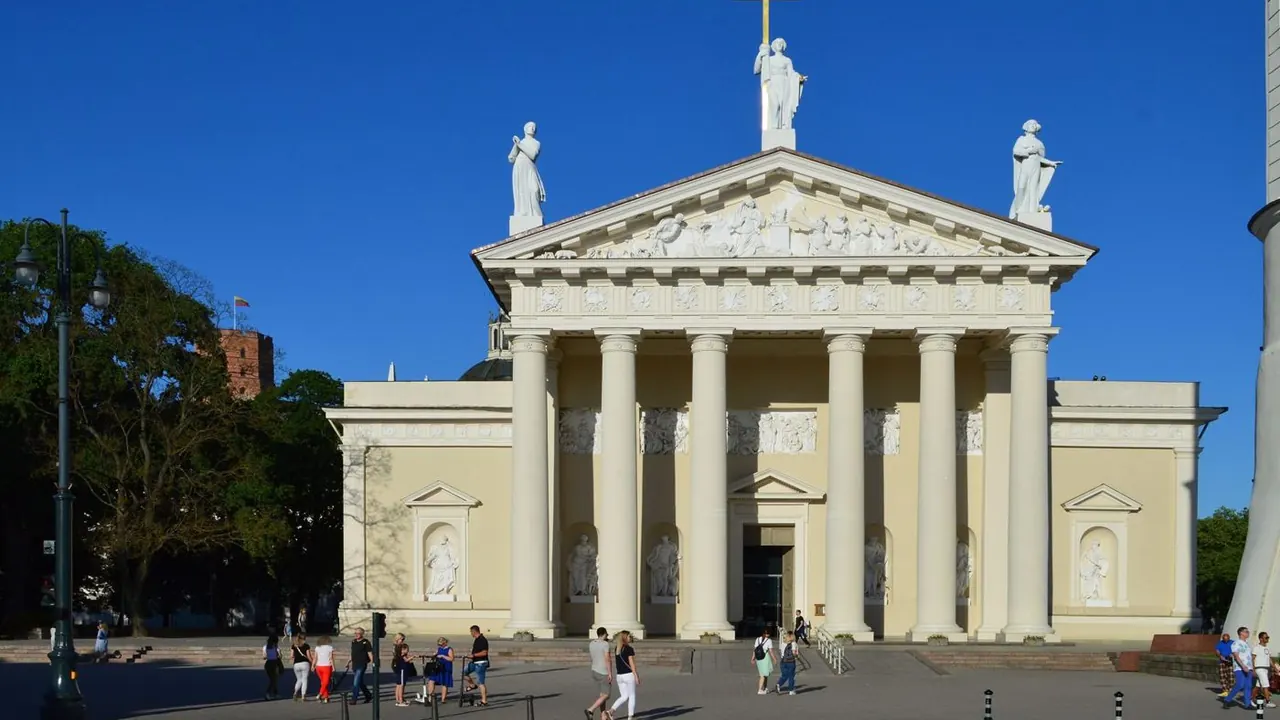
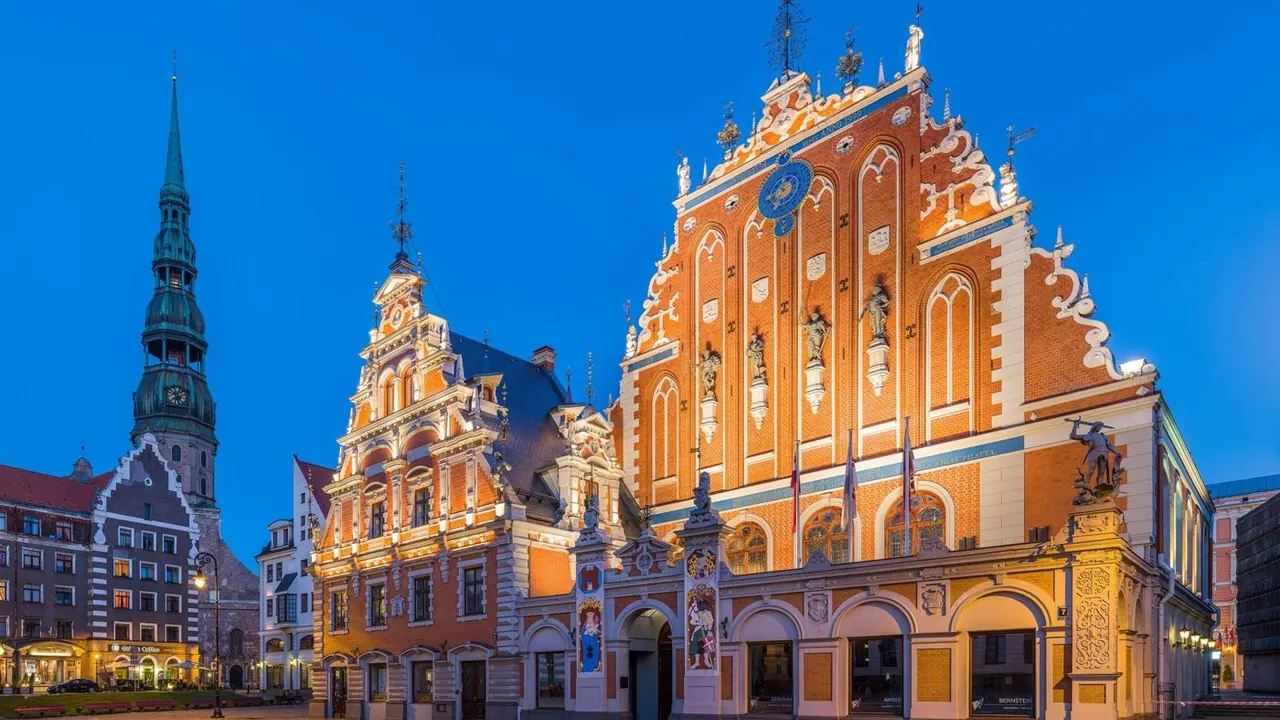
Photos: Vilnius by Scotch Mist, CC BY-SA 4.0, cropped; Riga by Diliff, CC BY-SA 3.0, cropped.
Vilnius or Riga?
Our verdict in twelve categories, each scored against the same fixed benchmark cities, and the climate month by month, so you can choose for your trip.
Choose Vilnius for
- prices
Choose Vilnius for a walking vacation through a large baroque old town set among wooded hills, with the forest starting at the edge of the centre. Its twentieth-century story, told in the former KGB building, and its Jewish past as the "Jerusalem of the North" give it real weight. Trakai and Kaunas are short train rides away, so it rewards history-minded walkers who have no need of the coast.
Choose Riga for
- beaches
- wellness
- live music and the arts
Riga suits travellers who want more than a city. Within half an hour you can be on the long sand at Jurmala or in a spa among the pines, and in the evenings the opera, the Dom organ and the choral tradition give it the deeper music scene of the two. That makes it the better pick for a summer trip that mixes streets and sea, for a slower spa-led break, or for anyone who plans their evenings around concerts.
Scoreboard
Twelve categories on one fixed scale from 0 to 100. The shaded stretch is the gap between the two.
Your match
Pick a travel style or drag the sliders, and both match scores follow your weighting.
Wins on prices with your weighting.
Wins on beaches and wellness with your weighting.
What matters to you?
Category by category
What the scores mean for a trip.
Beaches & swimming
Riga has a real beach on its doorstep. Jurmala's fine pale sand stretches for more than 30km below pine dunes, the water stays shallow far out, and the suburban train gets you there in about half an hour. The sea is cool, though, and only worth swimming in during high summer.
Vilnius is inland. A swimming day means the Green Lakes in the pine woods on the city's northern edge, or the lakes around Trakai. These are pleasant on a hot afternoon, but they are no substitute for the sea.
Food & drink
Both cities serve plain, filling northern food at fair prices, and neither is a place to plan a trip around eating. The difference is in the dishes. Riga leans towards the sea, with smoked eel and sprats at the Central Market's zeppelin hangars, plus rye bread and Black Balsam to finish.
Vilnius is a potato-and-pork kitchen: cepelinai dumplings, cold pink beetroot soup in summer, garlic fried bread with beer, and Karaim kibinai pastries, best eaten in Trakai. Both cities have a good craft beer scene.
Culture & sights
The two are evenly matched, and both need about two or three days. What sets Riga apart is just outside its compact Hanseatic Old Town: street after street of Art Nouveau facades carved with faces and sphinxes around Alberta iela.
Vilnius has a bigger and more rambling baroque old town of church towers and crooked lanes, crowned by Gediminas Tower. Its strength is history told on the spot, from the prison cells of the former KGB building to the old ghetto streets.
Nightlife
Riga offers a little more on a night out. The Old Town's cellar bars, beer pubs and cocktail bars fill at weekends, and a few clubs run until morning, though Friday and Saturday can be loud with groups. Locals prefer the calmer bars around Miera iela and, in summer, the canal-side terraces.
Vilnius runs on student energy at weekends and has a small but serious electronic scene in converted industrial spaces on the edge of the centre. Midweek and in winter it goes noticeably quieter.
Nature & outdoors
Neither city has dramatic scenery, but the green is closer in Vilnius. It sits in a bowl of wooded hills, with steep trails in Pavilniai and Verkiai a short bus ride away, and balloons drift over the Old Town on summer evenings.
Riga is flat. Its best landscapes take a little more travel: the red sandstone cliffs of the Gauja valley at Sigulda, about an hour away, and the misty bog boardwalks of Kemeri beyond Jurmala.
Day trips
Both have a good handful of outings. Riga's highlight is Rundale, a Rastrelli palace with French gardens, best reached by road. Turaida castle at Sigulda and the small medieval town of Cesis add to the list.
From Vilnius the classics are closer and easy by train: the island castle at Trakai in half an hour, and Kaunas, with its interwar modernist district, in about an hour. The UNESCO hill-forts of Kernavė are under an hour away.
Good for families
Riga is the easier city with children. Riga Zoo sits in the Mezaparks forest, the open-air museum has windmills to explore, and Jurmala adds an indoor water park and a beach where small children can paddle far out.
Vilnius has no major zoo or aquarium. Its high points for children are the funicular up to Gediminas Tower, rowing boats on the lake at Trakai and the Energy and Technology Museum. In both cities the cobbles are hard work with a pushchair.
Getting around
Both centres are compact and best seen on foot. Riga is flat, and its trams and suburban trains take you to the zoo, Jurmala and Sigulda, though winter ice slows walking on the cobbles. Vilnius is hillier and relies on buses and trolleybuses, with ride-hailing in wide use. Its airport is a short ride from the centre.
Shopping & style
Riga has the better shopping, mainly for local craft and design. Linen, patterned mittens and amber are easy to find, the Quiet Centre has a few design shops for Latvian fashion and homeware, and the June craft fair at the open-air museum is the best shopping day of the year.
Vilnius is more modest. High-street names line Gediminas Avenue, and the workshops of Užupis sell ceramics and woven sashes. Its big occasion is the Kaziukas folk fair in March. Amber on Pilies Street varies in quality, so take your time choosing.
Affordability
Both are good value for EU capitals, and the overall cost of a stay is much the same. In Riga, the bars and restaurants on the main Old Town squares are where costs creep towards Western levels, while opera seats are remarkably cheap. In Vilnius, cheap traditional lunches and local beer keep daily costs low, and the pressure falls on Old Town hotels at weekends in summer.
Live music & performing arts
Riga is the stronger music city. The National Opera performs most nights in season and seats are easy to get. The Dom Cathedral's great organ and the national orchestra at the Great Guild add more choice. Every five years the Song and Dance Festival fills Mezaparks with tens of thousands of singers.
Vilnius has a smaller offer. Its distinctive strength is theatre, with a celebrated school of avant-garde directors, though surtitles are only sometimes provided. Its long-running jazz festival makes autumn the best time for live music.
Wellness & relaxation
Riga has much more to offer here. Jurmala's spa hotels, Kemeri's peat mud and sulphur springs, and seaside saunas among the pines are all about half an hour away. A countryside pirts steam session with birch whisks is easy to arrange.
Vilnius has hotel spas and water parks with sauna zones. For a real spa stay you would go to Druskininkai, nearly two hours south. What the city does offer is quiet: slow mornings in Užupis cafés and walks along the river.
When should you go?
Pick your month. The climate figures are measured averages, not a forecast.
Vilnius in July
Riga in July
Daytime high, °C
Rainfall in the month, mm
Temperature and rainfall are climate normals, averaged over the years shown. Vilnius: 1991-2020 normals, Vilnius (13 km from centre). Riga: 1991-2020 normals, Riga (4.1 km from centre).
The two share a northern climate, with Vilnius a degree or two warmer in late spring because it lies inland. Both are at their best from late May to early September, when July highs reach about 24°C and the long light evenings suit walking and terraces. Riga adds a short beach season: only in July and August does the Baltic at Jurmala warm to around 19°C. High summer also brings the heaviest showers, and July is the wettest month in both cities.
Autumn is where they part. In Riga the rain hardly eases, and October is almost as wet as July at about 82mm, so take a waterproof if you go for the Gauja valley's autumn colour. Vilnius gets drier after August, which makes September and October easier for walking its hills and the Old Town. From November to March both sit near freezing, with short dark days. In Vilnius, sunshine drops from about 269 hours in July to 28 in December, so a winter visit means indoor sights, concerts and saunas.
Which traveller are you?
On a beach and sun trip, Riga is the clear choice. Jurmala's soft sand runs for kilometres just half an hour away by suburban train. From Vilnius the sea is three to four hours off, so a swim there means a lake.
For a relaxing and wellness trip, Riga wins again. Jurmala has been a spa resort since the nineteenth century, with Kemeri's mud and sulphur springs on hand. Vilnius has only hotel spas, and its proper spa town is about two hours away.
On a culture and arts trip, the two match on sights, but Riga pulls ahead once evenings count. Its opera plays most nights, the Dom organ is heard in regular concerts, and the Art Nouveau streets add a distinct second layer to the Old Town.
Before you go
| Measure | Vilnius | Riga |
|---|---|---|
| Official language | Lithuanian | Latvian |
| Currency | Euro (EUR) | Euro (EUR) |
| Sockets | CF220 V, 50 Hz | CF230 V, 50 Hz |
| Driving side | Right | Right |
| Time zone | UTC+2, UTC+3 in summer | UTC+2, UTC+3 in summer |
| Emergency number | 112 | 112 |
| Elevation | 98 m | 6 m |
| Main airport | Vilnius International Airport (VNO)6 km from centre82 non-stop destinations | Riga International Airport (RIX)9 km from centre93 non-stop destinations |
| Public holidays this year | 14 days | - |
By the numbers
| Measure | Vilnius | Riga |
|---|---|---|
| Population | 619,405 | 588,911 |
| People per km² | 1,545 | - |
| Museums within 10 km | 31 | 12 |
| UNESCO World Heritage sites within 50 km | 3 | 1 |
| Swim season, months above 21 °C | - | None |
Where else could you go?
Every comparison below shares a destination with this one, so you can follow Vilnius or Riga somewhere new.