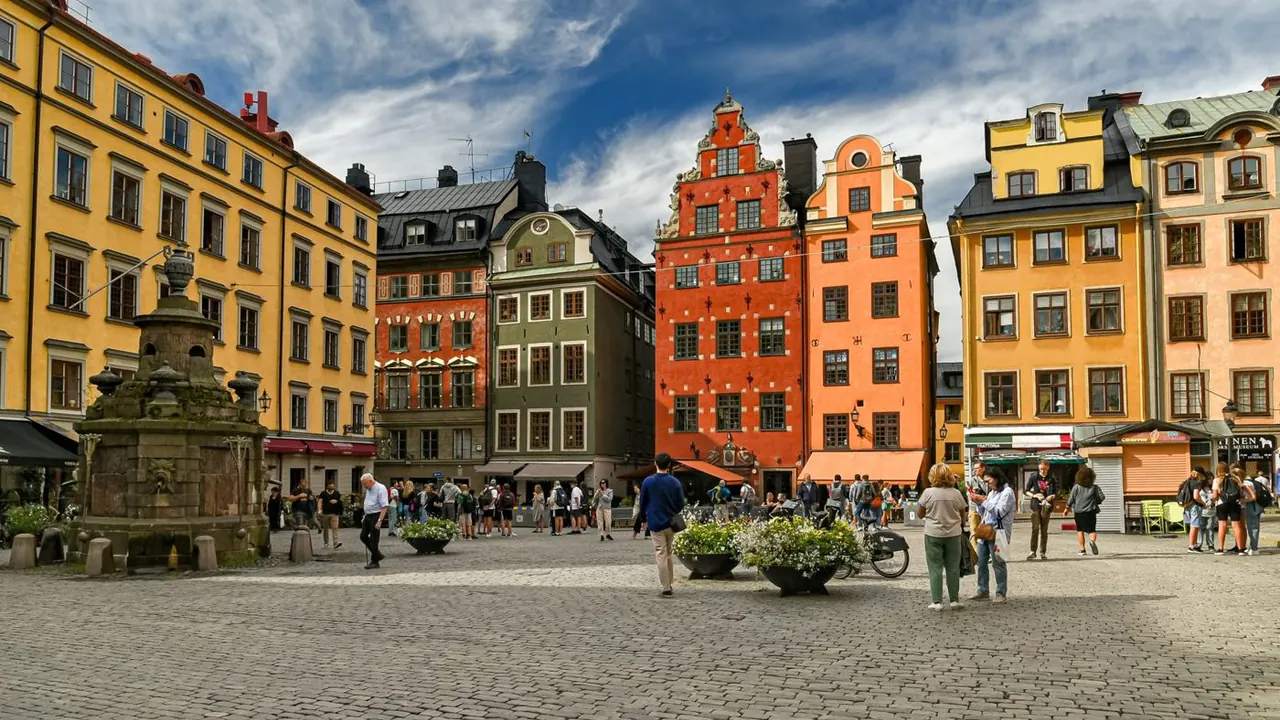
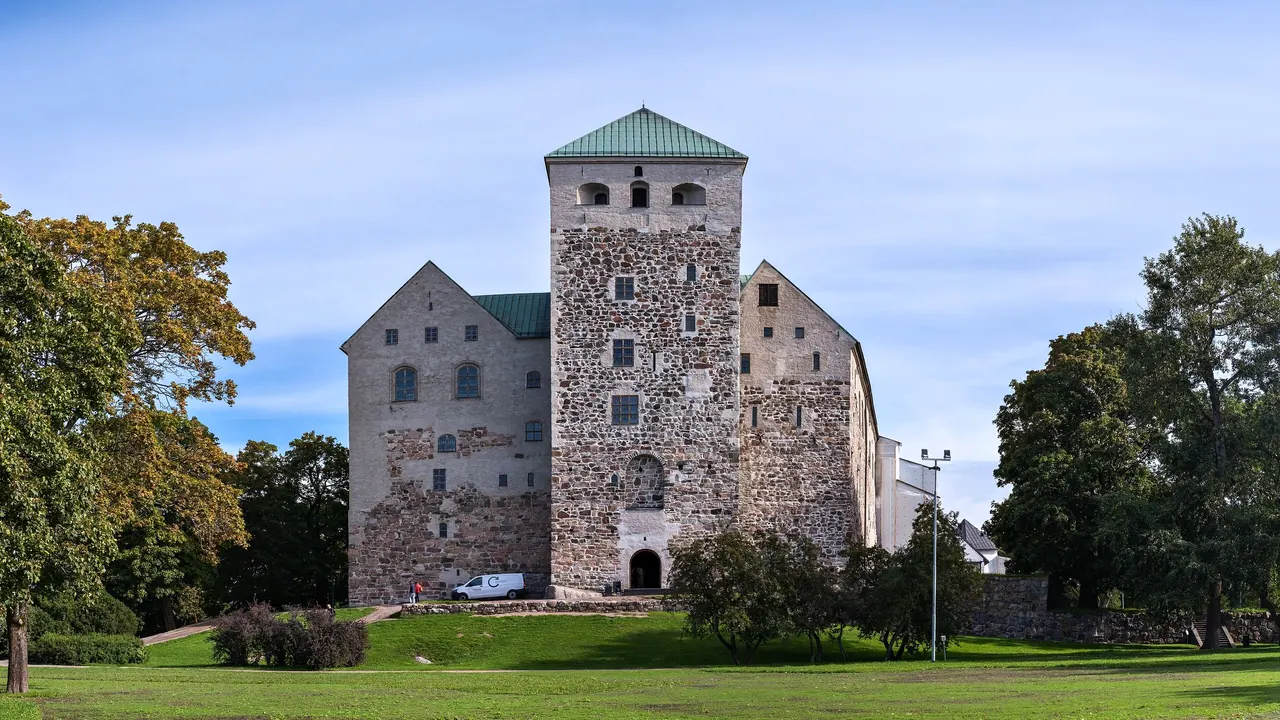
Photos: Stockholm by Jorge Franganillo, CC BY 2.0, cropped; Turku by Christian David, CC BY-SA 4.0, cropped.
Stockholm or Turku?
Our verdict in twelve categories, each scored against the same fixed benchmark cities, and the climate month by month, so you can choose for your trip.
Choose Stockholm for
- shopping
- culture and sights
- live music and the arts
Stockholm is the stronger choice for most trips. It has more to see: the Vasa, Skansen and Gamla Stan are just the start of a museum list that Turku can't match. It also eats better, shops far better and keeps the evenings fuller, and it is easier to get around. Families, first-time visitors to the Nordic countries and anyone with only a few days will get more out of it, as long as they can live with capital-city prices.
Choose Turku for
- prices
- wellness
Turku suits a traveller who wants a smaller, slower place and doesn't need much to fill the days. Two days covers the cathedral, the castle and Luostarinmäki. After that the appeal is the Finnish sauna-and-plunge routine, cycling the Archipelago Trail and an outing to the Moomin island at Naantali. It also works as a quieter stop before or after Helsinki.
Scoreboard
Twelve categories on one fixed scale from 0 to 100. The shaded stretch is the gap between the two.
Your match
Pick a travel style or drag the sliders, and both match scores follow your weighting.
Wins on shopping and culture and sights with your weighting.
Wins on prices and wellness with your weighting.
What matters to you?
Category by category
What the scores mean for a trip.
Beaches & swimming
Neither city is a beach destination, but Stockholm makes swimming easier to fit into a day. Its bathing spots are spread through the city: the rocks on Långholmen, the beach at Smedsuddsbadet and the freshwater lakes at Hellasgården. You reach them by metro or bicycle, and the lakes give you an option besides the Baltic.
Turku has one proper sandy beach, Saaronniemi at the far end of Ruissalo. It is shallow, backed by pines and good for small children, but it takes a bus ride to reach, and algae can cloud the water in late summer. Elsewhere in Turku, swimming means jumping off rocks and jetties in the archipelago.
Food & drink
Stockholm offers a much wider choice. It has serious Nordic tasting menus alongside old dining rooms serving meatballs, herring and toast skagen. Östermalms Saluhall shows the produce, and fika is a daily ritual in the cafés of Södermalm and Vasastan.
Turku's cooking is simpler and close to the archipelago: smoked fish, Baltic herring and dark archipelago bread, best tried at the 1896 market hall. It has only a few ambitious kitchens and little international food, so after a few dinners you will have tried most of what it offers. A summer evening on a boat moored on the Aura is the best of it.
Culture & sights
Stockholm is in another league. Gamla Stan fits medieval lanes and the Royal Palace onto one island, and the Vasa Museum holds a warship that sank on its maiden voyage in 1628. Skansen, the Nationalmuseum, Moderna Museet and the City Hall where the Nobel banquet is held add several more full days.
Turku matters more to Finnish history than its size suggests. It is the country's oldest city and its former capital, and its cathedral was consecrated around 1300. A great fire in the early nineteenth century destroyed most of the old town, though, so there are fewer sights. The castle, the surviving wooden district at Luostarinmäki and the medieval ruins under Aboa Vetus & Ars Nova make a rewarding couple of days rather than a long stay.
Nightlife
Stockholm gives you a choice of styles. Stureplan has dressed-up clubs with strict doors, and Södermalm has relaxed neighbourhood bars and small dance floors. In summer the city stays out late on terraces and by the water.
Turku's nightlife runs on its students. It has pubs and a few clubs around the market square and the river, with late Finnish closing times at weekends. Out of term and on winter weeknights it goes very quiet, so it suits a beer by the Aura more than a big night out.
Nature & outdoors
Both cities sit at the edge of huge granite archipelagos, and both are flat. Stockholm has more nature close to the city: the oak meadows of Royal Djurgården a walk from the centre, the old-growth forest of Tyresta National Park by public transport, and skating on natural ice in a cold winter.
Turku's Archipelago Sea is wilder and more of a trip in itself. The Archipelago Trail loops through it by bridge and small ferry and takes cyclists several days, and the outer islands form a national park. Ruissalo's oak woods are the nearest green escape, and most outdoor life stops outside May to September.
Day trips
From Stockholm, the trips lead to major Swedish history. Uppsala's cathedral and royal burial mounds are a short train ride away, and boats run to Drottningholm Palace and the Viking town of Birka. In summer you can add Vaxholm, Sandhamn or Gripsholm Castle.
Turku's outings are gentler: Naantali's wooden spa town close by, the painted houses of Old Rauma further north, and Helsinki if you can handle two hours each way by train. The best island villages, such as Nagu and Korpo, really need a car.
Good for families
Stockholm has more for children, and most of it is together on Djurgården: Skansen's moose and bears, Junibacken's Astrid Lindgren train ride and the rides at Gröna Lund. The Vasa and the science and natural history museums cover rainy days, so a family can fill a week in any weather.
Turku's big draw is Moomin World at Naantali, a whole island of Moomin houses and characters, but it is mainly open in summer. Forum Marinum's ships and the Kurala farm add a day or two, and the small, calm centre is easy with a pushchair. Out of season there is little to keep children busy.
Getting around
Stockholm covers more ground and still manages it well. A metro with painted bedrock stations, trams, buses and harbour ferries all use one ticket, and the ferry to Djurgården is a sightseeing trip in itself. Spread over fourteen islands, the city involves bridges and some steep climbs on Södermalm.
Turku is simpler but has less transport. Its centre along the Aura is flat and walkable, and the little Föri ferry, free and running for over a century, saves the walk to the next bridge. Beyond the centre you rely on city buses, and the outer archipelago needs a car.
Shopping & style
This is where the two differ most. Stockholm is a design destination: minimalist Swedish fashion and luxury houses around Biblioteksgatan and Norrmalmstorg, NK on Hamngatan, and the vintage and independent shops of SoFo, along with glass, textiles and homeware.
Turku's shopping is that of a regional city, with chains, a department store and a few shops selling Finnish glass and ceramics. The more memorable buys are local crafts: wool and woodwork made in the old workshops at Luostarinmäki, and produce from the market hall.
Affordability
Both are costly by European standards, and neither suits a tight budget. Turku is a little gentler on hotels and transport, helped by the walkable centre and the free river ferry. Stockholm can be cheaper if you time it well, since rooms cost less at weekends and through July.
Both have the same Nordic way of saving money, a filling weekday lunch deal, and both charge heavily for evening drinks. Stockholm offers more for nothing through its free museums, parks and bathing spots. In Turku, buying food from the market hall is the easiest way to save.
Live music & performing arts
Stockholm offers more nights out: opera and ballet at the Royal Swedish Opera, drama at the Royal Dramatic Theatre, two orchestras and a strong jazz and pop circuit. In summer there is baroque opera on the original eighteenth-century stage at Drottningholm Palace Theatre.
Turku's arts are smaller but have deep roots. Finland's oldest orchestra traces back to 1790, and its Swedish-language theatre has been playing since 1839. Summer is its best season, with concerts in the cathedral and castle during the Turku Music Festival and Ruisrock filling Ruissalo for a weekend.
Wellness & relaxation
Both cities are good places to unwind, in different ways. Stockholm's bathing culture is historic and urban: the Art Nouveau Centralbadet and the older Sturebadet, sauna and ice-hole dips at Hellasgården, and waterside spa hotels out towards Nacka.
In Turku the sauna is an everyday habit. Visitors can join in at public saunas by the water and in swimming halls, then plunge into the sea or the winter ice. Naantali next door is an old spa town, and Turku's quieter streets make the whole stay feel slower.
When should you go?
Pick your month. The climate figures are measured averages, not a forecast.
Stockholm in July
Turku in July
Daytime high, °C
Rainfall in the month, mm
Where the figures come from
Stockholm's sunshine is measured 26 km from the centre, at Stockholm Observatoriet.
Temperature and rainfall are climate normals, averaged over the years shown. Stockholm: 2003-2020 (sunshine 1991-2020, rainfall 1981-2010) normals, Stockholm Bromma Airport (7.1 km from centre). Turku: 1991-2020 (sunshine 1961-1990) normals, Turku (7.2 km from centre).
Both cities have the same short Nordic summer, and that is when each is at its best, with boats running out to the islands and the terraces by the water in full use. Swimming belongs to July and August only, when the Baltic reaches about 17°C off both cities. In June the sea is still too cold for most people. July has the warmest days, around 23°C in Stockholm and a degree lower in Turku. May and September are cool but pleasant for walking the streets, and from May to August both get long hours of sunshine, a little more in Stockholm.
The differences show in the dark half of the year. Stockholm's winter days stay just above freezing, while Turku's highs in January and February sit around -1°C. Turku is also wetter from autumn into winter, with about 79mm in October against noticeably less in Stockholm, and its November and December are even darker. Stockholm is the easier winter visit, but neither city is at its best from November to February.
Which traveller are you?
On a shopping trip, Stockholm is the clear choice, with whole days to spend among Swedish fashion labels, a grand department store and second-hand rails. Turku is an afternoon's browsing by comparison, and its best finds are handmade rather than designed.
For a culture and arts trip, Stockholm fills a week, moving from royal palaces and major art collections by day to opera or an orchestra in the evening. Turku is a shorter, quieter lesson in Finland's medieval past.
On a relaxing and wellness trip, the two are close. Stockholm offers a polished spa day in a historic city bathhouse. Turku makes sauna and cold plunge a daily routine, in a smaller city where nothing feels rushed.
Before you go
| Measure | Stockholm | Turku |
|---|---|---|
| Official language | Swedish | Finnish, Swedish |
| Currency | Swedish Krona (SEK) | Euro (EUR) |
| Sockets | CF230 V, 50 Hz | CF230 V, 50 Hz |
| Driving side | Right | Right |
| Time zone | UTC+1, UTC+2 in summer | UTC+2, UTC+3 in summer |
| Emergency number | 112 | 112 |
| Elevation | 22 m | 0 m |
| Main airport | Stockholm-Arlanda Airport (ARN)36 km from centre174 non-stop destinations | Turku Airport (TKU)7 km from centre8 non-stop destinations |
| Public holidays this year | 16 days | 15 days |
By the numbers
| Measure | Stockholm | Turku |
|---|---|---|
| City population | 984,748 | 209,633 |
| People per km² | 5,260 | 854 |
| Museums within 10 km | 266 | 27 |
| UNESCO World Heritage sites within 50 km | 3 | 0 |
| Swim season, months above 21 °C | None | None |
Where else could you go?
Every comparison below shares a destination with this one, so you can follow Stockholm or Turku somewhere new.
- Helsinkivs Turku
- Tallinnvs Turku
- Tartuvs Turku
- Tallinnvs Stockholm
- Helsinkivs Stockholm
- Gothenburgvs Stockholm