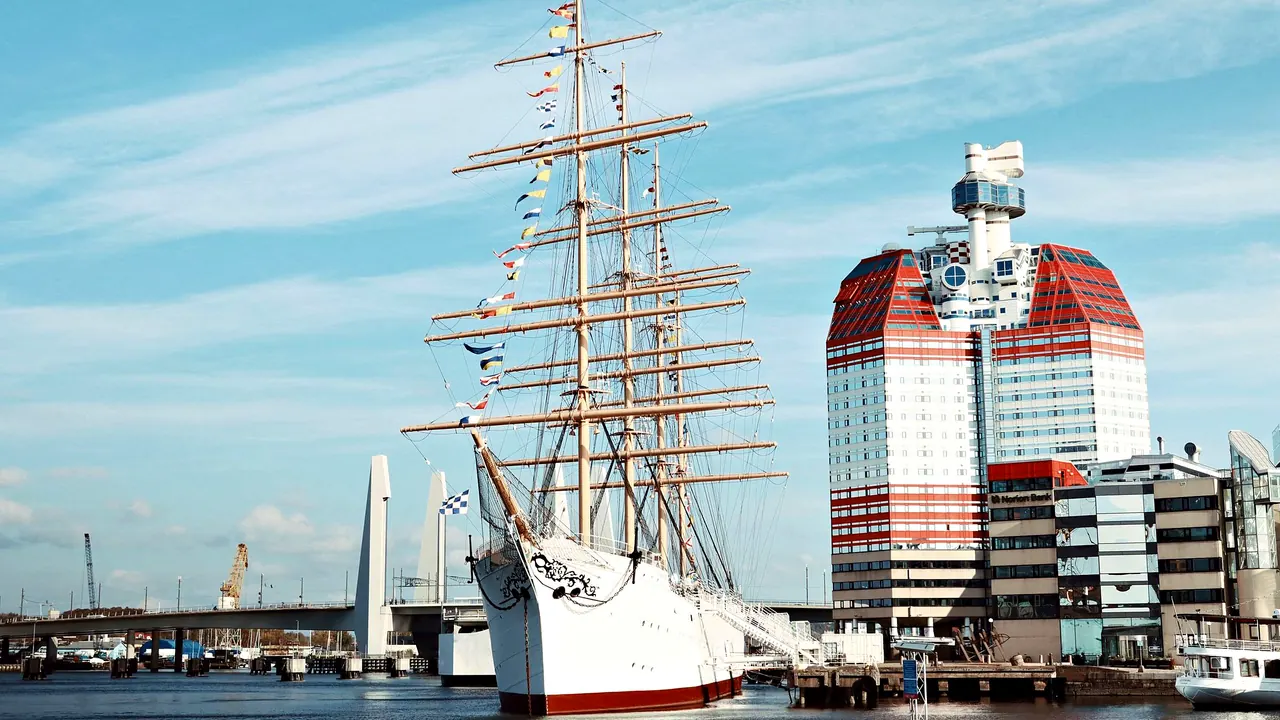
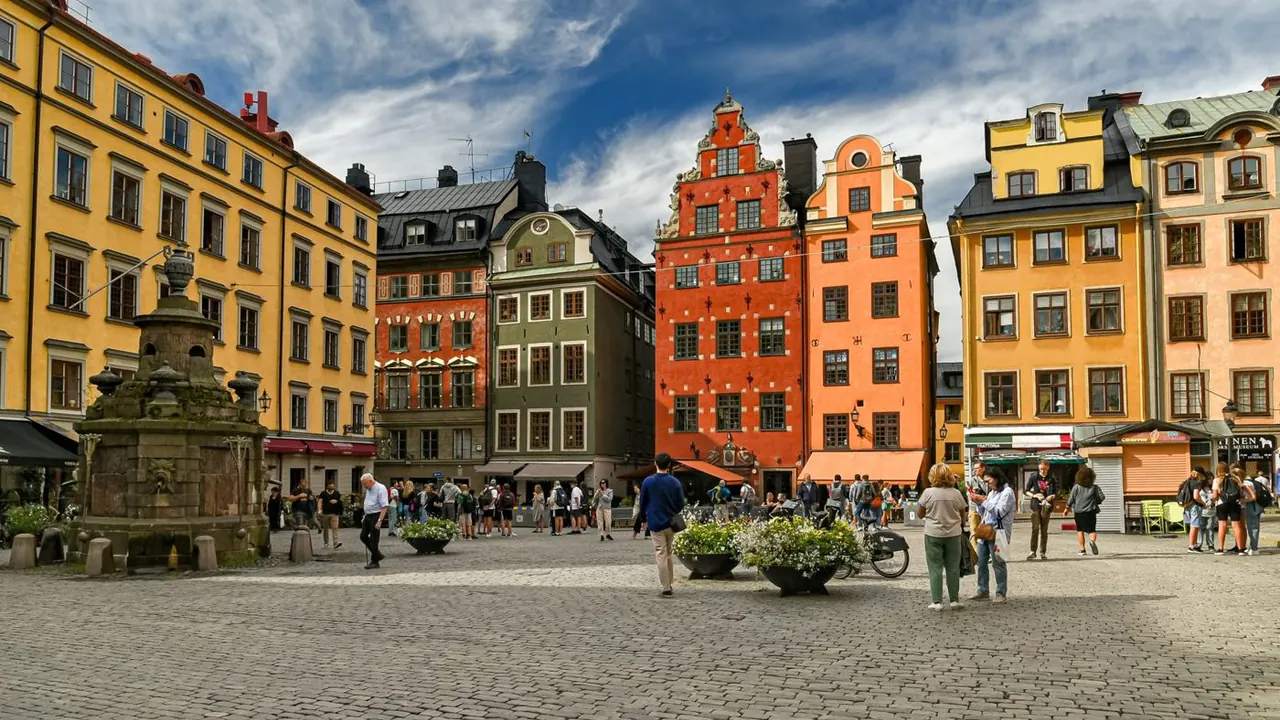
Photos: Gothenburg by Efrem Efre, Pexels License; Stockholm by Jorge Franganillo, CC BY 2.0, cropped.
Gothenburg or Stockholm?
Our verdict in twelve categories, each scored against the same fixed benchmark cities, and the climate month by month, so you can choose for your trip.
Choose Gothenburg for
- prices
Gothenburg suits a slower trip built around the sea. You get shrimp and langoustines from the Bohuslän coast, tram-and-ferry rides out to the car-free southern islands, and Liseberg a short walk from the centre if you have children. The city is smaller and easier to take in, and a little gentler on the wallet, but its sights fill only a couple of days.
Choose Stockholm for
- culture and sights
- shopping
- nightlife
Stockholm is the better pick when you want more to see and do. The Vasa Museum, Skansen and Gamla Stan give it far more sightseeing, its design shopping is worth the trip on its own, and the archipelago, outings to Uppsala and Drottningholm, and nights on Södermalm or around Stureplan give it a range that Gothenburg can't match over a week.
Scoreboard
Twelve categories on one fixed scale from 0 to 100. The shaded stretch is the gap between the two.
Your match
Pick a travel style or drag the sliders, and both match scores follow your weighting.
Wins on prices with your weighting.
Wins on culture and sights and shopping with your weighting.
What matters to you?
Category by category
What the scores mean for a trip.
Beaches & swimming
Neither city is a beach destination. In both, swimming means rock slabs, jetties and small coves during a short July and August season. The difference is the water. Gothenburg has the open, salty Kattegat, along the southern shore at Askim and Hovås or in the coves of Styrsö and Vrångö. Stockholm swims in brackish Baltic water and freshwater lakes, at Långholmen's rocks, at Smedsuddsbadet in the middle of town or at Hellasgården on the edge of the city.
Food & drink
The two eat at much the same level. Both have a costly but serious fine-dining tier and a strong fika habit. Gothenburg's cooking is about the sea: open shrimp sandwiches, langoustines, oysters and the autumn lobster, best seen at Feskekôrka and Stora Saluhallen.
Stockholm covers more ground. It has Nordic tasting menus with game and foraged herbs, alongside husmanskost such as meatballs with lingonberries and fried herring, all on show at Östermalms Saluhall. Go to Gothenburg for shellfish and to Stockholm for classic Swedish home cooking.
Culture & sights
Gothenburg's sights are modest: the canal grid laid out by Dutch engineers, the wooden houses of Haga, the art museum on Götaplatsen and the old East India Company building. They are pleasant and take a couple of days.
Stockholm is far ahead. The Vasa warship, Skansen, the Royal Palace in Gamla Stan, the Nationalmuseum and Moderna Museet fill several full days, and the woodland cemetery of Skogskyrkogården adds a UNESCO site. If sightseeing is the point of the trip, Stockholm is the clear winner.
Nightlife
Gothenburg's evenings are friendly and end early. There are student pubs and cocktail bars around Järntorget and Andra Långgatan, a few mainstream clubs on Avenyn, and not much open in the small hours.
Stockholm offers a fuller night out. The polished clubs around Stureplan run late at weekends, and Södermalm has a more relaxed spread of bars and small dance floors. Drinks are expensive in both cities.
Nature & outdoors
Both are sea cities with granite islands offshore. Gothenburg's southern archipelago is bare and heathery, with coastal paths a tram and ferry ride away. Inland there are the Delsjön lakes and the start of the Bohusleden trail. It is good for a day of kayaking or island walking.
Stockholm has more within reach. Its archipelago of tens of thousands of islands begins almost at the quayside, Royal Djurgården is a short walk from the centre, and the old pine forest of Tyresta National Park is about forty minutes away. In a cold winter, skating on natural ice adds a season Gothenburg lacks.
Day trips
Gothenburg's day trips run along the coast. Marstrand and its fortress, Varberg and the Trollhättan locks are easy by public transport, but the fishing villages of Smögen and Fjällbacka and the rock carvings at Tanum are much easier with a car.
Stockholm has the richer list, and most of it needs no car. Uppsala's cathedral and royal burial mounds, Sigtuna and Drottningholm Palace are reachable by train or boat, and summer boats add Birka, Gripsholm Castle and Vaxholm.
Good for families
Both cities are very easy with children, with buggy-friendly transport, safe streets and plenty for rainy days. What differs is the layout. Gothenburg puts Liseberg, Scandinavia's largest amusement park, and Universeum within walking distance of the centre, and the animal park in Slottsskogen is free. Stockholm gathers its family attractions on Djurgården, where Skansen's moose and bears, Junibacken's Astrid Lindgren world and the Gröna Lund rides sit side by side.
Getting around
Stockholm has the fuller network. The Tunnelbana metro, with its painted stations cut from the rock, shares one ticketing system with the trams, buses and harbour ferries to Djurgården. Gothenburg has no metro, but its flat, compact centre and wide tram network cover most visits, and the same ticket takes you out to the islands. Walking is simpler in Gothenburg, since Stockholm's fourteen islands mean bridges and some steep climbs on Södermalm.
Shopping & style
Gothenburg has a solid high street on Kungsgatan and the Nordstan mall. Its best browsing is in the craft shops of Haga and the second-hand stores of Linnéstaden and Majorna, but there is no luxury end to speak of.
Stockholm is a real shopping destination for Scandinavian design. Swedish fashion labels and international luxury houses cluster around Biblioteksgatan and Norrmalmstorg, NK on Hamngatan is the classic department store, and SoFo on Södermalm is full of vintage and independent boutiques.
Affordability
Both cities are expensive, and the gap between them is small, though Gothenburg is a touch gentler. The same tactics work in both: make the weekday set lunch your main meal, and stay at weekends or in July, when business travel drops and hotel rates ease. Gothenburg's transport ticket includes the island ferries. In Stockholm, the free parks, bathing spots and several free museums help offset the high price of drinks.
Live music & performing arts
Gothenburg has a fine orchestra, the Gothenburg Symphony at Konserthuset, and a harbour-side opera house with a respected dance company. Its indie and metal stages around Järntorget, and Way Out West in August, give it a livelier pop side.
Stockholm's stage is grander. It has the Royal Swedish Opera, the Royal Dramatic Theatre and two concert halls, and in summer the Drottningholm Palace Theatre stages baroque opera using its original eighteenth-century machinery. Drama in both cities is mostly in Swedish.
Wellness & relaxation
Gothenburg keeps wellness simple: a sauna, then a dip in the sea from a jetty, the municipal pools of Valhallabadet and a few hotel spas.
Stockholm has proper historic bathhouses. Centralbadet is an Art Nouveau spa from 1904, Sturebadet is older still, and waterside spa hotels line Nacka and the inner archipelago. In both cities, fika and a slow ferry ride do much of the relaxing.
When should you go?
Pick your month. The climate figures are measured averages, not a forecast.
Gothenburg in July
Stockholm in July
Daytime high, °C
Rainfall in the month, mm
Where the figures come from
Stockholm's sunshine is measured 26 km from the centre, at Stockholm Observatoriet.
Temperature and rainfall are climate normals, averaged over the years shown. Gothenburg: 1991-2020 normals, Goteborg Save Airport (9.8 km from centre). Stockholm: 2003-2020 (sunshine 1991-2020, rainfall 1981-2010) normals, Stockholm Bromma Airport (7.1 km from centre).
Both cities are at their best from June to August. Afternoons reach about 21°C in Gothenburg and 23°C in Stockholm, the evenings stay light, and swimming from the rocks becomes realistic. From May to July, Stockholm is the sunnier and drier of the two. The west-coast sea at Gothenburg warms a little sooner, to around 15°C in June against Stockholm's 12°C, though neither gets beyond cool.
Outside summer the main difference is rain. Gothenburg is damp for much of the year, peaking near 95mm in October. Stockholm's winters are drier but slightly colder, with daytime highs close to freezing in January and February. May and September are good months for walking in both cities, mild and less wet than late autumn.
Which traveller are you?
On a culture and arts trip, choose Stockholm. The Vasa Museum, Skansen, the Royal Palace and the national galleries fill several days, and the Royal Opera and the baroque theatre at Drottningholm fill the evenings. Gothenburg's sights take about two days.
For a shopping trip, Stockholm is again the stronger choice. Scandinavian design and minimalist Swedish fashion are its speciality, from NK and Biblioteksgatan to the vintage shops of SoFo. Kungsgatan and Haga in Gothenburg are pleasant for browsing but have nothing like the same depth.
On a tight budget, Gothenburg is slightly easier. Neither city is cheap, but Gothenburg's flat centre is walkable, its transport ticket includes the ferries to the car-free islands, and a picnic on the granite rocks makes a good alternative to dinner out.
Before you go
| Measure | Gothenburg | Stockholm |
|---|---|---|
| Official language | Swedish | Swedish |
| Currency | Swedish Krona (SEK) | Swedish Krona (SEK) |
| Sockets | CF230 V, 50 Hz | CF230 V, 50 Hz |
| Driving side | Right | Right |
| Time zone | UTC+1, UTC+2 in summer | UTC+1, UTC+2 in summer |
| Emergency number | 112 | 112 |
| Elevation | 12 m | 22 m |
| Main airport | Göteborg Landvetter Airport (GOT)19 km from centre79 non-stop destinations | Stockholm-Arlanda Airport (ARN)36 km from centre174 non-stop destinations |
| Public holidays this year | 16 days | 16 days |
By the numbers
| Measure | Gothenburg | Stockholm |
|---|---|---|
| City population | 674,529 | 984,748 |
| People per km² | 2,484 | 5,260 |
| Museums within 10 km | 39 | 266 |
| UNESCO World Heritage sites within 50 km | 0 | 3 |
| Swim season, months above 21 °C | None | None |
Where else could you go?
Every comparison below shares a destination with this one, so you can follow Gothenburg or Stockholm somewhere new.
- Aarhusvs Gothenburg
- Copenhagenvs Gothenburg
- Malmovs Gothenburg
- Oslovs Gothenburg
- Turkuvs Stockholm
- Tallinnvs Stockholm