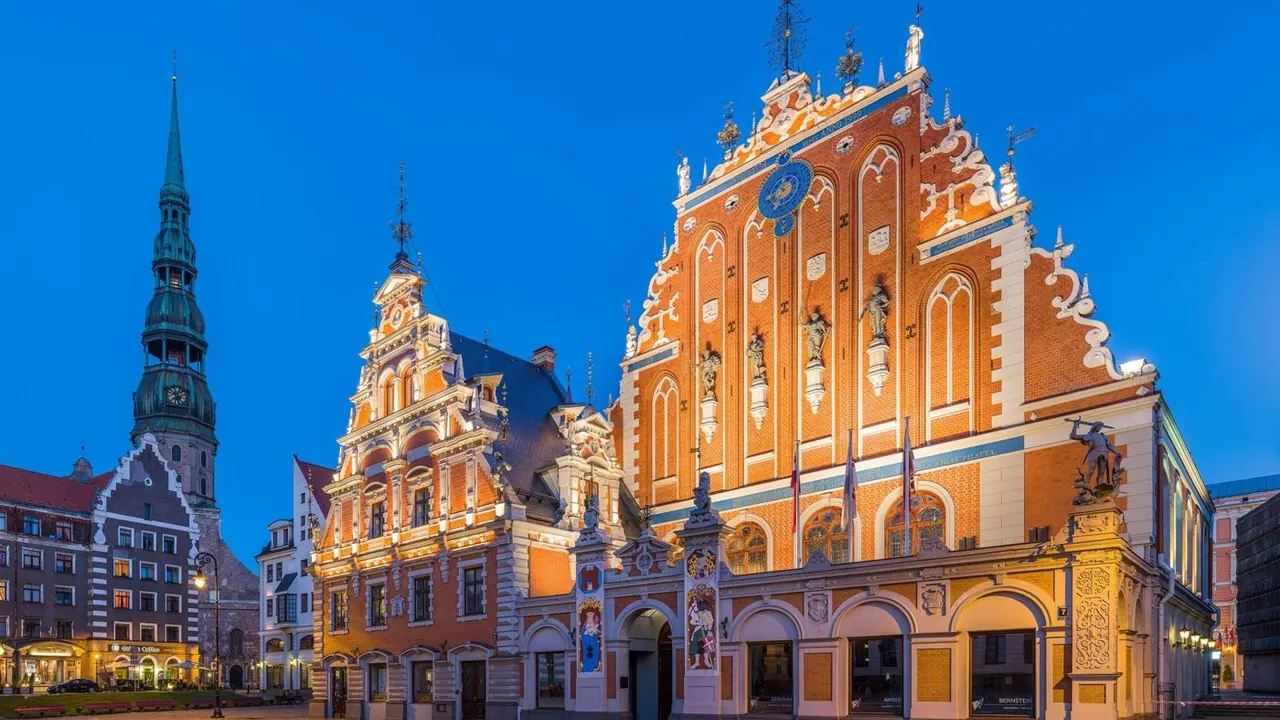
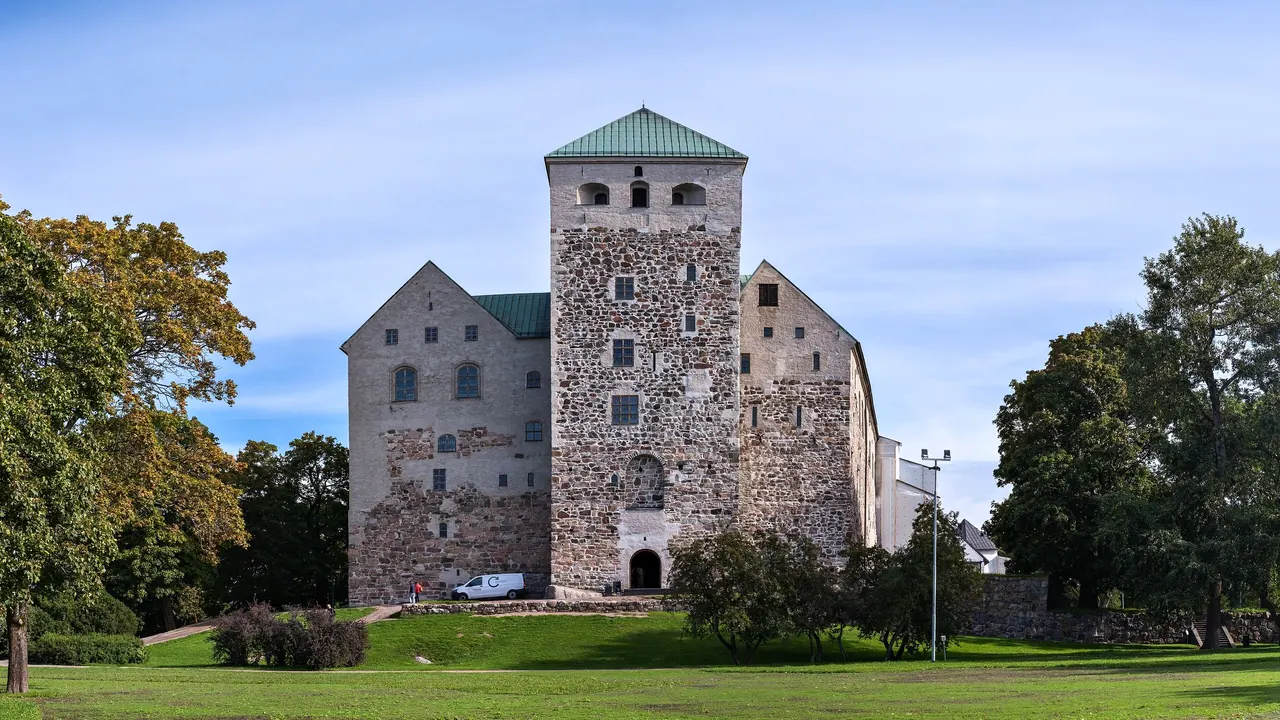
Photos: Riga by Diliff, CC BY-SA 3.0, cropped; Turku by Christian David, CC BY-SA 4.0, cropped.
Riga or Turku?
Our verdict in twelve categories, each scored against the same fixed benchmark cities, and the climate month by month, so you can choose for your trip.
Choose Riga for
- prices
- live music and the arts
- culture and sights
Riga is the fuller city break of the two. It has a UNESCO-listed Hanseatic Old Town, whole streets of carved Art Nouveau facades and an opera house where good seats are easy to get, and your money goes noticeably further. It suits travellers who want three or four days of sights, concerts and evenings out, and in summer the long sands of Jurmala add a beach day.
Choose Turku for
- families
- wellness
- nature and the outdoors
Turku is for a slower trip, mostly outdoors in summer. The Archipelago Sea begins at the edge of town, Moomin World is a short bus ride away at Naantali, and a sauna followed by a plunge in the sea is an everyday habit, not a spa treatment. It is the better choice for families with young children and for anyone who would rather spend the days among islands and boats than in museums, as long as they budget for Nordic prices.
Scoreboard
Twelve categories on one fixed scale from 0 to 100. The shaded stretch is the gap between the two.
Your match
Pick a travel style or drag the sliders, and both match scores follow your weighting.
Wins on prices and live music and the arts with your weighting.
Wins on families and wellness with your weighting.
What matters to you?
Category by category
What the scores mean for a trip.
Beaches & swimming
Neither city is a beach destination, but Riga has the better sand. Jurmala, half an hour away by suburban train, is a resort strip of pale sand more than 30km long, backed by dunes and wooden villas, with shallow water that suits small children.
Turku's main sandy beach is Saaronniemi at the far tip of Ruissalo. Otherwise people swim off granite rocks and jetties in the archipelago. The water is a touch cooler than at Jurmala and can cloud with algae in late summer, so swimming is mostly something to do after a sauna.
Food & drink
Riga eats better and more cheaply. Its Central Market, spread through former zeppelin hangars, is a far bigger show of smoked fish, sauerkraut, honey and rye bread than Turku has. Good bakeries and cafés, a craft beer scene and the bitter Black Balsam round it out, as long as you eat away from the themed restaurants of the Old Town.
Turku's 1896 market hall and archipelago produce, such as herring and dark sweet bread, are pleasant, and summer dinners on the Aura's moored boats have real charm. But the choice of restaurants is small, the international range is narrow and the bills are Nordic.
Culture & sights
Riga has far more to see. Its compact Hanseatic Old Town, with St Peter's, the Dom Cathedral and the House of the Blackheads, is only half of it. The streets around Alberta iela hold one of the richest collections of Art Nouveau architecture anywhere, and the national art and occupation museums add depth.
Turku's strength is older history: it was Finland's first capital, and its medieval cathedral and castle are national landmarks. After the fire of 1827, though, only the wooden quarter at Luostarinmäki survives, and the rest is a pleasant set of smaller museums rather than a historic townscape.
Nightlife
Riga is the better place for a night out. Cellar bars, beer pubs and a few late clubs fill the Old Town at weekends, sometimes loudly with groups on a city break. Locals go to calmer bars around Miera iela and to canal-side terraces in summer.
Turku's nights depend on its students and the season. The bars by the market square and the boats on the Aura are lively on summer weekends and during university terms, but winter weeknights are very quiet.
Nature & outdoors
Turku has the more striking landscape on its doorstep. The Archipelago Sea, one of the largest archipelagos in the world, starts at the city's edge with thousands of granite islands. Kayaking, sailing, island-hopping and the multi-day Archipelago Trail by bike and ferry are the main summer pastimes, and Ruissalo's old oak forest is a bus ride from the centre.
Riga's best scenery means an hour's trip to the Gauja valley, with sandstone cliffs, canoeing and a cable car over the gorge at Sigulda. Kemeri's bog boardwalks are a quieter alternative. It is good walking country, but there is less of it close to the city.
Day trips
Riga has the stronger day trips. Rundale, Rastrelli's Baroque palace with French gardens, is a real highlight, and Sigulda's Turaida castle and the medieval town of Cesis add castles and old streets within easy reach.
Turku's outings are gentler: wooden Naantali twenty minutes away, the painted houses of Old Rauma, and Helsinki as a long day by train. The archipelago villages really need a car or ferry, so most trips from Turku are to small towns rather than major sights.
Good for families
Turku is the better choice with children, especially in summer. Moomin World on its island at Naantali is a highlight young children remember. Forum Marinum's ships and the Kurala farm with its animals add more, and Finnish public life is built around welcoming families.
Riga is safe and calm, with a zoo in the Mezaparks forest, the open-air farmstead museum and a water park at Jurmala. Still, little in the city is designed for children, and the cobbled Old Town is hard going with a pushchair.
Getting around
Both are easy to manage on foot, with the main sights a few minutes' walk apart. In Riga the canal parks link the Old Town, the market and the Art Nouveau streets. In Turku the riverside paths along the Aura do the same, and the little free Föri ferry saves a walk to the next bridge.
Beyond the centre, Riga's trams, trolleybuses and suburban trains take some working out but reach Jurmala and Sigulda. Turku's single bus network is simpler to use, and cycling is common in summer.
Shopping & style
Riga has more worth taking home. Latvian linen, patterned knitted mittens, amber, ceramics and Black Balsam are easy to find, the Central Market sells everyday goods, and the June craft fair at the open-air museum is the best shopping of the year.
Turku's shops are mostly Nordic chains around the market square, plus a department store. The craft workshops at Luostarinmäki and a few shops selling Finnish glass and textiles are the main draw for visitors.
Affordability
Riga is much the cheaper city. Hotels, transport, museums and café lunches are moderate for an EU capital, opera tickets are unusually accessible, and the only real expense is eating and drinking on the Old Town squares.
In Turku, eating out is where money goes fastest. Dinner and especially alcohol are expensive by most European standards, so the weekday lunch buffet and self-catering from the market hall are the main ways to keep costs down.
Live music & performing arts
Music is one of Riga's great strengths. The National Opera and Ballet performs most nights from autumn to spring, the Dom Cathedral's organ is heard in regular concerts, and the national choral tradition peaks every five years when tens of thousands of singers fill the open-air stage at Mezaparks.
Turku's offer is smaller but has history: Finland's oldest orchestra and its oldest working theatre building. Its liveliest season is summer, with classical concerts in the cathedral and castle and the long-running Ruisrock festival on Ruissalo.
Wellness & relaxation
Turku makes relaxing part of daily life. Public saunas sit by the water, and a plunge in the sea or through a hole in the winter ice is open to any visitor. Spas at Naantali and on Ruissalo are close by, and the whole city moves at an easy pace.
Riga's wellness is half an hour away on the coast. Jurmala has seaside spa hotels and Kemeri's sulphur springs and mud treatments, and the Latvian pirts, with its birch-branch whisking, is best found in the countryside rather than in town.
When should you go?
Pick your month. The climate figures are measured averages, not a forecast.
Riga in July
Turku in July
Daytime high, °C
Rainfall in the month, mm
Temperature and rainfall are climate normals, averaged over the years shown. Riga: 1991-2020 normals, Riga (4.1 km from centre). Turku: 1991-2020 (sunshine 1961-1990) normals, Turku (7.2 km from centre).
Both cities are at their best from June to August. Riga is a little warmer, with July highs around 24°C against 22°C in Turku. The sea off Jurmala reaches about 19°C in August, a couple of degrees warmer than the water around Turku, so a swim is more inviting on the Latvian side. High summer is also wetter than spring in both places, and October is nearly as wet. May and September are mild and pleasant for walking the streets or the archipelago paths, though too cool for swimming.
From November to March both cities are cold and dark, with daytime highs close to freezing. Turku's sunshine shows how big the swing is: about 290 hours in June, and barely 20 in December. In winter Riga has more to offer, because its opera and concert season runs through the cold months. Turku in winter is mainly about the sauna and a dip through the ice.
Which traveller are you?
On a culture and arts trip, choose Riga. The Old Town's spires and guild houses, the Art Nouveau quarter and an opera and ballet company performing most nights from autumn to spring give it much more to see and hear than Turku's castle and cathedral.
On a family trip with young children, Turku is the better fit. Moomin World at Naantali, ships to climb aboard at Forum Marinum, a living-history farm and a city where children are welcome everywhere outweigh Riga's zoo and water park, especially in summer.
For a trip on a tight budget, go to Riga. Hotels, cafés, transport and opera tickets cost much less than in Turku, where dinner and especially drinks run at Nordic prices and a lunch buffet or the market hall is often the main way to save.
Before you go
| Measure | Riga | Turku |
|---|---|---|
| Official language | Latvian | Finnish, Swedish |
| Currency | Euro (EUR) | Euro (EUR) |
| Sockets | CF230 V, 50 Hz | CF230 V, 50 Hz |
| Driving side | Right | Right |
| Time zone | UTC+2, UTC+3 in summer | UTC+2, UTC+3 in summer |
| Emergency number | 112 | 112 |
| Elevation | 6 m | 0 m |
| Main airport | Riga International Airport (RIX)9 km from centre93 non-stop destinations | Turku Airport (TKU)7 km from centre8 non-stop destinations |
| Public holidays this year | - | 15 days |
By the numbers
| Measure | Riga | Turku |
|---|---|---|
| City population | 588,911 | 209,633 |
| People per km² | - | 854 |
| Museums within 10 km | 12 | 27 |
| UNESCO World Heritage sites within 50 km | 1 | 0 |
| Swim season, months above 21 °C | None | None |
Where else could you go?
Every comparison below shares a destination with this one, so you can follow Riga or Turku somewhere new.