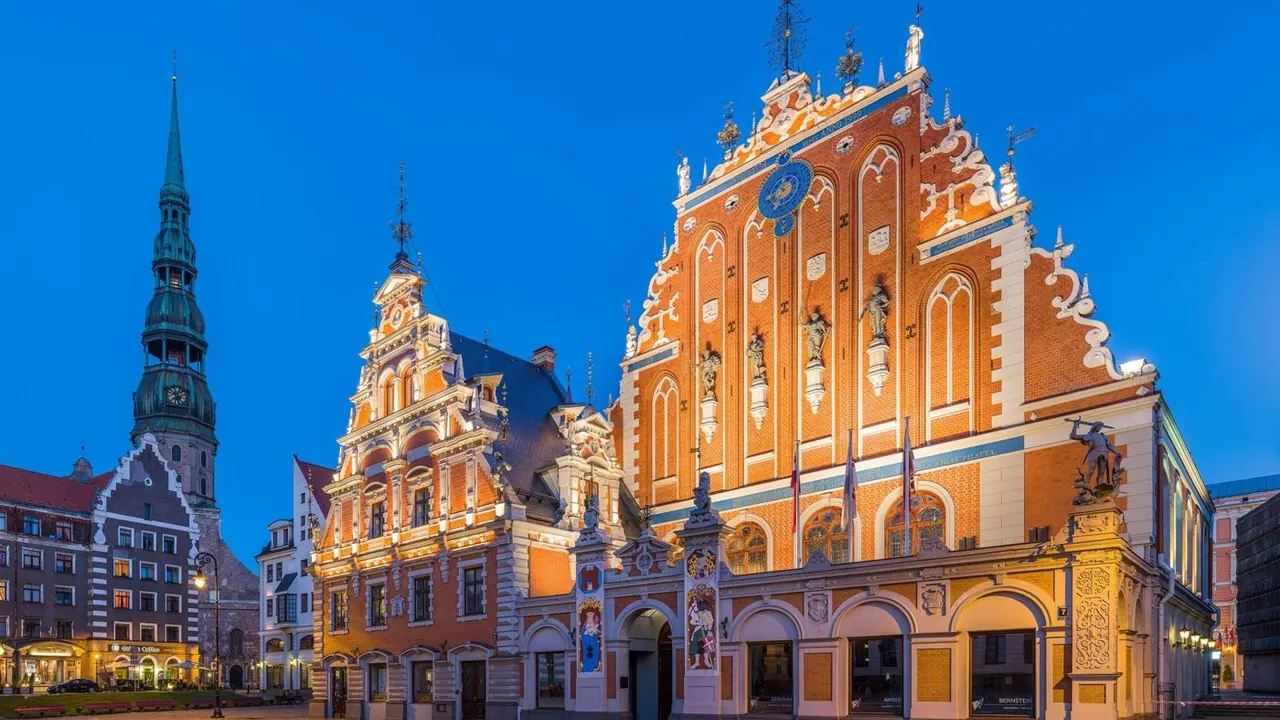
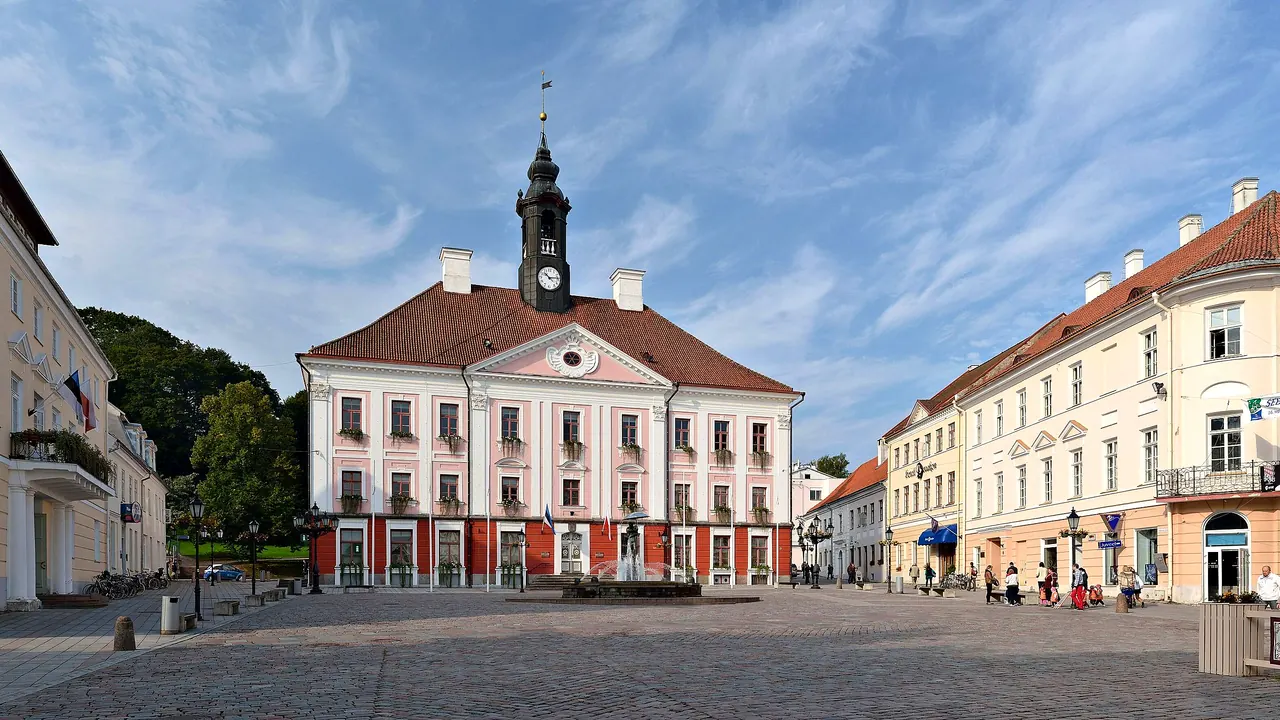
Photos: Riga by Diliff, CC BY-SA 3.0, cropped; Tartu by Ivar Leidus, CC BY-SA 3.0 EE, cropped.
Riga or Tartu?
Our verdict in twelve categories, each scored against the same fixed benchmark cities, and the climate month by month, so you can choose for your trip.
Choose Riga for
- live music and the arts
- culture and sights
- beaches
Riga is the better choice for most city trips. It has the richer architecture, with a Hanseatic Old Town and whole streets of carved Art Nouveau facades. It also has a proper opera house and concert halls, a bigger market and food scene, livelier evenings, and a long sandy coast a short train ride away. Pick it if you want several days of sights, music and eating out, with seaside or spa time added in summer.
Choose Tartu for
- getting around
Tartu suits a slower, smaller trip. It is a university town of classical streets, a wooded hill and a riverside, with students setting the pace. It works if you would rather walk, cycle and canoe than queue for sights, and if you want to go on into the Estonian countryside of lakes, smoke saunas and Old Believer villages. In winter it is the base for the ski trails of the Otepää uplands. Expect to fill a few quiet days rather than a full itinerary.
Scoreboard
Twelve categories on one fixed scale from 0 to 100. The shaded stretch is the gap between the two.
Your match
Pick a travel style or drag the sliders, and both match scores follow your weighting.
Wins on live music and the arts and culture and sights with your weighting.
Wins on getting around with your weighting.
What matters to you?
Category by category
What the scores mean for a trip.
Beaches & swimming
Riga is clearly better for the beach. Jurmala's wide pale sand runs for over 30km along the Gulf of Riga, backed by pine dunes and wooden villas. It is about half an hour away by suburban train. The water stays shallow far out, which helps with small children, though it is only warm enough to swim in high summer.
Tartu's beach options are smaller and spread out. You can bathe in town at Anne Kanal, a sandy spot on a side channel of the river. For lake beaches, Pühajärve and the Lake Peipus shore are 40 minutes or more away, and Peipus needs a car.
Food & drink
Both cities cook the same northern food of rye bread, smoked fish, mushrooms and berries, but Riga has far more of it. The Central Market in its five zeppelin hangars is one of the great food markets of the region. The Quiet Centre adds serious modern restaurants, and Latvian craft beer and Black Balsam give the drinking its own character. The main warning is to eat beyond the Old Town's themed tourist restaurants.
In Tartu, eating out mostly means student cafés, bakeries, a few ambitious kitchens and the market hall by the river. The best food is out of town, in the smoked fish and Peipus onions sold at roadside stalls in the Old Believer villages.
Culture & sights
Riga has much more to see. The Hanseatic Old Town has the spires of St Peter's, the Dom Cathedral and the House of the Blackheads. Just outside it, the Art Nouveau streets around Alberta iela make a world-class collection of the style. Add national museums of art and occupation and an open-air ethnographic museum, and two or three days are well filled.
Tartu offers a different kind of heritage, small and academic. It has the neoclassical university building, the sloping Town Hall Square and the cathedral ruins on Toome Hill. Its one major museum is the Estonian National Museum, a modern building that tells the country's story well.
Nightlife
Riga has more of a night out. Its Old Town cellar bars, cocktail bars and clubs stay open into the morning, though Friday and Saturday bring loud groups on short city breaks. For a calmer evening, locals head to the bars around Miera iela and the canal-side terraces.
Tartu's nights follow the university year. In term time, cheap pubs and cider bars around Rüütli street can be busy even on weeknights. In summer, when students leave, evenings move to quiet riverside terraces and there is little for clubbers.
Nature & outdoors
The outdoors in the two cities is about equal but differs in kind. Riga's best landscapes are coastal or an hour away. The Gauja valley at Sigulda has red sandstone cliffs, trails and a cable car over the gorge, and Kemeri's bog boardwalks are best seen in early mist.
Tartu has its river in the middle of town, so you can canoe or paddleboard on the Emajõgi without leaving the city. It also has hillier country close by: the sandstone walk at Taevaskoja, the Otepää lakes and ski trails, and the Haanja hills. Lake Peipus adds its wide open skies.
Day trips
Riga has the better choice of day trips, most within an hour or so. Rundale's Baroque palace by Rastrelli, the castles of Turaida and Sigulda, medieval Cesis and the wooden villas of Jurmala are all easy outings, several of them by train.
From Tartu, the highlight is Tallinn's walled old town, but it is about two hours each way. Closer outings are quieter and more rural: hilly Viljandi, the painted Old Believer villages along Peipus and the white Alatskivi manor. Most of the villages need a car.
Good for families
Both are safe, easy cities for children, but they keep them busy in different ways. In Riga, family days lean outdoors and towards summer: the zoo in the Mezaparks forest, the windmills at the open-air museum, and Jurmala's shallow sea and water park. The Old Town cobbles are hard on pushchairs.
Tartu's centrepiece is indoors. The AHHAA science centre and its planetarium can fill a whole day whatever the weather, and the toy museum in an old wooden house and the national museum's interactive displays add to it. Tartu holds up well on a rainy or wintry trip, while Riga comes into its own when the sun is out.
Getting around
Getting around is easy in both, with sights a short walk apart. Tartu's centre is flat and very small, and an electric bike-share covers the outer sights. Riga's Old Town, market and Art Nouveau streets are also close together, with trams and trolleybuses for the rest and suburban trains straight to the coast and Sigulda.
The real difference is beyond the city. From Riga, many outings work without a car. From Tartu, the lakes, manors and villages almost always need one.
Shopping & style
Riga is much better for shopping. Its Latvian linen, patterned mittens, amber and wooden kitchenware are worth seeking out, and design shops in the Quiet Centre sell local fashion. The Central Market sells everything from honey to everyday goods, and the June craft fair at the open-air museum is the year's best single occasion.
Tartu covers everyday needs, with a department store, a few malls and a handful of boutiques selling Estonian woollens and ceramics. It has little for anyone after fashion.
Affordability
Costs are much the same, moderate rather than cheap. In Riga, the trap is the Old Town squares, where food and drink approach Western prices, while cafés a few streets away and opera tickets are good value.
In Tartu, daytime is the cheap part, with student cafés, lunch menus, buses and bikes. Dinners in good restaurants and drinks in bars cost what they would further west.
Live music & performing arts
Riga is the stronger city for music. The national opera and ballet performs most nights in its white house by the canal, with seats that are easy to get. The national symphony plays in the Great Guild, and the Dom Cathedral holds regular organ concerts. Every five years, the Song and Dance Festival fills the Mezaparks stage with tens of thousands of singers.
Tartu has a respectable stage for its size. The Vanemuine stages opera, ballet and musicals, and the city held the first Estonian Song Festival in 1869. For a visitor, though, the choice of performances is far narrower.
Wellness & relaxation
Riga has a slight edge, mainly because of Jurmala. It has been a spa resort since the nineteenth century, and its hotels among the pines offer pools, massage and Kemeri's sulphur and peat mud treatments, all half an hour from the city.
Tartu has no springs or spa resort, and its relaxation centres on the sauna. That means the water centre in town, saunas by the river in summer, and above all the smoke saunas of Võromaa farms, which end with a pond plunge or a roll in the snow.
When should you go?
Pick your month. The climate figures are measured averages, not a forecast.
Riga in July
Tartu in July
Daytime high, °C
Rainfall in the month, mm
Temperature and rainfall are climate normals, averaged over the years shown. Riga: 1991-2020 normals, Riga (4.1 km from centre). Tartu: 1991-2020 normals, Tartu (8.9 km from centre).
The two cities have the same northern year, and the best of it runs from late May to early September, when days are long and mild enough for walking all day. July is the warmest month in both, with highs around 24°C in Riga and a touch lower in Tartu. Summer is also the wettest part of the year, with showers rather than long grey spells. Tartu's long summer days are its brightest, with about 276 hours of sunshine in July.
Riga's sea is only pleasant for a swim in July and August, when it reaches about 19°C, and it cools quickly in September. March and November are raw and grey in both cities, a few degrees above zero. From December to February, daytime highs stay around freezing. Tartu is the colder of the two, with January highs of about -2°C and the snow and ice that come with them. Riga's concerts and indoor sights make it the easier city break in winter.
Which traveller are you?
For a culture and arts trip, choose Riga. Its UNESCO-listed Old Town and the Art Nouveau streets around Alberta iela outclass Tartu's small classical centre. The national opera and ballet performs most nights from autumn to spring, and the Dom Cathedral holds organ concerts.
On a food and nightlife trip, Riga is the better bet. The Central Market's zeppelin hangars, the modern kitchens of the Quiet Centre and a strong craft beer scene give it range. Its Old Town bars and clubs keep going long after Tartu's student pubs quieten.
On an outdoors trip, the two are close, but Tartu has nature closer to hand. You can canoe the Emajõgi in town, cycle out to the floodplain meadows and walk the Taevaskoja cliffs half an hour away. Riga's best country, the Gauja valley, is an hour off.
Before you go
| Measure | Riga | Tartu |
|---|---|---|
| Official language | Latvian | Estonian |
| Currency | Euro (EUR) | Euro (EUR) |
| Sockets | CF230 V, 50 Hz | CF230 V, 50 Hz |
| Driving side | Right | Right |
| Time zone | UTC+2, UTC+3 in summer | UTC+2, UTC+3 in summer |
| Emergency number | 112 | 112 |
| Elevation | 6 m | 79 m |
| Main airport | Riga International Airport (RIX)9 km from centre93 non-stop destinations | Tartu Airport (TAY)8 km from centre1 non-stop destination |
| Public holidays this year | - | 12 days |
By the numbers
| Measure | Riga | Tartu |
|---|---|---|
| City population | 588,911 | 97,759 |
| People per km² | - | 2,507 |
| Museums within 10 km | 12 | 4 |
| UNESCO World Heritage sites within 50 km | 1 | 1 |
| Swim season, months above 21 °C | None | - |
Where else could you go?
Every comparison below shares a destination with this one, so you can follow Riga or Tartu somewhere new.