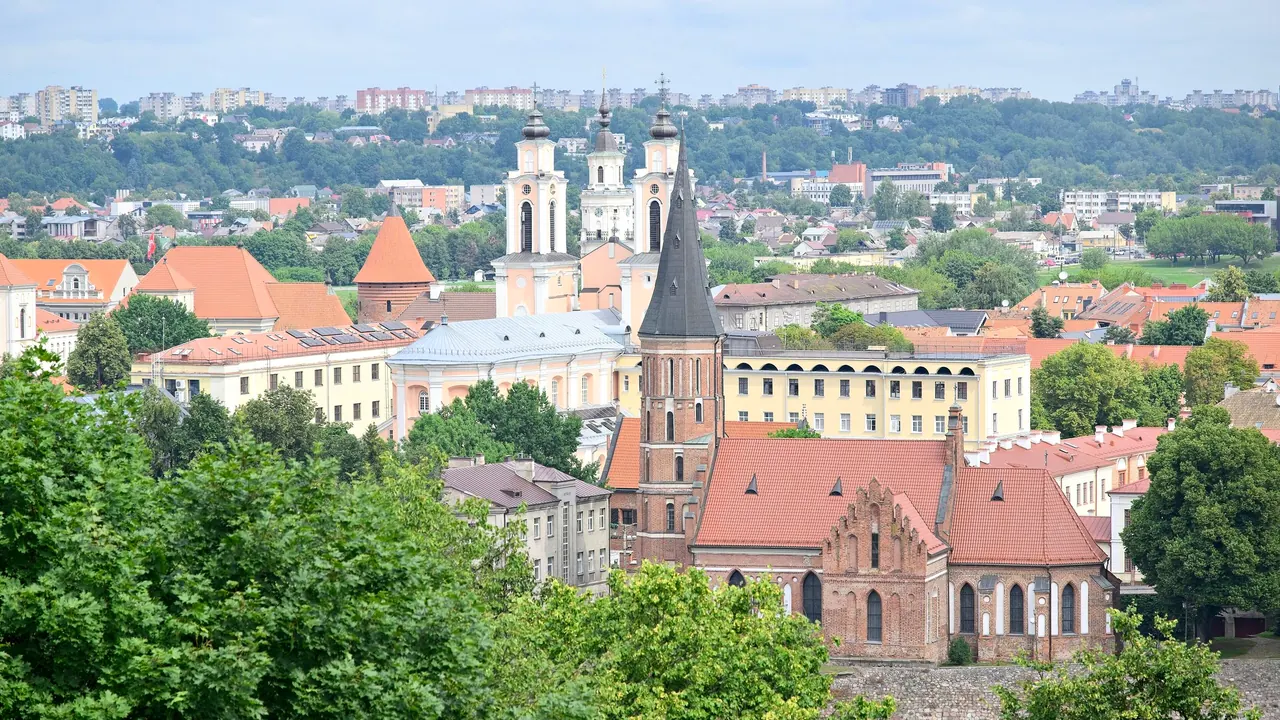
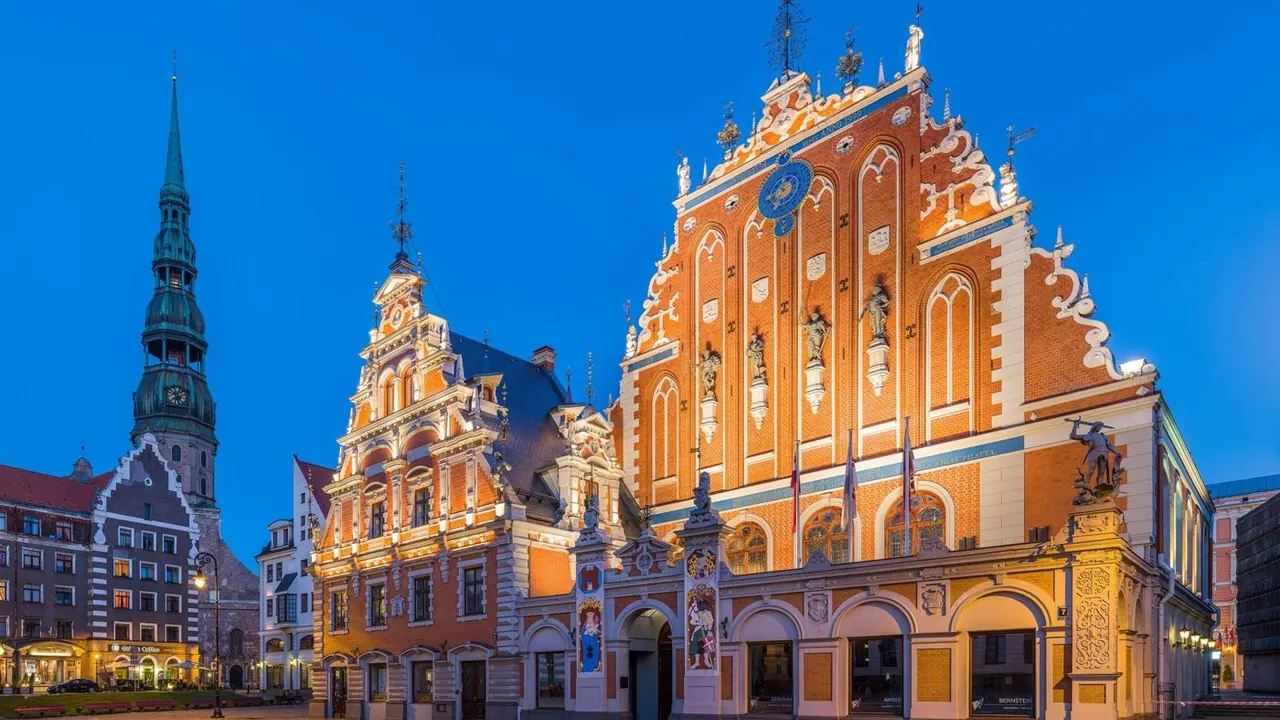
Photos: Kaunas by dave massie, CC BY 2.0, cropped; Riga by Diliff, CC BY-SA 3.0, cropped.
Kaunas or Riga?
Our verdict in twelve categories, each scored against the same fixed benchmark cities, and the climate month by month, so you can choose for your trip.
Choose Kaunas for
- prices
- day trips
Kaunas suits a traveller who wants a calm, inexpensive few days and cares about architecture. Its interwar modernist centre, a UNESCO site of functionalist offices and villas from the years it served as provisional capital, has no counterpart in Riga. Daily costs are lower, and Vilnius and Trakai are each about an hour away for anyone who wants more. Expect quiet evenings and a modest food scene.
Choose Riga for
- nightlife
- live music and the arts
- beaches
Riga is the fuller trip. It has stronger music, with opera most nights through the cooler months, more bars and places to eat beyond the Old Town, a real sand beach at Jurmala by suburban train, and the Gauja valley for walking. If you have one Baltic weekend and broad interests, you will get more from it.
Scoreboard
Twelve categories on one fixed scale from 0 to 100. The shaded stretch is the gap between the two.
Your match
Pick a travel style or drag the sliders, and both match scores follow your weighting.
Wins on prices and day trips with your weighting.
Wins on nightlife and live music and the arts with your weighting.
What matters to you?
Category by category
What the scores mean for a trip.
Beaches & swimming
Neither city is a beach destination, but Riga at least has the sea. Jurmala's 30km of soft, pale sand, backed by pine dunes and shallow for a long way out, is half an hour away by suburban train.
Kaunas is inland, and the coast at Palanga is a long day out. Swimming here is in fresh water at the reservoir, in the Nemunas at Panemune or in lakes such as Lampedziai. In high summer these can be a touch warmer than the Gulf, but the setting is a park lido rather than a seaside.
Food & drink
Both cuisines are plain northern cooking, built on rye bread, potatoes and dairy, but Riga gives a visitor more to explore. The Central Market, five zeppelin hangars of smoked eel, sprats and pickles, is worth a morning on its own. The Quiet Centre has a run of restaurants cooking with foraged produce, though the Old Town's themed places are best skipped.
Kaunas is the place for well-made cepelinai and cold pink beetroot soup, with coffee shops and craft beer serving its students. Modern Baltic kitchens are fewer, and a few days covers the best of them.
Culture & sights
Each city pairs an old town with a striking later layer, and each takes two or three days. Riga's is the richer whole. A Hanseatic core of spires and merchant houses gives way to the carved Art Nouveau blocks of Alberta iela and Elizabetes iela, and national museums and an open-air ethnographic park fill out the rest.
Kaunas answers with interwar modernism: functionalist and Art Deco buildings topped by Christ's Resurrection Church and its rooftop view. Add the Ciurlionis museum and the sobering Ninth Fort, and the sights are rewarding but fewer.
Nightlife
Riga has the clear edge after dark. Its Old Town cellar bars and clubs stay busy late at weekends, if loud with groups on city breaks. Locals spread out to Miera iela, canal terraces and the warehouse quarter by the market, so there is choice beyond the centre.
Kaunas runs on its students. Friday and Saturday fill the vaulted bars off Laisves aleja, but midweek the city goes to bed early and the summer break thins the crowd. It suits a beer or a glass of mead after dinner more than a late night.
Nature & outdoors
The land around both cities is flat, wooded and full of water, but Riga has the more striking scenery within reach. At Sigulda the Gauja valley cuts through red sandstone cliffs and caves, with trails, canoeing and a cable car. The raised-bog boardwalks at Kemeri feel like another world.
Kaunas keeps its outdoors gentle: the Azuolynas oak grove in town, cycle paths through the pines by the reservoir and canoeing on the Nemunas Loops. It is pleasant, but there is no single standout landscape.
Day trips
From Kaunas the main outing is another city. Vilnius and its large baroque old town are about an hour away by train, and Trakai's island castle is about the same distance by road. The Rumsiskes open-air museum of farmsteads is only a short drive away.
Riga's outings are palaces, castles and small towns rather than a second capital. Sigulda's Turaida castle and medieval Cesis lie on the railway to the north-east, so you can reach them without a car. Rundale's Rastrelli palace and gardens, about an hour and a quarter to the south, is the one trip that is easiest by road.
Good for families
Kaunas keeps children busy on a small scale. There are two interwar funiculars with river views at the top, the carved figures of the Devils' Museum and a modest zoo in the oak grove, plus the aviation museum for a wet morning. It suits a short summer stay.
Riga has more for a family to do. At Jurmala the sea stays shallow far out, and a large indoor water park covers cool days. The zoo in the Mezaparks forest and the windmills of the open-air museum make easy outings. In both cities the old-town cobbles are hard work with a pushchair.
Getting around
Both centres are walkable, neither has a metro, and cobbles slow you down in each. Riga's transport reaches a little further: it has trams as well as trolleybuses and buses, and suburban trains run straight to Jurmala and Sigulda, so the main outings need no car.
Kaunas is simpler to understand, with one long pedestrian street joining the modernist centre to the Old Town. The Ninth Fort, Pazaislis and the reservoir still need a bus or a cheap taxi.
Shopping & style
In Kaunas you shop for what you need. There are high-street chains along Laisves aleja and malls at the edge of the centre. For gifts there are amber, linen, woven sashes and honey from the market stalls, but you will find few independent boutiques.
Riga gives a browser more to find. Design shops in the Quiet Centre sell Latvian fashion and homeware, and patterned knitted mittens, ceramics and wooden kitchenware add to the craft choice, though the Old Town's souvenir shops vary in quality. If you visit in June, the craft fair at the open-air museum gives you an event Kaunas has nothing to match.
Affordability
Kaunas is the cheaper stay, most noticeably for rooms, which cost well below what a capital charges. Hearty meals, local beer, taxis and museum tickets are all modestly priced, and modern restaurants and imported drinks are the main exceptions.
Riga is reasonable too, but restaurants and bars on its Old Town squares charge close to Western European levels. Eating and sleeping a few streets out narrows the gap, and its opera seats are a real bargain.
Live music & performing arts
Music is where Riga pulls furthest ahead. The National Opera and Ballet performs most nights from autumn to spring, the national symphony orchestra plays in the Great Guild hall, and the Dom Cathedral organ is heard regularly. Every five years the Song and Dance Festival brings tens of thousands of singers to Mezaparks.
For its size, Kaunas has a respectable season. It has operetta and musicals at the State Musical Theatre, a well-regarded drama company and a philharmonic. The spring jazz festival and the summer concerts at Pazaislis Monastery are the times to aim for.
Wellness & relaxation
Both countries keep the wood-fired sauna with birch whisks and a cold plunge, called the pirtis in Lithuania and the pirts in Latvia. Riga's advantage is the coast: Jurmala's spa hotels, Kemeri's sulphur springs and its peat mud treatments are half an hour away among the pines.
Kaunas sends spa-goers to Birstonas, a mineral-spring resort about 40 minutes down the Nemunas. In the city itself there are saunas by the lakes and slow walks in the oak grove.
When should you go?
Pick your month. The climate figures are measured averages, not a forecast.
Kaunas in July
Riga in July
Daytime high, °C
Rainfall in the month, mm
Temperature and rainfall are climate normals, averaged over the years shown. Kaunas: 1991-2020 normals, Kaunas (6.7 km from centre). Riga: 1991-2020 normals, Riga (4.1 km from centre).
The two cities follow the same northern rhythm. May to September is the time to go, with daytime highs of about 24°C in July in both and long, light evenings. Kaunas gets around 281 hours of sunshine that month. Summer is also the wettest stretch, with July bringing about 85mm to each city. Only Riga has the sea, and the Gulf reaches about 19°C in August, which is when most people swim.
The difference shows from late summer. Kaunas stays a little warmer through August. Riga then turns wet in October, with around 82mm, while Kaunas stays drier. From November to March both sit around freezing with short, dark days. That is fine for museums and concerts but hard going for long walks over icy cobbles.
Which traveller are you?
On a trip on a tight budget, Kaunas makes your money go further. Central rooms cost well below capital rates, hearty Lithuanian lunches and taxis are cheap, and pedestrian Laisves aleja links most of the sights, so you rarely need transport.
For a culture and arts trip, choose Riga. Kaunas offers interwar modernism and the Ciurlionis museum, but Riga adds a Hanseatic core, the carved Art Nouveau streets around Alberta iela and deeper classical music, from symphony concerts to the Dom Cathedral organ.
For a food and nightlife trip, Riga gives you more. Kaunas offers good cepelinai and busy student weekends, then goes quiet midweek. Riga has the zeppelin-hangar Central Market, foraged cooking in the Quiet Centre and bars from Old Town cellars to Miera iela.
Before you go
| Measure | Kaunas | Riga |
|---|---|---|
| Official language | Lithuanian | Latvian |
| Currency | Euro (EUR) | Euro (EUR) |
| Sockets | CF220 V, 50 Hz | CF230 V, 50 Hz |
| Driving side | Right | Right |
| Time zone | UTC+2, UTC+3 in summer | UTC+2, UTC+3 in summer |
| Emergency number | 112 | 112 |
| Elevation | 48 m | 6 m |
| Main airport | Kaunas International Airport (KUN)12 km from centre30 non-stop destinations | Riga International Airport (RIX)9 km from centre93 non-stop destinations |
| Public holidays this year | 14 days | - |
By the numbers
| Measure | Kaunas | Riga |
|---|---|---|
| City population | 305,120 | 588,911 |
| People per km² | 1,943 | - |
| Museums within 10 km | 19 | 12 |
| UNESCO World Heritage sites within 50 km | 1 | 1 |
| Swim season, months above 21 °C | - | None |
Where else could you go?
Every comparison below shares a destination with this one, so you can follow Kaunas or Riga somewhere new.