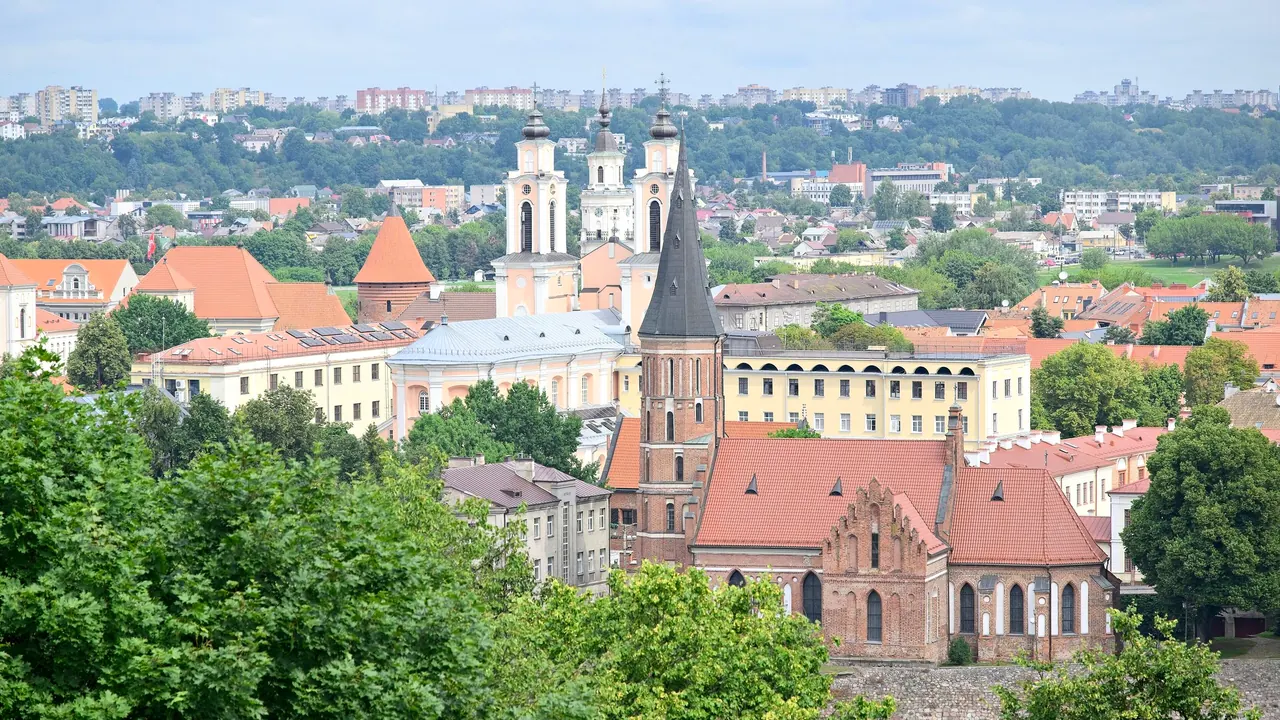
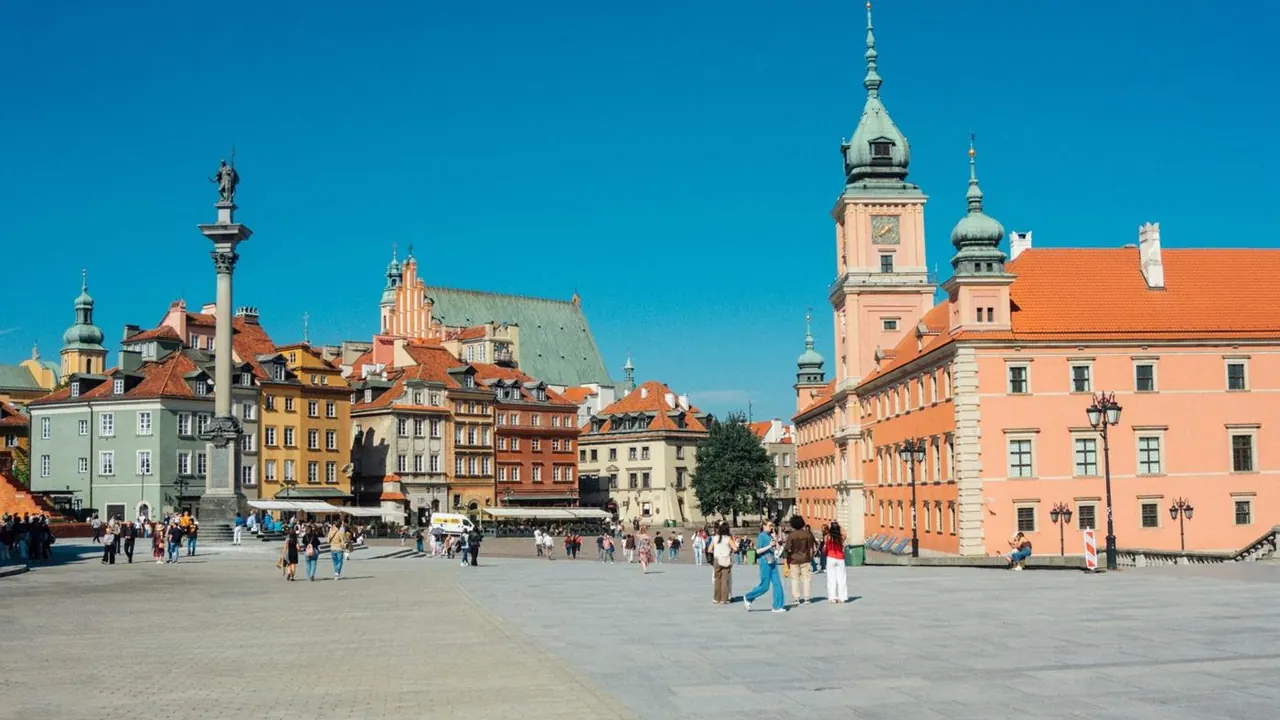
Photos: Kaunas by dave massie, CC BY 2.0, cropped; Warsaw by Raymond Petrik, Pexels License.
Kaunas or Warsaw?
Our verdict in twelve categories, each scored against the same fixed benchmark cities, and the climate month by month, so you can choose for your trip.
Choose Kaunas for
- beaches
- day trips
- wellness
Kaunas suits a slower, cheaper few days built around architecture and the countryside. Its interwar modernist centre is unlike anything Warsaw has, the Old Town and Laisves aleja are easy to walk, and it is a very good base for touring: Vilnius, Trakai's island castle and the Rumsiskes open-air museum are all close. Choose it if you'd rather explore during the day and have quiet evenings.
Choose Warsaw for
- nightlife
- shopping
- families
Warsaw is the bigger and fuller trip. Its history museums are among the strongest in Europe, the opera, philharmonic and Chopin recitals give you a choice of concerts every week, and the food and late-night bar scene go much further than anything in Kaunas. Families do better here too, with a major science centre and a large zoo, and the trams and metro make a longer stay easy.
Scoreboard
Twelve categories on one fixed scale from 0 to 100. The shaded stretch is the gap between the two.
Your match
Pick a travel style or drag the sliders, and both match scores follow your weighting.
Wins on beaches and day trips with your weighting.
Wins on nightlife and shopping with your weighting.
What matters to you?
Category by category
What the scores mean for a trip.
Beaches & swimming
Neither city is a reason to pack swimwear, but Kaunas at least lets you swim close to town. There are sandy bathing spots on the Kaunas Reservoir, on the Nemunas at Panemune and at lakes such as Lampedziai, where the water warms to around 20°C in high summer.
In Warsaw, the sandy Vistula banks on the Praga side are for sunbathing and a drink, not for swimming. A proper swim means going out to the Zegrze reservoir or using an outdoor pool. The Baltic is a long journey from both cities.
Food & drink
The two cities have a lot in common at the table: beetroot soups, rye and filling dishes from the forest and the dairy. Kaunas mostly stops there. You'll find cepelinai, smoked meats and mushroom pastries in the Old Town, washed down with local beer or mead, and a few days covers the best of it.
Warsaw goes a good deal further. There are milk-bar canteens, old-fashioned dining rooms serving duck and pork knuckle, and chefs turning game and fermented vegetables into tasting menus. Add market-hall food courts and small bars serving vodka with herring, and you can eat well for a week without repeating yourself.
Culture & sights
Kaunas's best feature is its original interwar architecture. The UNESCO-listed modernist centre of functionalist offices, villas and the Central Post Office leads up to the white Resurrection Church on Zaliakalnis. The Ciurlionis museum and the Ninth Fort give it depth, but two or three days is enough.
Warsaw offers more, and its museums are the reason. The Warsaw Rising Museum and POLIN rank among Europe's most powerful history museums. The Old Town, rebuilt from paintings after 1944, and the Royal Route out to Wilanów Palace tell a story of destruction and recovery that Kaunas has no equivalent for.
Nightlife
Kaunas makes for a pleasant evening rather than a night out. Students fill the cellar bars in the Old Town and off Laisves aleja on Fridays and Saturdays, but midweek and over the summer break the city empties early.
Warsaw has a real nightlife scene. Dozens of tiny bars in the pavilions keep people out until dawn, Mazowiecka Street and Nowy Świat fill up at weekends, and Praga's courtyards host techno and alternative nights. In summer, the bars move down to the Vistula boulevards.
Nature & outdoors
Both cities sit in flat lowland with no hills or sea nearby, so the difference is in the kind of green space. Around Kaunas it is mostly water: the reservoir regional park with sailing and lakeside cycle paths, river walks, the large Azuolynas oak grove, and canoeing on the Nemunas Loops.
Warsaw's countryside is wilder. Kampinos National Park, just past the suburbs, has inland dunes, marshes and elk, and the untamed eastern bank of the Vistula is full of birds within sight of the skyline.
Day trips
Kaunas is the better base for excursions, mainly because Lithuania's best sights are close together. Vilnius and its large baroque old town are about an hour away by train. Trakai's island castle and the hill-fort at Kernave are similarly close, and the manor houses along the Nemunas and the Rumsiskes open-air museum are closer still.
From Warsaw, Kraków and Toruń are too far for a comfortable day out. That leaves the factory palaces of Łódź, Lublin's old town, Kazimierz Dolny and Chopin's birthplace at Żelazowa Wola. It's a decent selection, but you'll get through it quickly.
Good for families
Kaunas is calm and safe, but there is little made for children. Its highlights are the funicular rides, the carved figures at the Devils' Museum and a small zoo in the oak grove, which together fill a short summer stay.
Warsaw has much more to offer. The Copernicus Science Centre can keep children busy for a full day, the zoo is large, and the parks have squirrels and playgrounds. Indoor water parks help in winter, and restaurants are used to families.
Getting around
Kaunas is mostly a walking city. Laisves aleja runs in a straight line from the modernist centre to the Old Town, and most sights are along it. Trolleybuses and cheap taxis take you out to the Ninth Fort or Pazaislis, though cobbles and hills slow you down in places.
Warsaw's transport is the better of the two. Trams, two metro lines and buses all use one ticket, and a direct train runs from the airport. You need that network, because beyond the Old Town the city spreads out along wide post-war avenues that aren't pleasant to walk.
Shopping & style
Kaunas is for buying souvenirs rather than going shopping. Look for amber, linen, woven sashes, wooden crafts, and honey or rye bread from the market stalls. Beyond that there are mostly high-street chains and malls.
Warsaw sells the same amber and linen, but also has Polish designer labels on Mokotowska Street, a luxury department store and the Hala Mirowska market hall. Its weekend flea markets sell communist-era objects and old posters.
Affordability
Both cities are cheap by Western European standards, with inexpensive public transport, modest museum tickets and low-cost meals. The difference is mainly in hotels. Kaunas rooms cost well below capital-city rates, while Warsaw's business visitors push central prices up on weekdays, so a weekend stay there is the better deal.
Live music & performing arts
Kaunas has a respectable season: operetta and musicals at the State Musical Theatre, a well-regarded drama theatre, a long-running spring jazz festival and summer concerts at Pazaislis Monastery.
Warsaw offers more. The national opera and ballet perform at the Grand Theatre on one of Europe's largest stages, and the Philharmonic has a full season. Chopin recitals run all year, with free summer Sunday concerts at his monument in Łazienki. In both cities, most theatre is performed in the local language.
Wellness & relaxation
Neither city is a spa destination, and their ways of relaxing differ. Kaunas has the Lithuanian pirtis, a wood-fired sauna with birch whisks and a cold plunge, and a calmer pace overall. The mineral-spring town of Birstonas is about 40 minutes away if you want a proper spa stay.
In Warsaw, relaxing means hotel spas and the large sauna areas at water parks, where Polish towel-waving sauna sessions are taken seriously. For fresh air, there's the saltwater graduation tower at Konstancin-Jeziorna, on the city's edge.
When should you go?
Pick your month. The climate figures are measured averages, not a forecast.
Kaunas in July
Warsaw in July
Daytime high, °C
Rainfall in the month, mm
Temperature and rainfall are climate normals, averaged over the years shown. Kaunas: 1991-2020 normals, Kaunas (6.7 km from centre). Warsaw: 1991-2020 normals, Warszawa-Okecie (7.7 km from centre).
The two cities share the same northern rhythm. Winters are dark and around freezing, spring warms up in April, and both are at their best from May to September. Kaunas runs a little cooler all year, with daytime highs of about 24°C in July and August against Warsaw's 25°C. It is also slightly wetter in high summer, at about 85mm in July. Lake and river swimming only really works in July and August, and May, June and September are the most comfortable months for walking.
Warsaw is clearly the sunnier of the two in summer, with about 334 hours of sunshine in July. Its winters are a degree or two milder and noticeably drier. In both cities, November to February brings short, grey days, which suit museums and concert halls far better than wandering the streets.
Which traveller are you?
For a food and nightlife trip, choose Warsaw. You can eat and drink your way through a long weekend there with something different every evening, and nights out run late. Kaunas suits one good Lithuanian dinner followed by an early night.
On a family trip with children, Warsaw is the easier choice, especially outside summer. You can plan whole days around attractions built for children, whatever the weather. In Kaunas you would be piecing days together from small sights and relying on long summer evenings.
For a relaxing and wellness trip, Kaunas is the gentler pick. The city moves slowly, an evening sauna fits easily into the day, and a night or two at the spa resort down the river rounds things off. Warsaw is a working capital that rarely slows down.
Before you go
| Measure | Kaunas | Warsaw |
|---|---|---|
| Official language | Lithuanian | Polish |
| Currency | Euro (EUR) | Zloty (PLN) |
| Sockets | CF220 V, 50 Hz | CE50 Hz |
| Driving side | Right | Right |
| Time zone | UTC+2, UTC+3 in summer | UTC+1, UTC+2 in summer |
| Emergency number | 112 | 112 |
| Elevation | 48 m | 118 m |
| Main airport | Kaunas International Airport (KUN)12 km from centre30 non-stop destinations | Warsaw Chopin Airport (WAW)8 km from centre172 non-stop destinations |
| Public holidays this year | 14 days | 14 days |
By the numbers
| Measure | Kaunas | Warsaw |
|---|---|---|
| City population | 305,120 | 1,862,402 |
| People per km² | 1,943 | 3,601 |
| Museums within 10 km | 19 | 117 |
| UNESCO World Heritage sites within 50 km | 1 | 1 |
Where else could you go?
Every comparison below shares a destination with this one, so you can follow Kaunas or Warsaw somewhere new.