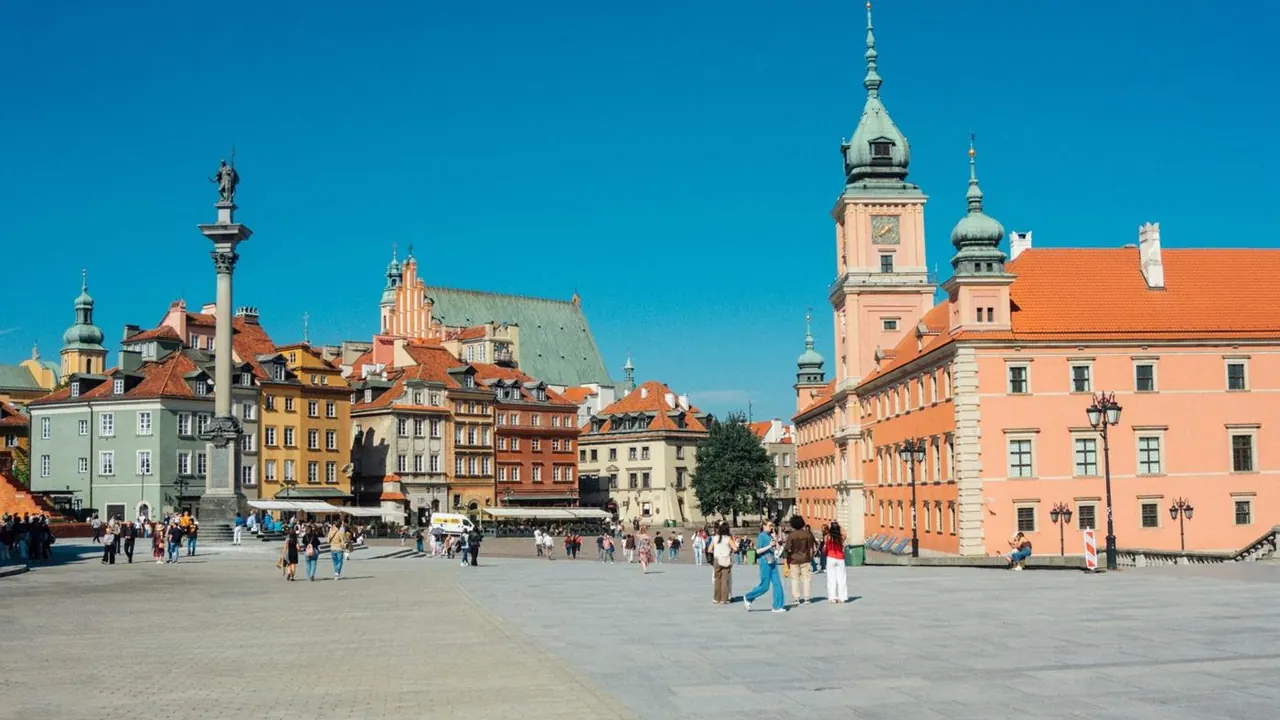
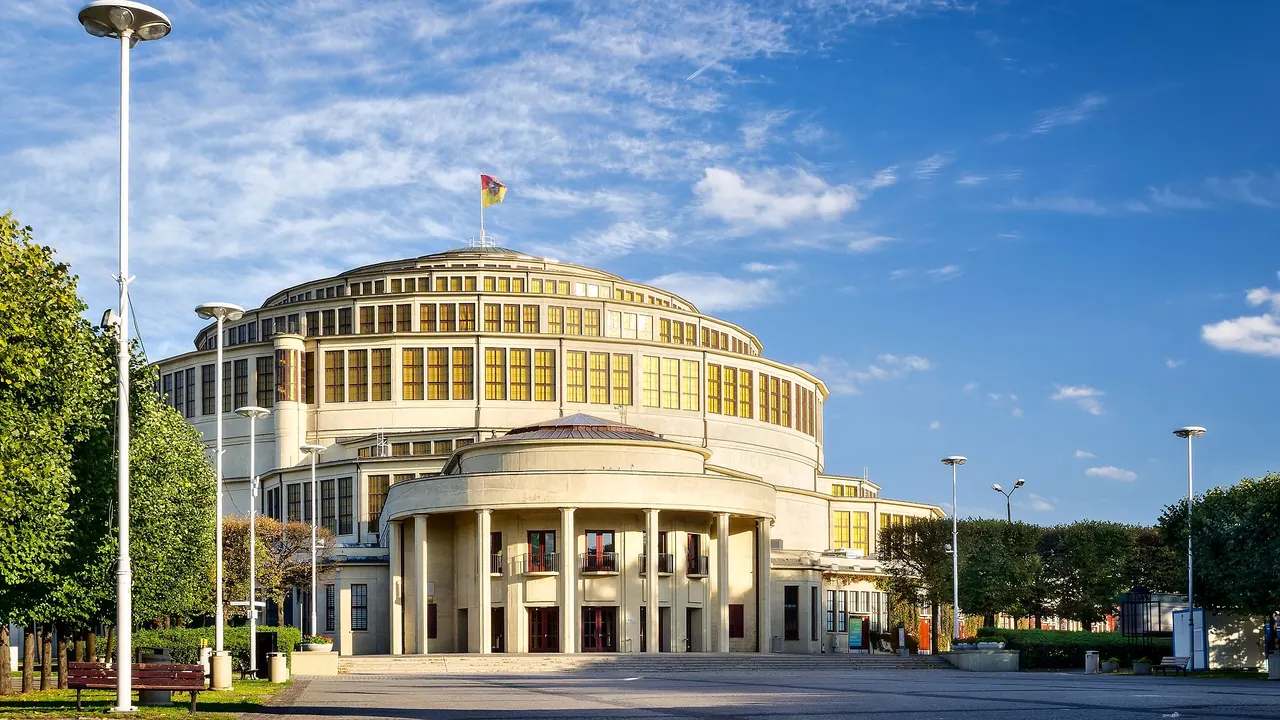
Photos: Warsaw by Raymond Petrik, Pexels License; Wroclaw by Jar.ciurus, CC BY-SA 3.0 PL, cropped.
Warsaw or Wroclaw?
Our verdict in twelve categories, each scored against the same fixed benchmark cities, and the climate month by month, so you can choose for your trip.
Choose Warsaw for
- shopping
- food and drink
- nightlife
Warsaw is the pick for a traveller who wants a capital's range. Its history museums, the Warsaw Rising Museum and POLIN above all, are among the most moving in Europe. The food scene runs from milk bars to ambitious tasting menus, and the nights go on into Praga's techno courtyards. It also has better shopping and a metro to tie a spread-out city together.
Choose Wroclaw for
- prices
- nature and the outdoors
- day trips
Wroclaw suits someone who would rather walk than ride, and who wants the countryside close by. Everything in the old centre sits within a short stroll of the Market Square and the cathedral island. Castles, abbeys and the Sudetes mountains are a drive away, and the city is cheaper to stay in and eat out in. Its evenings are a relaxed bar crawl through cellars and courtyards rather than a big club night.
Scoreboard
Twelve categories on one fixed scale from 0 to 100. The shaded stretch is the gap between the two.
Your match
Pick a travel style or drag the sliders, and both match scores follow your weighting.
Wins on shopping and food and drink with your weighting.
Wins on prices and nature and the outdoors with your weighting.
What matters to you?
Category by category
What the scores mean for a trip.
Beaches & swimming
Neither city is a place for sea and sand, and the Baltic is a long journey from both. Each has a summer river-beach culture of deckchairs and drinks on sandy banks, with no swimming in the river itself.
The difference is in where you go for a proper swim. Warsaw has the Zegrze reservoir just north of the city, along with lidos on the outskirts, and its wilder Praga bank of the Vistula feels more natural than the Oder's deckchair beaches. Wroclaw's swimmers head further out, to lakes and reservoirs in the Lower Silesian countryside.
Food & drink
Warsaw is the clear choice for anyone who cares about eating. Both cities share the same base of pierogi, żurek and milk-bar lunches. Warsaw adds a confident modern scene of chefs cooking with game, fermented vegetables and river fish, food halls in old industrial buildings, and a vodka culture with herring and pickles.
Wroclaw cooks Polish comfort food well, and the bistros a street or two off the Market Square lighten it up. It is not a city for eating adventures, though. Its strength is beer, poured in brewpubs set in historic cellars, more than anything on the plate.
Culture & sights
The two are close in depth but very different in kind. Warsaw is the city of great museums. The Warsaw Rising Museum and POLIN tell the story of the twentieth century with real force, and the Royal Route links the rebuilt Old Town to Łazienki and Wilanów.
Wroclaw's appeal lies more in its streets. The huge Market Square with its Gothic town hall, the lamplit lanes of Ostrów Tumski and the gilded Aula Leopoldina make the old centre itself the sight. The Racławice Panorama and the Centennial Hall give it a couple of unusual set pieces.
Nightlife
Warsaw has the bigger and later night out. Mazowiecka Street and Nowy Świat fill with bars and clubs, and the pavilions behind the main streets keep people drinking cheaply until morning. Across the river, Praga's old factories hold techno and alternative nights that a clubber would plan around.
Wroclaw's nights are a student bar crawl. They centre on the courtyard passage off Ruska Street and the cellars around the square, and they are good fun but light on clubs. The city also goes noticeably quiet between university terms.
Nature & outdoors
Wroclaw has the better outdoors because it has hills within reach. Ślęża rises alone from the plain for an easy half-day hike. The Karkonosze and the Table Mountains are about two hours away for proper hiking, or for skiing in winter, and in town the river splits around islands that make for pleasant walks.
Warsaw's landscape is flat lowland all round. What it offers is wildness rather than relief: Kampinos forest with its dunes, marshes and elk on the edge of the suburbs, and an untamed Vistula bank of sandbars and birdlife facing the skyline.
Day trips
Wroclaw is the better base for excursions. Lower Silesia packs castles, abbeys and market towns into one or two hours' driving, from the hilltop castle of Książ to the wooden Churches of Peace at Świdnica and Jawor. A hire car lets you string several together in a day.
From Warsaw the choice thins out sooner. Łódź and Lublin are reachable by train, and Chopin's birthplace at Żelazowa Wola, the gardens at Arkadia and the Treblinka memorial are good closer outings. Kraków, though, is too far for a comfortable day.
Good for families
Both cities are safe, clean and easy with children, so the choice comes down to the headline attraction. In Warsaw it is the Copernicus Science Centre, a hands-on museum that can fill a whole day, with the planetarium next door and indoor water parks for winter.
Wroclaw answers with its zoo and the Afrykarium's walk-through shark tunnel. Children also love hunting for the bronze dwarfs, which turns the car-free old centre into a game. Warsaw's history museums are heavy going for young children, while Wroclaw's list of attractions runs out sooner.
Getting around
Getting around is easy in both, but in different ways. Warsaw is spread out along wide post-war avenues. Its two metro lines, trams and one ticket for everything do the work, and a direct train runs from the airport to the centre.
In Wroclaw you mostly walk. The square, the university, the cathedral island and the riverside are close together on flat, largely pedestrianised streets, and you need a tram only for the zoo or the Centennial Hall. The trams can crawl in rush hour, though, and the network is less intuitive.
Shopping & style
Warsaw is the better place to shop. Beyond its big malls, Mokotowska Street has boutiques and Polish designer labels, and the city has a luxury department store and weekend flea markets selling communist-era posters.
Wroclaw covers the basics with its malls and the riverside market hall. The 1930s Renoma building is worth seeing for its ceramic facade, and Bolesławiec stoneware made nearby is the souvenir to take home. There is little else beyond a few vintage shops in Nadodrze.
Affordability
Wroclaw is the cheaper stay. The gap shows most in hotels: central rooms in Wroclaw cost a fraction of Western prices, while Warsaw's business visitors push weekday and trade-fair rates up.
Day-to-day costs are low in both. Milk bars, trams and museums are modestly priced, and drinks are cheap. Warsaw's free museum days help, and a weekend stay there softens the hotel bill.
Live music & performing arts
Both are good music cities, with Warsaw a little deeper. The national opera and ballet perform on the Grand Theatre's huge stage. Chopin recitals run all year, there are free summer Sunday concerts at his monument in Łazienki, and the Chopin Piano Competition comes round every five years.
Wroclaw leans towards concert music and festivals. The National Forum of Music has excellent acoustics, Wratislavia Cantans is devoted to oratorio and early music, and Jazz on the Oder is long-running. Its theatre has Grotowski's experimental legacy, but in both cities theatre is almost all in Polish.
Wellness & relaxation
Neither city has a bathing tradition, so in both, relaxing in town means hotel spas and the saunas of indoor water parks. Warsaw's slow corner is Konstancin-Jeziorna on its southern edge, with a saltwater graduation tower and a park. Otherwise it is a brisk working capital.
Wroclaw has a gentler pace, and the old spa towns of Lower Silesia are nearby. Szczawno-Zdrój, about an hour away, and Polanica and Kudowa further south offer pump rooms and spa parks in the Central European style.
When should you go?
Pick your month. The climate figures are measured averages, not a forecast.
Warsaw in July
Wroclaw in July
Daytime high, °C
Rainfall in the month, mm
Temperature and rainfall are climate normals, averaged over the years shown. Warsaw: 1991-2020 normals, Warszawa-Okecie (7.7 km from centre). Wroclaw: 1991-2020 (rainfall 1961-1990) normals, Wroclaw Copernicus Airport (10.5 km from centre).
Both cities have the same broad shape of year: cold, grey winters, a quick warm-up in April and May, and summer highs of about 25°C from June to August. That makes late spring through early autumn the time for walking and riverbank evenings in either place. July is the wettest month in both. Neither is a beach destination, but the summer months are warm enough for lounging on the sandy river banks and swimming in a lake or outdoor pool.
The differences are small but real. Warsaw gets clearly more sun from spring to late summer, over 330 hours in July, and its May and June are drier, which makes them its best months. Wroclaw has slightly milder winters and noticeably wetter early summers, about 77mm in June, so September is often the more settled month for exploring there and for the hills. From December to February both are near freezing, and short days make them better suited to museums and concert halls than to long walks.
Which traveller are you?
On a food and nightlife trip, Warsaw is the better choice. Its modern kitchens turn forest mushrooms and game into tasting menus, and vodka comes with herring and pickles. Afterwards, the pavilion bars and Praga's techno nights run far later than Wroclaw's cellar crawl.
For a trip on a tight budget, Wroclaw stretches the money further. Warsaw is good value for a capital, but its central hotels cost more, especially on weekdays. Summer weekends push up prices in Wroclaw, but a few streets from the square it is cheap again, and milk-bar lunches and beer cost little.
On an outdoors trip, Wroclaw has more variety. Warsaw's Kampinos forest suits flat walking and cycling, but from Wroclaw you can kayak around the Oder islands one day and hike in the Sudetes the next. A flat lowland capital cannot offer that contrast.
Before you go
| Measure | Warsaw | Wroclaw |
|---|---|---|
| Official language | Polish | Polish |
| Currency | Zloty (PLN) | Zloty (PLN) |
| Sockets | CE50 Hz | CE50 Hz |
| Driving side | Right | Right |
| Time zone | UTC+1, UTC+2 in summer | UTC+1, UTC+2 in summer |
| Emergency number | 112 | 112 |
| Elevation | 118 m | 111 m |
| Main airport | Warsaw Chopin Airport (WAW)8 km from centre174 non-stop destinations | Copernicus Wrocław Airport (WRO)11 km from centre84 non-stop destinations |
| Public holidays this year | 14 days | 14 days |
By the numbers
| Measure | Warsaw | Wroclaw |
|---|---|---|
| City population | 1,862,402 | 673,531 |
| People per km² | 3,601 | 2,299 |
| Museums within 10 km | 117 | 42 |
| UNESCO World Heritage sites within 50 km | 1 | 2 |
Where else could you go?
Every comparison below shares a destination with this one, so you can follow Warsaw or Wroclaw somewhere new.