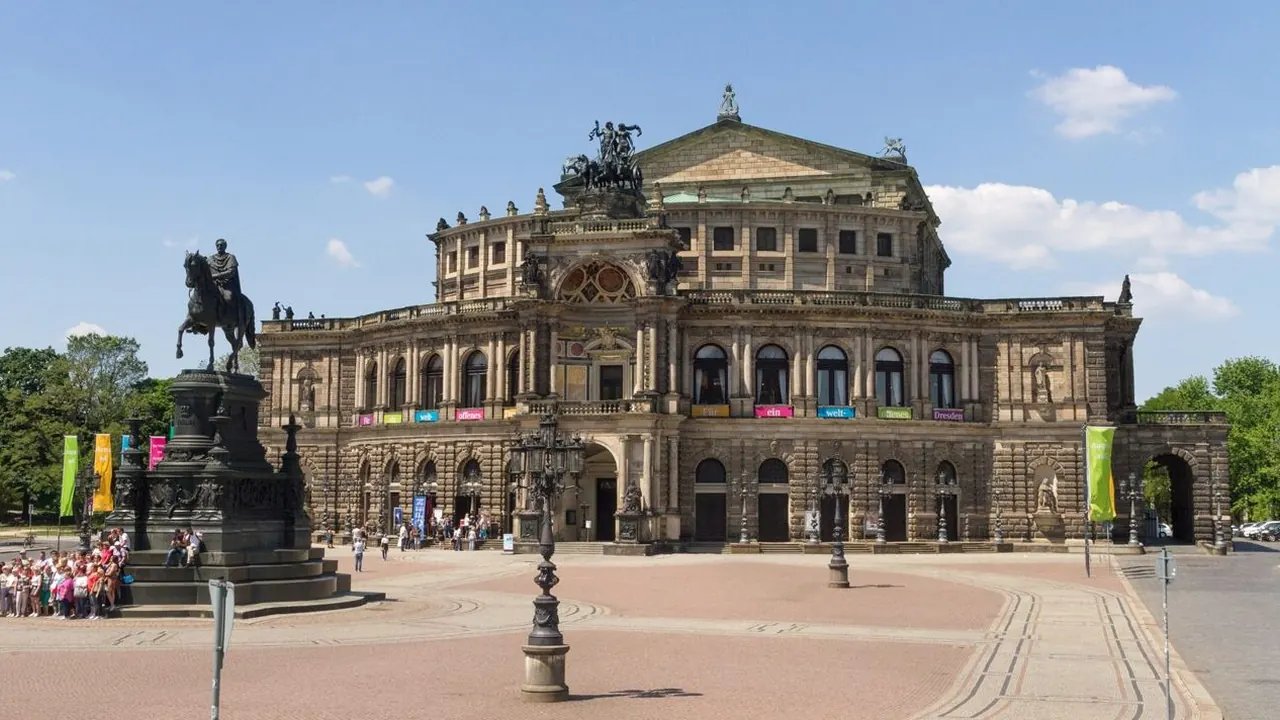
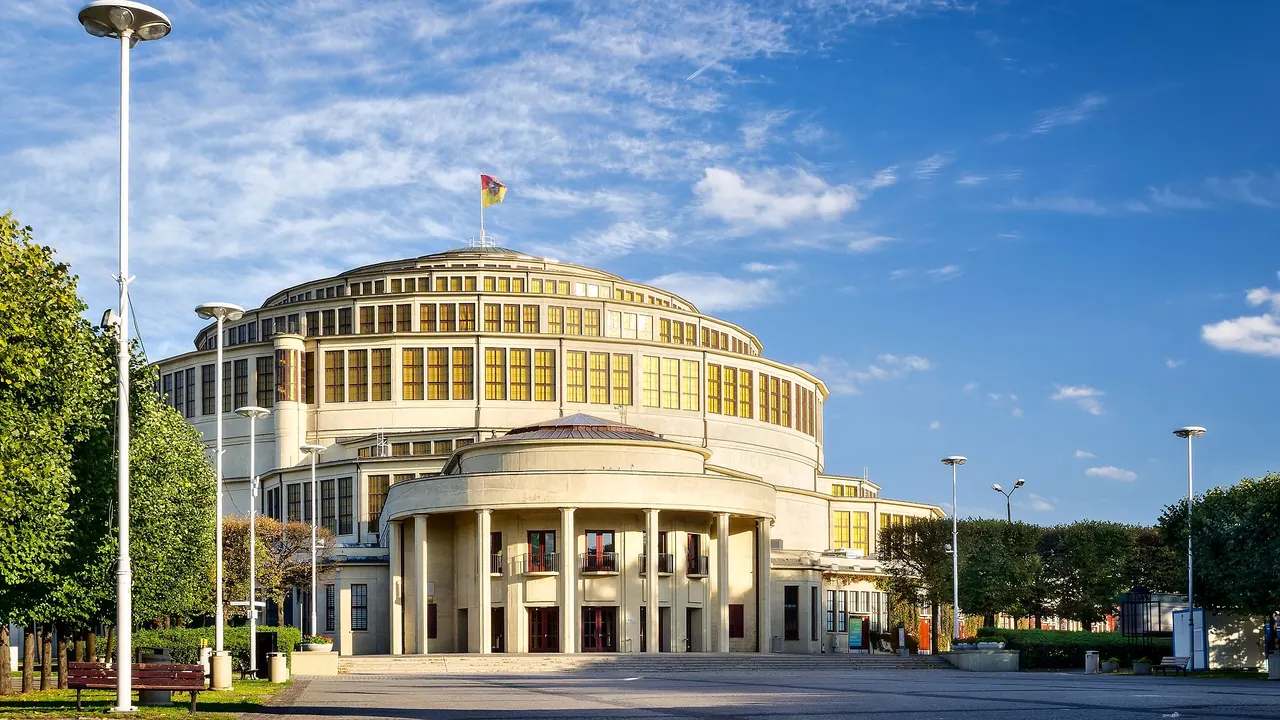
Photos: Dresden by Maksym Kozlenko, CC BY-SA 4.0, cropped; Wroclaw by Jar.ciurus, CC BY-SA 3.0 PL, cropped.
Dresden or Wroclaw?
Our verdict in twelve categories, each scored against the same fixed benchmark cities, and the climate month by month, so you can choose for your trip.
Choose Dresden for
- nature and the outdoors
- live music and the arts
- day trips
Dresden is the stronger pick for a trip built around art, music and landscape. Its old masters, royal treasures and opera house make a stay of several days worthwhile on their own, and the sandstone cliffs of Saxon Switzerland are close enough to hike in a day by suburban train. It suits travellers who want a cultured, steady pace and are happy to pay Western European prices for it.
Choose Wroclaw for
- prices
- nightlife
- food and drink
Wroclaw costs much less and is more fun after dark. Students fill its cellars and courtyard bars around one of Central Europe's great market squares, hotels and meals cost noticeably less, and the city has a playful side in its bronze dwarfs and riverside islands. Choose it for a sociable, good-value city break where the townscape matters more than the museum collections.
Scoreboard
Twelve categories on one fixed scale from 0 to 100. The shaded stretch is the gap between the two.
Your match
Pick a travel style or drag the sliders, and both match scores follow your weighting.
Wins on nature and the outdoors and live music and the arts with your weighting.
Wins on prices and nightlife with your weighting.
What matters to you?
Category by category
What the scores mean for a trip.
Beaches & swimming
Neither is a beach destination, and both send swimmers to pools or lakes rather than the river. Dresden's options lie close at hand, in the flooded gravel pits on the city's edge and the ponds around Moritzburg, while the Elbe banks are for deckchairs only.
Wroclaw does river lounging with more of a scene, with sandy beaches and drinks stands along the Oder, but its swimming lakes are further out in the Lower Silesian countryside.
Food & drink
The two are on much the same level, both hearty and satisfying rather than a reason to travel. Dresden leans to Saxon roasts, game and above all baking, with Stollen and Eierschecke at the centre of a serious afternoon coffee habit, and local dry wines from the Elbe valley vineyards.
Wroclaw is the beer city of the pair, with brewpubs in old cellars, and its pierogi, żurek and cheap milk-bar lunches give a more everyday Polish table. In both cities the main square serves tourist menus, and the better eating is a few streets away, in Dresden's Neustadt or Wroclaw's side streets.
Culture & sights
Dresden is the richer city for sightseeing because of what hangs inside its buildings. The Zwinger's Old Masters, the Green Vault's treasures and the Albertinum's Romantic painting are collections of real international weight, set around a rebuilt Frauenkirche and a riverfront terrace that need three or four days.
Wroclaw's appeal lies more in the streets themselves: the huge Market Square with its Gothic town hall, the gas-lit lanes of Ostrów Tumski and the 1913 Centennial Hall. The Racławice Panorama and Silesian art are worth seeing, but nothing here matches Dresden's galleries. Both centres were largely rebuilt after 1945, so they share a reconstructed, layered feel.
Nightlife
Wroclaw has the better night out, thanks to its very large student population. Bars are packed into the cellars around the Market Square and the courtyard passage off Ruska Street, and weekends run well past 2am, though things go quiet between university terms.
Dresden's going out is concentrated in the Äußere Neustadt, where pavement drinking and courtyard pubs make for relaxed summer evenings, while the old town is silent after dinner. Neither city has a club scene beyond a few venues in old industrial buildings.
Nature & outdoors
Dresden has a real outdoor destination on its doorstep. Saxon Switzerland's sandstone towers, the Bastei viewpoint and the long-distance Malerweg begin well under an hour away by suburban train, and the Elbe cycle route runs past vineyards and palaces from the city itself.
Wroclaw's green space is mostly in town, in Szczytnicki Park, the Japanese Garden and the river channels for kayaking. Ślęża makes an easy half-day climb, but the Karkonosze and Table Mountains are around two hours away and work best with a car.
Day trips
Dresden has more variety within reach, and most of it is easy by train. Meissen's porcelain and cathedral, the Königstein fortress, Leipzig, Görlitz and even Prague are all reachable in a day without a car.
Wroclaw's surroundings are a countryside of castles and abbeys, from the hilltop Książ to the UNESCO-listed wooden Churches of Peace at Świdnica and Jawor. They are rewarding, but a hire car makes it much easier to see several in one outing.
Good for families
Both are easy, relaxed cities with children, and the differences are in what keeps them busy. Dresden's draws are the Transport Museum, the children's railway in the Großer Garten and paddle-steamer trips up the Elbe, though it has no aquarium.
Wroclaw has exactly that, the Afrykarium at the zoo with its walk-through shark tunnel, plus a flat, largely car-free centre where hunting for bronze dwarfs keeps younger children happy.
Getting around
Dresden is slightly easier to get around, mainly because suburban trains and paddle steamers reach Meissen, Pillnitz and Saxon Switzerland, so a visitor never needs a car. Its old town and the Neustadt sit a short walk apart across the Augustus Bridge.
Wroclaw's flat, pedestrianised centre is excellent on foot or by bike, but its trams can crawl at rush hour and the castles and mountain villages beyond the city are far simpler to reach by road.
Shopping & style
Shopping is a sideline in both, with chain malls covering the basics. The souvenirs give each its character: Meissen porcelain and Ore Mountain wooden toys in Dresden, Bolesławiec stoneware and Baltic amber in Wroclaw.
For browsing, Dresden's Kunsthofpassage courtyards are the more interesting independent streets, and its Striezelmarkt makes Advent the best time to buy. Wroclaw offers the Renoma department store's ceramic façade and a riverside market hall full of cured meats and pickles.
Affordability
Wroclaw is clearly the cheaper of the two, and the gap shows most in the hotel bill and at the dinner table. Dresden is good value by German standards, well below Munich or Frankfurt, and it holds up best on transport: one ticket takes you by tram and suburban train out to Meissen or the sandstone country upriver, so day trips need no hire car. Sightseeing is where it costs more, since a stay built around the big collections soon adds up.
In Wroclaw the same budget buys a more central room, more meals out and more rounds in the cellar bars. The zoo with its Afrykarium is also cheap by Dresden's measure. Only the terraces and big hotels on the Market Square charge extra for the view, and the saving shrinks a little if you hire a car for the Lower Silesian castles.
Live music & performing arts
Dresden is one of Europe's music cities. The Semperoper and its Staatskapelle, with Wagner and Strauss premieres in their history, the Kreuzchor in the Kreuzkirche and Bach at the Frauenkirche put it in a different class for opera and sacred music.
Wroclaw does well for its size, with the acoustically fine National Forum of Music and the Wratislavia Cantans oratorio festival. Its strong theatre tradition is almost entirely in Polish, so most visitors will go for the concerts.
Wellness & relaxation
Neither is a spa city, but Dresden makes relaxing a little easier. Its municipal baths have the German public sauna culture, the thermal pool at Bad Schandau is under an hour away, and the wide Elbe meadows set an unhurried pace.
Wroclaw relies on hotel spas and a large aquapark. Its real wellness asset is the old Lower Silesian spa towns, with Szczawno-Zdrój about an hour away and its pump rooms and spa parks.
When should you go?
Pick your month. The climate figures are measured averages, not a forecast.
Dresden in July
Wroclaw in July
Daytime high, °C
Rainfall in the month, mm
Temperature and rainfall are climate normals, averaged over the years shown. Dresden: 1991-2020 normals, Dresden-Strehlen (3.8 km from centre). Wroclaw: 1991-2020 (rainfall 1961-1990) normals, Wroclaw Copernicus Airport (10.5 km from centre).
The two share an inland continental climate, so the best months are much the same. May, June and September are the most comfortable for walking the streets. July and August are the warmest, at about 26°C, which is warm enough for an outdoor pool or a lake. Summer is also the wettest season in both, with around 80mm a month in high summer, while late winter and early spring are the driest.
Dresden stays very slightly milder in April and October, which makes the shoulder months a little kinder there for sightseeing. Wroclaw gets clearly more sunshine from April to August, so its long summer days are brighter. Both turn cold and grey from December to February. January is the bleakest month, with highs of only 3 to 4°C, so winter in either city is better suited to museums and cafés than to long walks.
Which traveller are you?
On a culture and arts trip, Dresden is the clear choice. Raphael's Sistine Madonna, the Green Vault and Caspar David Friedrich fill the days, and evenings at the Semperoper or with the Kreuzchor give it a musical depth Wroclaw cannot match.
For a trip on a tight budget, Wroclaw goes much further. Central rooms, milk-bar lunches, beer and museum tickets all cost far less than in Dresden, where separate entry charges at each of the big collections soon mount up over a few days.
On an outdoors trip, Dresden wins easily. The national park's sandstone towers, the Malerweg trail and the climbing routes start under an hour away by train, while Wroclaw's flat plain leaves the real hills of the Sudetes about two hours' drive away.
Before you go
| Measure | Dresden | Wroclaw |
|---|---|---|
| Official language | German | Polish |
| Currency | Euro (EUR) | Zloty (PLN) |
| Sockets | CF230 V, 50 Hz | CE50 Hz |
| Driving side | Right | Right |
| Time zone | UTC+1, UTC+2 in summer | UTC+1, UTC+2 in summer |
| Emergency number | 112 | 112 |
| Elevation | 126 m | 111 m |
| Main airport | Dresden Airport (DRS)10 km from centre13 non-stop destinations | Copernicus Wrocław Airport (WRO)11 km from centre84 non-stop destinations |
| Public holidays this year | 11 days | 14 days |
By the numbers
| Measure | Dresden | Wroclaw |
|---|---|---|
| City population | 562,764 | 673,531 |
| People per km² | 1,713 | 2,299 |
| Museums within 10 km | 70 | 42 |
| UNESCO World Heritage sites within 50 km | 1 | 2 |
Where else could you go?
Every comparison below shares a destination with this one, so you can follow Dresden or Wroclaw somewhere new.