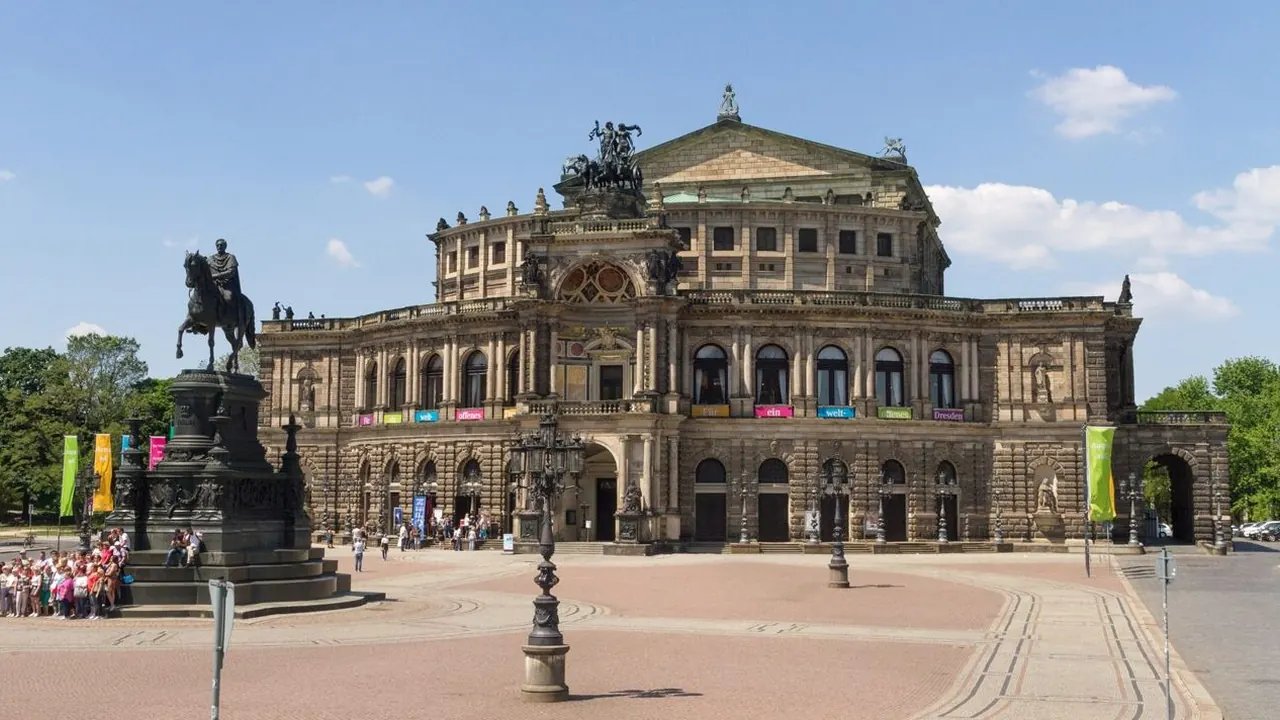
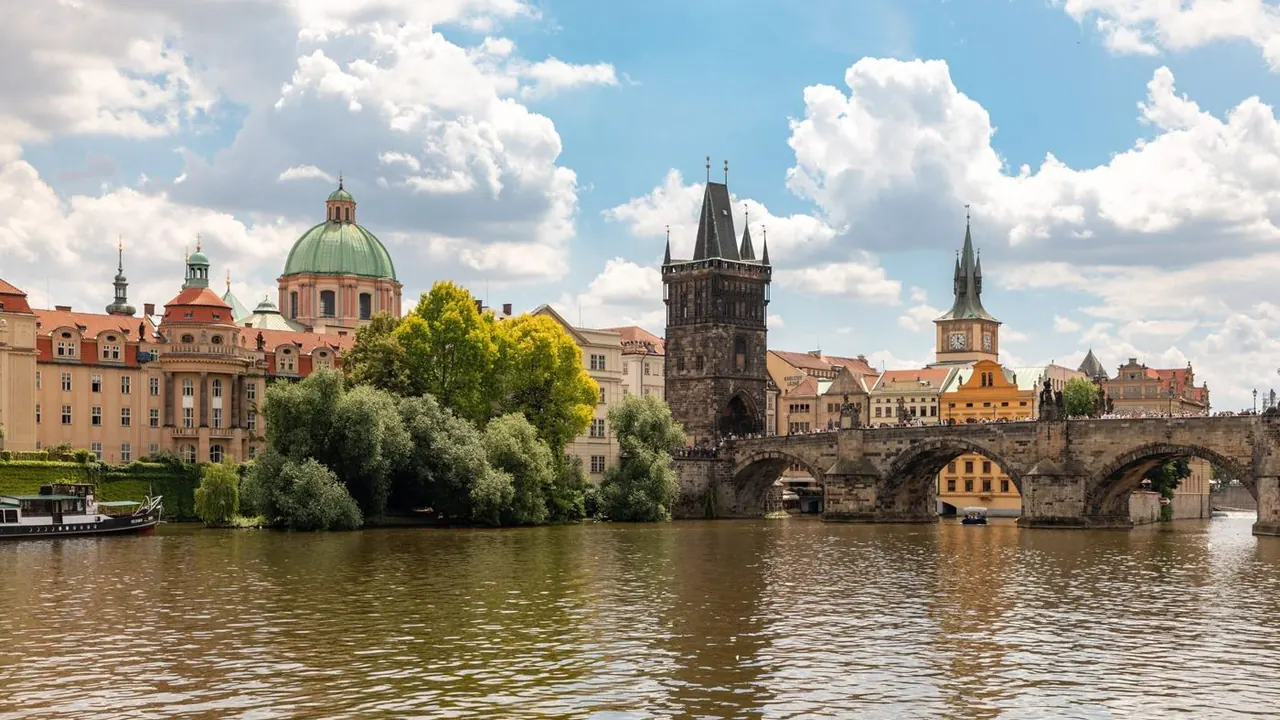
Photos: Dresden by Maksym Kozlenko, CC BY-SA 4.0, cropped; Prague by Dietmar Rabich, CC BY-SA 4.0, cropped.
Dresden or Prague?
Our verdict in twelve categories, each scored against the same fixed benchmark cities, and the climate month by month, so you can choose for your trip.
Choose Dresden for
- nature and the outdoors
- families
- wellness
Dresden suits a traveller who wants great art and real landscape on the same trip. The Old Masters and the Green Vault are a short walk apart, and the sandstone towers of Saxon Switzerland are under an hour upriver by train. The city's calmer pace and hands-on museums also make it the easier pick for a family.
Choose Prague for
- nightlife
- getting around
- shopping
Choose Prague if the evenings matter as much as the days. Its pubs and clubs go much deeper, the metro and all-night trams make the city simpler to cover, and the medieval and Baroque centre survived largely intact, so the streets themselves are the sight. Day to day it also costs a little less, as long as you eat and sleep away from Old Town Square.
Scoreboard
Twelve categories on one fixed scale from 0 to 100. The shaded stretch is the gap between the two.
Your match
Pick a travel style or drag the sliders, and both match scores follow your weighting.
Too close to call, 2 points apart
Wins on nature and the outdoors and families with your weighting.
Wins on nightlife and getting around with your weighting.
What matters to you?
Category by category
What the scores mean for a trip.
Beaches & swimming
Neither city is a beach destination, and in both the river is for boats rather than swimming. The difference is where locals go to cool off. In Dresden it is the flooded gravel pits on the edge of town and the ponds around Moritzburg. In Prague it is the Dzban reservoir in the Sarka valley, or the wooded Slapy reservoir about an hour south, which feels more like a day at a lake.
Food & drink
The two are close, and both serve hearty central European food built on dumplings and roasts. In Dresden the ritual is afternoon coffee with Eierschecke or Stollen, and the glass holds dry whites and sparkling wine from the vineyards of Radebeul and Meissen.
Prague is a beer city: unpasteurised pilsner from the tank, microbreweries, pub snacks and cheap chlebicky lunches. In both, the food gets better once you leave the showpiece squares, for the Neustadt in Dresden and for Vinohrady, Karlin or Letna in Prague.
Culture & sights
Each rewards three or four days, but in different ways. Dresden's strength is indoors. The Sistine Madonna in the Zwinger, the treasures of the Green Vault and the Romantic painting in the Albertinum are collections that Prague's museums do not match. They sit in a baroque core that was largely reconstructed after 1945.
Prague is the better city simply to walk through. Its centre survived, so the Castle, Mala Strana, the Charles Bridge, Josefov and the Art Nouveau and Cubist buildings join up into one continuous historic townscape. The cost is heavy crowds at the main sights.
Nightlife
Prague has much more to offer after dark. Cheap beer keeps pubs full across several districts: Zizkov for plain local bars, Vinohrady for wine and cocktails, Letna and Riegrovy sady for summer beer gardens. There are big clubs that stay open until dawn and a more interesting techno circuit in Holesovice.
Dresden's evenings happen almost entirely in the Äußere Neustadt. Students drink in small bars and out on the pavements, and a few clubs occupy old industrial buildings. It is friendly and easy, but small, and the old town goes quiet after dinner.
Nature & outdoors
Dresden has far more dramatic country on its doorstep. Saxon Switzerland starts under an hour upriver by suburban train, with the Bastei view, the multi-day Malerweg trail and a long tradition of free climbing on its sandstone towers. The Ore Mountains add summer hiking and some cross-country skiing.
Most of Prague's green space is in the city itself: Petrin Hill, Stromovka and the Divoka Sarka gorge. The Bohemian Karst around Karlstejn is gentle. Bohemian Switzerland, the Czech side of the same sandstone landscape, is about two hours away.
Day trips
Both are excellent bases, and each counts the other as a day trip, about two hours apart by train along the Elbe. Dresden's outings are short and varied: porcelain in Meissen, the lakeside lodge at Moritzburg, the Königstein fortress, and fast trains to Leipzig or Görlitz.
Prague's outings are mostly Bohemian castles and history: the cathedral and ossuary at Kutna Hora, Karlstejn, Konopiste and the sobering visit to Terezin. Cesky Krumlov is far enough that many visitors stay the night.
Good for families
Dresden is the easier city with children. The Großer Garten has a zoo and a miniature railway run largely by children, and the Transport Museum and the Hygiene Museum's hands-on section are good for rainy days. Paddle steamers and Moritzburg cover the outdoor days.
Prague has the single best attraction, the hillside zoo at Troja, as well as a storybook castle and an astronomical clock. Beyond those there is less to do, and steep lanes, the castle stairs and summer crowds make a pushchair hard work.
Getting around
Both centres are easy to walk, and neither needs a car. Prague's public transport goes further, with three metro lines on top of dense tram routes that run through the night. The funicular and the river ferries use the same tickets, so outlying neighbourhoods are quick to reach.
Dresden gets by on trams, suburban trains and paddle steamers, which cover everything a visitor needs. The downsides in Prague are tiring cobbles and pickpockets on the crowded trams through the centre.
Shopping & style
Prague offers a little more. It has luxury labels on Parizska, chains on Na Prikope, and distinctive Czech buys such as Bohemian crystal, garnet jewellery and marionettes, though much of the old centre is lined with identical souvenir shops.
Dresden's main streets are mostly chains on Prager Straße. Its character is in the Neustadt's second-hand and design shops, Meissen porcelain, wooden toys from the Ore Mountains and the Striezelmarkt in Advent.
Affordability
Prague is a little cheaper, mainly in everyday spending. Beer, pub lunches and transport stay cheap if you eat in Zizkov or Vinohrady and avoid the exchange booths and the restaurants with views in the centre.
Dresden is moderately priced and cheaper than the cities of western Germany, and eating in the Neustadt is good value. Each major museum charges its own entry, though, which adds up, and rooms cost more during the Christmas market season.
Live music & performing arts
Both are serious music cities, but in different ways. Dresden centres on the Semperoper and the Staatskapelle, with premieres by Wagner and Strauss in their history. The Kreuzchor boys' choir and a Dixieland jazz festival add to it.
Prague spreads its offer wider. It has three opera stages, including the Estates Theatre where Don Giovanni premiered, the Czech Philharmonic at the Rudolfinum and the Prague Spring festival. Black-light theatre and marionette shows need no Czech, though the many church concerts for visitors vary in quality.
Wellness & relaxation
Neither is a spa city. Dresden has the more practical everyday option: saunas at its municipal baths, and a proper thermal pool at Bad Schandau under an hour away. Prague offers hotel spas, massage studios and novelty beer baths, while the famous Czech spa towns lie far to the west.
In both, rest comes from slowing down. In Dresden that means the river meadows and terrace cafés, in Prague the grand coffee houses, Kampa island and the gardens below the castle.
When should you go?
Pick your month. The climate figures are measured averages, not a forecast.
Dresden in July
Prague in July
Daytime high, °C
Rainfall in the month, mm
Temperature and rainfall are climate normals, averaged over the years shown. Dresden: 1991-2020 normals, Dresden-Strehlen (3.8 km from centre). Prague: 1991-2020 normals, Praha-Libus (8.1 km from centre).
Both cities follow the same central European rhythm. May and September are the most comfortable months for walking the streets. They are mild, the days are long and there is less rain than in high summer. July and August are the warmest months, at about 26°C in Dresden and a degree less in Prague. In both cities the wet season runs from June to August, with showers and thunderstorms, and in Prague June is the wettest month of all. Neither city is near the sea, so summer is the time for reservoirs, lakes and outdoor pools.
Winter is cold and dim in both. In January Prague is close to freezing at 2°C. Dresden is a little milder but wetter. Prague's winters are drier but greyer, with fewer hours of sunshine in November and December. In high summer the balance reverses and Prague gets slightly more sun than Dresden.
Which traveller are you?
For a food and nightlife trip, Prague is the better pick. Dresden's Saxon game and Elbe valley wine hold their own against Prague's svickova and goulash, but its nights out stay in one student quarter. Prague's pub culture spreads across districts and runs until dawn.
For an outdoors trip, choose Dresden. Serious hiking and rock climbing start a short train ride away, so you can spend the day on the rocks and still be back in town for dinner. From Prague, similar sandstone country takes a long day, and the walks nearer the city are gentler.
On a family trip with young children, Dresden asks less of parents. The pace is calmer, there is green space along the river and there are indoor options for wet days. Prague has one outstanding zoo and a storybook look, but every outing takes more effort with a pushchair.
Before you go
| Measure | Dresden | Prague |
|---|---|---|
| Official language | German | Czech |
| Currency | Euro (EUR) | Czech Koruna (CZK) |
| Sockets | CF230 V, 50 Hz | CE230 V, 50 Hz |
| Driving side | Right | Right |
| Time zone | UTC+1, UTC+2 in summer | UTC+1, UTC+2 in summer |
| Emergency number | 112 | 112 |
| Elevation | 126 m | 235 m |
| Main airport | Dresden Airport (DRS)10 km from centre13 non-stop destinations | Václav Havel Airport Prague (PRG)12 km from centre178 non-stop destinations |
| Public holidays this year | 11 days | 13 days |
By the numbers
| Measure | Dresden | Prague |
|---|---|---|
| City population | 562,764 | 1,397,880 |
| People per km² | 1,713 | 2,817 |
| Museums within 10 km | 70 | 88 |
| UNESCO World Heritage sites within 50 km | 1 | 1 |
Where else could you go?
Every comparison below shares a destination with this one, so you can follow Dresden or Prague somewhere new.