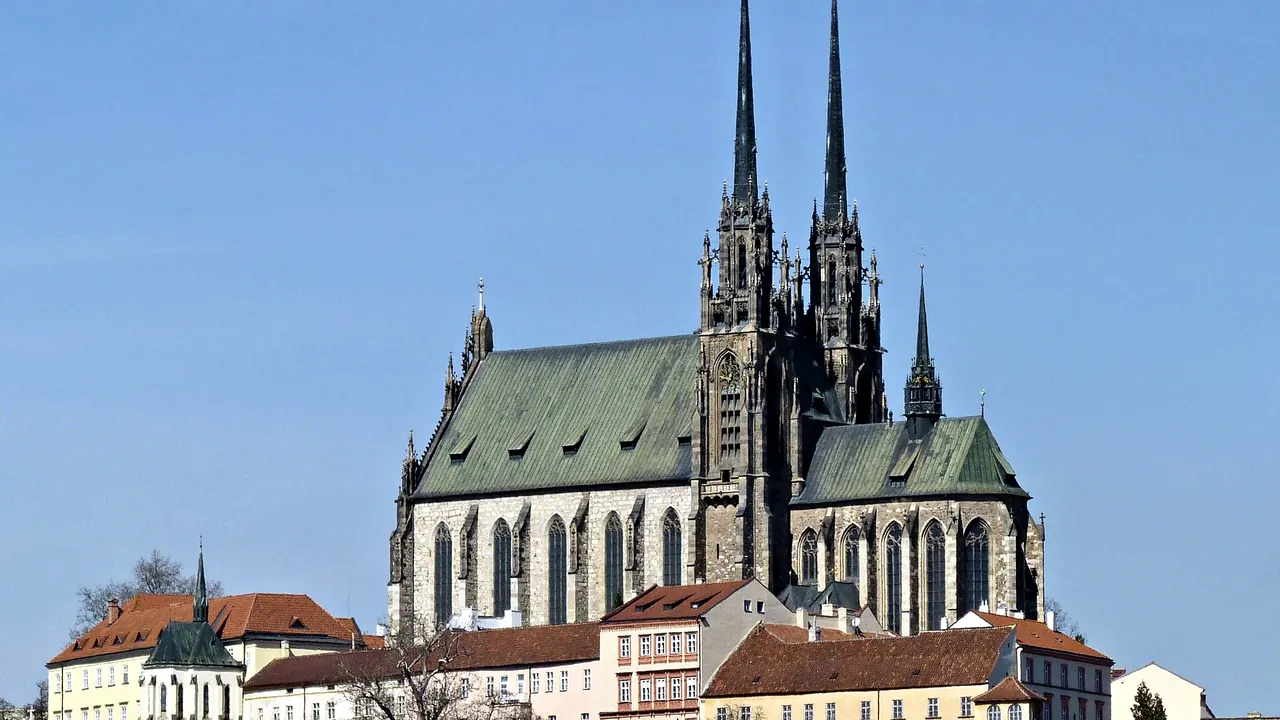
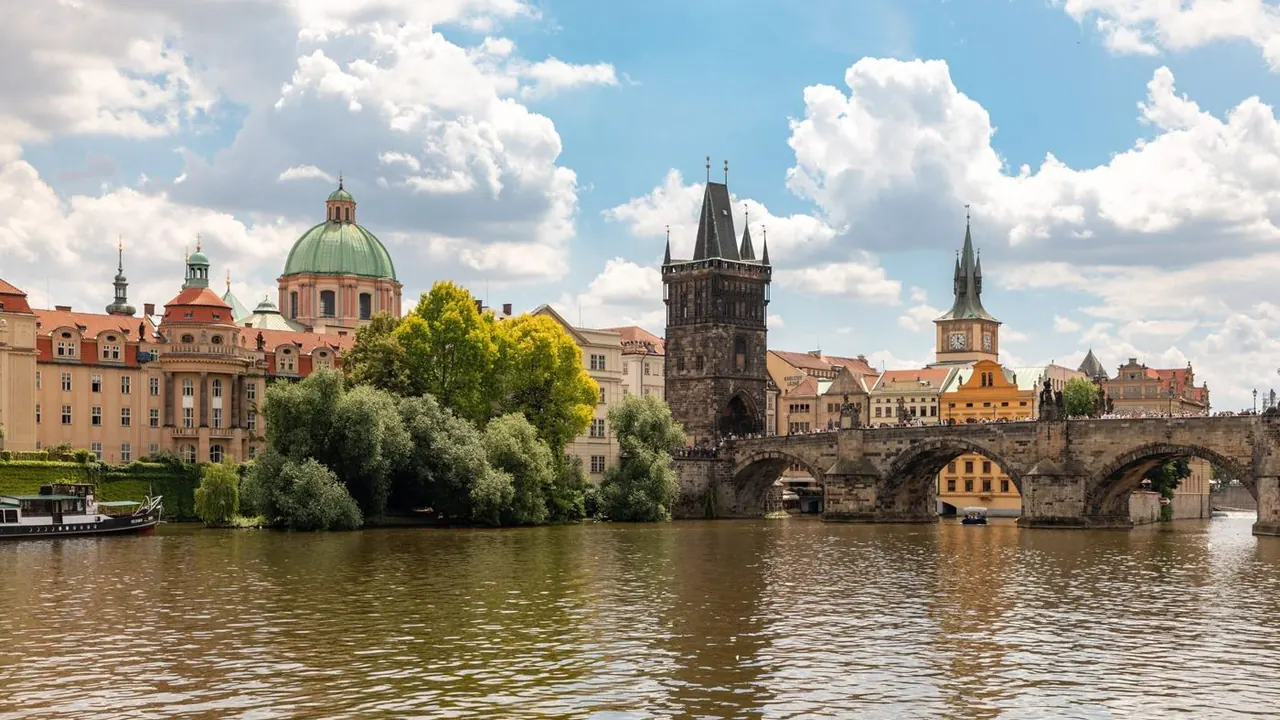
Photos: Brno by Michal Klajban, CC BY-SA 3.0, cropped; Prague by Dietmar Rabich, CC BY-SA 4.0, cropped.
Brno or Prague?
Our verdict in twelve categories, each scored against the same fixed benchmark cities, and the climate month by month, so you can choose for your trip.
Choose Brno for
- prices
- day trips
- beaches
Brno suits the traveller who has already seen Prague, or who wants Czechia at a slower pace and a lower cost. Its draw is a sharp, specific one: Villa Tugendhat and the interwar functionalist streets around it, Janacek opera in the city where he worked, Moravian wine poured by the glass and a cocktail scene tucked behind cellar doors. It also works as a base for southern Moravia, with Lednice-Valtice, the Moravian Karst and even Vienna within a day's reach.
Choose Prague for
- culture and sights
- nightlife
- shopping
Pick Prague for a first trip to Central Europe or for anyone who travels for history laid on thick. The castle, Mala Strana, the Charles Bridge and Josefov form a far richer old centre than anything in Brno, and the evenings are fuller too, with three opera stages, the Rudolfinum and a pub culture that runs into techno clubs in Holesovice. The price is crowds in the core and a little more spent, both easily softened by staying out in Vinohrady or Karlin.
Scoreboard
Twelve categories on one fixed scale from 0 to 100. The shaded stretch is the gap between the two.
Your match
Pick a travel style or drag the sliders, and both match scores follow your weighting.
Wins on prices and day trips with your weighting.
Wins on culture and sights and nightlife with your weighting.
What matters to you?
Category by category
What the scores mean for a trip.
Beaches & swimming
Neither city has a coast, and the swimming on offer is much the same: a reservoir on the north-western edge with grassy or wooded banks. Brno's reservoir is reached by tram and river boat, with the Nove Mlyny lakes an hour south. Prague has the Dzban reservoir in the Sarka valley and the wooded shores of Slapy. Either one makes a hot afternoon, not a reason to travel.
Food & drink
The plates are nearly identical, svickova, goulash and roast pork with dumplings, so the difference lies in what you drink with them. Brno leans towards wine and coffee: Moravian whites and Frankovka from vineyards less than an hour away, careful specialty cafés and a cocktail habit for its size, though fine dining is thin.
Prague is the beer city, with unpasteurised tank lager, microbreweries, chlebicky and canteen buffets, plus a slightly wider modern restaurant scene in Karlin and Letna. Its catch is the centre, where the menus around Old Town Square are poor value. Brno has no such tourist trap to avoid.
Culture & sights
Here Prague is clearly ahead. Its whole historic centre is a single UNESCO site, running from St Vitus Cathedral and Golden Lane down through the Baroque palaces of Mala Strana and across the Charles Bridge to the Old Town and the Jewish Quarter. It also has Art Nouveau and Cubist buildings found almost nowhere else, and it needs three or four days.
Brno's appeal is narrower and more modern. Villa Tugendhat and the functionalist villas and office blocks are the reason to come, with Spilberk Castle, the cathedral, the crypts and the Mendel Museum filling two or three easy days, and without Prague's crowds.
Nightlife
Prague gives the bigger night out. Zizkov's cheap neighbourhood pubs, the beer gardens on Letna and Riegrovy sady and a real clubbing circuit, from dawn-closing venues near Wenceslas Square to techno in Holesovice's industrial spaces, mean you can go as late as you like.
Brno is better for a long evening of drinks than for dancing. Its student bars around Jakubske namesti and its well-made cocktails behind unmarked doors are a pleasure, but there are only a few clubs and the city empties out in high summer.
Nature & outdoors
The outdoors is similar in scale but different in character. From Brno the highlight is underground: the Moravian Karst, half an hour north, where boats run along the Punkva river beneath the Macocha Abyss, with vineyard cycling and the Palava ridge to the south.
Prague has more green inside the city, with Petrin, Stromovka and the gorge of Divoka Sarka. Its best hiking lies further out, among the sandstone towers of Bohemian Switzerland and the Bohemian Paradise, about two hours away.
Day trips
Both cities make excellent bases, so the choice comes down to what you want to see. Brno has a dense ring of UNESCO sites within an hour or two, among them Lednice-Valtice, Kromeriz, Trebic and Telc, along with the Austerlitz battlefield and wine towns such as Mikulov. Vienna and Bratislava are each about an hour and a half by train.
Prague's outings are about castles and history: Karlstejn, Konopiste, the silver town of Kutna Hora and the sobering visit to Terezin. Dresden and Karlovy Vary are about two hours away, while Cesky Krumlov is a long day.
Good for families
Both are safe with children, and neither has a great deal aimed squarely at them, so it depends on what holds your children's attention. Brno's draws are hands-on: the VIDA science centre, mammoths in the Anthropos pavilion, the planetarium and the cave boat in the Moravian Karst.
Prague has the bigger single attraction in its Troja zoo, with its chairlift and large enclosures, along with the storybook castle and the astronomical clock. The trade-off is steep stairs and summer crowds that make pushchairs harder work than in Brno's smaller centre.
Getting around
Prague has the more complete network. Three metro lines carry you across the city quickly and trams run through the night, so even outer neighbourhoods are easy to reach. The one thing to watch is pickpockets on the crowded tram lines through Mala Strana.
Brno has no metro and does not need one. Its compact centre is mostly pedestrianised, the trams reach Villa Tugendhat and the reservoir, and the same ticket covers regional trains across South Moravia, which makes day trips unusually simple.
Shopping & style
Prague offers clearly more. It has luxury labels on Parizska and real Czech buys such as Bohemian crystal, garnet jewellery and marionettes, with better design and vintage shops in Vinohrady and Holesovice. You do have to look past a great deal of souvenir clutter in the old centre.
Brno has the usual chains on Ceska and Masarykova and only a scattering of independents. What is worth carrying home is wine bought straight from a Moravian cellar.
Affordability
Brno is the cheaper stay, and more evenly so. Rooms, lunch menus, wine and transport are inexpensive across the city, and the only thing that pushes rates up is a big trade fair.
Prague can be good value too, but only if you plan for it. You need to stay a few tram stops out, eat in Zizkov or Vinohrady and avoid the exchange booths, because the hotels and riverside restaurants of the historic core are priced for visitors.
Live music & performing arts
Prague has the deeper calendar. It has three opera stages, including the Estates Theatre, where Don Giovanni had its premiere. The Czech Philharmonic plays at the Rudolfinum, and the Prague Spring festival is a fixture of the year. Black-light theatre and marionettes also work for visitors who speak no Czech.
Brno is smaller but has a clear identity built on Janacek. His operas are at the heart of the programme at the Janacek Theatre, the Reduta is where the young Mozart played, and the city holds a festival devoted to the composer.
Wellness & relaxation
Brno has no spa tradition and no thermal springs. Relaxing there means a public swimming complex with a sauna area, one of a handful of day spas, or an unhurried afternoon in Luzanky park or on the Spilberk slopes. The city's calm pace helps, but there is little in the way of treatments.
Prague has no bathing culture of its own either, but it gives you more to work with. It has hotel spas, plenty of massage studios and beer baths in hops and malt, which are more fun than restorative. Its best rest comes from the grand old coffee houses, the terraced Baroque gardens below the castle and quiet benches on Kampa island or at Vysehrad. You will rest more easily if you stay in a residential district away from the noisy core.
When should you go?
Pick your month. The climate figures are measured averages, not a forecast.
Brno in July
Prague in July
Daytime high, °C
Rainfall in the month, mm
Temperature and rainfall are climate normals, averaged over the years shown. Brno: 1991-2020 normals, Brno / Turany (8.4 km from centre). Prague: 1991-2020 normals, Praha-Libus (8.1 km from centre).
The two cities share almost the same inland climate, so the calendar works the same way for both. May to September is the comfortable stretch for walking, with summer highs around 25°C that rarely turn oppressive, and late spring and September are the pleasantest months for sightseeing on foot and for the countryside. Summer is also when the rain falls, in short showers and storms rather than long grey spells. Prague gets a little more of it, nearly 80mm in June and August, while Brno stays slightly drier and a touch sunnier through midsummer.
From November to February both are cold and dim, with daytime highs of only 2°C or so in mid-winter and very little sunshine. That suits museums, concerts, coffee houses and pubs rather than long days outdoors. Neither city has a beach season worth planning around. July and August are simply warm enough for an afternoon at a reservoir.
Which traveller are you?
On a culture and arts trip, Prague is the stronger choice. Its UNESCO-listed centre, castle complex, Josefov synagogues and three opera houses give days and evenings of material, while Brno's modernism and Janacek stages make a fine, but shorter, second act.
For a trip on a tight budget, Brno stretches the money further. Central hotels, weekday pub lunch menus, local wine and museum entries all cost little, and nothing comparable to Prague's overpriced tourist core pushes the bill up.
On a food and nightlife trip, Prague offers more to fill the nights: pub-crawling in Zizkov, wine bars in Vinohrady and clubs that stay open until dawn. Brno counters with serious cocktail bars and Moravian wine, but it goes quiet in July and August.
Before you go
| Measure | Brno | Prague |
|---|---|---|
| Official language | Czech | Czech |
| Currency | Czech Koruna (CZK) | Czech Koruna (CZK) |
| Sockets | CE230 V, 50 Hz | CE230 V, 50 Hz |
| Driving side | Right | Right |
| Time zone | UTC+1, UTC+2 in summer | UTC+1, UTC+2 in summer |
| Emergency number | 112 | 112 |
| Elevation | 237 m | 235 m |
| Main airport | Brno-Tuřany Airport (BRQ)8 km from centre40 non-stop destinations | Václav Havel Airport Prague (PRG)12 km from centre178 non-stop destinations |
| Public holidays this year | 13 days | 13 days |
By the numbers
| Measure | Brno | Prague |
|---|---|---|
| City population | 402,739 | 1,397,880 |
| People per km² | 1,750 | 2,817 |
| Museums within 10 km | 25 | 88 |
| UNESCO World Heritage sites within 50 km | 2 | 1 |
Where else could you go?
Every comparison below shares a destination with this one, so you can follow Brno or Prague somewhere new.
- Viennavs Brno
- Dresdenvs Prague
- Bratislavavs Brno
- Cesky Krumlovvs Prague
- Cesky Krumlovvs Brno
- Leipzigvs Prague