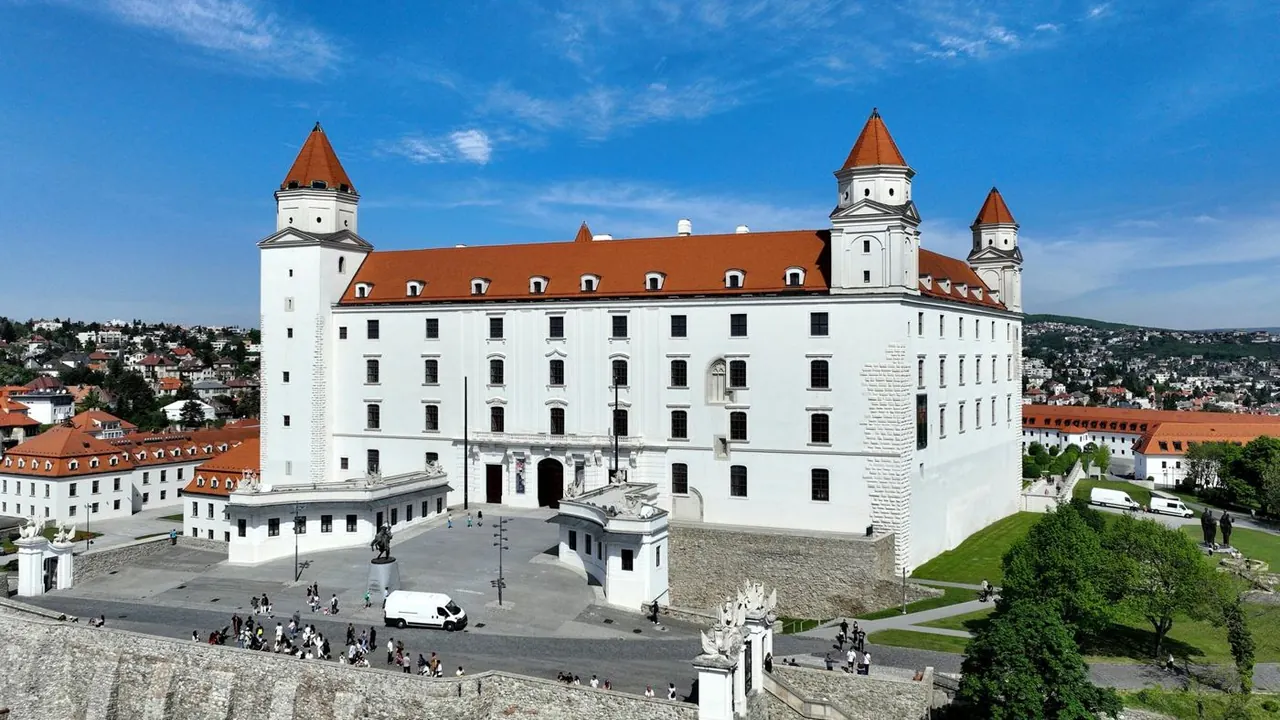
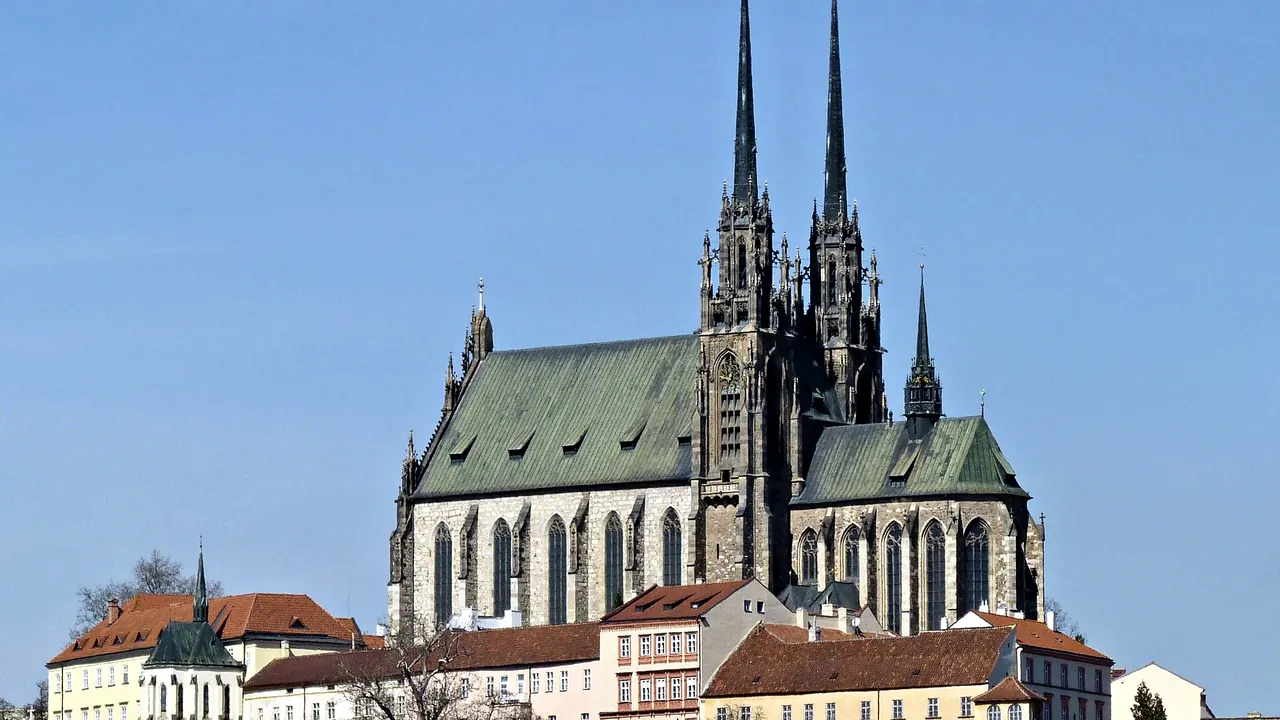
Photos: Bratislava by C.Stadler/Bwag, CC BY-SA 4.0, cropped; Brno by Michal Klajban, CC BY-SA 3.0, cropped.
Bratislava or Brno?
Our verdict in twelve categories, each scored against the same fixed benchmark cities, and the climate month by month, so you can choose for your trip.
Choose Bratislava for
- wellness
- beaches
- shopping
Bratislava suits a traveller who wants a small, pretty capital on the Danube with Vienna about an hour up the line. The coronation town below the castle takes a day or two, the Small Carpathian wine villages start at the city's edge, and the spa town of Piestany or the water park at Senec make an easy day of rest. Weekend nights in the Old Town are loud and sociable, which suits groups after a lively pub crawl.
Choose Brno for
- culture and sights
- families
- live music and the arts
Brno is the better pick for anyone drawn to architecture, opera and a slightly cheaper stay. Villa Tugendhat and the interwar functionalist districts give it a sight Bratislava cannot match, and Janacek's legacy fills the theatres. Families get more to do, with the VIDA science centre and the boat through the Punkva Caves, and a single ticket reaching across South Moravia makes the UNESCO towns around it simple to reach.
Scoreboard
Twelve categories on one fixed scale from 0 to 100. The shaded stretch is the gap between the two.
Your match
Pick a travel style or drag the sliders, and both match scores follow your weighting.
Wins on wellness and beaches with your weighting.
Wins on culture and sights and families with your weighting.
What matters to you?
Category by category
What the scores mean for a trip.
Beaches & swimming
Neither city is a place for a beach vacation, and both send their swimmers to lakes on hot summer days. Bratislava's Zlate piesky has a sandy shore on the tram line, with the larger Senec lakes half an hour out for a weekend.
Brno's equivalent is the reservoir on the Svratka, with grassy banks and a river boat, though algae can spoil the water in hot spells. Its wider choice, the Nove Mlyny lakes under the Palava hills, is about an hour away.
Food & drink
Both serve hearty Central European cooking in pubs with good lager, and both sit near their own vineyards. Bratislava has Slovak specialities such as bryndzove halusky and the poppy-seed Bratislava rolls, with house-brewed beer and Small Carpathian Veltliner and Frankovka poured in wine bars on the city's doorstep.
Brno's food is the Czech classics of svickova and roast pork, but its drinking culture runs wider, with specialty coffee and serious cocktail bars alongside Moravian wine. The Zelny trh morning market adds fresh produce, while in Bratislava the best meals take a step away from the tourist menus on the central squares.
Culture & sights
Bratislava's sights are a compact royal story: the cathedral where Hungarian kings were crowned, the brass crowns marking their route, the Primate's Palace and the castle above, plus the cliff-top ruins of Devin. It is charming and done in a day or two.
Brno gives a culture-minded visitor more to chew on. Villa Tugendhat is a UNESCO-listed landmark of modern architecture, and whole districts of functionalist buildings surround it. Add the Spilberk fortress, the Capuchin Crypt, the ossuary under St James's and the abbey where Mendel founded genetics, and the city holds a curious visitor longer.
Nightlife
The two are close in size of scene but different in character. Bratislava's Old Town fills on Friday and Saturday with pubs, wine bars and visiting groups, stag parties among them, and goes quiet in the week.
Brno's nights follow the university term rather than the weekend, centred on Jakubske namesti and known for small, carefully run cocktail bars hidden behind unmarked doors. It empties noticeably in July and August, when Bratislava's riverside terraces are at their busiest.
Nature & outdoors
The outdoors are equally good in both, but the landscapes differ. Bratislava has wooded hills straight from the city, with beech-forest trails up to the Kamzik tower, and the Danube's floodplain forests and flat cycle route into Austria, plus whitewater rafting at Cunovo.
Brno's highlight lies half an hour north in the Moravian Karst, a limestone country of caves, underground rivers and the 138m Macocha Abyss. To the south it has the Palava ridge and the Dyje valley of Podyji National Park, so it offers more variety, while Bratislava's green space starts closer to the centre.
Day trips
Both are superb bases, and they even share one destination in the Lednice-Valtice chateaux and parkland. Bratislava's trump card is Vienna about an hour away, by train or boat, with Austria's Carnuntum and Lake Neusiedl and Hungary's Pannonhalma abbey also in range.
Brno's strength is depth rather than a single star. Kromeriz, Trebic, Telc and Zelena Hora are all UNESCO sites within an hour or two, along with the Austerlitz battlefield, Baroque Olomouc and the wine towns of Mikulov and Znojmo. Vienna and Bratislava are each about an hour and a half by train.
Good for families
Both are safe and calm with children, but Brno has more built for them. The VIDA science centre is hands-on, the Anthropos pavilion brings mammoths and cave dwellers to life, there is a planetarium on Kravi hora, and the Punkva Caves boat trip is the outing children remember best.
Bratislava relies more on the outdoors: the playgrounds and chairlift around Kamzik, the hillside zoo, statue-spotting in the Old Town and the water park at Senec. That fills a short stay well, but a longer family trip runs out of ideas sooner than in Brno.
Getting around
Both centres are small enough to walk, and neither has a metro. Bratislava's sights lie within a twenty-minute walk, but its station sits on a rise above the Old Town, and trips across the river or to the suburbs are slower than they look.
Brno is easier. Its station is right at the edge of the old town, a dense tram network reaches Villa Tugendhat, the zoo and the reservoir, and night buses cover the late hours. Its one ticket also covers regional trains across South Moravia, which makes day trips much simpler.
Shopping & style
For a souvenir with a story, Bratislava has the edge. The state folk-craft centre sells genuine Slovak handwork, from Modra majolica to lace and blue-print cloth, and when the riverside malls feel generic, Vienna's boutique streets are only a train ride away.
Brno's centre is mostly high-street chains on Ceska and Masarykova, with a scattering of independent vintage, design and bookshops in the old town's arcades. Its best buys are things to eat and drink: Moravian wine bought straight from the cellars on a day out, and seasonal produce and flowers from the Zelny trh market. In Bratislava the bottle to take home is Small Carpathian wine.
Affordability
Both are cheap by Western standards, with low-cost beer, wine, transport and museums, but Brno stretches a budget a little further. Mid-range rooms and pub lunch menus there cost very little, and only the specialty coffee and cocktail bars charge noticeably more.
Bratislava is still good value, though its main Old Town squares and the glass-fronted riverside complexes price meals more like a Western city. Rooms also climb on busy summer weekends, while in Brno it is the big trade fairs that fill the hotels.
Live music & performing arts
Brno has the richer stage life, thanks to Janacek, who lived and worked there. Its National Theatre runs three houses, with his operas at the heart of the repertoire in the Janacek Theatre, and the old Reduta where the young Mozart played. Big musicals and a long-standing experimental stage add range.
Bratislava's evening is simpler: opera and ballet at the Slovak National Theatre on Hviezdoslav Square and the Slovak Philharmonic in its own Reduta, with easy tickets and a solid standard. For a bigger programme its visitors go to Vienna.
Wellness & relaxation
Neither city has thermal springs of its own, but Bratislava makes it easier to find a spa day. The water park at Senec is half an hour away, and Piestany, a historic spa town famed for mud and sulphur-water cures, is about an hour by train.
Brno has no spa tradition to draw on, so unwinding means swimming complexes with saunas, hotel spas and quiet afternoons in Luzanky park or on the Spilberk slopes. It is a calm city to slow down in, just without the baths.
When should you go?
Pick your month. The climate figures are measured averages, not a forecast.
Bratislava in July
Brno in July
Daytime high, °C
Rainfall in the month, mm
Where the figures come from
Bratislava has no rain gauge within 25 km of the centre, so its rainfall comes from a gridded climate dataset read at the city rather than from a gauge further away.
Bratislava's sunshine is measured 56 km from the centre, at Wien / Hohe Warte.
Temperature and rainfall are climate normals, averaged over the years shown. Bratislava: 1991-2020 normals, Bratislava Ivanka (8.6 km from centre). Brno: 1991-2020 normals, Brno / Turany (8.4 km from centre).
The two cities share an inland Central European climate, and their best months for walking are May, June and September, when days are warm and sunny without the midsummer heat. July and August peak at around 27°C in Bratislava and a degree cooler in Brno, which is warm enough for an afternoon at the lakes and the reservoir but rarely too hot for sightseeing. Summer is also the wettest season in both, usually as short downpours, with Bratislava the damper of the two at about 82mm in July.
Winters are cold and grey, with highs close to freezing from December to February and little sunshine, so a visit then is about museums, cafés and the opera season rather than long walks. Brno has the drier winters, with only about 22mm in January, while Bratislava is a touch milder and sunnier through most of the year.
Which traveller are you?
On a culture and arts trip, Brno rewards a longer stay. Its sights run from Gothic and Habsburg to bold interwar modernism, its museums cover art, prehistory and science, and an evening of Janacek's operas in the city where he composed them is hard to beat.
On a family trip with young children, Brno copes better with wet days and longer stays, because its best children's attractions are hands-on and indoors, and trams make hopping between them easy. Bratislava works for a short break but leans on fine weather and parks.
For a relaxing and wellness trip, Bratislava suits a slower pace. Mornings in riverside cafés, quiet weekday walks in the beech woods above town and Slovakia's long spa tradition within easy reach make a gentler stay than Brno, where unwinding stops at saunas and parks.
Before you go
| Measure | Bratislava | Brno |
|---|---|---|
| Official language | Slovak | Czech |
| Currency | Euro (EUR) | Czech Koruna (CZK) |
| Sockets | CE230 V, 50 Hz | CE230 V, 50 Hz |
| Driving side | Right | Right |
| Time zone | UTC+1, UTC+2 in summer | UTC+1, UTC+2 in summer |
| Emergency number | 112 | 112 |
| Elevation | 152 m | 237 m |
| Main airport | M. R. Štefánik Airport (BTS)8 km from centre68 non-stop destinations | Brno-Tuřany Airport (BRQ)8 km from centre40 non-stop destinations |
| Public holidays this year | 15 days | 13 days |
By the numbers
| Measure | Bratislava | Brno |
|---|---|---|
| City population | 480,902 | 402,739 |
| People per km² | 1,308 | 1,750 |
| Museums within 10 km | 22 | 25 |
| UNESCO World Heritage sites within 50 km | 2 | 2 |
Where else could you go?
Every comparison below shares a destination with this one, so you can follow Bratislava or Brno somewhere new.
- Viennavs Bratislava
- Viennavs Brno
- Budapestvs Bratislava
- Cesky Krumlovvs Brno
- Grazvs Bratislava
- Praguevs Brno