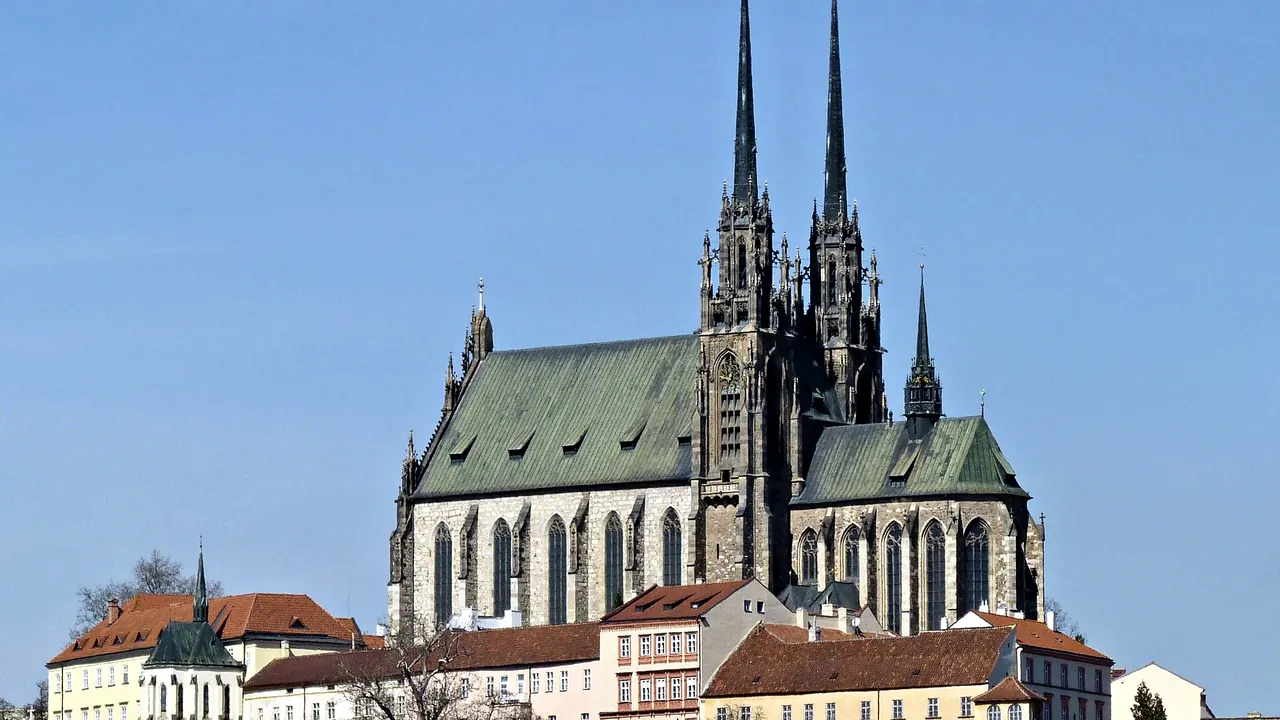
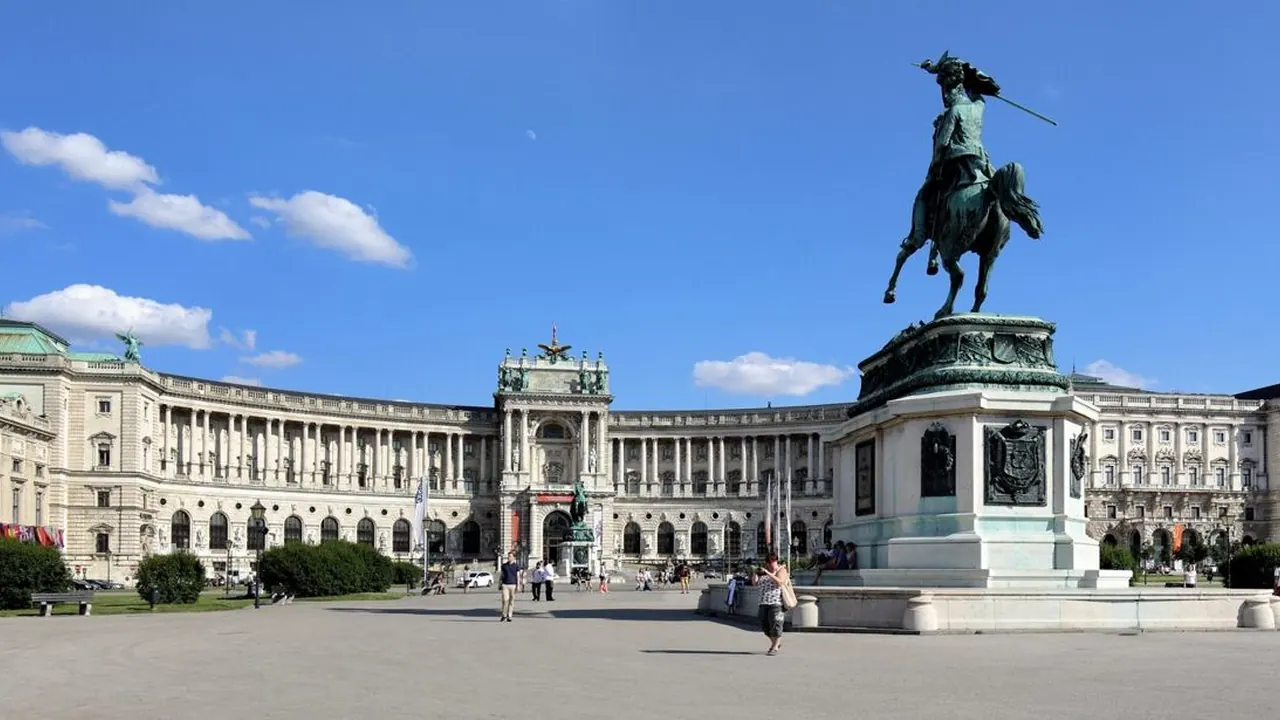
Photos: Brno by Michal Klajban, CC BY-SA 3.0, cropped; Vienna by C.Stadler/Bwag, CC BY-SA 3.0 AT, cropped.
Brno or Vienna?
Our verdict in twelve categories, each scored against the same fixed benchmark cities, and the climate month by month, so you can choose for your trip.
Choose Brno for
- prices
- day trips
Brno suits travellers who want a cheaper, smaller base with a lot within reach. The centre takes two or three days, built around Villa Tugendhat, interwar functionalist buildings and the crypts under the old town. After that it works as a hub for southern Moravia's chateaux, wine towns and caves, and the evenings run on cocktail bars and Moravian wine. It is the better pick if you count the cost and like doing a fresh excursion most days.
Choose Vienna for
- live music and the arts
- culture and sights
- shopping
Vienna is for anyone who puts music, art and imperial grandeur first and is happy to pay more for them. The palaces and first-rank museums fill a week, there is opera or a concert every night, and coffee houses, thermal baths and the Prater make it the easier city for a slow trip or a family one. Getting around and shopping are also more polished.
Scoreboard
Twelve categories on one fixed scale from 0 to 100. The shaded stretch is the gap between the two.
Your match
Pick a travel style or drag the sliders, and both match scores follow your weighting.
Wins on prices and day trips with your weighting.
Wins on live music and the arts and culture and sights with your weighting.
What matters to you?
Category by category
What the scores mean for a trip.
Beaches & swimming
Neither city is anywhere near the sea, but Vienna makes summer swimming part of an ordinary day. The Danube Island gives about 20km of grassy banks and gravel shores. The calmer, warmer Alte Donau is lined with old lidos, and both are a U-Bahn ride from the centre.
Brno's equivalent is the reservoir on the Svratka, reached by tram and river boat, with small beaches and the risk of algae in hot spells. The Nove Mlyny lakes are an hour away. That makes Brno a city for the occasional swim, while in Vienna you can swim most summer evenings.
Food & drink
Vienna has a cuisine of its own: schnitzel, Tafelspitz and a pastry tradition served in grand coffee houses. Its Heuriger taverns pour wine grown inside the city limits, and there is a solid fine-dining tier on top. Brno eats more plainly, with svickova, goulash and roast pork in beer halls. Its fine dining is thin and the range runs out quickly.
Where Brno holds its own is drink. Specialty coffee, serious cocktails and Moravian whites and Frankovka by the glass give it a stronger drinks culture than its kitchens suggest. Neither city has much international or street food.
Culture & sights
Brno's strength is modernist. Villa Tugendhat and one of Europe's richest collections of interwar functionalist architecture give it something Vienna cannot match. The Gothic cathedral, Spilberk, the Capuchin Crypt and the Mendel Museum fill out a stay of two or three days.
Vienna is on a far larger scale. The Hofburg, Schönbrunn, St Stephen's and the Ringstrasse are imperial set pieces, and the Kunsthistorisches, the Belvedere, the Albertina and the Leopold hold collections of world rank. Jugendstil adds a second great period in the Secession and Otto Wagner's stations, and even a week leaves plenty unseen.
Nightlife
The two are close, and neither is a city for all-night parties. They differ in rhythm. Brno's nights are driven by students: small cocktail bars behind unmarked doors, cellars and wine bars around Jakubske namesti, all full in term and noticeably emptier in July and August.
Vienna is busiest in summer, with deckchair bars along the Danube Canal, and it keeps late bars and small clubs under the Gürtel arches all year. It also has a modest electronic club scene. Its singular draw is winter, when the ball season fills palaces with formal dances that visitors can join.
Nature & outdoors
Both have good country close by, with Vienna slightly ahead. Its Vienna Woods and vineyard trails up to the Kahlenberg start at the edge of the city, the Donau-Auen floodplain forest lies to the east, and the alpine plateaus of the Rax and Schneeberg are within reach for real mountain walking.
Brno has no mountains, but it has something Vienna lacks: the Moravian Karst, with its caves, the underground river boat at Punkva and the Macocha Abyss. To the south are the Palava ridge, the Dyje valley and long cycle routes through the wine country.
Day trips
Both are excellent bases, and a fast train links them, so each makes a day trip from the other. Brno has the edge in density. Lednice-Valtice, Telc, Trebic, Kromeriz and Zelena Hora are all UNESCO sites within an hour or two, along with the Austerlitz battlefield, Olomouc and the wine towns of Mikulov and Znojmo.
Vienna's outings are fewer but strong. The Wachau valley has Melk and Dürnstein, and the abbeys of Klosterneuburg and Heiligenkreuz and the spa town of Baden are close by. Bratislava is about an hour away by river or rail.
Good for families
Vienna is far better set up for children. Schönbrunn Zoo, the oldest still running, has a maze and a children's museum beside it. The Prater has its Ferris wheel and rides, Haus des Meeres has sharks inside a flak tower, and the Natural History, Technical and ZOOM museums cover wet days.
Brno is safe and easy, but its list is short: the VIDA science centre, the hillside zoo, the Anthropos mammoths and the planetarium. The boat through the Punkva Caves is its standout outing, and the cobbles and hills call for a sturdy pushchair.
Getting around
Both centres are compact and walkable, and neither needs a car. Vienna adds five U-Bahn lines to its trams, runs the metro all night at weekends, and reaches everything from Schönbrunn to the vineyard villages with little effort.
Brno manages on trams, trolleybuses and buses, with one quiet advantage: its single ticket also covers regional trains across South Moravia. That makes its many day trips unusually simple. Expect some steep streets around Spilberk and the cathedral hill.
Shopping & style
Vienna is the clear choice for shopping. Luxury houses line the Kohlmarkt and Graben, Mariahilfer Strasse has everyday fashion and Neubau's side streets hold independent designers. The city also has crafts worth carrying home: Augarten porcelain, crystal, Loden and dirndls. Its Christmas markets are a draw of their own.
In Brno, Ceska and Masarykova offer the usual chains plus a few vintage and design shops. The best things to take home from Brno are Moravian wine, bought straight from the cellars, and produce from Zelny trh.
Affordability
Brno costs clearly less. Rooms are cheap for central Europe except during big trade fairs, weekday pub lunch menus are very good value, and beer, wine, transport and museums all cost little.
Vienna sits in the middle to upper bracket. Heuriger buffets, sausage stands, free palace gardens and opera standing places soften the bill, but the major palaces and museums charge full price.
Live music & performing arts
Few cities match Vienna for music. The State Opera stages a different work most nights, the Musikverein's Golden Hall is home to the Vienna Philharmonic, and the Konzerthaus, Volksoper, Theater an der Wien and Burgtheater fill out the week. The Boys' Choir sings Sunday Mass in the Hofburg chapel.
Brno's stage life is serious for its size and centred on Janacek, whose operas anchor the Janacek Theatre's repertoire. The Reduta, where the young Mozart played, and the Brno Philharmonic add depth. Much of the drama is in Czech, so visitors do best with the opera, ballet and concerts.
Wellness & relaxation
Vienna offers real thermal bathing. There is a large spring-fed complex of pools and saunas at Oberlaa and the Art Deco Amalienbad, and Baden's sulphur springs are half an hour away. Its coffee houses and vineyard taverns make slowness part of everyday life.
Brno has no springs or spa tradition, only pool complexes with saunas and a few hotel spas. Its calm comes from quiet afternoons in Luzanky park and on the Spilberk slopes.
When should you go?
Pick your month. The climate figures are measured averages, not a forecast.
Brno in July
Vienna in July
Daytime high, °C
Rainfall in the month, mm
Temperature and rainfall are climate normals, averaged over the years shown. Brno: 1991-2020 normals, Brno / Turany (8.4 km from centre). Vienna: 1991-2020 normals, Wien / Hohe Warte (4.7 km from centre).
Brno and Vienna share the same continental year, with Vienna about a degree warmer in most months. Late May, June and September are the best months for walking the streets, warm without being heavy. In July and August Brno reaches about 26°C and Vienna 27°C. That is warm enough for a swim at the Brno Reservoir or on the Danube Island and the Alte Donau. These are also the sunniest months in both cities, with Vienna slightly ahead.
The rain differs outside summer. Brno is clearly drier in winter and spring, with only about 22mm in January against 42mm in Vienna, and it stays a little drier in autumn too. In summer the two are much alike, both getting 70mm in June, and May to August is the wettest stretch in each. From December to February both sit just above freezing under short, dull days. That suits Vienna's concerts and museums better than Brno's walks and excursions.
Which traveller are you?
On a culture and arts trip, Vienna is the clear choice. The Kunsthistorisches Museum, the Belvedere and the Habsburg palaces would fill a week on their own, and the State Opera, Musikverein and Konzerthaus put world-class music on stage every night of the season.
On a trip on a tight budget, Brno stretches money much further. Pub lunch menus, cheap beer and Moravian wine, low museum entries and one ticket that covers regional trains mean a full week of sightseeing and day trips costs far less than in Vienna.
On a family trip with children, Vienna has far more to offer. Schönbrunn Zoo, the Prater rides, the shark aquarium, dinosaurs at the Natural History Museum and the ZOOM children's museum cover both sunny and rainy days. Brno has its science centre and cave boat ride but runs out sooner.
Before you go
| Measure | Brno | Vienna |
|---|---|---|
| Official language | Czech | German, Austrian Sign Language |
| Currency | Czech Koruna (CZK) | Euro (EUR) |
| Sockets | CE230 V, 50 Hz | CF230 V, 50 Hz |
| Driving side | Right | Right |
| Time zone | UTC+1, UTC+2 in summer | UTC+1, UTC+2 in summer |
| Emergency number | 112 | 112 |
| Elevation | 237 m | 151 m |
| Main airport | Brno-Tuřany Airport (BRQ)8 km from centre40 non-stop destinations | Vienna International Airport (VIE)18 km from centre202 non-stop destinations |
| Public holidays this year | 13 days | 16 days |
By the numbers
| Measure | Brno | Vienna |
|---|---|---|
| City population | 402,739 | 2,028,289 |
| People per km² | 1,750 | 4,890 |
| Museums within 10 km | 25 | 152 |
| UNESCO World Heritage sites within 50 km | 2 | 4 |
Where else could you go?
Every comparison below shares a destination with this one, so you can follow Brno or Vienna somewhere new.
- Bratislavavs Vienna
- Bratislavavs Brno
- Grazvs Vienna
- Cesky Krumlovvs Vienna
- Cesky Krumlovvs Brno
- Praguevs Brno