Photos: Graz by C.Stadler/Bwag, CC BY-SA 4.0, cropped; Vienna by C.Stadler/Bwag, CC BY-SA 3.0 AT, cropped.
Graz or Vienna?
Our verdict in twelve categories, each scored against the same fixed benchmark cities, and the climate month by month, so you can choose for your trip.
Choose Graz for
- nature and the outdoors
- prices
Graz suits a traveller who wants a handsome old town without the scale of a capital, and who would rather spend the afternoons outdoors. The Schöckl, the gorges and the South Styrian wine hills are all close, and the food is rooted in the farmland around the city. It works well for two or three unhurried days with a car for the countryside.
Choose Vienna for
- live music and the arts
- culture and sights
- families
Choose Vienna if the trip is about the great sights and, above all, music. Imperial palaces, first-rank art collections and an opera and concert life that runs every night put it in a different league for culture. It is also the easier pick with children and the better base for day trips without a car, including Bratislava and the Wachau.
Scoreboard
Twelve categories on one fixed scale from 0 to 100. The shaded stretch is the gap between the two.
Your match
Pick a travel style or drag the sliders, and both match scores follow your weighting.
Wins on nature and the outdoors and prices with your weighting.
Wins on live music and the arts and culture and sights with your weighting.
What matters to you?
Category by category
What the scores mean for a trip.
Beaches & swimming
Neither city is anywhere near the sea, but Vienna makes summer swimming much easier. The Danube Island and the lidos on the Alte Donau are right inside the city and you can reach them by U-Bahn after a day of sightseeing.
In Graz you have to leave town for the converted gravel-pit lakes such as the Schwarzlsee. They are pleasant enough, but it is an outing rather than a quick dip.
Food & drink
Vienna eats a little better, mainly because of its depth: schnitzel and Tafelspitz in wood-panelled Beisl taverns, a whole pastry tradition, the ritual of the grand coffee house, and Heuriger wine taverns within the city limits.
Graz offers something more rural and more regional. Pumpkin seed oil goes on nearly everything, the morning farmers' markets are excellent and Buschenschank taverns in the vineyards are under an hour away. Neither city has much range beyond Austrian cooking.
Culture & sights
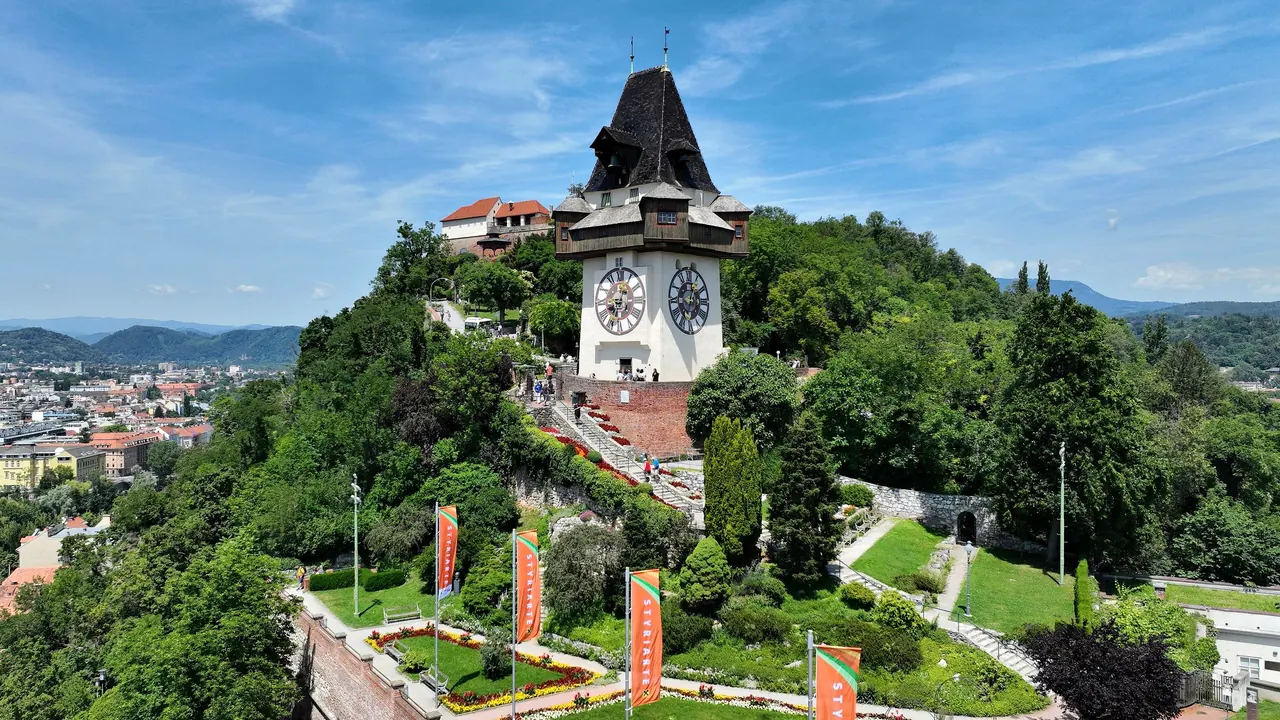
Graz is best for wandering rather than working through a list. Its strength is a whole old town that has survived intact, with red roofs, Renaissance courtyards and Baroque fronts best seen together from the clock tower on the castle hill. Its one real surprise is the Landeszeughaus, where rows of armour and weapons still stand ready as if for a siege, and the blue Kunsthaus across the Mur offers a modern contrast.
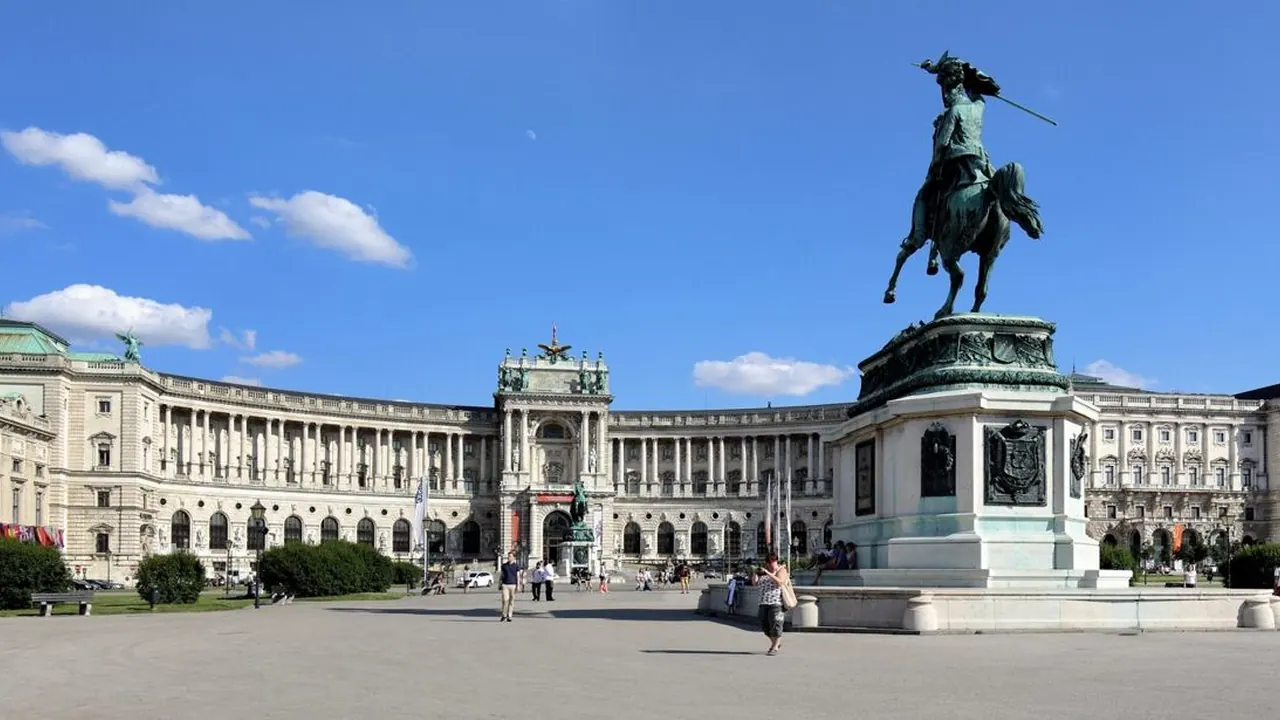
Vienna has far greater depth. Eggenberg is a provincial palace, while the Hofburg and Schönbrunn were the Habsburgs' own seats, and Vienna's galleries are among the world's best, from the Bruegels at the Kunsthistorisches Museum to Klimt at the Belvedere and Schiele at the Leopold. It suits a visit planned around great collections and two distinct building eras, imperial grandeur and the Vienna Secession.
Nightlife
Curiously, both cities call their old-town drinking lanes the Bermuda Triangle. In Graz that, plus the arty bars of Lend, is most of it. The nights are student-driven and good for wine bars and pub crawls, and they go quiet in the long summer break.
Vienna goes out more and with more variety, with late bars and small clubs under the Gürtel railway arches and deckchair bars on the Danube Canal in summer. It also has the winter ball season, which has no equivalent in Graz.
Nature & outdoors
Graz is the better base for the outdoors. The Schöckl, with its cable car, trails and paragliders, rises just beyond the city, and the waterfalls and ladders of the Bärenschützklamm and the high limestone of the Gesäuse are within reach.
Vienna's green land is gentler: the beech hills of the Vienna Woods, vineyard trails up to the Kahlenberg, and the floodplain forest of the Donau-Auen. Its nearest real mountains, the Rax and Schneeberg, are about an hour and a half away.
Day trips
Vienna has the wider choice and most of it can be reached by train or boat. Bratislava and Brno are other countries' cities a short ride away, and the Wachau, with Melk and Dürnstein, is a classic day out on the Danube.
Graz's outings are more rural: the South Styrian Wine Road, Riegersburg on its volcanic crag, the Lipizzaner farm at Piber and Maribor across the border. They are lovely, but most are far easier with a car.
Good for families
Both are calm and safe, but Vienna gives children much more to do. It has the world's oldest working zoo at Schönbrunn, the Prater's Ferris wheel and rides, sharks at Haus des Meeres, and dinosaurs at the Natural History Museum for wet days.
Graz has one outstanding treat, riding up the Schlossberg and sliding down through the inside of the hill, plus a fairytale train and a children's museum. With no zoo, aquarium or theme park, a longer stay means heading out to the wildlife park or the countryside.
Getting around
Both centres are compact and easy on foot, and neither needs a car within the city. Graz relies on trams and buses across a small, flat centre, with a lift and funicular up the castle hill.
Vienna adds five U-Bahn lines that run all night at weekends. Its public transport also reaches Schönbrunn, the Danube Island and the vineyard villages, whereas Graz's countryside sights are hard to reach without a car.
Shopping & style
Vienna offers more. The Kohlmarkt and Graben carry the luxury houses, Mariahilfer Strasse handles everyday fashion, and Neubau has independent designers. Augarten porcelain, crystal and the Christmas markets give it craft and seasonal pull too.
Graz is modest by comparison: high-street shops in the old buildings of the Herrengasse and Sporgasse, small design shops in Lend, and little luxury. Its best souvenirs are edible, such as pumpkin seed oil, Schilcher rosé and Styrian chocolate.
Affordability
Costs are much the same in both, fair for Western Europe rather than cheap. What differs is where you save. In Graz it is the many student lunch menus and a centre you can walk, though hotels climb during festivals and trade fairs.
In Vienna, the savings come from free palace gardens and churches, sausage stands, and standing places at the State Opera. Hotel prices there rise during the ball season and the Christmas market weeks.
Live music & performing arts
Vienna is one of the world's great music cities. The State Opera stages a different work most nights, the Vienna Philharmonic plays in the Golden Hall of the Musikverein, and the Burgtheater, Volksoper and the Boys' Choir add to a calendar that never stops.
Graz is serious for its size. It has Austria's second-largest opera house, the Styriarte early-music festival, the avant-garde steirischer herbst and a strong jazz scene fed by its music university. Still, it is a good regional stage rather than a reason to travel.
Wellness & relaxation
Vienna makes rest easier to find. Therme Wien and the Art Deco Amalienbad are inside the city, and Baden's sulphur springs are half an hour away, alongside the slow ritual of the coffee house.
Graz has no bathing tradition of its own, only pools and hotel spas, so thermal bathing means an hour's trip east to the spa villages. The reward is distinctive, though, with Hundertwasser's wavy, grass-roofed resort at Bad Blumau.
When should you go?
Pick your month. The climate figures are measured averages, not a forecast.
Graz in July
Vienna in July
Daytime high, °C
Rainfall in the month, mm
Temperature and rainfall are climate normals, averaged over the years shown. Graz: 1991-2020 normals, Graz Airport (7.9 km from centre). Vienna: 1991-2020 normals, Wien / Hohe Warte (4.7 km from centre).
The two cities follow almost the same temperatures through the year. Winters are cold with short days, highs reach about 21°C in May and September, the best months for walking the streets, and the peak of summer sits around 27°C. From June to early September it is warm enough for an afternoon at the Styrian lakes or on the Danube, and neither city is often too hot for sightseeing.
The rain is what sets them apart. Graz has dry winters, but summer brings heavy thunderstorms, with about 125mm a month from June to August. Vienna spreads its rain more evenly and stays under about 80mm even in summer. Vienna gets a little more sunshine from spring to late summer, while Graz is noticeably brighter from November to February, which helps on a winter visit.
Which traveller are you?
On a culture and arts trip, Vienna is the clear choice. The Hofburg, Schönbrunn and the Kunsthistorisches Museum need a week to see properly, and the State Opera and the Musikverein put world-class performances within reach on almost any night.
For an outdoors trip, Graz has the edge. Its home mountain, the Schöckl, is right on the edge of the city, the Bärenschützklamm gorge is a short trip out, and proper alpine hiking in the Gesäuse and Hochschwab lies within about two hours.
On a family trip with children, Vienna has far more to fill the days. Schönbrunn Zoo, the Prater rides, an aquarium in a flak tower and several hands-on museums cover rainy and sunny days alike, while Graz runs short of big attractions after the Schlossberg.
Before you go
| Measure | Graz | Vienna |
|---|---|---|
| Official language | German, Austrian Sign Language | German, Austrian Sign Language |
| Currency | Euro (EUR) | Euro (EUR) |
| Sockets | CF230 V, 50 Hz | CF230 V, 50 Hz |
| Driving side | Right | Right |
| Time zone | UTC+1, UTC+2 in summer | UTC+1, UTC+2 in summer |
| Emergency number | 112 | 112 |
| Elevation | 353 m | 151 m |
| Main airport | Graz Airport (GRZ)9 km from centre26 non-stop destinations | Vienna International Airport (VIE)18 km from centre202 non-stop destinations |
| Public holidays this year | 16 days | 16 days |
By the numbers
| Measure | Graz | Vienna |
|---|---|---|
| City population | 306,971 | 2,028,289 |
| People per km² | 2,406 | 4,890 |
| Museums within 10 km | 29 | 152 |
| UNESCO World Heritage sites within 50 km | 1 | 4 |
Where else could you go?
Every comparison below shares a destination with this one, so you can follow Graz or Vienna somewhere new.