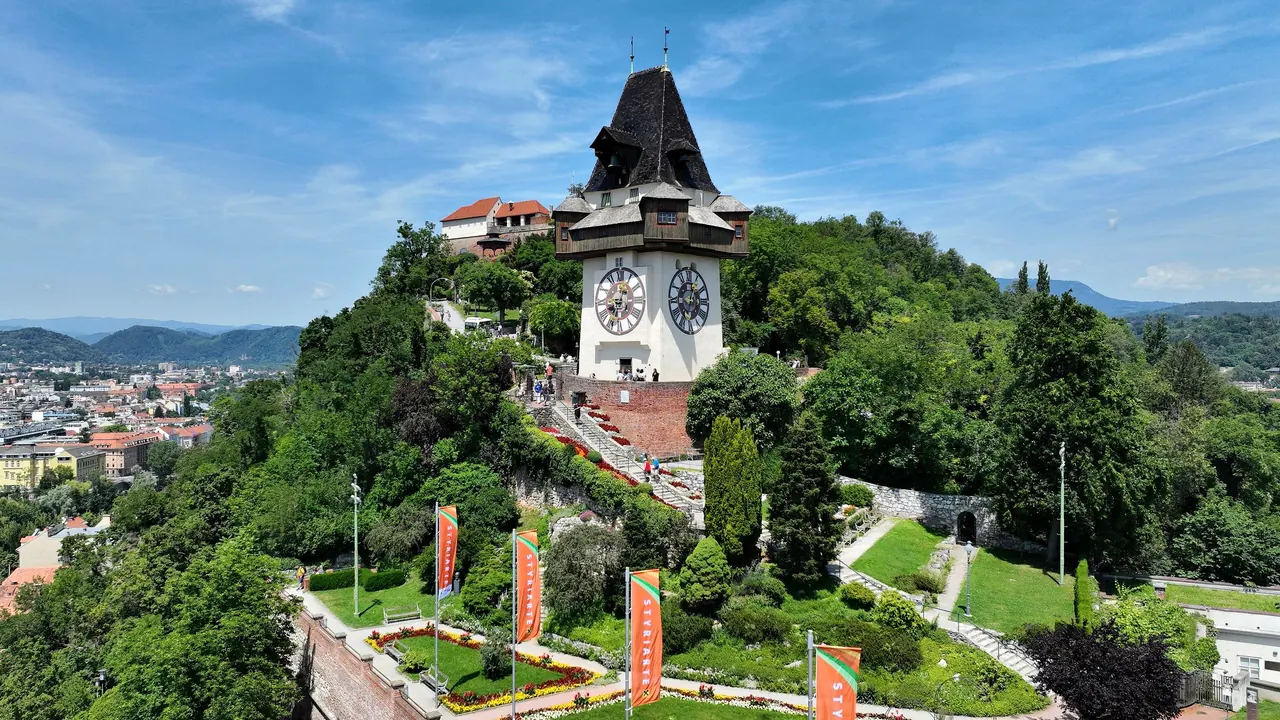
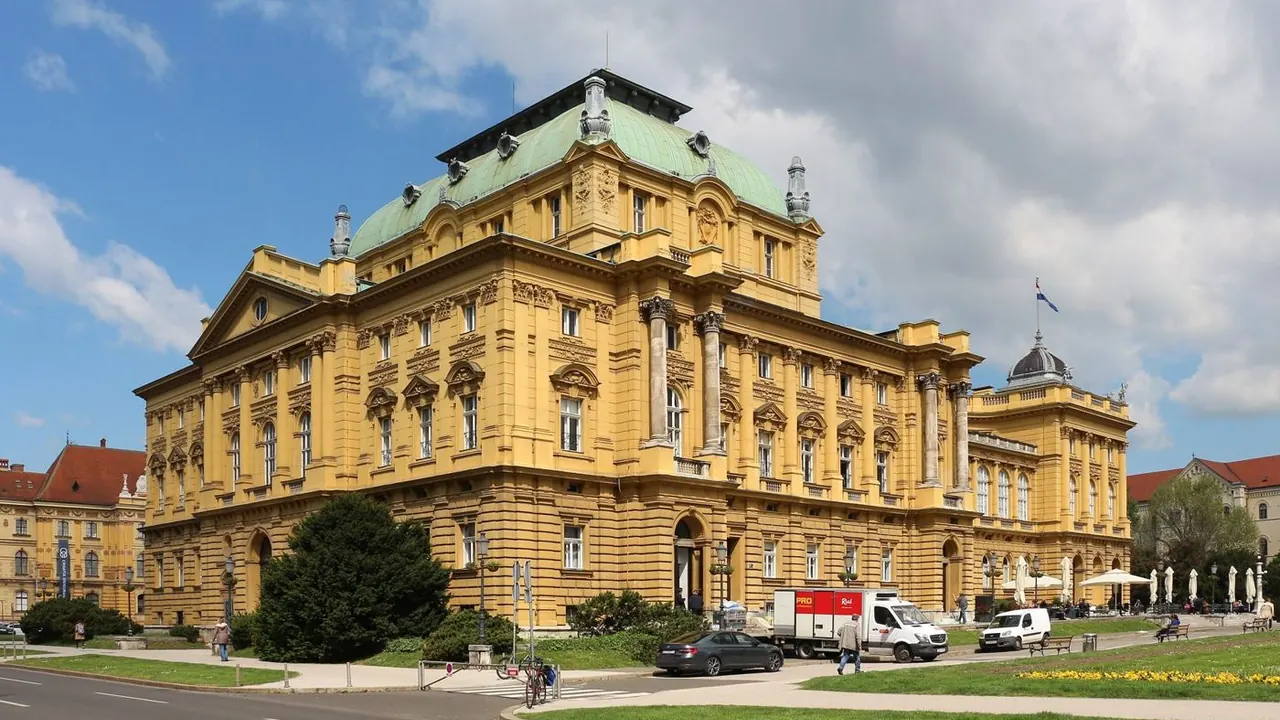
Photos: Graz by C.Stadler/Bwag, CC BY-SA 4.0, cropped; Zagreb by Bernard Gagnon, CC BY-SA 4.0, cropped.
Graz or Zagreb?
Our verdict in twelve categories, each scored against the same fixed benchmark cities, and the climate month by month, so you can choose for your trip.
Choose Graz for
- wellness
- getting around
- culture and sights
Graz suits the traveller who wants a polished, easy few days: an unusually intact old town, an armoury and a Baroque palace to explore, a serious opera house, and a centre so compact and well served by trams that you barely think about getting around. It also pays off beyond the city, with Styria's thermal spa villages, wine hills and proper alpine walking all within a couple of hours.
Choose Zagreb for
- prices
- nightlife
Pick Zagreb if you care more about a looser, cheaper stay with a stronger social life. The café terraces, the evening strip of Tkalčićeva and the summer crowd at Jarun give it more going on after dark, and your money goes noticeably further. It is a capital with two distinct halves, Upper Town lanes and Austro-Hungarian Lower Town, best enjoyed at an unhurried pace.
Scoreboard
Twelve categories on one fixed scale from 0 to 100. The shaded stretch is the gap between the two.
Your match
Pick a travel style or drag the sliders, and both match scores follow your weighting.
Wins on wellness and getting around with your weighting.
Wins on prices and nightlife with your weighting.
What matters to you?
Category by category
What the scores mean for a trip.
Beaches & swimming
Neither city is a beach destination, and both cool off the same way, at old gravel pits turned into bathing lakes. Graz has the Schwarzlsee, with grassy banks and jetties, while Zagreb has Jarun, with pebbly shores, lifeguarded areas and rowing lanes, right inside the city.
The real difference is the sea. From Graz it is a long way off, but from Zagreb the Adriatic is about two hours' drive, so a coastal stop slots into a Croatian trip far more easily.
Food & drink
Both cities cook hearty Central European food built around their morning markets, Kaiser-Josef-Platz and Lendplatz in Graz, Dolac under its red umbrellas in Zagreb. Graz has the more distinctive regional larder: pumpkin seed oil on everything, cold fried chicken salad, and crisp South Styrian whites poured at rustic Buschenschank taverns under an hour away.
Zagreb's pleasures are štrukli, turkey with mlinci and fresh cheese with cream, but its real ritual is coffee, above all the Saturday morning promenade around Flower Square. Neither offers much range beyond local cooking.
Culture & sights
Graz has the finer historic setting. Its old town of arcaded Renaissance courtyards climbs to the Schlossberg and the Uhrturm, and the Landeszeughaus armoury, still stacked with thousands of suits of armour, has no real equivalent in Zagreb. Schloss Eggenberg and the blue Kunsthaus widen the span from Baroque to modern.
Zagreb's appeal is its two-part layout, the medieval Upper Town with St Mark's tiled roof and the Stone Gate, and the Lower Town's Green Horseshoe of parks and galleries. Its museums are good rather than great, though the Museum of Broken Relationships is memorable and Mirogoj cemetery is one of the loveliest sights in either city.
Nightlife
Zagreb has the livelier evenings. Café-bars on Tkalčićeva turn from coffee to drinks as the night goes on, smaller cocktail and craft beer bars fill the Lower Town courtyards, and in summer the crowd heads out to the lakeside clubs at Jarun.
Graz goes out on a smaller scale, in the bar lanes of the Bermuda Triangle and the artier places in Lend. It depends more on its students, so it goes quiet in the long summer break, just when Zagreb's outdoor scene is at its liveliest.
Nature & outdoors
Both have a home mountain on the edge of town, but Graz offers more variety. The Schöckl has a cable car, paragliders and wide views over Styria, the Bärenschützklamm climbs past waterfalls on wooden ladders, and genuine alpine hiking in the Gesäuse and Hochschwab is within about two hours.
Zagreb's Medvednica is lower and reached by tram and bus, with beech woods and mountain huts, and Maksimir park brings old oak woods into the city. Plitvice's lakes make a superb if long day, but the surrounding country stays gentle, with no high mountains nearby.
Day trips
Both cities have plenty of good outings, and in both a car helps. From Graz the trips lean towards wine and monasteries: the South Styrian Wine Road and Ehrenhausen, Riegersburg on its volcanic crag, the Lipizzaners at Piber and the great library at Admont.
Zagreb looks north to the castles and baroque churches of Zagorje, with Trakošćan, Marija Bistrica and the baroque town of Varaždin, plus Plitvice to the south. Each also gives you a neighbouring country: Maribor is an hour from Graz by train, Ljubljana a long day from Zagreb.
Good for families
Graz has more for children in the centre. The Schlossberg alone fills a day, with the glass lift up, the long underground slide down and the Märchenbahn train through fairytale tunnels, and the FRida & freD children's museum adds hands-on exhibits and theatre.
Zagreb has the one thing Graz lacks, a zoo in Maksimir park, plus the Tesla technical museum with its trams and mock mine, and lake swimming at Jarun and Bundek. Neither has a theme park or big aquarium.
Getting around
The heart of Graz is flat and mostly pedestrianised, while Zagreb's Upper Town climbs on steep cobbles. In Graz the old town sights are a few minutes apart on foot, trams cross the centre on one simple ticket, and cycling beside the Mur is easy.
Zagreb makes up for its slopes with a dense web of blue trams and a tiny funicular up to the Upper Town, but trams slow down in rush-hour traffic. In both cities you only need a car for trips into the countryside.
Shopping & style
From Graz you take home things to eat and drink: pumpkin seed oil, Schilcher rosé and craft chocolate from the region. Zagreb's souvenirs are crafts instead: red licitar honey-dough hearts, lace, and a necktie from the country that gave the world the cravat.
Graz is the nicer place to browse, with traditional shops in old buildings on the Herrengasse and the sloping Sporgasse, a grand nineteenth-century department store with a rooftop view, and design and vintage shops in Lend. Zagreb's Ilica is mostly chains and everyday fashion, though the Sunday morning flea market at Britanski trg is worth a wander.
Affordability
Zagreb is the cheaper stay. Central apartments, tram fares, museum tickets and market food are all easy on the budget, though a smart dinner or cocktails cost much as they would further west.
Graz is fair rather than cheap, with Austrian prices for sit-down dinners and wine. Student lunch menus, bakeries, combined museum tickets and a centre you can walk keep costs in check.
Live music & performing arts
Graz has the stronger stage. Its Opera, the second largest house in Austria, runs a full season, and two festivals give it a profile: Styriarte for early and classical music in early summer, and steirischer herbst for avant-garde work in autumn. The music university's jazz programme also feeds a real jazz scene.
Zagreb has a solid season at the Croatian National Theatre and the Lisinski hall, chamber music from the Zagreb Soloists, and open-air concerts in Upper Town courtyards in summer. In both, spoken theatre is mostly in the local language, so music is the safer choice.
Wellness & relaxation
Graz is the clear pick for a spa break. About an hour east lies a whole string of thermal villages, Bad Blumau with its Hundertwasser buildings, Loipersdorf, Bad Waltersdorf and Bad Radkersburg, all open to day visitors.
Zagreb's spa towns in Zagorje, such as Tuheljske and Krapinske Toplice, are fewer and simpler, used by locals for a weekend soak. In town, both rely on calm instead: coffee houses and the Stadtpark in Graz, long café mornings and quiet Upper Town lanes in Zagreb.
When should you go?
Pick your month. The climate figures are measured averages, not a forecast.
Graz in July
Zagreb in July
Daytime high, °C
Rainfall in the month, mm
Temperature and rainfall are climate normals, averaged over the years shown. Graz: 1991-2020 normals, Graz Airport (7.9 km from centre). Zagreb: 1991-2020 (sunshine 1981-2010, rainfall 1981-2010) normals, Zagreb / Gric (0.6 km from centre).
Both cities share a continental pattern of cold winters and warm summers, and late spring and early autumn are the most comfortable time for walking either one. Graz peaks at about 27°C in July, but summer is also its wettest season, with June to August each bringing around 125mm, often as storms. Its winters are drier but cold, around 3°C in January.
Zagreb runs a couple of degrees warmer, reaching about 29°C in July, and gets a little more summer sunshine, which makes its lakes slightly more inviting in July and August. Its rain is spread more evenly through the year, with the wettest month coming in early summer, around 108mm in June. In winter Graz has the brighter days, while Zagreb's are greyer but a touch milder.
Which traveller are you?
For a relaxing and wellness trip, Graz suits a slow week that mixes town and countryside. You can spend mornings in its quiet old town and afternoons soaking in warm thermal water an hour away. Zagreb's spa choice is thinner and more local.
On a trip on a tight budget, Zagreb lets the same money cover more nights. Graz is fair but Austrian in its prices. In Zagreb, a week of eating simply, riding trams and visiting museums stays comfortably affordable, though smart dinners do not.
For an outdoors trip, Graz is better for travellers who would rather pack hiking boots than a city guide. A mountain for an easy morning is right on its doorstep, with gorges and real alpine routes for full days further out. Zagreb offers gentler forest walks and rolling hills.
Before you go
| Measure | Graz | Zagreb |
|---|---|---|
| Official language | German, Austrian Sign Language | Croatian |
| Currency | Euro (EUR) | Euro (EUR) |
| Sockets | CF230 V, 50 Hz | CF230 V, 50 Hz |
| Driving side | Right | Right |
| Time zone | UTC+1, UTC+2 in summer | UTC+1, UTC+2 in summer |
| Emergency number | 112 | 112 |
| Elevation | 353 m | 127 m |
| Main airport | Graz Airport (GRZ)9 km from centre26 non-stop destinations | Zagreb Franjo Tuđman International Airport (ZAG)11 km from centre65 non-stop destinations |
| Public holidays this year | 16 days | 14 days |
By the numbers
| Measure | Graz | Zagreb |
|---|---|---|
| City population | 306,971 | 767,131 |
| People per km² | 2,406 | - |
| Museums within 10 km | 29 | 27 |
| UNESCO World Heritage sites within 50 km | 1 | 0 |
Where else could you go?
Every comparison below shares a destination with this one, so you can follow Graz or Zagreb somewhere new.