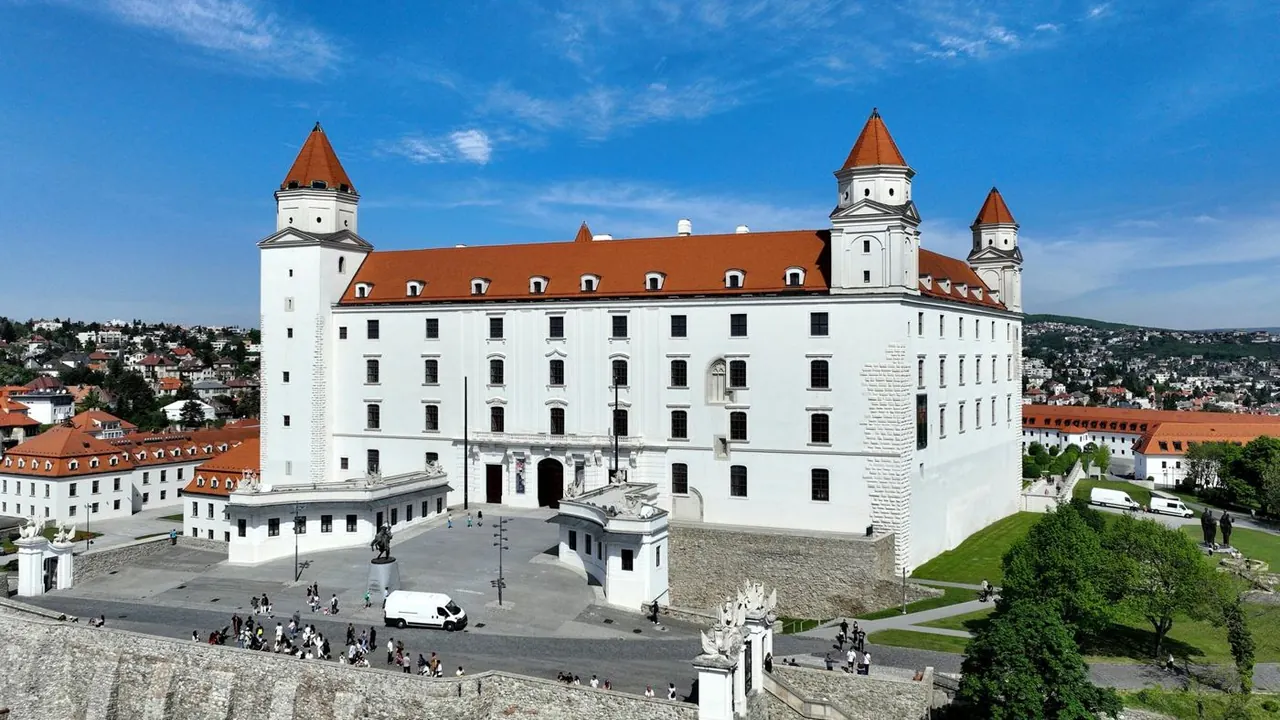
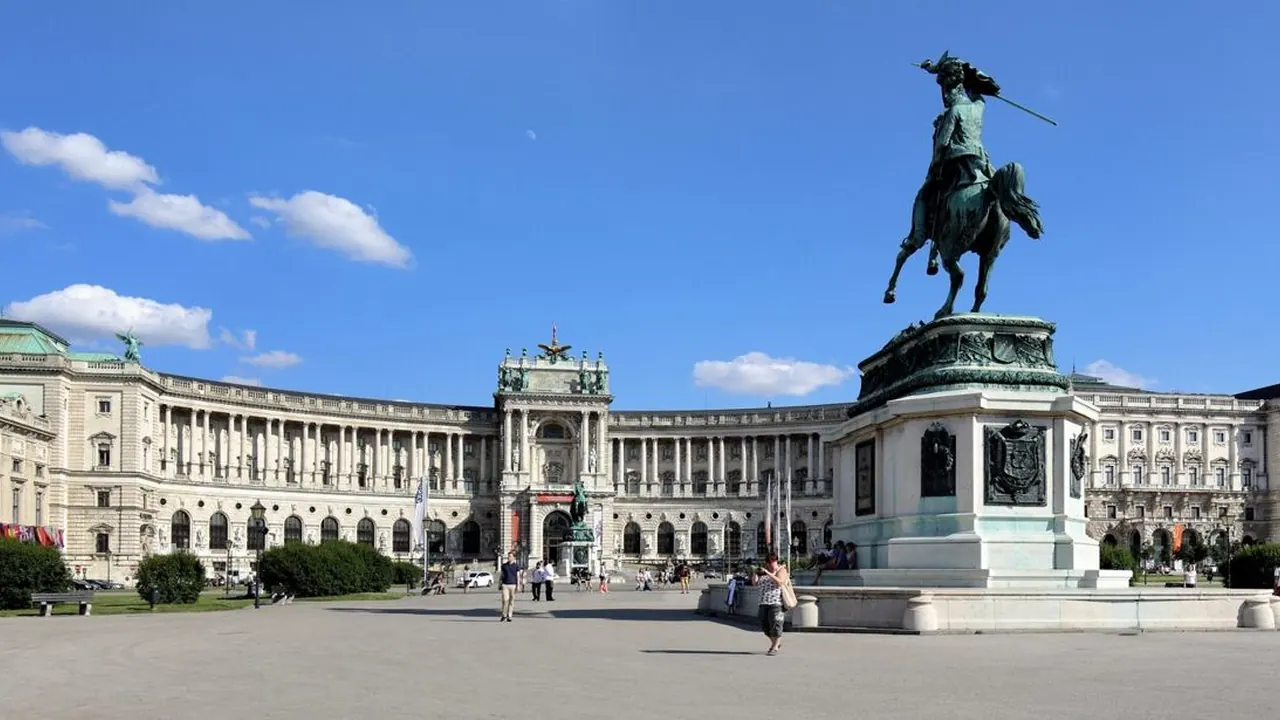
Photos: Bratislava by C.Stadler/Bwag, CC BY-SA 4.0, cropped; Vienna by C.Stadler/Bwag, CC BY-SA 3.0 AT, cropped.
Bratislava or Vienna?
Our verdict in twelve categories, each scored against the same fixed benchmark cities, and the climate month by month, so you can choose for your trip.
Choose Bratislava for
- prices
- day trips
Bratislava suits a short, easy-going stay on a modest budget. Its Old Town and castle take a day or two, meals and drinks cost noticeably less than upriver, and the Small Carpathian vineyards start at the edge of town. It also makes a good base for a trip that crosses borders: Austrian, Czech and Hungarian sights are all within a day out, Vienna included.
Choose Vienna for
- live music and the arts
- culture and sights
- families
Choose Vienna if the trip is about the things a former imperial capital does best. Here you get palaces and first-rank galleries for a week, opera and concerts every night, a proper café and Heuriger culture, and a public transport network that makes all of it simple. Families and anyone staying longer than a weekend will find much more to fill the days, though everything costs more.
Scoreboard
Twelve categories on one fixed scale from 0 to 100. The shaded stretch is the gap between the two.
Your match
Pick a travel style or drag the sliders, and both match scores follow your weighting.
Wins on prices and day trips with your weighting.
Wins on live music and the arts and culture and sights with your weighting.
What matters to you?
Category by category
What the scores mean for a trip.
Beaches & swimming
Neither city has a sea, but Vienna's summer swimming is easier to reach and has more variety. The Danube Island gives 20km of grassy and gravel banks, and the warmer, calmer Alte Donau is lined with old lidos, all reachable by U-Bahn after a day of sightseeing.
In Bratislava the Danube itself is off-limits for swimming. Bathing means the sandy lake shore at Zlate piesky, reached by tram, or the Senec lakes half an hour out, and both get crowded at weekends.
Food & drink
Vienna has a whole cuisine of its own, from schnitzel and Tafelspitz to Sachertorte. It also has two lasting rituals: the grand coffee house, and the Heuriger taverns in vineyards inside the city limits. Bratislava's cooking is simpler and more rural, with bryndzove halusky, roast duck with lokse and Bratislava rolls, served in hearty Old Town pubs that brew their own beer.
Wine links the two, with Veltliner poured on both sides of the border, and Bratislava's Small Carpathian bottles rarely reach export shelves. Neither city offers much international range. In Bratislava the tourist menus on the central squares make good meals harder to find.
Culture & sights
These two are far apart here. Bratislava's attractions are compact: the coronation cathedral with brass crowns in the pavement, the Primate's Palace, the Blue Church, the white castle and the ruins at Devin, all of which fit into a day or two.
Vienna was built as the capital of an empire. The Hofburg and Schönbrunn alone take up a day. Add the Kunsthistorisches Museum's Bruegels, Klimt at the Belvedere, Schiele at the Leopold and the Jugendstil buildings of the Secession and Otto Wagner, and a week passes without repeating anything.
Nightlife
Bratislava's nights are a weekend pub crawl through a few Old Town streets. They are loud and cheap on Fridays and Saturdays, popular with students and stag groups, and quiet the rest of the week.
Vienna has more choices and a calmer pace. There are late bars and small clubs under the Gürtel railway arches, deckchair bars on the Danube Canal in summer, and long evenings over wine at a Heuriger. In winter the ball season offers something Bratislava has no answer to: formal balls in palaces, with tickets on sale to visitors.
Nature & outdoors
The two share a landscape: low beech hills at the city edge and the wild Danube floodplain between them. Vienna has slightly more. The Vienna Woods and vineyard trails climb to the Kahlenberg, the Prater's meadows reach into the centre, and real limestone mountains at Rax and Schneeberg are about 90 minutes away.
In Bratislava, trails from Koliba climb the Little Carpathians to Kamzik, and Devinska Kobyla looks out over the meeting of the Morava and Danube. The whitewater course at Cunovo adds rafting. The nearest high mountains, the Tatras, are a full day's journey away.
Day trips
Both are well placed, and each is the other's best day trip. The difference is direction. From Bratislava, short trips cross borders: Roman Carnuntum and Lake Neusiedl in Austria, Lednice-Valtice in the Czech Republic, Pannonhalma in Hungary, plus Slovakia's own wine route through Pezinok and Modra.
From Vienna, the classic outing heads up the Danube into the Wachau, with Melk abbey, Dürnstein and terraced vineyards. Closer outings include Klosterneuburg, Heiligenkreuz and Haydn's Eisenstadt, all mostly in Austrian country.
Good for families
Vienna is much the stronger choice with children. Schönbrunn Zoo, the Prater's Ferris wheel and rides, the shark tanks at Haus des Meeres and the dinosaurs and hands-on exhibits in its museums easily fill a week, rain or shine.
Bratislava is safe and gentle. Children can hunt for the bronze statues in the pedestrian Old Town, ride the chairlift at Kamzik and visit the hillside zoo. With a water park at Senec as the treat, it works well for a weekend but not much longer.
Getting around
Both centres are easy to walk. Vienna adds five U-Bahn lines, a dense tram network and night trains at weekends, so Schönbrunn, the Danube Island and the vineyard villages are all a simple ride away.
Bratislava has no metro. Its trams and buses reach the zoo, Devin and the lakes, but crossing the river or heading out to the suburbs takes longer than the map suggests. The main station sits uphill from the Old Town.
Shopping & style
Vienna offers far more. Luxury houses line the Graben and Kohlmarkt, Mariahilfer Strasse covers everyday fashion and Neubau has independent designers. Augarten porcelain, Loden and crystal make gifts with real local roots.
Bratislava's best buys are small and specific: Modra majolica, lace and blue-print cloth from the state folk-craft centre, and a few bottles of Small Carpathian wine. Beyond that its malls carry the usual chains, and locals go to Vienna for serious fashion.
Affordability
Bratislava is the cheaper city. Beer, wine, trams and museum tickets cost little, weekday pub lunches are generous, and a modest budget covers a central room and good meals. Prices only rise on the main squares and along the glass-fronted riverside complexes.
Vienna costs more overall, mostly for rooms and the full entry fees at the big palaces and museums. Set lunches, sausage stands, free palace gardens and opera standing places help keep it manageable.
Live music & performing arts
Music is one of the main reasons to visit Vienna. The State Opera stages a different work most nights, and the Vienna Philharmonic plays in the Golden Hall of the Musikverein. The Volksoper, Konzerthaus and Burgtheater fill the rest of the week, and the Boys' Choir sings Sunday Mass.
Bratislava offers a solid, unhurried version of the same thing: opera and ballet at the Slovak National Theatre and the Philharmonic in the Reduta, with tickets easy to get. Many of its own visitors take the train upriver when they want a major international programme.
Wellness & relaxation
Vienna makes rest easy. Long coffee-house afternoons are part of daily life, and there are thermal pools and saunas at Therme Wien, the tiled Art Deco Amalienbad, and Baden's sulphur springs half an hour away.
Bratislava is calm for a capital, and its forest paths are quiet on weekdays, but it has no baths of its own. A proper soak means a day out, to the water park at Senec or by train to the historic mud and sulphur cures of Piestany.
When should you go?
Pick your month. The climate figures are measured averages, not a forecast.
Bratislava in July
Vienna in July
Daytime high, °C
Rainfall in the month, mm
Where the figures come from
Bratislava has no rain gauge within 25 km of the centre, so its rainfall comes from a gridded climate dataset read at the city rather than from a gauge further away.
Bratislava's sunshine is measured 56 km from the centre, at Wien / Hohe Warte.
Temperature and rainfall are climate normals, averaged over the years shown. Bratislava: 1991-2020 normals, Bratislava Ivanka (8.6 km from centre). Vienna: 1991-2020 normals, Wien / Hohe Warte (4.7 km from centre).
The two cities lie about an hour apart on the same river, so they share the same weather through the year. Summer is warm, with highs around 27°C in July and August and plenty of sunshine. That is the season for swimming in the lakes and the Danube backwaters, roughly June to early September. Late spring and early summer bring the most rain, about 67mm in May, mostly as showers rather than whole grey days.
For walking the streets, May, June and September are the best months, warm but rarely tiring, with September around 21°C. Winter is cold and dim, with highs near 3°C in January and few hours of sun. That suits days spent in museums, coffee houses and concert halls, so Vienna holds up far better in those months than Bratislava, which has much less to do indoors.
Which traveller are you?
On a culture and arts trip, Bratislava rewards a day of wandering, while Vienna rewards a whole week. Its palaces and galleries hold some of Europe's great collections, and the evenings belong to opera and concerts, so both days and nights are full.
For a trip on a tight budget, Bratislava is the sensible base. Everyday spending stays low without much effort, and a comfortable room and good meals fit a modest budget. That lets Vienna be a cheap day out by train rather than an expensive stay.
On a family trip with children, Bratislava works for a gentle weekend, safe and small enough for young legs. Vienna suits a longer stay. There is enough indoors and out to make each day different whatever the weather, and prams fit easily on its trams.
Before you go
| Measure | Bratislava | Vienna |
|---|---|---|
| Official language | Slovak | German, Austrian Sign Language |
| Currency | Euro (EUR) | Euro (EUR) |
| Sockets | CE230 V, 50 Hz | CF230 V, 50 Hz |
| Driving side | Right | Right |
| Time zone | UTC+1, UTC+2 in summer | UTC+1, UTC+2 in summer |
| Emergency number | 112 | 112 |
| Elevation | 152 m | 151 m |
| Main airport | M. R. Štefánik Airport (BTS)8 km from centre70 non-stop destinations | Vienna International Airport (VIE)18 km from centre202 non-stop destinations |
| Public holidays this year | 15 days | 16 days |
By the numbers
| Measure | Bratislava | Vienna |
|---|---|---|
| City population | 480,902 | 2,028,289 |
| People per km² | 1,308 | 4,890 |
| Museums within 10 km | 22 | 152 |
| UNESCO World Heritage sites within 50 km | 2 | 3 |
Where else could you go?
Every comparison below shares a destination with this one, so you can follow Bratislava or Vienna somewhere new.