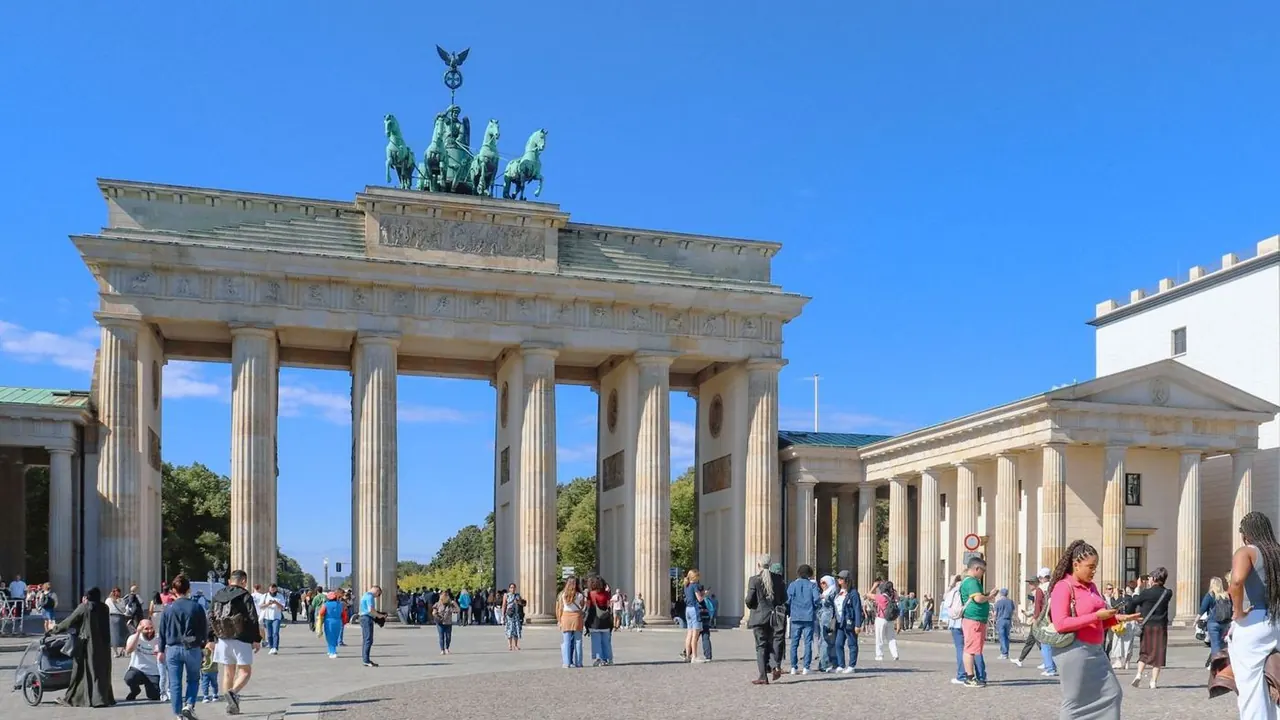
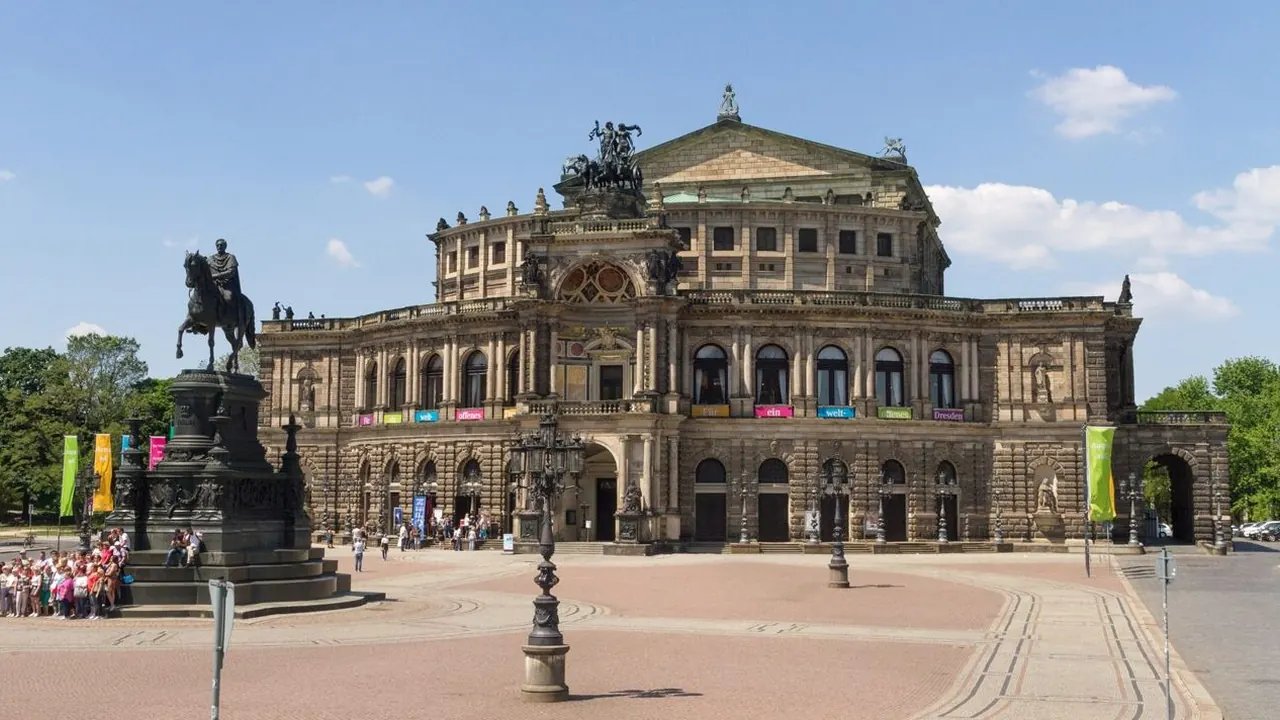
Photos: Berlin by Claudia Solano, Pexels License; Dresden by Maksym Kozlenko, CC BY-SA 4.0, cropped.
Berlin or Dresden?
Our verdict in twelve categories, each scored against the same fixed benchmark cities, and the climate month by month, so you can choose for your trip.
Choose Berlin for
- nightlife
- beaches
- shopping
Berlin is the pick if you want a big city with many sides. Its nightlife is in a league of its own, there is something on stage every night, and the twentieth century is told at the places where it happened. It also comes out ahead on range of food, on shopping and on keeping children busy. The price is more travel between districts that each feel like a separate town.
Choose Dresden for
- nature and the outdoors
- day trips
- prices
Dresden suits a slower, more focused trip. The baroque riverside and its great picture galleries fill a few days on foot. After that, the sandstone towers of Saxon Switzerland, the porcelain town of Meissen and the old streets of Görlitz draw you out into the countryside. It costs a little less, and the evenings end earlier.
Scoreboard
Twelve categories on one fixed scale from 0 to 100. The shaded stretch is the gap between the two.
Your match
Pick a travel style or drag the sliders, and both match scores follow your weighting.
Wins on nightlife and beaches with your weighting.
Wins on nature and the outdoors and day trips with your weighting.
What matters to you?
Category by category
What the scores mean for a trip.
Beaches & swimming
Neither city has a coast, but Berlin makes far more of summer swimming. Strandbad Wannsee, with its sandy shore and wicker beach chairs, the Müggelsee and forest lakes such as Schlachtensee are proper bathing spots a short train ride from the centre, and the water is warm enough in July and August.
In Dresden the Elbe is for deckchairs on the banks, not for swimming, because of the shipping and strong currents. Cooling off there means an outdoor pool, the flooded gravel pits on the edge of the city or the ponds at Moritzburg.
Food & drink
Berlin's strength is range. Decades of Turkish migration shaped it, and it also has good Vietnamese, Levantine and Korean cooking, a serious fine-dining tier and market halls such as Markthalle Neun. Dresden eats more traditionally: sauerbraten, game and dumplings, plus a baking culture that puts Stollen and Eierschecke on the table with afternoon coffee.
What Dresden has that Berlin lacks is local wine from the Elbe valley vineyards around Radebeul and Meissen. Beyond the Neustadt, though, the choice thins out, and the streets around the Frauenkirche lean towards tourist menus. In Berlin, varied eating spreads across several districts.
Culture & sights
Both cities have collections of world rank, and Berlin goes a step further. Museum Island, the bust of Nefertiti, the Pergamon collections and the Gemäldegalerie match Dresden for grandeur. On top of that come the Wall Memorial, the Reichstag dome and the Memorial to the Murdered Jews of Europe, which tell the twentieth-century story at the places where it happened.
Dresden is the more harmonious group of sights. The Zwinger with the Sistine Madonna, the treasures of the Green Vault and the rebuilt Frauenkirche all stand within a short walk of each other by the Elbe. Much of it is reconstruction, but three or four days cover it comfortably, while Berlin's sights are spread across a far larger city.
Nightlife
This is the widest gap between the two cities. Berlin's techno clubs in old power stations and warehouses draw people from around the world, with no fixed closing hours and parties that run into Monday. Behind them is a deep layer of smoky Kneipen in Neukölln and Wedding and cocktail bars in Mitte.
Going out in Dresden means the Äußere Neustadt. There, students fill small bars and pavement beer kiosks on summer nights, and a handful of clubs operate in old industrial buildings. It is friendly enough for a few evenings, but the old town is quiet once dinner is over.
Nature & outdoors
Dresden has the scenery that Berlin lacks. The sandstone towers and gorges of Saxon Switzerland begin less than an hour upriver, with the Bastei view, several days of walking on the Malerweg and a long tradition of free climbing. The Ore Mountains add summer hiking and some cross-country skiing.
Berlin's outdoors is flat and gentle: the Tiergarten, cycling on the Tempelhof runways, walks in the Grunewald, sailing on the Havel and the Wall Trail by bike. It is pleasant, but there is nothing to climb.
Day trips
Each city has one standout trip close by: Potsdam's palaces from Berlin, and Meissen's cathedral and porcelain from Dresden. Dresden's list goes deeper, though. It includes Moritzburg, the Königstein fortress, Radebeul's vineyards, the old towns of Bautzen and Görlitz, and Prague at the outer edge of a long day.
From Berlin, Wittenberg, Dessau's Bauhaus buildings, the Spreewald and the Sachsenhausen memorial are worthwhile, and Dresden itself makes a long day out. After those, the choice runs out quickly.
Good for families
Berlin gives children more to do. Two large zoos, an aquarium, the towering dinosaur at the Natural History Museum and the hands-on Museum of Technology fill several days, and the flat streets make prams easy.
Dresden is calmer and smaller in scale. It has a zoo, a miniature railway in the Großer Garten largely run by children, the Transport Museum and trips on the paddle steamers. Older children get the most from it, especially on a day among the rocks of Saxon Switzerland. Cobbles and formal galleries test younger ones.
Getting around
Berlin has the stronger network. U-Bahn, S-Bahn, trams and buses share one ticket, trains run through the night at weekends, and the flat streets have plenty of bike lanes. You will need all of it, because Mitte, Kreuzberg, Prenzlauer Berg and Charlottenburg are separate centres.
Dresden asks less of you. The old town and the Neustadt are a short walk apart across the Augustus Bridge, trams cover the rest of the city, and suburban trains and paddle steamers follow the Elbe out to the day trips. You need a car in neither city.
Shopping & style
Berlin has much more to browse. There are the big brands on the Kurfürstendamm, the KaDeWe food hall and young designers around Hackescher Markt. Above all there are the Sunday flea markets at Mauerpark and Boxhagener Platz, good for vinyl and East German curios.
Dresden's main shopping streets are mostly chains, and the Neustadt and the Kunsthofpassage are where to find something more individual. What it offers that Berlin does not is traditional craft to take home: Meissen porcelain, Ore Mountain wooden toys and, in Advent, the stalls of the Striezelmarkt.
Affordability
Dresden comes out somewhat cheaper overall, noticeably below the big cities of western and southern Germany. Its costs pile up in the sightseeing, because the Zwinger galleries, the Green Vault and the Albertinum each charge their own entry, so a full museum programme adds up over a few days. Rooms in the old town cost most in Advent, when the Christmas market is on, and around the big festivals.
Berlin's expensive dates fall at other times, around trade fairs and on summer weekends. From day to day it is easy to spend little, with döner, bakeries and modest beer prices in the Kneipen, and one day ticket covers the whole city. A trip built around opera, fine dining and Museum Island costs what it would in any major European capital, though.
Live music & performing arts
Both are serious music cities, and Berlin has more of everything. It has three opera houses, the Berlin Philharmonic in Scharoun's Philharmonie, famous theatres such as the Berliner Ensemble, and the Friedrichstadt-Palast revue. Add a deep circuit of jazz and rock venues and there is something on every night.
Dresden's programme is narrower but distinguished. It has the Semperoper and its Staatskapelle, the Kreuzchor in the Kreuzkirche, Bach at the Frauenkirche and the Dresden Music Festival. Outside classical music and festival time, there is not much rock or jazz.
Wellness & relaxation
Neither city has thermal springs, and both share the German habit of the public sauna. Berlin has more of it, with large clothes-free sauna complexes and the columned halls of the Stadtbad Neukölln, along with park afternoons and long Sunday mornings in café gardens.
Dresden relies more on its pace than its spas. It has municipal baths with saunas, the wide Elbe meadows, an old town that empties in the evening, and coffee and cake on a terrace above the river. Bad Schandau's thermal pool is less than an hour away, on the way to Saxon Switzerland.
When should you go?
Pick your month. The climate figures are measured averages, not a forecast.
Berlin in July
Dresden in July
Daytime high, °C
Rainfall in the month, mm
Temperature and rainfall are climate normals, averaged over the years shown. Berlin: 1991-2020 normals, Berlin / Alexanderplatz (0.9 km from centre). Dresden: 1991-2020 normals, Dresden-Strehlen (3.8 km from centre).
In both cities May and September are the easiest months for walking the streets: warm, long days without real heat. June is just as good in Berlin, but in Dresden it is already fairly wet, with about 72mm of rain. That wetter spell carries on through July and August, peaking near 83mm, while Berlin's summer rain falls mostly in July. Highs of about 25°C in Berlin and 26°C in Dresden in July and August give the short window for swimming in Berlin's lakes, and Berlin also gets a little more sunshine from May to August.
Winters are cold and grey in both, with January highs of about 4°C. Dresden has slightly more winter sun and a marginally milder December, so it is a touch brighter for a visit late in the year. Even so, neither city is at its best for walking between November and March.
Which traveller are you?
For a food and nightlife trip, choose Berlin. Kreuzberg's Turkish grill houses, Vietnamese canteens and market-hall evenings lead on to corner Kneipen, beer by the canal and techno clubs that run through the weekend. Dresden's Neustadt is fun for a couple of nights, not much more.
On an outdoors trip, Dresden wins easily. The gorges of Saxon Switzerland, the Bastei and the Malerweg trail start less than an hour away by suburban train, and there is climbing and the Elbe cycle route as well. Berlin has flat forest walks and lake paddling.
On a tight budget, Dresden goes a little further. Hotels are reasonably priced for most of the year and meals in the Neustadt are good value. Berlin is cheap to eat in too, but rooms cost more there, especially when trade fairs fill the city.
Before you go
| Measure | Berlin | Dresden |
|---|---|---|
| Official language | German | German |
| Currency | Euro (EUR) | Euro (EUR) |
| Sockets | CF230 V, 50 Hz | CF230 V, 50 Hz |
| Driving side | Right | Right |
| Time zone | UTC+1, UTC+2 in summer | UTC+1, UTC+2 in summer |
| Emergency number | 112 | 112 |
| Elevation | 34 m | 126 m |
| Main airport | Berlin Brandenburg Airport (BER)19 km from centre161 non-stop destinations | Dresden Airport (DRS)10 km from centre13 non-stop destinations |
| Public holidays this year | 10 days | 11 days |
By the numbers
| Measure | Berlin | Dresden |
|---|---|---|
| City population | 3,700,577 | 562,764 |
| People per km² | 4,153 | 1,713 |
| Museums within 10 km | 157 | 70 |
| UNESCO World Heritage sites within 50 km | 4 | 1 |
Where else could you go?
Every comparison below shares a destination with this one, so you can follow Berlin or Dresden somewhere new.