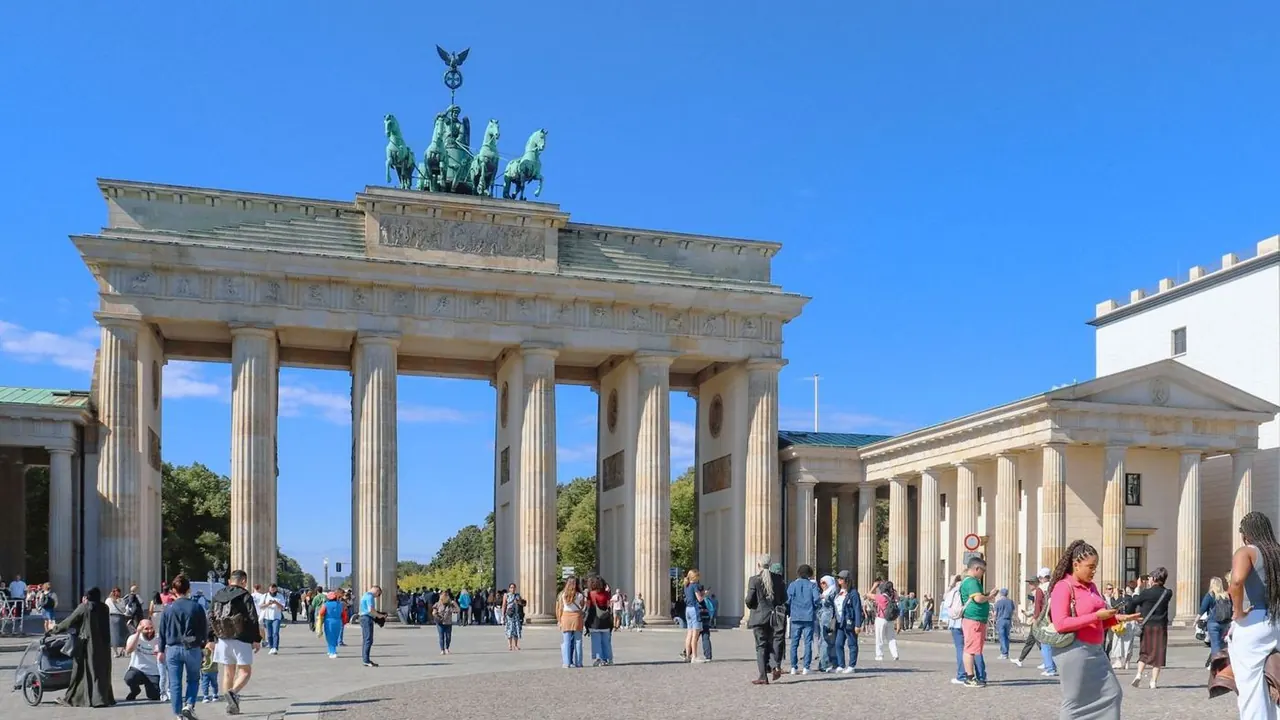
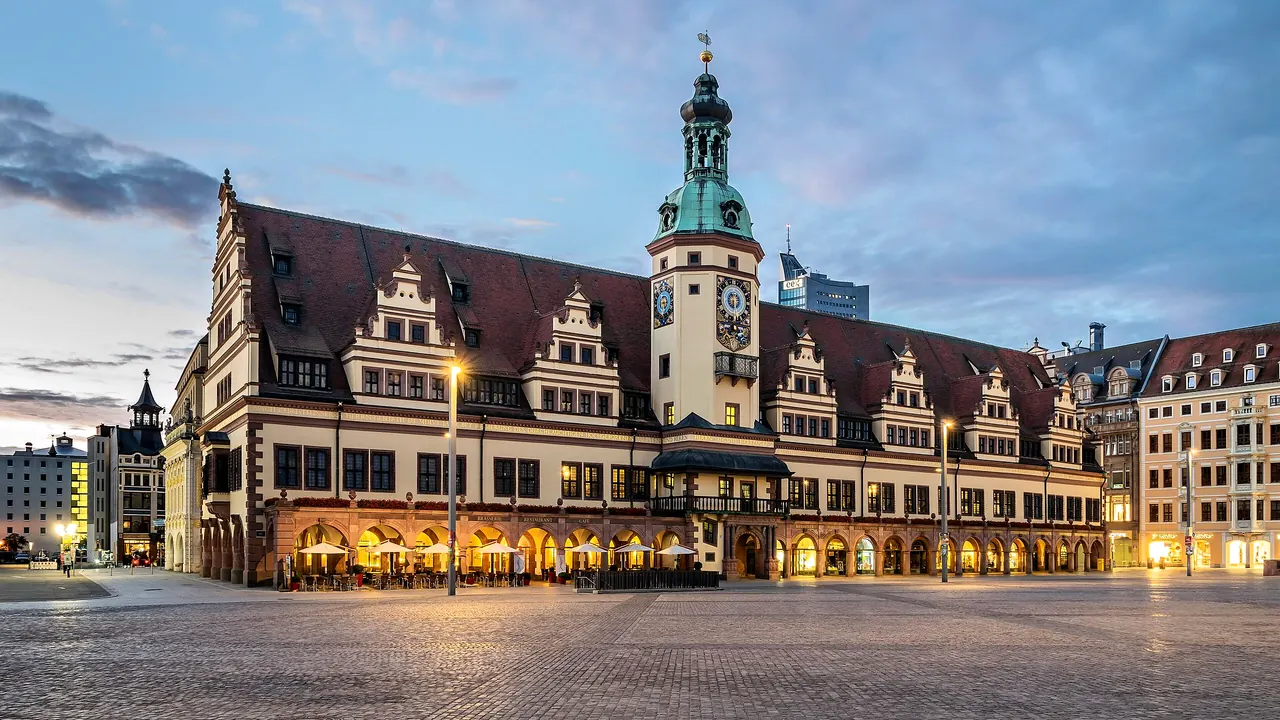
Photos: Berlin by Claudia Solano, Pexels License; Leipzig by Krzysztof Golik, CC BY-SA 4.0, cropped.
Berlin or Leipzig?
Our verdict in twelve categories, each scored against the same fixed benchmark cities, and the climate month by month, so you can choose for your trip.
Choose Berlin for
- nightlife
- culture and sights
- shopping
Berlin is the better pick for a trip centred on the city itself. It has the great collections of Museum Island, twentieth-century history told at the places where it happened, three opera houses and the Philharmonic, and a club scene people cross Europe for. Add the wider food choice, the Sunday flea markets and a proper sauna culture, and it rewards a longer stay and travellers who want plenty of nights out.
Choose Leipzig for
- day trips
- prices
Leipzig suits a calmer, more compact trip, and it makes a good base. You can cross its old town on foot in no time. The Thomaskirche and the Gewandhaus give it far more music than a city its size would normally have, and rooms near the centre cost less. Most of all, Dresden, Weimar, Erfurt and Wittenberg are all an easy train ride away, so it is the right choice for seeing central Germany rather than one big capital.
Scoreboard
Twelve categories on one fixed scale from 0 to 100. The shaded stretch is the gap between the two.
Your match
Pick a travel style or drag the sliders, and both match scores follow your weighting.
Wins on nightlife and culture and sights with your weighting.
Wins on day trips and prices with your weighting.
What matters to you?
Category by category
What the scores mean for a trip.
Beaches & swimming
Neither city has a sea, but Berlin's lake bathing has more to offer. Strandbad Wannsee, with its long sandy shore and wicker beach chairs, and the Müggelsee are long-standing summer haunts. Forest lakes such as Schlachtensee and Plötzensee are a short S-Bahn or bus ride from the centre.
Leipzig's lakes are flooded lignite mines south of town. The Cospudener See and Markkleeberger See have sand, clear water and beach bars, reached by tram or by bike through the floodplain forest. They are pleasant on a hot day, but there are fewer of them, and in both cities swimming is really a July and August affair.
Food & drink
Berlin eats better, mainly because there is so much more variety. Decades of Turkish migration fill Kreuzberg and Neukölln with bakeries and grill houses. Vietnamese, Korean and Levantine cooking are everywhere, and there is a serious fine-dining tier above the currywurst stands, plus market halls, beer gardens and natural wine bars.
Leipzig's table is plainer and more local: Saxon roasts with dumplings, the marzipan Leipziger Lerche and sour, salted Gose beer. Its coffee-house tradition goes back three centuries, and Auerbachs Keller, the cellar from Goethe's Faust, still serves food. For anything more varied you head out to the Karli or Plagwitz, and fine dining is thin.
Culture & sights
Berlin is in another league for sights. Museum Island alone, with Nefertiti and the Pergamon collections, could take days, and the Gemäldegalerie and Charlottenburg Palace add more. The Reichstag, the Holocaust memorial and the Wall memorial on Bernauer Strasse make the twentieth century something you walk through, not just read about.
Leipzig's sights are fewer and closer together. Bach's Thomaskirche and the Nikolaikirche, where the 1989 Monday prayers began, stand a few minutes apart among the trade-fair arcades. The Runde Ecke and the Grassi museums are worth seeing, but two or three days is enough, where Berlin can easily fill a week.
Nightlife
Berlin is the one people travel to for clubbing. Its techno clubs in old power stations and factories have no fixed closing time, parties run into Monday and the doors are famously strict. Around them, Friedrichshain and Kreuzberg have smoky Kneipen, cocktail bars and canal-side beer on summer nights.
Leipzig draws on the same industrial, electronic tradition on a smaller scale, with friendlier doors and a student crowd. The Karli, Connewitz and the converted mills of Plagwitz make for good nights. Outside term time and weekends, though, it can go quiet, which Berlin rarely does.
Nature & outdoors
The two are broadly level, both flat and green with no hills, but the green is laid out differently. Berlin's open spaces are big and spread out: the Tiergarten, the old Tempelhof runways for cycling and kite-surfing, the Grunewald forest and the Havel lakes for sailing, plus the Wall Trail as a long, easy bike ride.
Leipzig's nature runs through the middle of the city. The Auwald floodplain forest and a web of canals let you paddle from Plagwitz almost into the centre. The mining lakes add a white-water canoe course, and the sandstone towers of Saxon Switzerland are about two hours away by train.
Day trips
Leipzig is clearly the better base for excursions, because it sits at the hub of central Germany's railways. Dresden and Weimar are each a little over an hour away, and Erfurt and Halle take under an hour. Naumburg's cathedral, Wittenberg, the Wörlitz gardens, Meissen and the Wartburg extend the list well beyond a week.
Berlin has one outstanding trip in Potsdam, where Sanssouci and the Prussian palaces fill a whole day, plus the Spreewald canals and the Sachsenhausen memorial. Wittenberg and Leipzig are within reach, but Dresden is a long day, and after that the choice runs out.
Good for families
Berlin gives children more to do. It has two zoos, the Zoologischer Garten with its aquarium and the vast, leafy Tierpark, as well as the dinosaur skeleton at the Natural History Museum and the trains and planes of the German Museum of Technology. Flat streets and trains make prams easy.
Leipzig has one big draw in its zoo, whose covered Gondwanaland hall works in any weather. It also has something Berlin lacks, the Belantis theme park beside the Cospudener See, along with the Panometer panoramas. Once those are done, though, the list thins out faster.
Getting around
Both are easy to get around, with flat streets, good cycle lanes and no need for a car, but they work differently. Berlin relies on its rail network: U-Bahn, S-Bahn, trams and buses on one ticket, with trains running all night at weekends. You will need them, because Mitte, Kreuzberg, Prenzlauer Berg and Charlottenburg are separate centres.
Leipzig is a city you mostly walk. The old town sits inside its ring with most sights in or near it, and trams cover the outer districts. Regional and long-distance trains leave from the same main station on its northern edge.
Shopping & style
Berlin offers far more choice. The Kurfürstendamm has the big brands and KaDeWe's food hall, the streets around Hackescher Markt have concept stores and young designers, and Kreuzberg and Prenzlauer Berg are full of vinyl and vintage. Sunday at Mauerpark or Boxhagener Platz, digging for East German curios, is a Berlin ritual.
Leipzig's covered arcades make browsing pleasant in the rain, but mostly hold familiar chains. The more individual finds are in Plagwitz, along Karl-Heine-Strasse and in the galleries of the Spinnerei cotton mill, with sheet music and instrument shops for musicians.
Affordability
Overall the two cost much the same, and neither is a budget destination. The difference lies in where you save. Leipzig's advantage is the room: central hotels and apartments cost less than in most big German cities, unless a trade fair is on, and concert and opera tickets are reasonable.
In Berlin the saving is more in eating. Döner, Vietnamese canteens and corner Kneipen keep daily costs down, and a day ticket covers the whole city. Its museums and restaurants, though, make a culture-heavy trip add up.
Live music & performing arts
Berlin has the deeper stage. With three opera houses, the Berlin Philharmonic in Scharoun's Philharmonie, the Konzerthaus and the Friedrichstadt-Palast revue, plus jazz cellars and experimental venues, there is something worth seeing every night. Its famous theatre is mostly in German.
Leipzig's music is remarkable for its size, and it owns the Bach story. You can hear the Gewandhaus Orchestra and the opera house facing each other across Augustusplatz, or the Thomanerchor singing cantatas where Bach led it. The June Bachfest and the Whitsun Wave-Gotik-Treffen give it festivals of its own.
Wellness & relaxation
Berlin is the better place to unwind properly. Its large sauna complexes offer infusion rituals and quiet rest rooms in the clothes-free German manner, and the columned halls of Stadtbad Neukölln make a swim and sauna feel like an occasion. Brandenburg's thermal resorts are about an hour away.
Leipzig has the same sauna tradition in modern pool complexes and a few lakeside saunas, but nothing as atmospheric. Its calm comes from the city itself: walks in the floodplain forest, an uncrowded Sunday and spa towns such as Bad Düben visited separately.
When should you go?
Pick your month. The climate figures are measured averages, not a forecast.
Berlin in July
Leipzig in July
Daytime high, °C
Rainfall in the month, mm
Temperature and rainfall are climate normals, averaged over the years shown. Berlin: 1991-2020 normals, Berlin / Alexanderplatz (0.9 km from centre). Leipzig: 1991-2020 (sunshine 1961-1990, rainfall 1961-1990) normals, Leipzig-Holzhausen (5.7 km from centre).
The two cities have almost the same climate, so the month you choose hardly separates them. Both are at their best from May to September, when daytime highs reach 20°C or more. July and August, at around 25°C, are the only months warm enough for a lazy afternoon at the lakes. Neither gets too hot for walking the streets. Summer is also the wettest time of year, and July brings the most rain to Berlin, a good deal less to Leipzig at about 56mm.
Winter is grey and cold in both, with highs of around 4°C from December to February and very little sunshine. That season suits museums, concerts and saunas rather than parks. Berlin gets slightly more sun in high summer and Leipzig slightly more in the darkest months, but the gap is too small to plan around.
Which traveller are you?
For a food and nightlife trip, choose Berlin. Its techno clubs in old power stations run from Saturday into Monday, and the bars of Kreuzberg and Neukölln sit among Turkish grill houses, Vietnamese canteens and serious modern restaurants. Leipzig's student scene is friendly but smaller.
On a culture and arts trip, Berlin has more to fill the days: Museum Island, the old masters of the Gemäldegalerie, the Wall memorials, then the Philharmonic or one of three opera houses at night. Leipzig's Bach churches and Gewandhaus are excellent but cover less ground.
For a short city break, Leipzig is easier. The main sights sit inside a compact ring you can walk, two or three days covers them, and rooms near the old town are cheaper. Berlin's separate centres take more time and transport to see properly.
Before you go
| Measure | Berlin | Leipzig |
|---|---|---|
| Official language | German | German |
| Currency | Euro (EUR) | Euro (EUR) |
| Sockets | CF230 V, 50 Hz | CF230 V, 50 Hz |
| Driving side | Right | Right |
| Time zone | UTC+1, UTC+2 in summer | UTC+1, UTC+2 in summer |
| Emergency number | 112 | 112 |
| Elevation | 34 m | 110 m |
| Main airport | Berlin Brandenburg Airport (BER)19 km from centre161 non-stop destinations | Leipzig/Halle Airport (LEJ)13 km from centre20 non-stop destinations |
| Public holidays this year | 10 days | 11 days |
By the numbers
| Measure | Berlin | Leipzig |
|---|---|---|
| City population | 3,700,577 | 615,932 |
| People per km² | 4,153 | 2,068 |
| Museums within 10 km | 157 | 40 |
| UNESCO World Heritage sites within 50 km | 4 | 1 |
Where else could you go?
Every comparison below shares a destination with this one, so you can follow Berlin or Leipzig somewhere new.