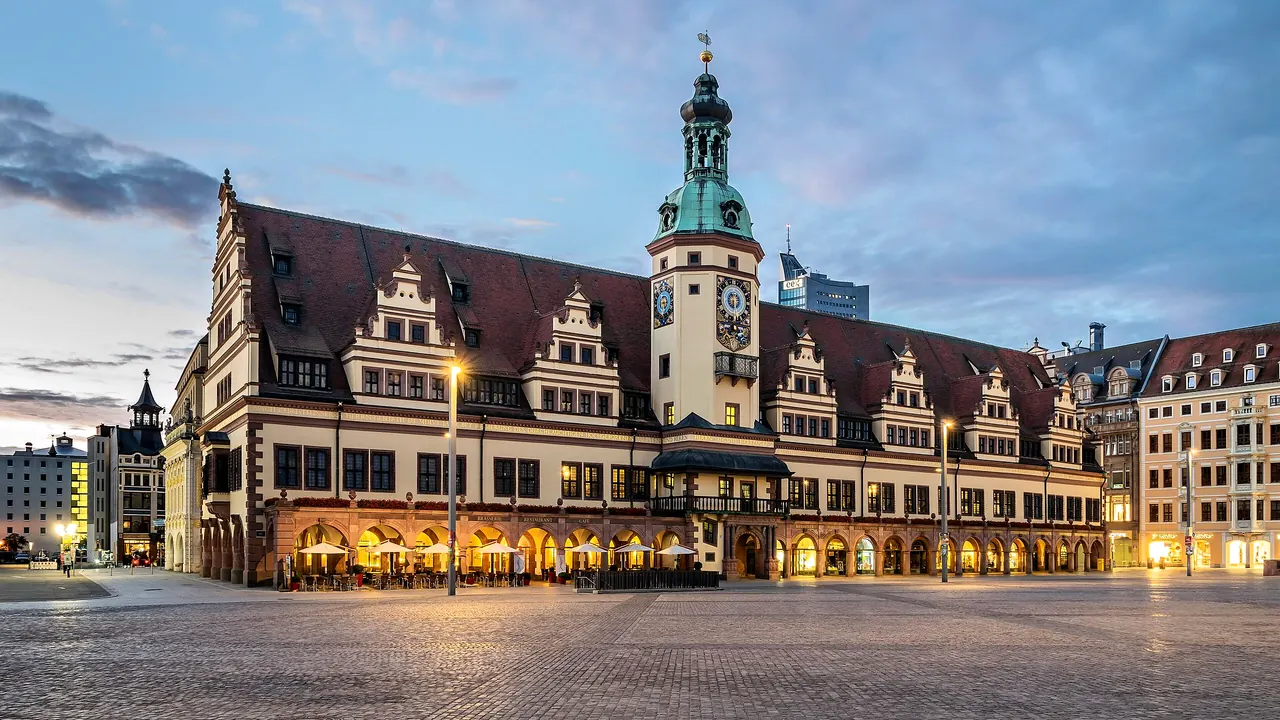
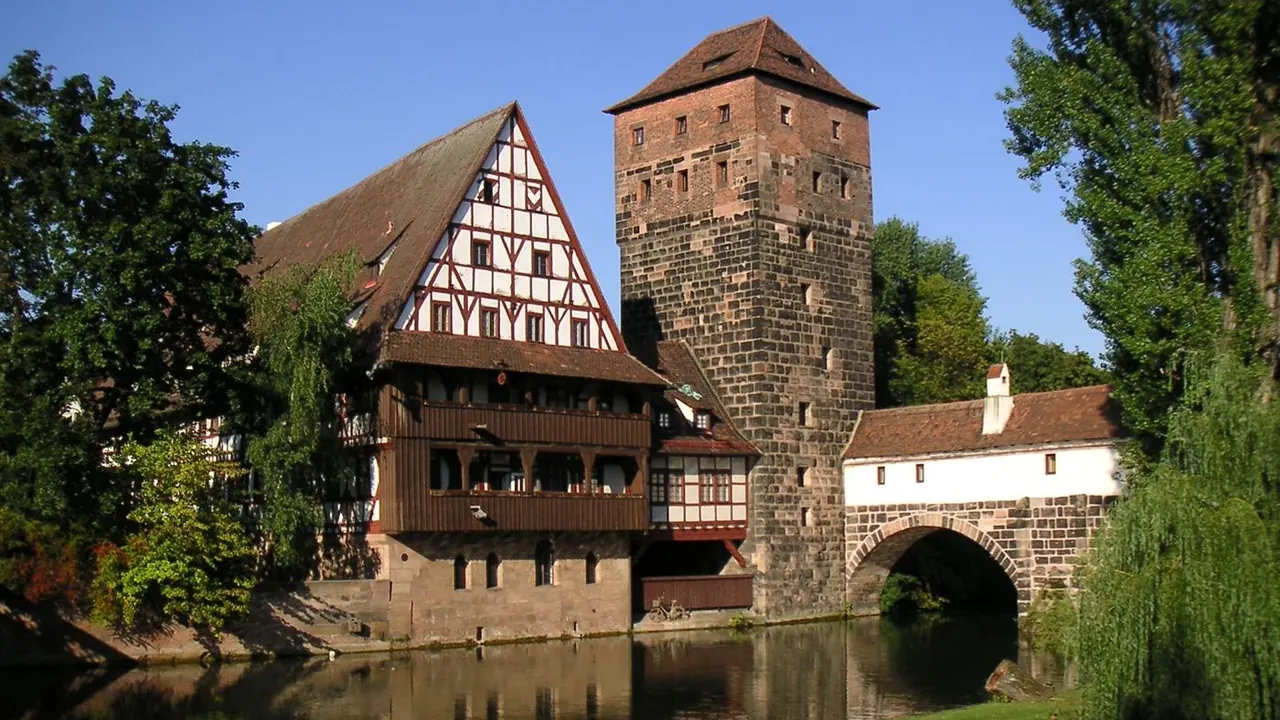
Photos: Leipzig by Krzysztof Golik, CC BY-SA 4.0, cropped; Nuremberg by Horst Gutmann, CC BY 2.0, cropped.
Leipzig or Nuremberg?
Our verdict in twelve categories, each scored against the same fixed benchmark cities, and the climate month by month, so you can choose for your trip.
Choose Leipzig for
- live music and the arts
- nightlife
- beaches
Leipzig suits travellers who plan their evenings around music. Bach's church and choir, the Gewandhaus Orchestra and a full opera house sit within a short walk of each other, and after the concert there's a club scene in old factories that runs until morning. Add the flooded mine lakes for a summer swim and cheap rooms near the old town, and it makes a strong base for a younger or more music-minded trip.
Choose Nuremberg for
- wellness
- nature and the outdoors
- culture and sights
Nuremberg is the better pick if you want a medieval walled town, a castle on the hill and Franconian beer and bratwurst in old taverns. It has the weightier museums and the sobering twentieth-century sites, and it's better for walking and climbing in Franconian Switzerland and for a long soak at a thermal spa. Evenings are calmer and centre on bars and beer gardens rather than dancefloors.
Scoreboard
Twelve categories on one fixed scale from 0 to 100. The shaded stretch is the gap between the two.
Your match
Pick a travel style or drag the sliders, and both match scores follow your weighting.
Too close to call, 2 points apart
Wins on live music and the arts and nightlife with your weighting.
Wins on wellness and nature and the outdoors with your weighting.
What matters to you?
Category by category
What the scores mean for a trip.
Beaches & swimming
Neither city is a beach destination, but Leipzig has the better summer swimming. Its flooded former mines, the Cospudener See and Markkleeberger See, have sandy shores and beach bars, and you can reach them by tram or bike. The Kulkwitzer See also draws divers.
In Nuremberg the nearest lakes are the Brombachsee and its neighbours, about an hour away, with grassy banks and only small strips of sand. A swim in town means an outdoor pool.
Food & drink
Nuremberg has the stronger food identity. There are the small beechwood-grilled bratwurst on pewter plates, Schäufele for Sunday lunch and Lebkuchen all year. Beer is the bigger draw: Franconia's dense spread of small breweries supplies the taverns and riverside beer gardens with lagers and smoky Kellerbier.
Leipzig's Saxon cooking is filling but plainer. Its specialities are sour, salted Gose beer and a coffee-house tradition dating back to the eighteenth century. For variety, though, it does better in the Südvorstadt and Plagwitz, where casual international kitchens and brunch cafés offer a change from roast and dumplings.
Culture & sights
Nuremberg has more to see. The walls are almost complete and the Kaiserburg stands above Gothic churches and Dürer's house. The Germanisches Nationalmuseum can fill a whole day, and the Rally Grounds and Courtroom 600 cover the Nazi era and its reckoning.
Leipzig's sights are different. They tell the story of Bach at the Thomaskirche, the 1989 Monday prayers at the Nikolaikirche and the Stasi at the Runde Ecke, with trade-fair arcades in between. The museums are good but less famous, and two or three days cover them.
Nightlife
Leipzig is much the better city for a night out. Its clubs grew up in disused factories and warehouses, electronic music dominates, and weekend nights go on past dawn with relaxed door policies. The Karli and Connewitz fill with bars and late kiosks, and Plagwitz has bars in converted mills by the canal.
Nuremberg is mostly about bars. You'll find taverns and wine bars in the old town, students on the riverbanks in summer and a more alternative crowd in Gostenhof. It makes a pleasant evening, but few people dance until sunrise.
Nature & outdoors
Nuremberg has better walking country within easy reach. Pine forest starts at the city edge, and Franconian Switzerland, about an hour away, has marked trails between villages, caves and well-known climbing on limestone towers.
Leipzig is flat and its outdoors is more about water. The Auwald floodplain forest runs through the city, you can canoe from Plagwitz almost to the centre, and the lakes to the south have a white-water course and good cycling circuits.
Day trips
Both are excellent bases with no need for a car, but the trips have a different character. From Leipzig you reach the east and centre of Germany: Dresden's baroque, Goethe's Weimar, Luther's Wittenberg, the Bauhaus in Dessau, and Berlin in about an hour and a quarter.
Nuremberg's trips are medieval and southern. There's Bamberg's cathedral hill, Regensburg on the Danube, Würzburg's Residence and vineyards, and the walled towns of Rothenburg and Dinkelsbühl, with Munich about an hour away by fast train.
Good for families
Both work well with children, but in different ways. Leipzig's zoo, with its covered Gondwanaland hall, is the main event, and summer adds sandy lake shallows and the Belantis theme park. The flat centre is easy with a pushchair.
Nuremberg's toy-making past gives it more for children in town, with the Toy Museum, full-size locomotives at the railway museum and a children's Christmas market. Only the cobbled climb to the castle is hard work.
Getting around
Both cities are easy without a car, but their centres feel different on foot. Leipzig's old town is the quicker to cross, about fifteen minutes inside the ring. The city is flat with wide cycle lanes, so a bike often beats the trams, and an underground S-Bahn line runs south to the lakes.
Nuremberg's walled town is larger, about 1.5km across, but still easy to walk. The cobbled climb to the castle is the only hard stretch. Beyond the walls, U-Bahn lines (some of them driverless), trams and buses all run on one ticket and reach the Rally Grounds, the Palace of Justice and Fürth.
Shopping & style
Neither city is a big shopping destination, and both centres are mostly chain stores. Leipzig's character lies in its covered arcades and in Plagwitz, where vintage clothes, record shops and the Spinnerei's galleries appeal to people who collect design and art.
Nuremberg is better for souvenirs: Lebkuchen in tins, wooden toys and crafts from the Handwerkerhof. In Advent, the Christkindlesmarkt makes the city a real shopping destination.
Affordability
The overall cost is much the same, but you save on different things. In Leipzig the savings are on beds, with plenty of mid-range rooms near the old town, while meals and drinks cost the national average. In Nuremberg rooms are fair outside the fair weeks and Advent, and the savings come from inexpensive tavern meals and local beer. In both cities, check the trade-fair calendar before you book.
Live music & performing arts
Few cities its size match Leipzig for music. It has the Gewandhaus Orchestra, an opera house with full repertory, the Thomanerchor singing Bach most weekends during term, and the Bachfest each June. Away from the classical stage there's operetta, cabaret and the large Wave-Gotik-Treffen at Whitsun.
Nuremberg's Staatstheater in its Art Nouveau house and its two orchestras give a respectable year-round programme. Its best moments are in summer, with the open-air concert in the Luitpoldhain and free folk at the Bardentreffen.
Wellness & relaxation
Leipzig has no bathing tradition of its own, so wellness there means modern pool and sauna complexes, hotel spas and a few saunas by the lakes. The spa towns of Bad Düben and Bad Lausick need a separate drive out. What the city does offer is quiet. It is uncrowded for its size, and a slow Sunday in the Auwald or the parks is its own kind of rest.
Nuremberg is the better choice if a proper soak matters. Neighbouring Fürth has a large thermal spa with sauna gardens, a short U-Bahn ride away, so you can fit an afternoon there into a city stay without planning a separate outing. The leisure pools on the city's edge also have sauna areas, where you should expect nude, mixed bathing. Otherwise people unwind in beer gardens and along the Pegnitz, though the old town is busier in the Christmas market season.
When should you go?
Pick your month. The climate figures are measured averages, not a forecast.
Leipzig in July
Nuremberg in July
Daytime high, °C
Rainfall in the month, mm
Temperature and rainfall are climate normals, averaged over the years shown. Leipzig: 1991-2020 (sunshine 1961-1990, rainfall 1961-1990) normals, Leipzig-Holzhausen (5.7 km from centre). Nuremberg: 1991-2020 normals, Nuernberg (5.5 km from centre).
The two cities have almost the same climate, so the weather won't help you choose between them. From December to February daytime highs reach only about 5°C and the sun barely shows. November is only a little milder, so long days on foot are cold work in both. Spring warms quickly, and highs reach about 25°C in July and August. That is warm enough for an afternoon at the lakes but rarely too hot for walking the streets.
Summer is also the wettest season in both, with showers and storms from May through August. Leipzig is the wetter of the two in July, at about 56mm, while Nuremberg gets slightly more summer sun. For comfortable sightseeing, September is the best month in either city, mild and drier than high summer. April and May also work well if you don't mind cooler days or the odd shower.
Which traveller are you?
For classical music lovers, Leipzig is the clear choice. You can hear the Thomanerchor sing Bach in the church where he worked and is buried, and the Gewandhaus Orchestra plays across the square from the opera. Nuremberg's programme is good but regional.
On an outdoors trip, Nuremberg has the better country close by. The Reichswald begins at the edge of town, and Franconian Switzerland's valleys, caves and climbing rocks are an hour away. From Leipzig, real hiking means a train of about two hours.
For a relaxing and wellness trip, Nuremberg makes it easier. A thermal spa with sauna gardens is a short U-Bahn ride away in Fürth, and Bad Windsheim's saline pools make a day out. Leipzig offers forest walks and ordinary sauna complexes.
Before you go
| Measure | Leipzig | Nuremberg |
|---|---|---|
| Official language | German | German |
| Currency | Euro (EUR) | Euro (EUR) |
| Sockets | CF230 V, 50 Hz | CF230 V, 50 Hz |
| Driving side | Right | Right |
| Time zone | UTC+1, UTC+2 in summer | UTC+1, UTC+2 in summer |
| Emergency number | 112 | 112 |
| Elevation | 110 m | 209 m |
| Main airport | Leipzig/Halle Airport (LEJ)13 km from centre20 non-stop destinations | Nuremberg Airport (NUE)5 km from centre56 non-stop destinations |
| Public holidays this year | 11 days | 12 days |
By the numbers
| Measure | Leipzig | Nuremberg |
|---|---|---|
| City population | 615,932 | 531,159 |
| People per km² | 2,068 | 2,848 |
| Museums within 10 km | 40 | 50 |
| UNESCO World Heritage sites within 50 km | 1 | 1 |
Where else could you go?
Every comparison below shares a destination with this one, so you can follow Leipzig or Nuremberg somewhere new.
- Dresdenvs Leipzig
- Berlinvs Leipzig
- Munichvs Nuremberg
- Stuttgartvs Nuremberg
- Heidelbergvs Nuremberg
- Frankfurtvs Nuremberg