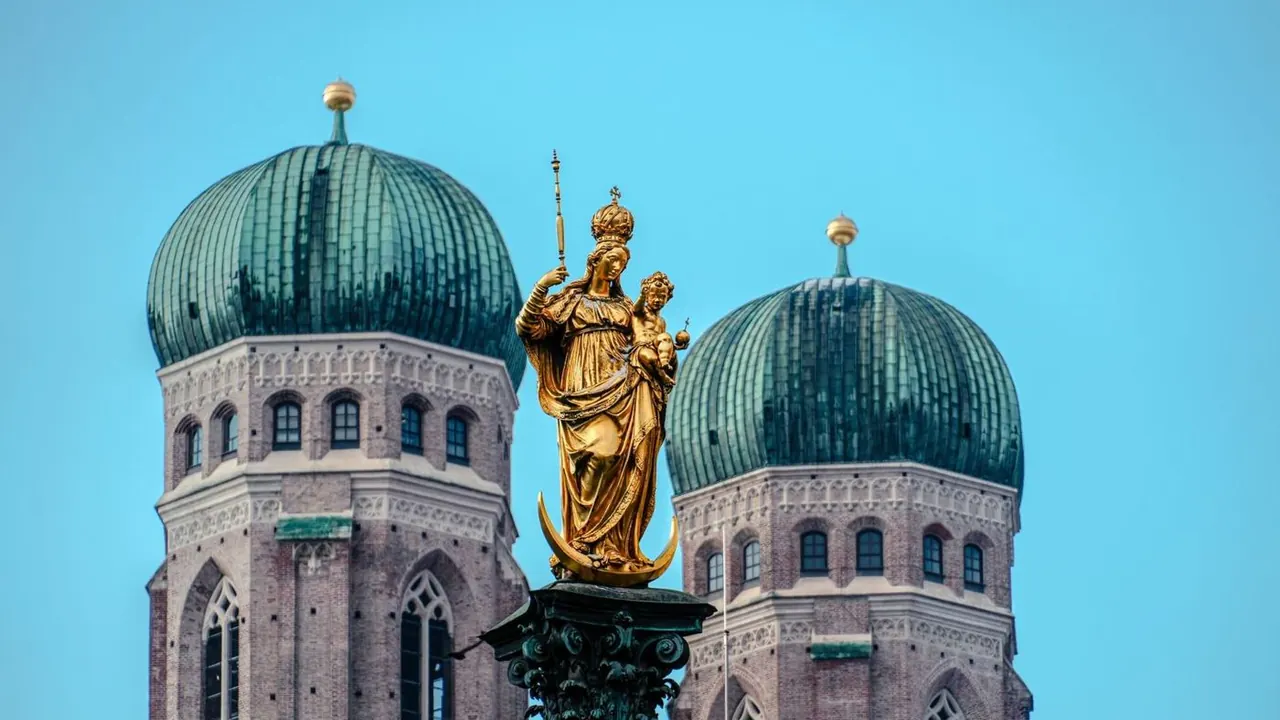
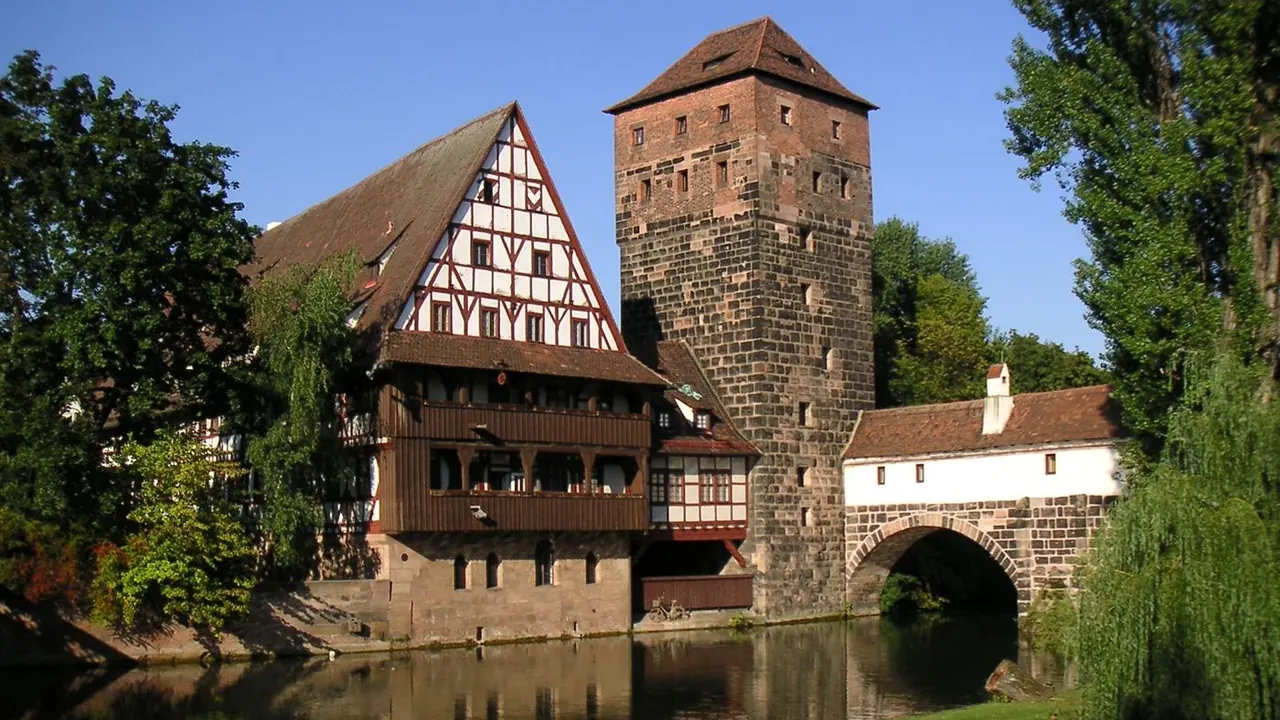
Photos: Munich by 0xd1ma, Pexels License; Nuremberg by Horst Gutmann, CC BY 2.0, cropped.
Munich or Nuremberg?
Our verdict in twelve categories, each scored against the same fixed benchmark cities, and the climate month by month, so you can choose for your trip.
Choose Munich for
- live music and the arts
- shopping
- nature and the outdoors
Munich is the stronger all-round choice. The gap is widest in the arts, the outdoors and shopping. It suits travellers who want great picture galleries and a world-class opera house in the evening, then alpine trails or a lake swim by day. Families also find more to fill the days. The price is a costlier stay, mostly in hotels.
Choose Nuremberg for
- prices
Pick Nuremberg for a smaller, cheaper trip built around a walled medieval old town, Franconian brewery taverns and some of Germany's most sobering twentieth-century history. It suits travellers who like to walk everywhere, spend less on rooms and use the city as a base for Bamberg, Würzburg and the Romantic Road towns.
Scoreboard
Twelve categories on one fixed scale from 0 to 100. The shaded stretch is the gap between the two.
Your match
Pick a travel style or drag the sliders, and both match scores follow your weighting.
Wins on live music and the arts and shopping with your weighting.
Wins on prices with your weighting.
What matters to you?
Category by category
What the scores mean for a trip.
Beaches & swimming
Neither city is a swimming destination, but Munich makes a summer swim easier. The Isar's gravel banks at the Flaucher are in town, and the Starnberger See and Ammersee are an S-Bahn ride away, with jetties, lawns and clear, fresh alpine water.
From Nuremberg, the nearest open water is the Franconian Lake District, a chain of reservoirs around the Brombachsee about an hour south with a few small sandy strips. In the city itself, swimming means outdoor pools.
Food & drink
Both cities cook pork and pour beer, but Munich offers more range. It has the brewery beer halls, beer gardens under chestnut trees and the Viktualienmarkt. There is also a respectable tier of starred restaurants, plus good Italian, Turkish and Balkan cooking.
Nuremberg is for beer drinkers who want variety from small breweries, with Franconian lagers and smoky Kellerbier in the taverns. Its finger-sized bratwurst grilled over beechwood and its Lebkuchen are true local specialities. Away from the taverns, though, dining is fairly ordinary.
Culture & sights
Munich's strength is its royal collections. The old masters of the Alte Pinakothek lead the Kunstareal, and the Residenz, Nymphenburg Palace and the vast Deutsches Museum add more. Nuremberg cannot match that depth of museums.
Nuremberg's appeal is its setting: a walled old town under the Kaiserburg, with Gothic churches, Dürer's house and the Germanisches Nationalmuseum. Its twentieth-century sites, the Rally Grounds and Courtroom 600, make a serious companion to the Dachau memorial outside Munich.
Nightlife
Munich gives more choice after dark. Cocktail and gay bars cluster around Gärtnerplatz and the Glockenbachviertel, Schwabing has student pubs, and a handful of techno and house clubs stay open until morning at weekends. From late September the Oktoberfest tents on the Theresienwiese take over for just over two weeks.
Nuremberg's evenings are quieter and mostly spent in bars. There are taverns and wine bars in the old town, while Gostenhof has small alternative bars that make a more interesting night out. There is little serious clubbing.
Nature & outdoors
Here the gap is wide. From Munich the Alps are about an hour away by train, with the Zugspitze, Tegernsee and the Wetterstein for summer hiking and winter skiing. In town there is the huge English Garden, with surfers riding the standing wave on the Eisbach.
Nuremberg has no mountains. Its outdoors means the Reichswald pine forest at the edge of the city and the wooded valleys and limestone towers of Franconian Switzerland. These are good for walkers, cyclists and rock climbers, but nothing on an alpine scale.
Day trips
Both are excellent bases, with Munich slightly ahead for range. Its day trips cross a border and change landscape: Salzburg and Innsbruck in Austria, the royal castles of Neuschwanstein and Herrenchiemsee, and Augsburg half an hour away.
Nuremberg's list is all old towns and wine country: Bamberg, Würzburg, Rothenburg ob der Tauber, and Bayreuth for Wagner. Regensburg is easy from either city. The two cities are about an hour apart by fast train, so one trip can cover both.
Good for families
Munich is easier for a longer family trip. It has the Hellabrunn zoo along the Isar, the Deutsches Museum's hands-on sections, the Sea Life aquarium, beer gardens with playgrounds and lake beaches in summer. Legoland Deutschland is about an hour and a half away by car.
Nuremberg draws on its toy-making past, with the Toy Museum, full-size locomotives at the railway museum and a zoo in old quarries with a dolphin house. That is plenty for a few days, but the cobbled climb to the castle is hard work with a pushchair.
Getting around
Both cities run the U-Bahn, S-Bahn, trams and buses on one ticket system, and neither needs a car. Munich's network is larger and reaches the lakes, the Olympic Park and the airport. Its flat riverside routes make it a good city for cycling, though the central S-Bahn line is prone to delays.
Nuremberg is smaller. Almost everything sits inside walls about 1.5km across, so most visitors walk and only need transport for the zoo, the Rally Grounds and Fürth.
Shopping & style
Munich is the shopping city of the two. Maximilianstrasse has the luxury houses, Neuhauser Strasse and Kaufingerstrasse have the department stores, and Glockenbach and Schwabing have independent boutiques. Specialist tailors sell proper Tracht, the dirndls and lederhosen of Bavarian costume.
In Nuremberg people mostly buy souvenirs rather than fashion: Lebkuchen in decorated tins, wooden toys and crafts from the Handwerkerhof. In Advent the Christkindlesmarkt is one of Germany's most famous Christmas markets, but outside that season the shopping streets are ordinary.
Affordability
Munich is the costlier stay, and hotels are where you notice it. Rooms are dear all year and climb further during the Oktoberfest and the big trade fairs. The free pleasures are real, from the English Garden and the Isar banks to the lakes, and beer gardens still let you bring your own picnic, while several museums charge only a token fee on Sundays. They take the edge off a day's spending, but they cannot make up for the cost of a bed.
Nuremberg goes noticeably further, and the saving runs through the whole day rather than only the room. A plate of bratwurst in an old-town tavern is filling and cheap, most sights are modestly priced, and with nearly everything inside the walls many visitors hardly need a transport ticket. Its expensive weeks are the trade fairs, above all the world's biggest toy fair, and the Christkindlesmarkt season. Outside those dates, the stay itself is fairly priced.
Live music & performing arts
Munich is one of Europe's great music cities, and Nuremberg cannot match it. Munich has the Bavarian State Opera at the National Theatre, three orchestras of real standing, chamber opera in the gilded Cuvilliés Theatre and a long-established summer opera festival.
Nuremberg's Staatstheater stages opera, ballet and drama in repertory. Summer is the city's livelier season, with free folk and world music at the Bardentreffen and an open-air orchestral concert in the Luitpoldhain. It is a good regional stage, but not a reason to travel.
Wellness & relaxation
Munich has the stronger bathing culture. It has the Art Nouveau Müller'sches Volksbad with its Roman-style steam bath in the centre, Erding's huge thermal complex about forty minutes away, and spa towns such as Bad Tölz towards the mountains.
Nuremberg relies on its neighbours: the thermal spa with sauna gardens in Fürth, a short U-Bahn ride away, and the saline pools of Bad Windsheim an hour west. Both cities share the German custom of mixed, textile-free saunas and slow afternoons in a beer garden.
When should you go?
Pick your month. The climate figures are measured averages, not a forecast.
Munich in July
Nuremberg in July
Daytime high, °C
Rainfall in the month, mm
Temperature and rainfall are climate normals, averaged over the years shown. Munich: 1991-2020 normals, München (1.9 km from centre). Nuremberg: 1991-2020 normals, Nuernberg (5.5 km from centre).
The two cities have almost the same temperatures, so the calendar works the same way for both. Summer highs reach about 25°C in July and August. From June to early September that is warm enough for an afternoon at the lakes, and still comfortable for sightseeing. Winters are cold, with daytime highs around 4°C in January, and the short grey days suit museums better than long walks. April and May, and September and October, are the most pleasant months for exploring the streets on foot.
The real difference is rain. Munich lies closer to the Alps and gets about 120mm a month from June to August. Nuremberg's wettest month, July, sees 77mm, so a summer trip to Franconia is noticeably drier. Summer sunshine is much the same in both, but Nuremberg's winters are gloomier, with clearly less sun than Munich from November to January.
Which traveller are you?
On a culture and arts trip, Munich is the clear pick. The Kunstareal's galleries, the Residenz, the Bavarian State Opera and three serious orchestras fill both days and evenings. Nuremberg's old town, Germanisches Nationalmuseum and regional stage fill fewer of them.
For an outdoors trip, choose Munich. The Alps begin about an hour south, with hiking around Garmisch-Partenkirchen in summer and skiing in winter, and the Five Lakes are good for sailing and cycling. Nuremberg's Franconian Switzerland is good walking country, but gentler.
On a tight budget, Nuremberg goes further. Outside the trade-fair weeks and Advent its rooms are fairly priced, and tavern meals and local beer are cheap. Munich's hotels are dear all year, and its restaurants charge Western European capital prices.
Before you go
| Measure | Munich | Nuremberg |
|---|---|---|
| Official language | German | German |
| Currency | Euro (EUR) | Euro (EUR) |
| Sockets | CF230 V, 50 Hz | CF230 V, 50 Hz |
| Driving side | Right | Right |
| Time zone | UTC+1, UTC+2 in summer | UTC+1, UTC+2 in summer |
| Emergency number | 112 | 112 |
| Elevation | 519 m | 209 m |
| Main airport | Munich Airport (MUC)29 km from centre210 non-stop destinations | Nuremberg Airport (NUE)5 km from centre56 non-stop destinations |
| Public holidays this year | 12 days | 12 days |
By the numbers
| Measure | Munich | Nuremberg |
|---|---|---|
| City population | 1,505,036 | 531,159 |
| People per km² | 4,844 | 2,848 |
| Museums within 10 km | 74 | 50 |
| UNESCO World Heritage sites within 50 km | 1 | 1 |
Where else could you go?
Every comparison below shares a destination with this one, so you can follow Munich or Nuremberg somewhere new.