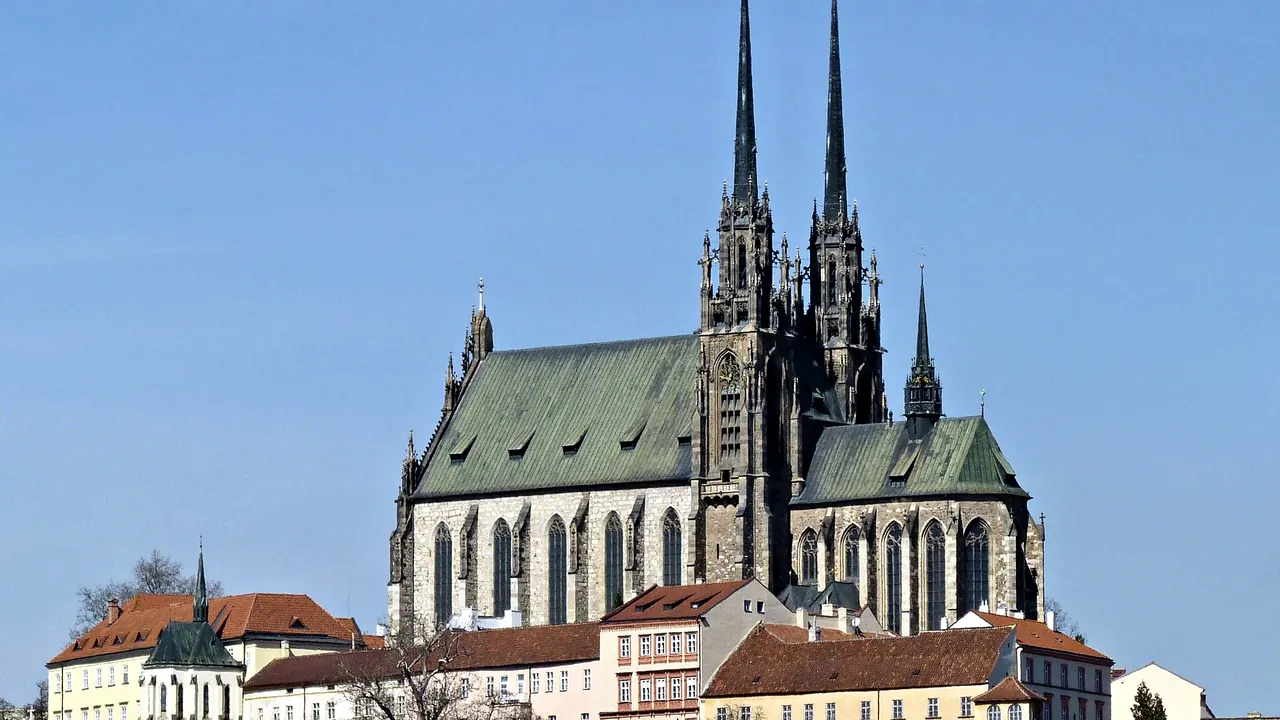
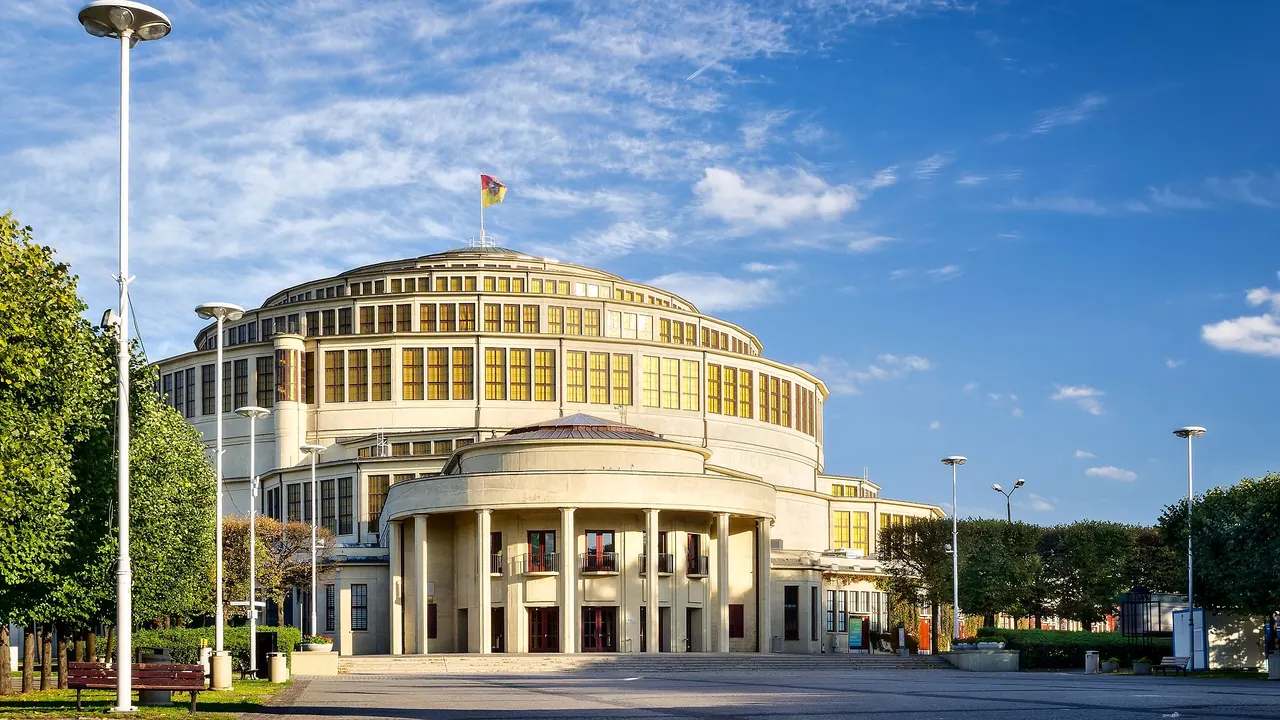
Photos: Brno by Michal Klajban, CC BY-SA 3.0, cropped; Wroclaw by Jar.ciurus, CC BY-SA 3.0 PL, cropped.
Brno or Wroclaw?
Our verdict in twelve categories, each scored against the same fixed benchmark cities, and the climate month by month, so you can choose for your trip.
Choose Brno for
- day trips
- getting around
- beaches
Brno works best as a base rather than a destination in itself. The city takes two or three days, and its real strength is what lies around it: the chateaux and parkland of Lednice-Valtice, a string of UNESCO towns, the Moravian Karst caves and wine country you can drink your way through, all on one regional ticket. Choose it if you like modernist architecture, opera and day trips by train, and if Vienna on the same trip appeals.
Choose Wroclaw for
- nightlife
- culture and sights
- families
Wroclaw gives you more within the city. The Market Square, the cathedral island and the riverside islands make a fuller old town to explore, nights out in the cellars and courtyards go on later, and children have the dwarf hunt and the Afrykarium. It also stretches a budget a little further. Choose it for a longer stay in one place, especially with friends or a family.
Scoreboard
Twelve categories on one fixed scale from 0 to 100. The shaded stretch is the gap between the two.
Your match
Pick a travel style or drag the sliders, and both match scores follow your weighting.
Too close to call, 1 point apart
Wins on day trips and getting around with your weighting.
Wins on nightlife and culture and sights with your weighting.
What matters to you?
Category by category
What the scores mean for a trip.
Beaches & swimming
Neither city is a place for a beach vacation, and they get to the water in different ways. Brno's reservoir on the Svratka, reached by tram and river boat, is where locals actually swim, with the Nove Mlyny lakes an hour south as a second option, though algae can spoil the water in hot spells.
Wroclaw's sandy spots along the Oder are for deckchairs and a drink rather than swimming, so getting in the water means an outdoor pool or a trip out to the Lower Silesian lakes.
Food & drink
The two eat at much the same level, but the meals differ. Brno means Czech beer-hall cooking such as svickova and goulash, and its real strengths are drinks: specialty coffee, serious cocktail bars and Moravian wine from vineyards close by.
Wroclaw is about pierogi, żurek in a bread bowl and roast duck, with old milk bars for cheap lunches and a few modern bistros near the Market Square. Its drinking centres on beer, from brewpubs in historic cellars to Polish craft taps.
Culture & sights
Wroclaw has more to see in town. Its huge Market Square and Gothic town hall, the red-brick lanes of Ostrów Tumski lit by hand at dusk, the gilded Aula Leopoldina and the Racławice Panorama add up to a richer old town, with the rebuilding after 1945 as a strong backstory.
Brno's highlights are more specialised. Villa Tugendhat and the interwar functionalist buildings are the main draw for anyone interested in architecture, and the Capuchin Crypt and the Mendel Museum are memorable, but the historic centre is smaller and covered in a couple of days.
Nightlife
Wroclaw is the livelier night out. The courtyard passage off Ruska Street lets you drift between shot bars, craft pubs and cocktail bars, weekends run past 2am, and in summer the drinking moves out onto the riverbanks and islands.
Brno is better suited to a quieter evening than a big night. Its pleasures are small cocktail bars behind unmarked doors and Moravian wine bars around Jakubske namesti. Neither city has much of a club scene, and both go quiet when the students leave for the summer.
Nature & outdoors
The countryside around each city is about equally good, but different in character. Brno's best outing is underground: the limestone Moravian Karst half an hour north, with a boat through the Punkva Caves beneath the Macocha Abyss, plus vineyard cycling and the Palava ridge to the south.
Wroclaw's nature is mostly hills and river. The Oder islands and Szczytnicki Park give green within the city, Ślęża makes a half-day climb, and the Karkonosze and Table Mountains offer real mountain hiking two hours away, with skiing in winter, something Brno cannot match.
Day trips
This is where Brno pulls well ahead. Lednice-Valtice, Kromeriz, Trebic, Telc and Zelena Hora put a cluster of UNESCO sites within an hour or two, along with the Austerlitz battlefield. Olomouc, Vienna and Bratislava all work as train days.
Wroclaw has fine outings too, including Książ castle and the wooden Churches of Peace, but they are fewer and more spread out. Combining several in a day really needs a car.
Good for families
Wroclaw is the easier choice with children. The bronze dwarves turn the old town into a treasure hunt, the large zoo has the Afrykarium's shark tunnel, and the flat, car-free centre around the Market Square is easy with a pushchair.
Brno is safe and manageable but has less made for children: the VIDA science centre, a hillside zoo and the planetarium. The boat ride through the Punkva Caves is its standout outing, and its cobbles and hills make pushchairs harder work.
Getting around
Both centres are walkable, but Brno is simpler to manage. Its small, pedestrianised core can be crossed in a quarter of an hour, and a single ticket covers trams, trolleybuses and regional trains across South Moravia, so day trips need no car.
Wroclaw is flat and good for cycling, with river bike lanes and a city bike scheme. However, its trams slow down in rush hour, the network takes some learning, and many castles and mountain villages are much easier to reach by car.
Shopping & style
Brno's shopping is thin: the chains along Ceska and Masarykova, a few design and vintage shops in the old-town arcades, and malls by the station. The best things to carry home are bottles of Moravian wine, ideally bought at a cellar on a day out, and flowers or produce from Zelny trh.
Wroclaw has more worth browsing, even if it is still no shopping destination. The 1930s Renoma store is worth seeing for its ceramic facade, the riverside market hall sells cured meats and pickles, and Bolesławiec stoneware, Baltic amber and the vintage shops of Nadodrze give its souvenirs more character.
Affordability
Both are cheap for Central Europe, and Wroclaw stretches a little further. Milk-bar lunches, cheap beer and modestly priced trams and museums keep daily costs low, as long as you avoid the terraces on the Market Square.
Brno is still good value, especially for weekday pub lunch menus and local wine, but specialty coffee and cocktails cost more there. Big trade fairs at the exhibition grounds can also make rooms hard to find.
Live music & performing arts
Both have unusually serious stages for their size, with different strengths. Brno's is built around Janacek, whose operas are central to the repertoire at the Janacek Theatre. The Reduta, where the young Mozart played, adds history, and there is a festival devoted to the composer.
Wroclaw is the stronger choice for concerts. The National Forum of Music has excellent acoustics, and the Wratislavia Cantans and Jazz on the Oder festivals add to the year. In both cities most theatre is in the local language, so visitors are better off with music.
Wellness & relaxation
Neither city has thermal springs of its own, and relaxing in town means pools with saunas, hotel spas and calm parks such as Luzanky in Brno or the islands in Wroclaw. The real difference lies outside. From Wroclaw, the old Lower Silesian spa towns such as Szczawno-Zdrój are about an hour away, with their pump rooms and spa parks. From Brno, there is no easy equivalent.
When should you go?
Pick your month. The climate figures are measured averages, not a forecast.
Brno in July
Wroclaw in July
Daytime high, °C
Rainfall in the month, mm
Temperature and rainfall are climate normals, averaged over the years shown. Brno: 1991-2020 normals, Brno / Turany (8.4 km from centre). Wroclaw: 1991-2020 (rainfall 1961-1990) normals, Wroclaw Copernicus Airport (10.5 km from centre).
The two cities share almost the same inland climate, so the same months suit both. Winters are cold and grey, with daytime highs of only 2°C to 4°C from December to February, and sightseeing then means short days and indoor stops. Spring warms quickly. May and June are pleasant for walking, and July and August reach about 26°C, warm enough for the reservoir or the riverbanks but rarely too hot to walk around.
The main difference is rain. Summer is the wettest season in both, but Wroclaw gets noticeably more, with July bringing about 83mm against 71mm in Brno, often as showers and storms. Both are drier and still sunny in September, which is perhaps the best month for either, and Brno has the drier late autumn of the two.
Which traveller are you?
For a wine trip, Brno is the natural base. Vineyards begin less than an hour south, the regional ticket covers the trains, and cellar towns such as Mikulov and Znojmo make easy tasting days before an evening of local whites back in town.
On a food and nightlife trip, Wroclaw gives you more evenings to fill. Dinner, a brewpub and a run of bars all sit a few minutes' walk apart, rounds stay cheap, and weekends last long enough for a proper night out, while Brno winds down earlier.
On a family trip with children, Wroclaw lets you fill several days without leaving town. The things children enjoy most are in the city itself, a short walk or tram ride apart, whereas Brno's most memorable family outing means a trip out to the caves.
Before you go
| Measure | Brno | Wroclaw |
|---|---|---|
| Official language | Czech | Polish |
| Currency | Czech Koruna (CZK) | Zloty (PLN) |
| Sockets | CE230 V, 50 Hz | CE50 Hz |
| Driving side | Right | Right |
| Time zone | UTC+1, UTC+2 in summer | UTC+1, UTC+2 in summer |
| Emergency number | 112 | 112 |
| Elevation | 237 m | 111 m |
| Main airport | Brno-Tuřany Airport (BRQ)8 km from centre40 non-stop destinations | Copernicus Wrocław Airport (WRO)11 km from centre84 non-stop destinations |
| Public holidays this year | 13 days | 14 days |
By the numbers
| Measure | Brno | Wroclaw |
|---|---|---|
| City population | 402,739 | 673,531 |
| People per km² | 1,750 | 2,299 |
| Museums within 10 km | 25 | 42 |
| UNESCO World Heritage sites within 50 km | 2 | 2 |
Where else could you go?
Every comparison below shares a destination with this one, so you can follow Brno or Wroclaw somewhere new.