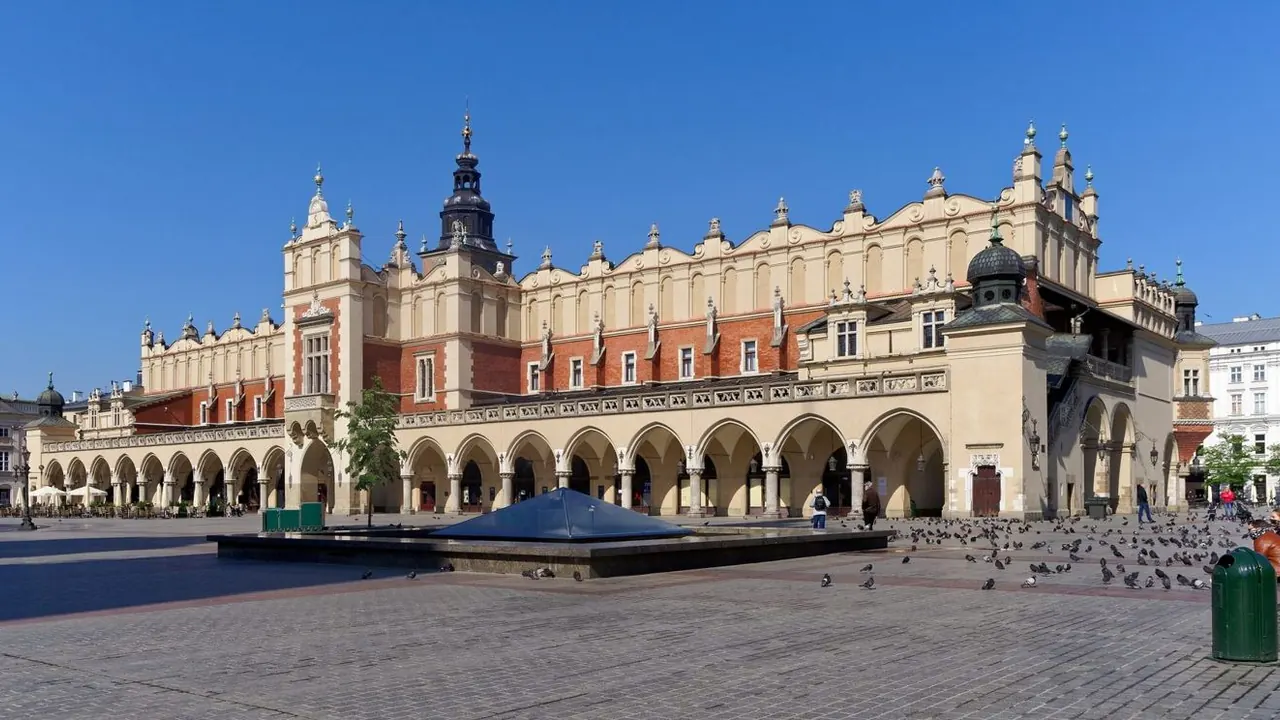
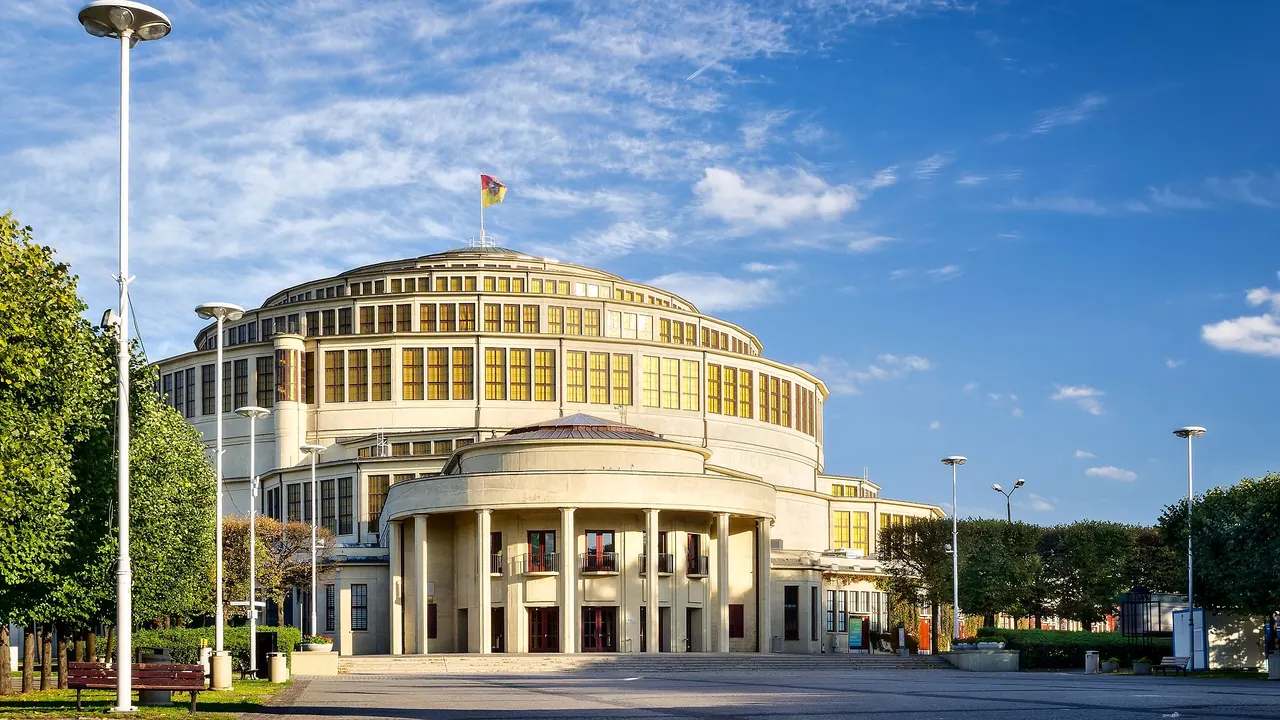
Photos: Krakow by Jakub Hałun, CC BY-SA 4.0, cropped; Wroclaw by Jar.ciurus, CC BY-SA 3.0 PL, cropped.
Krakow or Wroclaw?
Our verdict in twelve categories, each scored against the same fixed benchmark cities, and the climate month by month, so you can choose for your trip.
Choose Krakow for
- day trips
- culture and sights
- nightlife
Krakow is the stronger choice for a first trip to Poland built around history. Its medieval centre came through the war intact, Wawel and Kazimierz carry the weight of the country's royal and Jewish past, and Wieliczka and Auschwitz are easy to reach without a car. Evenings are livelier too, with cellar bars all over the Old Town and late courtyards in Kazimierz.
Choose Wroclaw for
- live music and the arts
- families
- prices
Travellers who want a calmer, sunnier city with fewer stag groups and more big concerts will be happier in Wroclaw. The cathedral island, the river islands and the hunt for bronze dwarfs make it easy going with young children, and the National Forum of Music gives classical music lovers a real reason to come. With a car, the castles, abbeys and old spa towns of Lower Silesia make for slower touring.
Scoreboard
Twelve categories on one fixed scale from 0 to 100. The shaded stretch is the gap between the two.
Your match
Pick a travel style or drag the sliders, and both match scores follow your weighting.
Wins on day trips and culture and sights with your weighting.
Wins on live music and the arts and families with your weighting.
What matters to you?
Category by category
What the scores mean for a trip.
Beaches & swimming
Neither city is a beach destination, and the Baltic is a long way from both. Their summer water is different, though. Krakow has Zakrzowek, a flooded quarry with turquoise water where you can swim in fenced areas. Wroclaw's sandy beaches on the Oder are for deckchairs and a drink, and anyone who wants to swim there goes to a pool or a lake in the countryside.
Food & drink
Both cook the same hearty Polish dishes of pierogi, żurek and roast duck, and both still have milk bars, but Krakow has more of a food culture. Obwarzanek carts, the zapiekanka counters in Plac Nowy's round market hall and the stalls of Stary Kleparz give eating there a street-level character, and flavoured vodka adds to the drinking.
Wroclaw is stronger on beer, with brewpubs in old cellars, and its bistros off the Market Square serve lighter versions of the Polish classics. Still, the food is satisfying rather than memorable. In both cities the terraces on the main square are better for the view than for a meal.
Culture & sights
What Krakow has is real medieval fabric. The city came through the war intact, so the Main Market Square, the Cloth Hall, St Mary's and Wawel are original, and the synagogues of Kazimierz still stand. The Schindler Factory and a Leonardo add to it, and a curious visitor needs two or three full days.
Wroclaw tells a different story, of a city largely rebuilt after the 1945 siege. The Gothic Town Hall, the gaslit lanes of Ostrów Tumski, the gilded Aula Leopoldina and the Centennial Hall are all worth seeing, and the Racławice Panorama is unlike anything else. Taken together, though, the sights carry less weight than Krakow's.
Nightlife
Both are student cities that drink late in brick cellars, but Krakow's nights are bigger and more varied. The shabby-chic bars and vodka bars around Plac Nowy in Kazimierz have a character Wroclaw can't match, and there are more clubs. The trade-off is the stag and hen groups that fill parts of the Old Town at weekends.
In Wroclaw the night is more concentrated. The courtyard passage off Ruska Street is the main bar crawl, and in summer the drinking moves out to the riverbanks and islands. There are few clubs, and the city goes noticeably quiet when the students leave between terms.
Nature & outdoors
Krakow's advantage lies mostly just outside town. The Wolski Forest and the Kosciuszko Mound are on its western edge, Ojcow's limestone valley with its caves is half an hour away, and the Tatras and the wooden rafts on the Dunajec make long days out further south.
Wroclaw is greener inside the city, with the Oder's islands, the Japanese Garden in Szczytnicki Park and kayaks on the river, but the land around it is flat. Ślęża is an easy half-day climb, and the Karkonosze and the Table Mountains are about two hours away, with skiing in winter.
Day trips
Krakow is clearly ahead here. Two of Poland's best-known sites, the Wieliczka Salt Mine and Auschwitz-Birkenau, are easy to reach without a car, and Zakopane below the Tatras makes a third big outing. Many people plan a whole trip around these visits.
From Wroclaw, Lower Silesia offers a quieter circuit: Książ Castle above its gorge, the wooden Churches of Peace, the abbey at Krzeszów and the fortress at Kłodzko. They are rewarding but less famous, and you really need a car to see several in one day.
Good for families
Both are safe cities with car-free squares, so the difference is in what children will enjoy. Krakow has its dragon legend, with the fire-breathing statue and the Dragon's Den cave at Wawel. Older children can manage Wieliczka or a drive to Energylandia, but cobbles and the heavy subject matter of several sights need some planning.
Wroclaw is flatter and gentler for small children, with the dwarf hunt, the shark tunnel in the zoo's Afrykarium and the hands-on water science centre. It runs out of big attractions sooner, though.
Getting around
Krakow's sights sit closer together. The Old Town, Wawel, Kazimierz and Podgorze are an easy walk from one another, much of the centre is closed to traffic, and a train runs in from the airport. The drawbacks are cobbles that slow you down with wheeled luggage, and trams that get stuck in traffic, since there is no metro to fall back on.
Wroclaw's centre is flat, which makes it pleasant on foot and by bike, with lanes along the river and a city bike system. The tram network is large but takes some learning. For the castles and mountain villages of Lower Silesia, a car is far easier than the train.
Shopping & style
Neither is a shopping destination, but Krakow has more to browse. The Cloth Hall, which has traded since the Middle Ages, sells amber, carved boxes and lace in the middle of the square, and Kazimierz adds vintage and antique shops and a weekend flea market on Plac Nowy.
Shopping in Wroclaw is more practical: malls for the chains, the Renoma department store with its ceramic facade, and a market hall by the river for food. In both cities the souvenirs to buy are Bolesławiec pottery and amber, and neither has a luxury shopping street.
Affordability
Cost will rarely decide between these two. A beer, a milk-bar lunch and a tram ride are cheap in either city. In each one the terraces on the main square charge for the view, and summer weekends push up room prices.
The difference is in how much effort it takes to keep costs down. In Krakow it pays to stay and eat in Kazimierz or Podgorze, and to reach Wieliczka and Auschwitz by train or bus rather than on an organised tour. Wroclaw needs less planning: comfortable central hotels are good value, the zoo and museums cost little, and a few streets off the Market Square everything is cheap again.
Live music & performing arts
Both have serious theatre traditions, Kantor in Krakow and Grotowski in Wroclaw, but nearly all of it is in Polish, so for visitors the music matters more. Krakow's music is small-scale and on most evenings: Chopin recitals in churches and palaces, jazz in brick cellars and klezmer in Kazimierz. The summer Jewish Culture Festival ends with an open-air concert on Szeroka Street.
Wroclaw is about bigger stages. It has the National Forum of Music with its excellent acoustics, an opera house by the old moat, and festivals such as Wratislavia Cantans and Jazz on the Oder.
Wellness & relaxation
Krakow's most unusual way to slow down is underground, in the salt-air therapy sessions inside the Wieliczka mine. The naturally hot thermal pools of Podhale near Zakopane are about two hours south. In the city itself, the tree-lined Planty and the Vistula banks below Wawel are the quiet places to sit.
Wroclaw has the old spa towns of Lower Silesia close by, with their pump rooms, spa parks and treatment houses. Szczawno-Zdrój is about an hour away, so taking the waters is an easy day out, and Polanica and Kudowa lie further south. Back in town, an aquapark with saunas and slow afternoons on the river islands do much the same job as Krakow's water park and riverbanks.
When should you go?
Pick your month. The climate figures are measured averages, not a forecast.
Krakow in July
Wroclaw in July
Daytime high, °C
Rainfall in the month, mm
Temperature and rainfall are climate normals, averaged over the years shown. Krakow: 1991-2020 (sunshine 1961-1990) normals, Krakow (10.1 km from centre). Wroclaw: 1991-2020 (rainfall 1961-1990) normals, Wroclaw Copernicus Airport (10.5 km from centre).
The two cities follow almost the same calendar. Both are cold and dark from November to March, with midwinter highs only just above freezing, so a winter trip means museums, cafés and concerts rather than long walks. Spring warms quickly, and May to September is the comfortable time for walking the streets, with both reaching about 25°C in July and August.
They differ in rain and sun. Summer is the wettest season in both, but Krakow gets more of it, about 100mm in July against 83mm in Wroclaw. Wroclaw is also clearly sunnier all year, with long bright days from April to September. September is a good shoulder month in both, and noticeably drier in Wroclaw.
Which traveller are you?
On a culture and arts trip, Krakow is the better pick. Wawel's castle and cathedral, the Veit Stoss altarpiece, the synagogues of Kazimierz and Leonardo's Lady with an Ermine fill two or three full days, and Wieliczka and Auschwitz are easy to add by train or bus.
For a food and nightlife trip, Krakow again has the edge. Zapiekanki at Plac Nowy, flavoured vodkas and cellar cafés lead into a night of cheap bar-hopping through Kazimierz and the Old Town. There are more clubs and the late scene runs deeper than in Wroclaw.
On a family trip with young children, Wroclaw is the gentler choice. Its flat, largely car-free centre is easy to get around, the bronze dwarf hunt keeps small children busy for hours, and the zoo's Afrykarium shark tunnel is a real highlight. Fewer of its main sights deal with heavy subjects than in Krakow.
Before you go
| Measure | Krakow | Wroclaw |
|---|---|---|
| Official language | Polish | Polish |
| Currency | Zloty (PLN) | Zloty (PLN) |
| Sockets | CE50 Hz | CE50 Hz |
| Driving side | Right | Right |
| Time zone | UTC+1, UTC+2 in summer | UTC+1, UTC+2 in summer |
| Emergency number | 112 | 112 |
| Elevation | 219 m | 111 m |
| Main airport | Kraków John Paul II International Airport (KRK)11 km from centre132 non-stop destinations | Copernicus Wrocław Airport (WRO)11 km from centre84 non-stop destinations |
| Public holidays this year | 14 days | 14 days |
By the numbers
| Measure | Krakow | Wroclaw |
|---|---|---|
| City population | 804,237 | 673,531 |
| People per km² | 2,459 | 2,299 |
| Museums within 10 km | 113 | 42 |
| UNESCO World Heritage sites within 50 km | 4 | 2 |
Where else could you go?
Every comparison below shares a destination with this one, so you can follow Krakow or Wroclaw somewhere new.