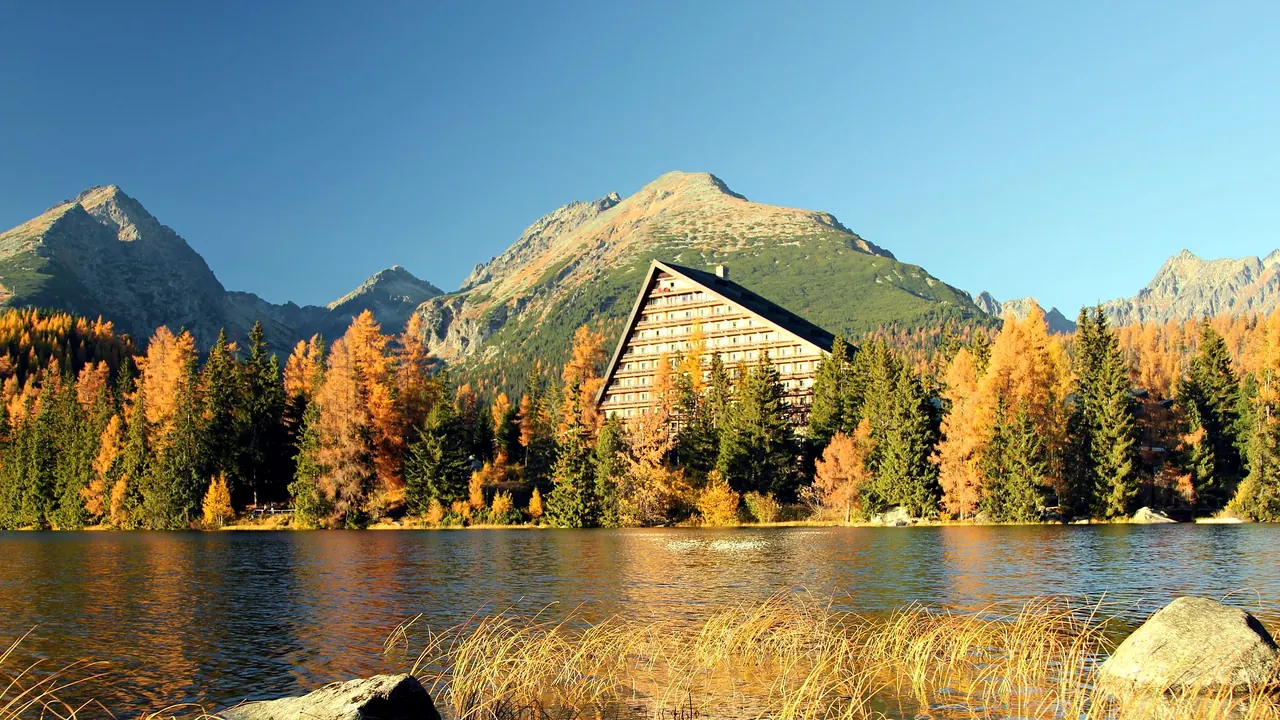
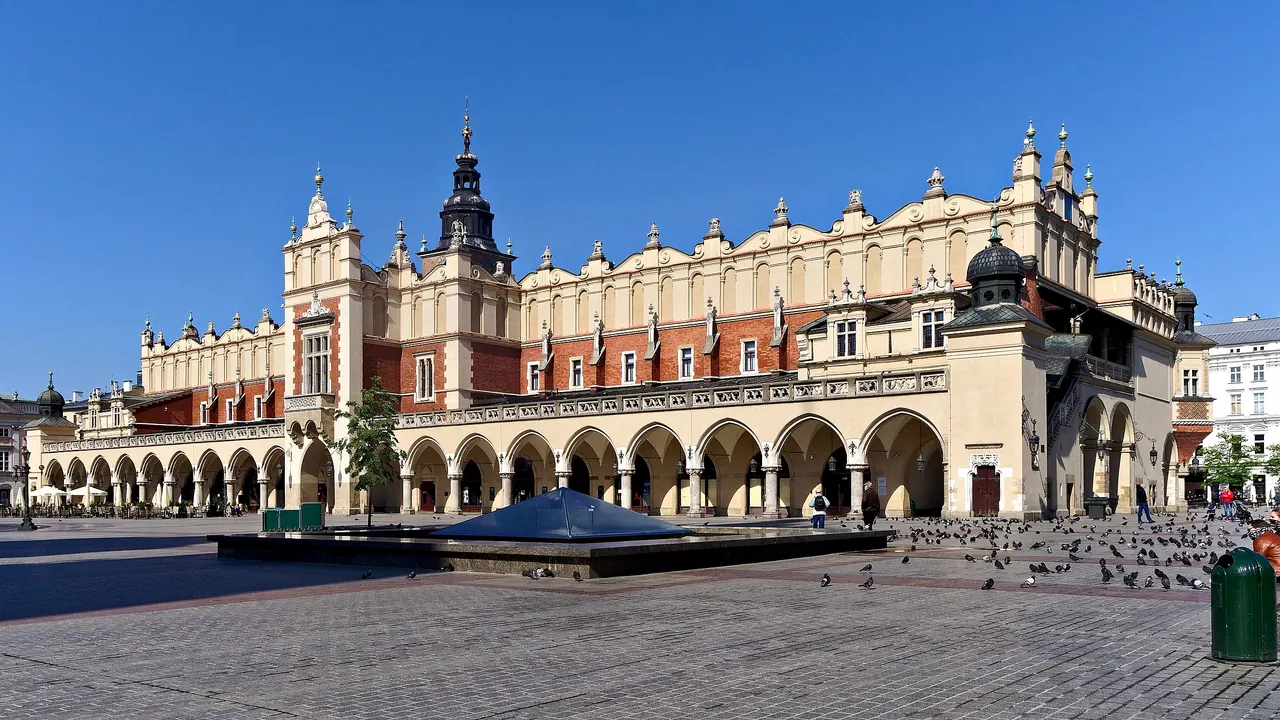
Photos: High Tatras by Marián Moravčík, Pexels License; Krakow by Jakub Hałun, CC BY-SA 4.0, cropped.
High Tatras or Krakow?
Our verdict in twelve categories, each scored against the same fixed benchmark cities, and the climate month by month, so you can choose for your trip.
Choose High Tatras for
- nature and the outdoors
- wellness
Choose the High Tatras if the trip is about the mountains themselves. The resorts sit at the foot of granite peaks, and trails, tarns, cable cars and huts begin a short walk from the railway. In winter there is compact skiing. Evenings are quiet and the food is hearty rather than varied. The old spa character makes it a restful base for walkers who want long days outside and early nights.
Choose Krakow for
- culture and sights
- nightlife
- live music and the arts
Krakow suits travellers who want a city to explore on foot. It has a medieval centre that survived the war, Wawel and Kazimierz, cellar bars that stay open late and concerts most evenings. It is also the cheaper and easier base for Wieliczka and Auschwitz. The mountains can still be reached from Krakow on a long day out, but you will not wake up in them.
Scoreboard
Twelve categories on one fixed scale from 0 to 100. The shaded stretch is the gap between the two.
Your match
Pick a travel style or drag the sliders, and both match scores follow your weighting.
Wins on nature and the outdoors and wellness with your weighting.
Wins on culture and sights and nightlife with your weighting.
What matters to you?
Category by category
What the scores mean for a trip.
Beaches & swimming
Neither place is for a beach vacation, and in both swimming is something to do on the side. The Tatras have warm outdoor water in the geothermal pools around Poprad and the thermal parks of the Liptov valley, but swimming in the tarns is not allowed. Krakow's best swim is in the fenced bathing areas of the turquoise Zakrzowek quarry, a short tram ride from the centre, with an indoor water park as the alternative.
Food & drink
Krakow has far more to choose from. Pierogi with every filling, zurek in a bread bowl, milk-bar lunches and late-night zapiekanki in Kazimierz come with craft beer, flavoured vodka and cellar cafés, although there is little fine dining.
In the Tatras the cooking is good but narrow: bryndzové halušky, cabbage soup and game in kolíba taverns. Soup and beer at a mountain hut after a climb is often the best meal of the day. Beyond the hotel restaurants and the ordinary places in Poprad, there is little variety.
Culture & sights
This is where the two differ most. Krakow's medieval centre came through the war intact. Wawel's castle and coronation cathedral, the Veit Stoss altarpiece, Kazimierz and Leonardo's Lady with an Ermine fill two or three full days.
The Tatra resorts were built for health, not history. Their sights are timber and Art Nouveau villas, old sanatoria and the national park museum in Tatranská Lomnica. If you stay there, the region's heritage is in the Spiš towns below.
Nightlife
Krakow has a real night out and the Tatras do not. Students keep the brick-vaulted cellar bars of the Old Town busy past midnight, the courtyards around Plac Nowy in Kazimierz have the most character, and there are clubs for those who want them.
In the mountains, hikers go to bed early. A beer or a borovička after dinner is the usual end to the day. In winter a few après-ski and hotel bars in Tatranská Lomnica and Starý Smokovec stay open later, and Poprad has a handful of pubs.
Nature & outdoors
The Tatras are the real thing: Europe's smallest alpine range rising straight from the resorts, with peaks over 2,600m, more than a hundred tarns, and chamois, marmots and bears. The cable car to Lomnický štít and the funicular to Hrebienok start in the resorts, and summer hiking and winter skiing are on the doorstep, though many high trails close from November to mid-June.
Krakow's green spaces are gentler: the Planty, the Blonia meadow, the Wolski Forest and the Kosciuszko Mound, with Ojcow's limestone valley half an hour north. The same Tatra peaks are about two hours south of Krakow, so from there they are a long day out rather than a base.
Day trips
Krakow has the bigger names. Wieliczka's salt chambers are half an hour away and the Auschwitz-Birkenau memorial about an hour and a half, both easy to reach without a car. Kalwaria Zebrzydowska, Wadowice and Czestochowa lie further out.
The Tatras have a fine cluster of their own in Spiš: Kežmarok's wooden church, Levoča's Gothic altar and the ruins of Spiš Castle, all within an hour. These are smaller places, though, and fitting two or three into one day is far simpler with a hire car.
Good for families
Both work well with children, in different ways. In the Tatras the days are spent outdoors: the funicular to Hrebienok and its waterfalls, the pushchair-friendly path around the lake at Štrbské Pleso, the Belianska cave, and ski schools and sledging in winter. The longer hikes are too steep for small children.
Krakow keeps children busy with the fire-breathing dragon below Wawel, the zoo, the indoor water park and Energylandia an hour away. Its drawbacks are cobbles and the heavy subject matter at several sights. In the mountains, the drawback is that there is no zoo or theme park.
Getting around
Krakow is easier to get around. The Old Town, Wawel, Kazimierz and Podgorze are within walking distance of each other and trams cover the rest. Trains run from the airport, and Wieliczka and Auschwitz are easy to reach, so you never need a car.
In the Tatras, the narrow-gauge electric railway links the resorts along the range, a rack railway climbs to Štrbské Pleso and the lifts do the rest, so trailheads are easy to reach. Services are less frequent, though, and trips to the Spiš towns and the Pieniny lead many visitors to hire a car.
Shopping & style
Krakow has much more to buy: amber, lace and carved wooden boxes in the medieval Cloth Hall, Boleslawiec pottery, high-street fashion on Florianska and a weekend flea market on Plac Nowy, though luxury labels are scarce. In the Tatras, shopping means outdoor gear, smoked sheep's cheese and a bottle of local spirit, with Poprad's shopping centres for anything else.
Affordability
Krakow is the cheaper of the two. Beer is cheap, milk bars keep lunch inexpensive and trams and museums cost little. Staying away from the Main Square, or in Kazimierz and Podgorze, brings costs down further.
The Tatras are good value for a mountain vacation, well below the western Alps. Cable cars, ski passes and the large spa hotels at Štrbské Pleso and Tatranská Lomnica add up, though, and staying in Poprad or the smaller villages helps.
Live music & performing arts
If live music matters to the trip, Krakow is the only real choice of the two. In the Tatras, hearing music is a matter of timing and luck: a folk group in summer or at the turn of the year, or musicians playing in a tavern while you eat. The resorts are set up for early nights rather than stages, so a walker based there who wants a proper concert has to travel for it.
In Krakow, a concert fits easily into the evening after a day of sightseeing, even if you have no Polish. You can pick a Chopin recital in an Old Town church or palace, a night at the Philharmonic or the opera, jazz in a cellar, or klezmer in Kazimierz. The city's well-known drama, from the Stary Teatr to Kantor's experimental work, is mostly in Polish and so out of reach for most visitors. Music, not theatre, is what makes the difference here.
Wellness & relaxation
The Tatra resorts began as climatic spas, and rest is still part of the appeal. The large hotels have wellness floors with pools and saunas, Poprad and Vrbov have geothermal pools, and there are forest walks with long views, best outside July and August.
Krakow can be calm away from the Main Square, on the Planty or the Vistula banks below Wawel. Wellness there means hotel spas, the indoor water park and the salt-air therapy sessions at Wieliczka. The nearest hot springs are near Zakopane, about two hours away.
When should you go?
Pick your month. The climate figures are measured averages, not a forecast.
High Tatras in July
Krakow in July
Daytime high, °C
Rainfall in the month, mm
Where the figures come from
High Tatras's station stands 272 m below the city centre, so the centre is likely a little cooler than the figures say.
Temperature and rainfall are climate normals, averaged over the years shown. High Tatras: 1991-2020 normals, Poprad / Tatry (8.4 km from centre). Krakow: 1991-2020 (sunshine 1961-1990) normals, Krakow (10.1 km from centre).
Both places follow the same Central European pattern: cold winters, warm summers and the most rain in July. In the Tatras the high trails are open from mid-June, so the hiking season runs from then into early autumn, with resort highs of about 23°C in July and August. July is also the wettest month, at around 101mm, and the weather on the ridges can change quickly. From December to February highs stay close to freezing, which suits skiing and sledging rather than walking. The mountains get more sun than Krakow in every month, and far more in winter.
Krakow is a degree or two warmer and reaches 25°C in high summer. That is pleasant for long days on foot and warm enough for the fenced bathing areas at Zakrzowek. May, June and September are the easiest months for sightseeing. Winter is cold and dim, with barely 28 hours of sunshine in December, so it is better spent in museums and cellar bars than outdoors.
Which traveller are you?
On an outdoors trip, the High Tatras win clearly. The Tatranská magistrála and the climb to Rysy start near the resort stops, cable cars lift you to high summits, and Slovak Paradise is within an hour. Krakow has gentle parks, and the mountains are a long day away.
For a culture and arts trip, Krakow is the obvious pick. Wawel, St Mary's Basilica, the synagogues of Kazimierz and the Schindler Factory fill several days, and evenings bring Chopin recitals, opera or jazz. The Tatra resorts offer little beyond their spa-era villas.
On a food and nightlife trip, Krakow is well ahead again. Pierogi, zurek and late zapiekanki at Plac Nowy lead on to cellar bars and Kazimierz courtyards that stay busy past midnight. In the Tatras the day usually ends with dumplings and a beer.
Before you go
| Measure | High Tatras | Krakow |
|---|---|---|
| Official language | Slovak | Polish |
| Currency | Euro (EUR) | Zloty (PLN) |
| Sockets | CE230 V, 50 Hz | CE50 Hz |
| Driving side | Right | Right |
| Time zone | UTC+1, UTC+2 in summer | UTC+1, UTC+2 in summer |
| Emergency number | 112 | 112 |
| Elevation | 966 m | 219 m |
| Main airport | Poprad-Tatry Airport (TAT)8 km from centre4 non-stop destinations | Kraków John Paul II International Airport (KRK)11 km from centre132 non-stop destinations |
| Public holidays this year | 15 days | 14 days |
By the numbers
| Measure | High Tatras | Krakow |
|---|---|---|
| Population | 3,749 | 804,237 |
| People per km² | 10 | 2,459 |
| Museums within 10 km | 1 | 113 |
| UNESCO World Heritage sites within 50 km | 4 | 4 |
Where else could you go?
Every comparison below shares a destination with this one, so you can follow High Tatras or Krakow somewhere new.
- Zakopanevs High Tatras
- Zakopanevs Krakow
- Budapestvs High Tatras
- Wroclawvs Krakow
- Warsawvs Krakow
- Bratislavavs High Tatras