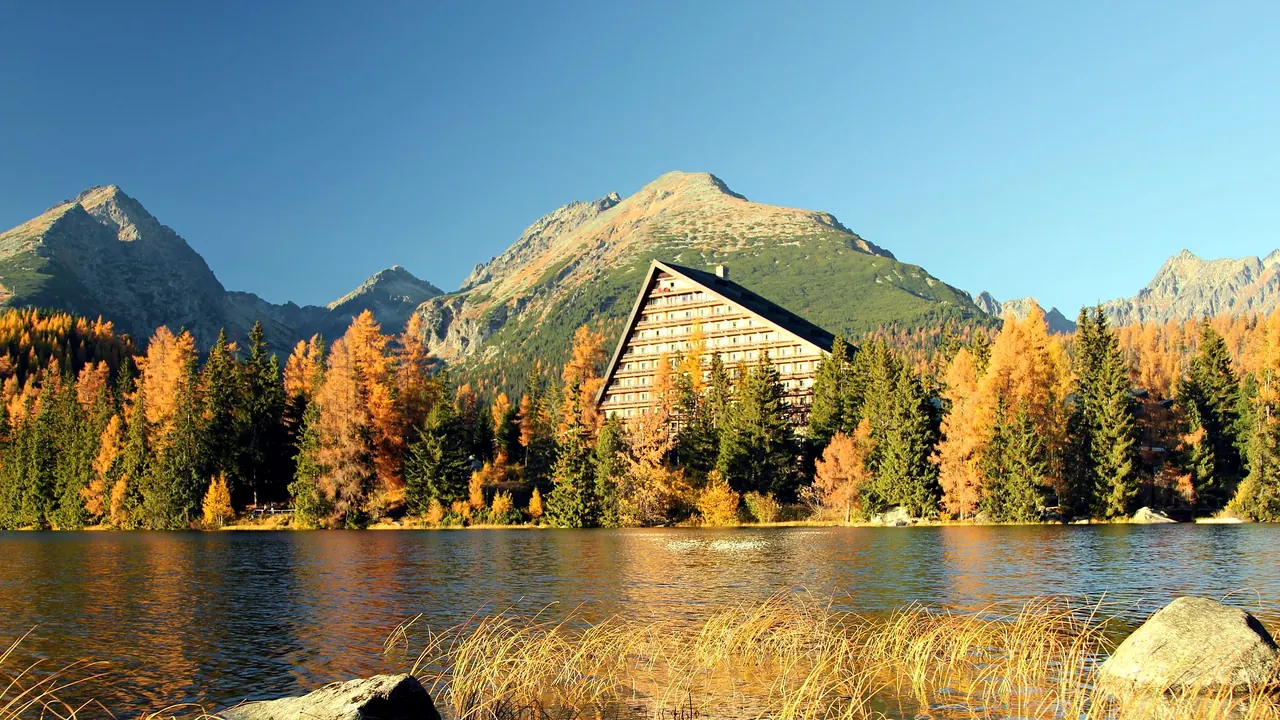
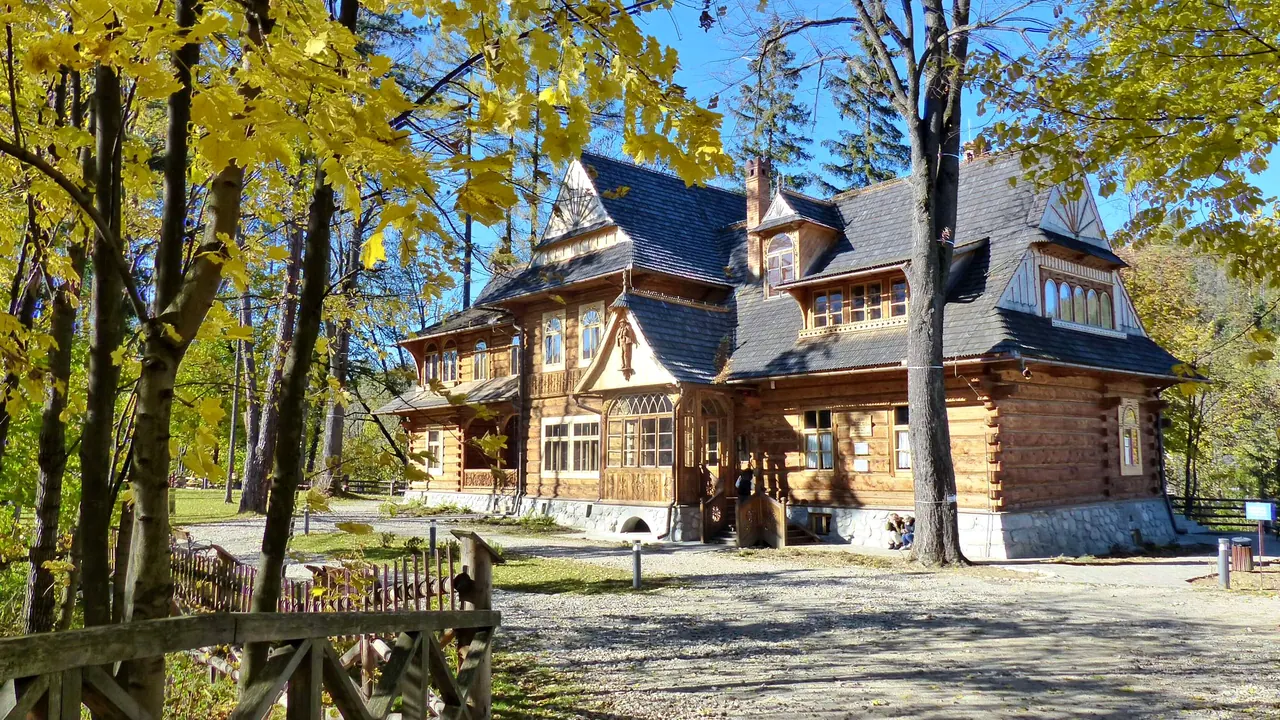
Photos: High Tatras by Marián Moravčík, Pexels License; Zakopane by Wojciech Grzegorz Domagała, CC BY-SA 4.0, cropped.
High Tatras or Zakopane?
Our verdict in twelve categories, each scored against the same fixed benchmark cities, and the climate month by month, so you can choose for your trip.
Choose High Tatras for
- day trips
- getting around
- nature and the outdoors
The High Tatras suit walkers who want the mountains with as little else as possible. The resorts are strung along the foot of the range and linked by a little electric railway, with funiculars and a cable car to the high ground and a trail that runs hut to hut along the whole massif. Summers here are noticeably drier than on the Polish side. The evenings are quiet, and the medieval Spiš towns are close enough to fill the rest days.
Choose Zakopane for
- live music and the arts
- nightlife
- culture and sights
Choose Zakopane if you want a proper town at the end of the trail. It has its own architecture, inns with fiddlers and grilled sheep's cheese, a theatre, a craft market and a main street that stays lively on winter weekends. The hiking is just as good, but evenings, food and highland culture give it far more off the mountain, as long as you can live with the crowds and traffic at peak times.
Scoreboard
Twelve categories on one fixed scale from 0 to 100. The shaded stretch is the gap between the two.
Your match
Pick a travel style or drag the sliders, and both match scores follow your weighting.
Wins on day trips and getting around with your weighting.
Wins on live music and the arts and nightlife with your weighting.
What matters to you?
Category by category
What the scores mean for a trip.
Beaches & swimming
Neither has a beach, and swimming in the tarns is banned on both sides of the range. In the High Tatras the swimming is in the geothermal pools around Poprad or the larger thermal parks in the Liptov valley, about an hour away.
Zakopane has warm outdoor thermal pools close to town. It also has the one open-water option of the two: a few modest bathing spots on the Czorsztyn reservoir, about an hour's drive away.
Food & drink
The cooking is close kin on both sides of the border: sheep's cheese, dumplings, cabbage soups and grilled meat. In the High Tatras the most memorable meal is often bryndzové halušky at a mountain hut after a climb. Down in the resorts there are kolíba taverns and hotel dining rooms, and anything more varied means a trip to Poprad.
Zakopane gives you much more choice. Oscypek is grilled with cranberry jam on stalls all over town, and timber inns with open fires serve smoked-rib soup and lamb. The best of it is in the smaller family inns on the side streets, away from the repetitive menus on Krupówki.
Culture & sights
The Slovak resorts offer little beyond their spa-era timber and Art Nouveau villas and the national park museum in Tatranská Lomnica. For real heritage you have to go down to the valley.
Zakopane has a cultural identity of its own. It gave its name to an architectural style drawn from highland carpentry, which you can see at Villa Koliba and the chapel at Jaszczurówka. Add the Tatra Museum, Szymanowski's Villa Atma and the carved grave markers of Pęksowy Brzyzek, and you have a satisfying day in town.
Nightlife
In the High Tatras the evening usually ends with dinner and a glass of borovička. A few après-ski and hotel bars in Tatranská Lomnica and Starý Smokovec stay open later in winter, but there are no clubs.
Zakopane has a real night out, centred on Krupówki, with pubs, a few dance clubs and inns that get loud. It is busiest on ski-season weekends and at New Year, which is a big event in Poland. Midweek and out of season it calms down a lot.
Nature & outdoors
This is one mountain range seen from two sides, and both are superb. The Slovak side has the higher granite, with Gerlachovský štít at 2,655m. A cable car climbs almost to the top of Lomnický štít, a funicular rises to the waterfalls above Hrebienok, and the magistrála trail lets you walk the whole range from hut to hut. The catch is that many high paths close from November to mid-June.
From Zakopane the national park begins at the edge of town. You get crocus meadows in Kościeliska, the crowded road up to Morskie Oko, the climb to Giewont's cross and the chained Orla Perć ridge for experienced scramblers. Kasprowy Wierch, reached by cable car, is lower than the Slovak lift summit, but the Polish trails offer more variety for scramblers.
Day trips
Both bases make good day trips, but in different directions. From the High Tatras the Spiš heritage is right on the doorstep: Kežmarok's wooden church is about twenty minutes away, and Levoča's Gothic altar and the ruins of Spiš Castle are under an hour. Košice is an easy train ride.
Zakopane looks north instead. Kraków and the Wieliczka salt mine make a long but rewarding day out, while the painted larch church at Dębno and the log houses of Chochołów are close by. Spiš is still within reach from Zakopane, but the weekend traffic out of town can stretch any journey.
Good for families
Both work well for outdoor families, in different moods. The Slovak resorts are calm and safe. Children can take the funicular to the waterfalls above Hrebienok, a pushchair manages the flat path around Štrbské Pleso, and the Belianska show cave and the summer bobsled runs give a break from walking.
Zakopane has more going on. The Gubałówka funicular leads to slides and a toboggan run, Kościeliska suits small legs, and several thermal water parks lie a short drive away. The price is crowds on Krupówki and traffic jams during school breaks.
Getting around
Getting around is about equally easy, by different means. In the High Tatras a narrow-gauge electric railway links the resorts over about 30km to Poprad's main-line station and small airport, and a rack railway climbs to Štrbské Pleso. Trains are not frequent, though, and the Spiš towns are easier by car.
Zakopane has a walkable centre and fast private minibuses to Kuźnice and the valley trailheads. Its weak point is getting there: the road jams at peak times, the train from Kraków is slow, and parking in town is hard work.
Shopping & style
On the Slovak side, shopping is outdoor gear, smoked cheese and bottles of spirit, with Poprad's ordinary shopping centres for anything else.
Zakopane has a real craft tradition to buy into. The market below Gubałówka sells thick wool sweaters, sheepskin rugs, felt slippers and carved boxes. Look for the handmade pieces rather than the trinkets.
Affordability
Both are far cheaper than the western Alps, with hearty meals and family guesthouses on both sides. In the High Tatras the big costs are the cable cars to the peaks, ski passes and the large spa hotels at Štrbské Pleso and Tatranská Lomnica, and staying in Poprad keeps the budget down.
In Zakopane, everyday costs like minibuses and park entry are low. Here the danger is timing: Christmas, New Year, winter school breaks and long summer weekends push room rates up, while spring and autumn are noticeably cheaper.
Live music & performing arts
There is almost nothing to see on stage in the Slovak resorts, just an occasional folk ensemble or music with dinner in a tavern.
Zakopane has a living tradition. Highland string bands with sharp fiddles play in the inns most evenings, and the small Witkacy Theatre is well regarded. Every August the International Festival of Mountain Folklore fills the streets with dance troupes.
Wellness & relaxation
Both began as mountain-air health resorts and still have that restful feel. In the High Tatras the calm is in the place itself. Quiet resorts, forest walks and hotel wellness floors are backed up by geothermal pools at Poprad and Vrbov.
Zakopane has more thermal bathing close by. Large complexes at Białka Tatrzańska, Bukowina, Szaflary and Chochołów have outdoor pools that steam in the snow with views of the peaks. The town centre is far from peaceful in high season, though, so for real rest stay on the quieter slopes.
When should you go?
Pick your month. The climate figures are measured averages, not a forecast.
High Tatras in July
Zakopane in July
Daytime high, °C
Rainfall in the month, mm
Where the figures come from
High Tatras's station stands 272 m below the city centre, so the centre is likely a little cooler than the figures say.
Zakopane has no rain gauge within 25 km of the centre, so its rainfall comes from a gridded climate dataset read at the destination rather than from a gauge further away.
Zakopane's sunshine is measured 34 km from the centre, at Poprad / Tatry.
Temperature and rainfall are climate normals, averaged over the years shown. High Tatras: 1991-2020 normals, Poprad / Tatry (8.4 km from centre). Zakopane: 1999-2020 (sunshine 1991-2020, rainfall 1991-2020) normals, Zakopane (0.2 km from centre).
Both are at their best for walking from June to September, when the days are mild rather than hot. The Slovak resorts run a degree or two warmer and reach about 24°C in August. The real difference is rain. Zakopane is much wetter in every month, and in July it gets around 176mm against about 101mm in the High Tatras, so expect more wet hiking days on the Polish side. Sunshine is much the same in both, with the most in July and August.
From December to February daytime highs sit near freezing, between 0°C and 3°C. Those months are for skiing, sledging and thermal pools rather than long walks. November and March are cold rather than freezing. On both sides the winter months are far drier than the summer ones. Late May and September are good months between the seasons for walking in the valleys, but many high trails on the Slovak side stay closed until mid-June.
Which traveller are you?
For an outdoors trip, the High Tatras edge it. The resorts sit right on the trails, the magistrála links huts and tarns along the whole range, a cable car climbs to 2,634m, and the summers are drier than on the Polish side.
On a food and nightlife trip, Zakopane is the clear choice. Its timber inns serve kwaśnica and grilled oscypek with live highland music, and Krupówki has pubs and dance clubs. The Slovak resorts mostly go quiet after dinner.
For a culture and arts trip, Zakopane offers far more in town: the Zakopane style villas and chapel, the Tatra Museum, the artists' cemetery and the Witkacy Theatre. In the High Tatras, culture mostly means driving down to the Spiš towns.
Before you go
| Measure | High Tatras | Zakopane |
|---|---|---|
| Official language | Slovak | Polish |
| Currency | Euro (EUR) | Zloty (PLN) |
| Sockets | CE230 V, 50 Hz | CE50 Hz |
| Driving side | Right | Right |
| Time zone | UTC+1, UTC+2 in summer | UTC+1, UTC+2 in summer |
| Emergency number | 112 | 112 |
| Elevation | 966 m | 837 m |
| Main airport | Poprad-Tatry Airport (TAT)8 km from centre4 non-stop destinations | Kraków John Paul II International Airport (KRK)87 km from centre132 non-stop destinations |
| Public holidays this year | 15 days | 14 days |
By the numbers
| Measure | High Tatras | Zakopane |
|---|---|---|
| Population | 3,749 | 25,770 |
| People per km² | 10 | 306 |
| Museums within 10 km | 1 | 18 |
| UNESCO World Heritage sites within 50 km | 4 | 2 |
Where else could you go?
Every comparison below shares a destination with this one, so you can follow High Tatras or Zakopane somewhere new.
- Krakowvs Zakopane
- Krakowvs High Tatras
- Budapestvs High Tatras
- Budapestvs Zakopane
- Brnovs Zakopane
- Bratislavavs Zakopane