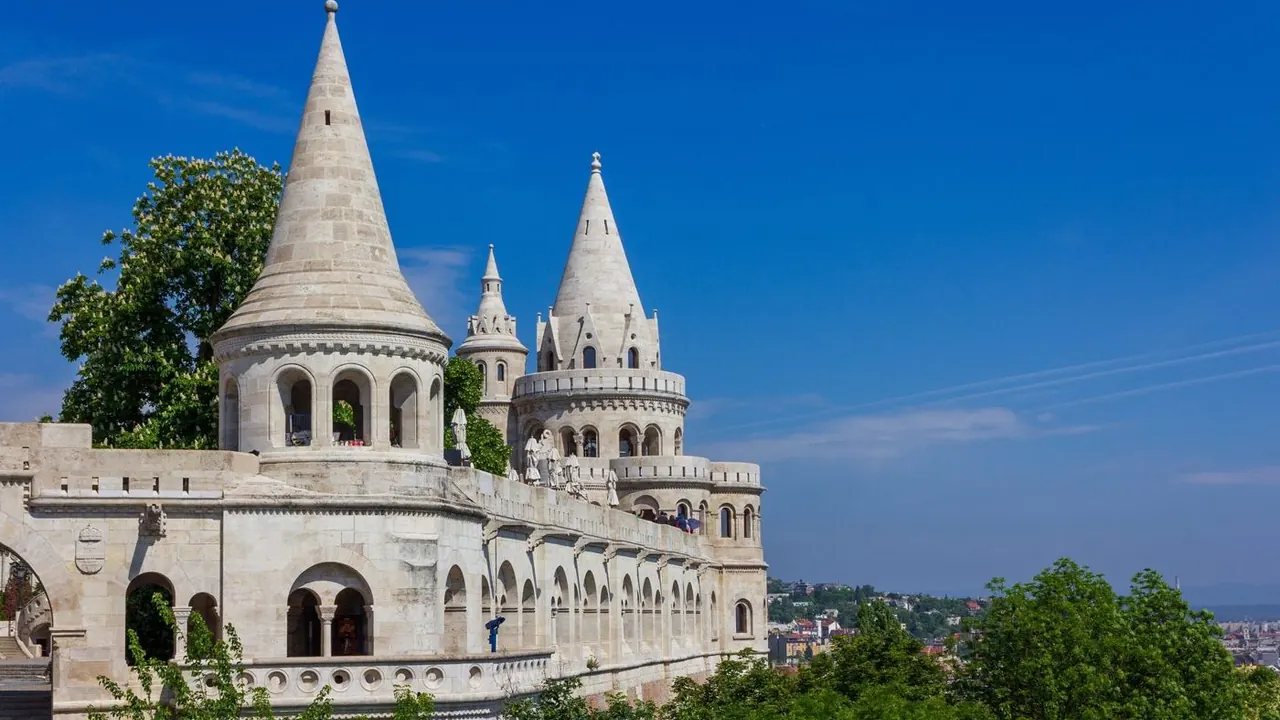
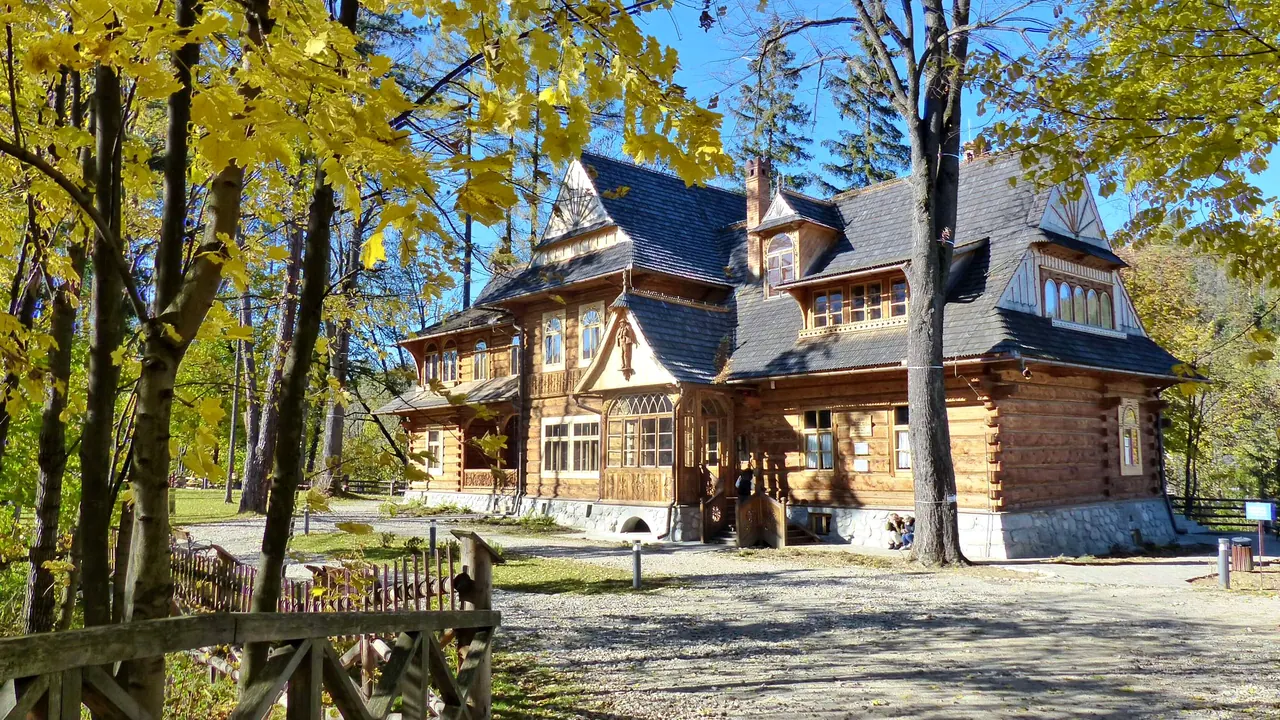
Photos: Budapest by Perituss, CC0; Zakopane by Wojciech Grzegorz Domagała, CC BY-SA 4.0, cropped.
Budapest or Zakopane?
Our verdict in twelve categories, each scored against the same fixed benchmark cities, and the climate month by month, so you can choose for your trip.
Choose Budapest for
- culture and sights
- nightlife
- live music and the arts
Budapest is the choice for a city vacation in the full sense. It has a river front lined with palaces and Parliament, museums and concert halls for several days, ruin bars and wine bars for the evenings, and historic thermal baths in the middle of town for the afternoons in between. Trams and a short metro tie it together, so a long weekend goes a long way without a car.
Choose Zakopane for
- nature and the outdoors
- prices
Zakopane suits travellers who want to spend their days on trails rather than on pavements. The Tatras start at the edge of town, with glacial lakes, granite peaks and a cable car to the ridge, and in winter the same slopes turn to skiing and sledging. Its culture, food and evenings are simple and highland in character, and the mountains are what fill the trip.
Scoreboard
Twelve categories on one fixed scale from 0 to 100. The shaded stretch is the gap between the two.
Your match
Pick a travel style or drag the sliders, and both match scores follow your weighting.
Wins on culture and sights and nightlife with your weighting.
Wins on nature and the outdoors and prices with your weighting.
What matters to you?
Category by category
What the scores mean for a trip.
Beaches & swimming
Neither place has a coast, but Budapest gives swimmers more to work with. The big open-air lidos such as Palatinus on Margaret Island make a full summer day, and shallow Lake Velence, which warms well in high summer, is under an hour away by train.
Zakopane's glacial lakes are off limits for bathing, and the nearest open water is the reservoir at Czorsztyn, about an hour's drive away. Here swimming means the outdoor thermal pools around town, which do at least stay warm in any season.
Food & drink
Budapest has the wider table. Goulash, paprikash and lángos sit alongside the Great Market Hall, the layered cakes of the old coffee houses and a serious modern restaurant scene. Its biggest advantage is wine, with Tokaji, Eger reds and Balaton whites poured across District V and VII.
Zakopane's cooking is narrower and more rustic. Grilled oscypek with cranberry jam, kwaśnica with smoked rib and lamb in timber inns are satisfying after a day on the trails. The best meals are in the family inns on the side streets rather than on Krupówki.
Culture & sights
These two are far apart here. Budapest needs several days: Parliament facing the Royal Palace across the Danube, Matthias Church and the Fishermen's Bastion, the Dohány Street Synagogue, Art Nouveau landmarks and the communist statues of Memento Park.
Zakopane's heritage is small but its own. The Zakopane style of carved highland timber shows in Villa Koliba, the chapel at Jaszczurówka and the old cemetery at Pęksowy Brzyzek, and the whole of it fits into a single day.
Nightlife
Budapest is the place to go out. The ruin bars of the old Jewish Quarter, the cocktail bars and late clubs of Kazinczy and Király streets, and summer garden bars and party boats on the Danube keep weekends going long after midnight. For a quieter evening, the wine bars of District V are easy to find.
Zakopane's nights gather on Krupówki, with pubs, a few clubs and inns that turn rowdy. It comes alive mainly with the après-ski crowd and at New Year, and it is quiet midweek and out of season.
Nature & outdoors
Zakopane is the stronger destination for the outdoors. The Tatra national park begins at the town's edge. Hikes range from flat valley walks through Kościeliska to Giewont, Rysy and the chained Orla Perć ridge. A cable car climbs to Kasprowy Wierch, and rafting on the Dunajec gorge is about an hour away.
Budapest's green side is gentler. Forest walks in the Buda Hills, cave tours under them and the wooded ridges of the Danube Bend make good half-days, but they are low hills rather than mountains.
Day trips
Budapest has the easier and more varied outings. Szentendre, Visegrád and Esztergom on the Danube Bend, and the royal palace at Gödöllő, are all within reach by suburban train or boat. Eger, Hollókő and Pannonhalma are further out but still manage as a long day.
From Zakopane the excursions mostly need the road. Kraków and the Wieliczka salt mine are about two hours away, the wooden church at Dębno is close, and Spiš Castle and Levoča lie across the Slovak border. Weekend traffic can make all of these journeys considerably longer.
Good for families
Both work well for children, in quite different ways. Budapest offers city attractions: the old zoo in City Park, the Children's Railway run by schoolchildren, the hands-on Palace of Wonders and lidos with wave pools.
Zakopane is about being outside. Families can ride the funicular and the summer toboggan on Gubałówka, push buggies along the flat valley trails, try sledging and ski school in winter, and spend wet days at the thermal water parks.
Getting around
Budapest is far simpler to move around. Central Pest is flat, tram line 2 doubles as a sightseeing ride along the river, the boulevard trams run all night and the little Line 1 metro is quick to learn. Nobody needs a car.
Zakopane's pedestrianised centre is easy on foot, and minibuses run to Kuźnice and the valley entrances. Getting there and getting out are harder, though: the road jams at peak times, the train from Kraków is slow, and the Slovak side is easier with a car.
Shopping & style
Budapest has more worth buying, even if it is not a shopping capital. Herend and Zsolnay porcelain, paprika and Tokaji from the Great Market Hall, small design boutiques in Districts V and VII, and communist-era finds at Ecseri flea market all beat the souvenirs on Váci utca.
In Zakopane, shopping comes down to highland craft. The market at the foot of Gubałówka has wool sweaters, sheepskins, felt slippers, carved boxes and wheels of oscypek, and the handmade pieces are the ones to look for.
Affordability
The two cost about the same overall, but the costs build up in different ways. In Budapest it is about where you eat and drink. Transport, wine and ordinary coffee houses are cheap, while Váci utca and the grand historic cafés add to the bill.
In Zakopane it is about when you go. Guesthouses, inn meals and minibuses are cheap compared with alpine resorts, but Christmas, New Year and the school breaks push up room rates, and spring and autumn are the cheapest seasons.
Live music & performing arts
Budapest offers music on most nights. There is opera at the State Opera House and the Erkel Theatre, chamber music in the Art Nouveau hall of the Liszt Academy, the national concert hall at Müpa, operetta, church concerts and folk ensembles. Spoken theatre is in Hungarian, so visitors mostly come for music and dance.
Zakopane's stage life is smaller and local. The Witkacy Theatre, highland fiddle bands playing in the inns, and the mountain folklore festival that fills the streets each August are its high points.
Wellness & relaxation
Both towns sit on hot springs, but Budapest makes far more of them. Its baths are inside the city and are landmarks in their own right: the neo-Baroque Széchenyi, the mosaics of the Gellért, and the Ottoman domes of Rudas and Király. An afternoon soak is easy to fit between sights.
In Zakopane, the thermal complexes are in the nearby villages of Chochołów, Białka Tatrzańska and Bukowina. Their outdoor pools look out on the Tatras and make a fine end to a day of hiking or skiing, but you need to travel out for them, and the town centre is far from restful in high season.
When should you go?
Pick your month. The climate figures are measured averages, not a forecast.
Budapest in July
Zakopane in July
Daytime high, °C
Rainfall in the month, mm
Where the figures come from
Zakopane has no rain gauge within 25 km of the centre, so its rainfall comes from a gridded climate dataset read at the city rather than from a gauge further away.
Zakopane's sunshine is measured 34 km from the centre, at Poprad / Tatry.
Temperature and rainfall are climate normals, averaged over the years shown. Budapest: 1991-2020 (sunshine 1981-2010, rainfall 1981-2010) normals, Budapest Met Center (2.1 km from centre). Zakopane: 1999-2020 (sunshine 1991-2020, rainfall 1991-2020) normals, Zakopane (0.2 km from centre).
Budapest is a warm-weather city from May to September, with highs around 28°C in August and the sunniest skies in July. That suits the open-air lidos and the riverside terraces, though midsummer afternoons can be tiring for long sightseeing walks, so May, June and September are the most comfortable months for the streets. Rain is moderate all year. Winters are cold, with highs near 4°C, and that is when the steaming outdoor thermal pools are at their most atmospheric.
Zakopane runs cooler and wetter all year. Summer highs reach only about 21°C, which is good for hiking, but July is also the wettest month at around 176mm, so mountain plans need flexible days. September and October bring drier, settled weather for walking in the valleys. From December to February highs stay around 0°C, which is the season for skiing, sledging and soaking in the thermal pools.
Which traveller are you?
On an outdoors trip, Zakopane is the clear pick. It has real alpine terrain right outside town: the walk to Morskie Oko, the climb to Rysy, the cable car to Kasprowy Wierch and winter skiing. Budapest's Buda Hills and Danube Bend give pleasant walks but nothing as dramatic.
For a culture and arts trip, Budapest is far ahead. It has the UNESCO-listed river panorama and Andrássy Avenue, the old masters at the Museum of Fine Arts, the State Opera House and the Liszt Academy. Zakopane's wooden villas and museums fill a single day.
On a food and nightlife trip, Budapest wins easily. You get paprika cooking, grand coffee houses and Tokaji in the wine bars, then ruin bars in District VII until late. Zakopane offers hearty inn meals and lively Krupówki pubs, mostly in ski season.
Before you go
| Measure | Budapest | Zakopane |
|---|---|---|
| Official language | Hungarian | Polish |
| Currency | Forint (HUF) | Zloty (PLN) |
| Sockets | CF230 V, 50 Hz | CE50 Hz |
| Driving side | Right | Right |
| Time zone | UTC+1, UTC+2 in summer | UTC+1, UTC+2 in summer |
| Emergency number | 112 | 112 |
| Elevation | 117 m | 837 m |
| Main airport | Budapest Liszt Ferenc International Airport (BUD)18 km from centre157 non-stop destinations | Kraków John Paul II International Airport (KRK)87 km from centre132 non-stop destinations |
| Public holidays this year | 13 days | 14 days |
By the numbers
| Measure | Budapest | Zakopane |
|---|---|---|
| City population | 1,675,777 | 25,770 |
| People per km² | 3,191 | 306 |
| Museums within 10 km | 81 | 18 |
| UNESCO World Heritage sites within 50 km | 1 | 2 |
Where else could you go?
Every comparison below shares a destination with this one, so you can follow Budapest or Zakopane somewhere new.
- Krakowvs Zakopane
- Bratislavavs Budapest
- Viennavs Budapest
- Brnovs Zakopane
- Bratislavavs Zakopane
- Brnovs Budapest