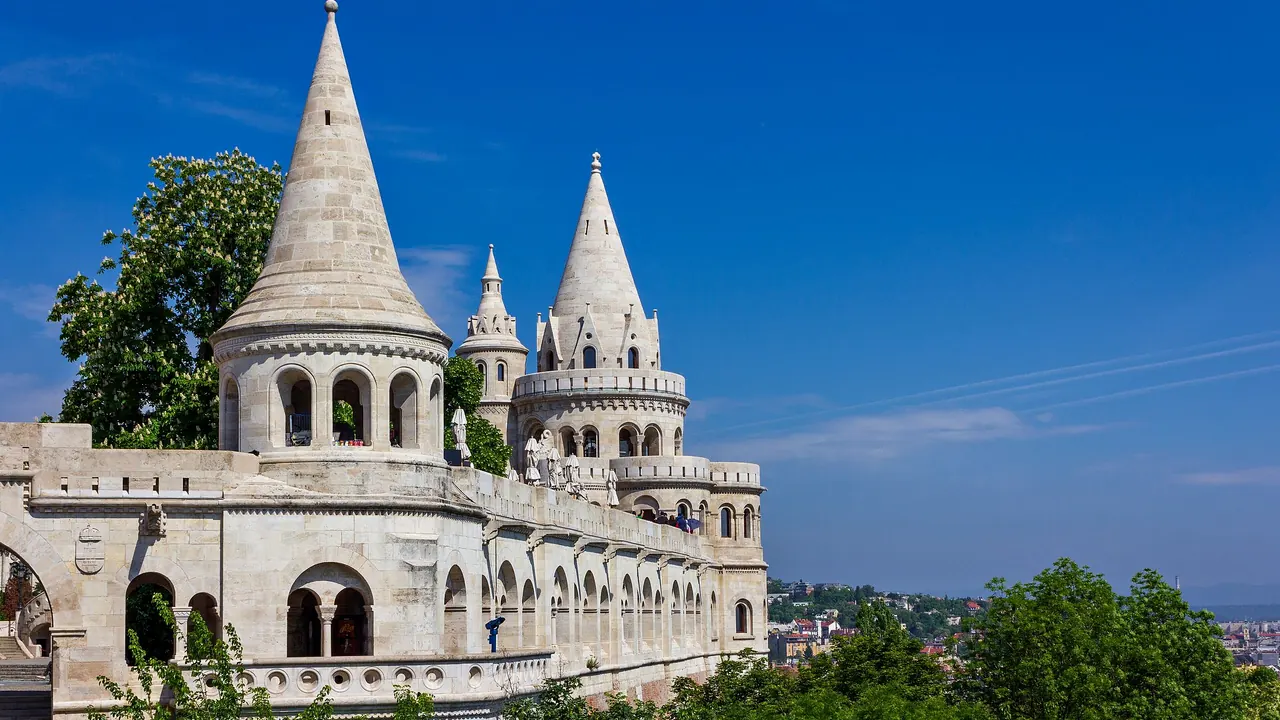
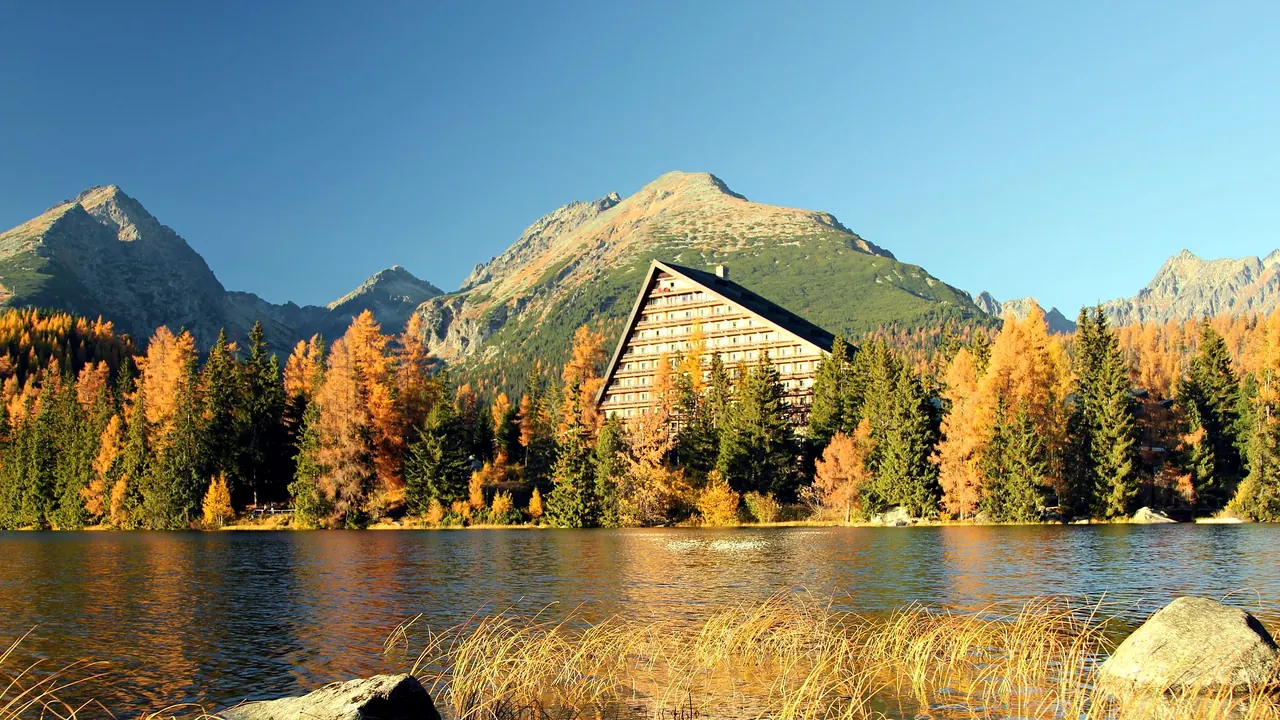
Photos: Budapest by Perituss, CC0; High Tatras by Marián Moravčík, Pexels License.
Budapest or High Tatras?
Our verdict in twelve categories, each scored against the same fixed benchmark cities, and the climate month by month, so you can choose for your trip.
Choose Budapest for
- live music and the arts
- nightlife
- culture and sights
Budapest is the choice for a city trip in the full sense. The riverfront of Parliament and the Royal Palace, opera and concert halls with music most nights, the ruin bars of District VII and, above all, the thermal baths give days of sights and long evenings. It suits travellers who want history, good wine and a soak at the Széchenyi or the Rudas, with the Buda Hills for a walk on the side.
Choose High Tatras for
- nature and the outdoors
Walkers and skiers, and anyone who wants mountain quiet, should head for the High Tatras instead. Granite peaks, tarns and trails between mountain huts start a short walk from the resort railway, and the medieval Spiš towns fill the rest days. Expect early nights, plain mountain food and very few museums or shops. You come for the mountains and the peace.
Scoreboard
Twelve categories on one fixed scale from 0 to 100. The shaded stretch is the gap between the two.
Your match
Pick a travel style or drag the sliders, and both match scores follow your weighting.
Wins on live music and the arts and nightlife with your weighting.
Wins on nature and the outdoors with your weighting.
What matters to you?
Category by category
What the scores mean for a trip.
Beaches & swimming
Neither place has a beach, but Budapest is the better of the two for a swim. Its big open-air lidos, Palatinus on Margaret Island among them, make a full summer day out. Lake Velence, shallow and warm, is under an hour away by train.
In the Tatras, swimming in the glacial tarns is not allowed inside the national park. A swim means the geothermal pools around Poprad or the water parks of the Liptov valley, which work as a break between hikes but are no reason to travel.
Food & drink
Budapest has far more to eat and drink. You get goulash, lángos and chimney cake, the tiled Great Market Hall, old coffee houses serving Dobos cake, and wine bars pouring Tokaji, Eger reds and Somló whites, with a serious modern restaurant tier on top.
In the Tatras you eat Slovak mountain food: bryndzové halušky, cabbage soup and game in timbered taverns. Often the best meal is soup and a beer at a hut after a climb. It fills you up, but there is little choice beyond it.
Culture & sights
Budapest takes several days to see properly. The Danube panorama runs from Parliament to the Royal Palace and the Fishermen's Bastion, and the city adds the Museum of Fine Arts, the Dohány Street Synagogue and layers from Ottoman tombs to the statues of Memento Park.
The Tatra resorts were built for mountain air, and their sights are mostly timber and Art Nouveau spa villas, along with the national park museum in Tatranská Lomnica. For real heritage, visitors have to go down into the valley.
Nightlife
In Budapest the night runs late. There are ruin bars in the crumbling courtyards of District VII, clubs on Kazinczy and Király streets, and terraces and party boats on the Danube in summer. The wine bars of District V suit a calmer evening.
In the Tatras, hikers go to bed early. Most evenings end over dinner and a glass of borovička, and even in ski season a few après-ski and hotel bars are all there is.
Nature & outdoors
The High Tatras are true alpine country. Granite peaks rise above 2,600m over glacial valleys and tarns, chamois and marmots live up high, and the Lomnický štít cable car and the Hrebienok funicular take you straight onto the mountain. Winter brings skiing at Tatranská Lomnica and Štrbské Pleso, and Slovak Paradise and the Pieniny are within an hour.
The outdoors around Budapest is gentler. The Buda Hills give forest walks and lookout towers half an hour from the centre, and the Danube Bend has wooded ridges and a riverside cycle path. It is pleasant walking country, but there are no mountains.
Day trips
Both make good bases, but the outings differ in kind. From Budapest, the Danube Bend towns of Szentendre, Visegrád and Esztergom are easy by suburban train, and Eger's castle and wine cellars or the village of Hollókő make longer days.
From the Tatras, the draw is the medieval Spiš cluster: Kežmarok's wooden church, Levoča with its Gothic altar, and the vast ruins of Spiš Castle, with Zakopane across the Polish border. These towns are small and scattered, so a car helps far more here than in Budapest.
Good for families
Both work with children, in different ways. Budapest has the zoo in City Park, the Children's Railway, the Palace of Wonders science centre and summer lidos with slides. Busy pavements and loud weekend nights in District VII take some planning.
The Tatras offer open space rather than attractions. There is the funicular to the Hrebienok waterfalls, a flat pushchair path round Štrbské Pleso, and sledging and ski schools in winter, all in calm, safe resorts. There is no zoo, though, and the longer hikes are too steep for small legs.
Getting around
Budapest is the easier place to get around. Pest is flat and walkable, trams run along the Danube and round the boulevard all night, the metro is simple, and taxis are cheap, so nobody needs a car.
In the Tatras, a narrow-gauge electric railway links the resorts, and funiculars and cable cars reach the trailheads, which works well within the range. Services are thinner, though, and many visitors hire a car for the Spiš towns and the Pieniny.
Shopping & style
Budapest has the only real shopping of the two. You can buy Herend and Zsolnay porcelain, browse small design boutiques in Districts V and VII, pick up paprika and Tokaji at the Great Market Hall, and look for communist-era finds at the Ecseri flea market. In the Tatras it comes down to outdoor gear, smoked sheep's cheese and souvenirs, with Poprad's ordinary shopping centres as the fallback.
Affordability
Costs are much the same in both, and each is cheap for what it is: Budapest compared with Western capitals, the Tatras compared with the western Alps. In Budapest, money goes further on public transport, wine and lunch menus away from Váci utca.
In the Tatras, guesthouses, hut meals and the local railway keep costs down. Cable cars, ski passes and the large spa hotels at Štrbské Pleso are where the spending rises.
Live music & performing arts
Budapest has music most nights. There is opera at the State Opera House and the Erkel Theatre, orchestral and chamber music in the Art Nouveau hall of the Liszt Academy and at Müpa, and operetta and Hungarian folk dance as well. The Tatras have no theatre and no concert hall. Live music there means an occasional folk group or a tavern band playing over dinner.
Wellness & relaxation
Budapest is built on thermal springs, and its baths are part of everyday life. There are the steaming outdoor pools of the Széchenyi, the mosaics of the Gellért and the Ottoman domes of Rudas and Király, and an afternoon moving between them sets the pace of a stay.
The Tatras offer a different kind of rest. The resorts began as climatic spas, and their hotel wellness floors, the geothermal pools near Poprad and quiet forest walks are restful. The bathing is modern and practical, though, with no historic bathhouses to match Budapest's.
When should you go?
Pick your month. The climate figures are measured averages, not a forecast.
Budapest in July
High Tatras in July
Daytime high, °C
Rainfall in the month, mm
Where the figures come from
High Tatras's station stands 272 m below the city centre, so the centre is likely a little cooler than the figures say.
Temperature and rainfall are climate normals, averaged over the years shown. Budapest: 1991-2020 (sunshine 1981-2010, rainfall 1981-2010) normals, Budapest Met Center (2.1 km from centre). High Tatras: 1991-2020 normals, Poprad / Tatry (8.4 km from centre).
Budapest is warmest from June to August, with highs of about 28°C in August. That is lido weather and the sunniest stretch of the year, but midday sightseeing in Pest can feel heavy, so May and September are the most comfortable months for walking the city. Winters are grey and cold at around 4°C. The steaming outdoor thermal pools make those months worth a visit even so.
The High Tatras stay a few degrees cooler all year and are warmest in August at about 24°C. That is pleasant for hiking, but midsummer is also the wettest time there, with about 101mm of rain in July, far more than Budapest gets. Many high trails are closed from November to mid-June, so late June to early October is the walking season. September is still around 18°C and drier, and is often the best of it. Winter highs hover just above freezing, which suits skiing, and the cold months are slightly sunnier in the mountains than in the city.
Which traveller are you?
On an outdoors trip, the High Tatras win easily. The Tatranská magistrála trail, cable cars to summits above 2,600m and more than a hundred tarns among granite peaks outclass the gentle forest walks of the Buda Hills and the Danube Bend.
For a culture and arts trip, Budapest is the obvious pick. Parliament, the Castle District, Andrássy Avenue, the old masters at the Museum of Fine Arts and evenings at the State Opera or the Liszt Academy fill days that the Tatra spa villas cannot.
On a food and nightlife trip, Budapest leads again. Paprika-rich cooking, the Great Market Hall, wine bars pouring Tokaji and Eger reds and the ruin bars of District VII beat a plate of dumplings at a hut and an early night in Starý Smokovec.
Before you go
| Measure | Budapest | High Tatras |
|---|---|---|
| Official language | Hungarian | Slovak |
| Currency | Forint (HUF) | Euro (EUR) |
| Sockets | CF230 V, 50 Hz | CE230 V, 50 Hz |
| Driving side | Right | Right |
| Time zone | UTC+1, UTC+2 in summer | UTC+1, UTC+2 in summer |
| Emergency number | 112 | 112 |
| Elevation | 117 m | 966 m |
| Main airport | Budapest Liszt Ferenc International Airport (BUD)18 km from centre157 non-stop destinations | Poprad-Tatry Airport (TAT)8 km from centre4 non-stop destinations |
| Public holidays this year | 13 days | 15 days |
By the numbers
| Measure | Budapest | High Tatras |
|---|---|---|
| Population | 1,675,777 | 3,749 |
| People per km² | 3,191 | 10 |
| Museums within 10 km | 81 | 1 |
| UNESCO World Heritage sites within 50 km | 1 | 4 |
Where else could you go?
Every comparison below shares a destination with this one, so you can follow Budapest or High Tatras somewhere new.
- Zakopanevs High Tatras
- Krakowvs High Tatras
- Bratislavavs Budapest
- Zakopanevs Budapest
- Viennavs Budapest
- Bratislavavs High Tatras