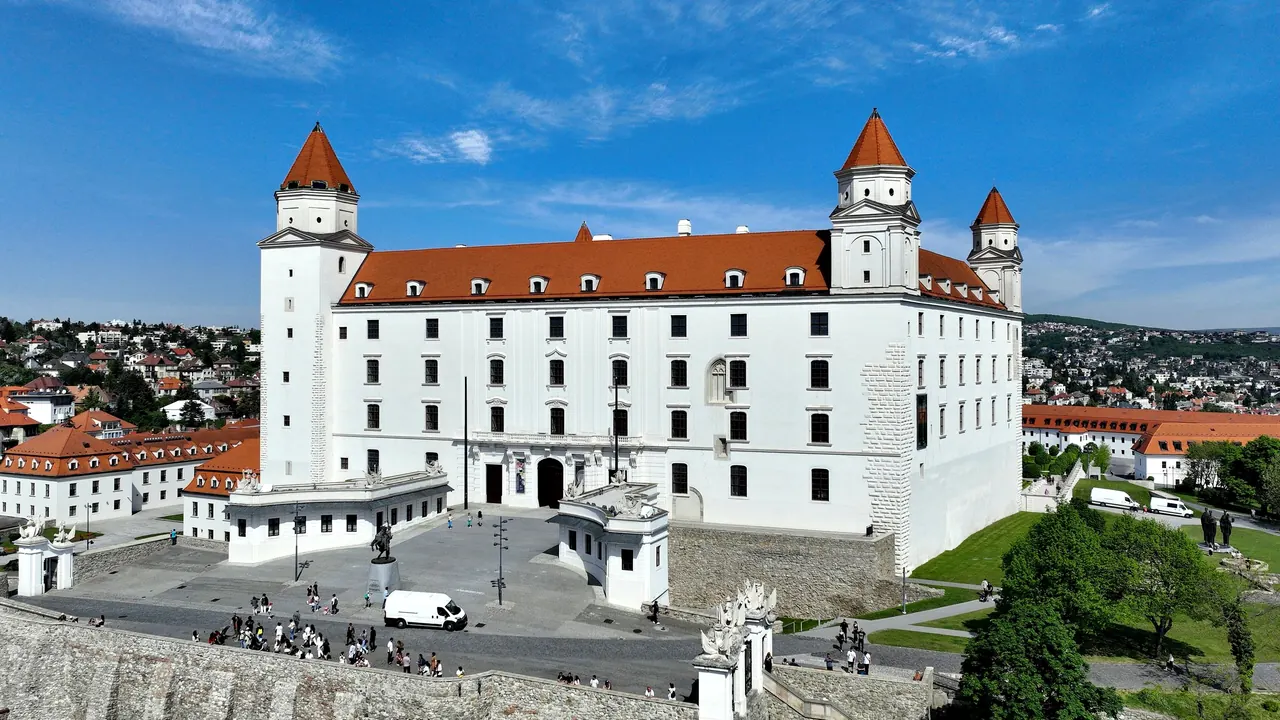
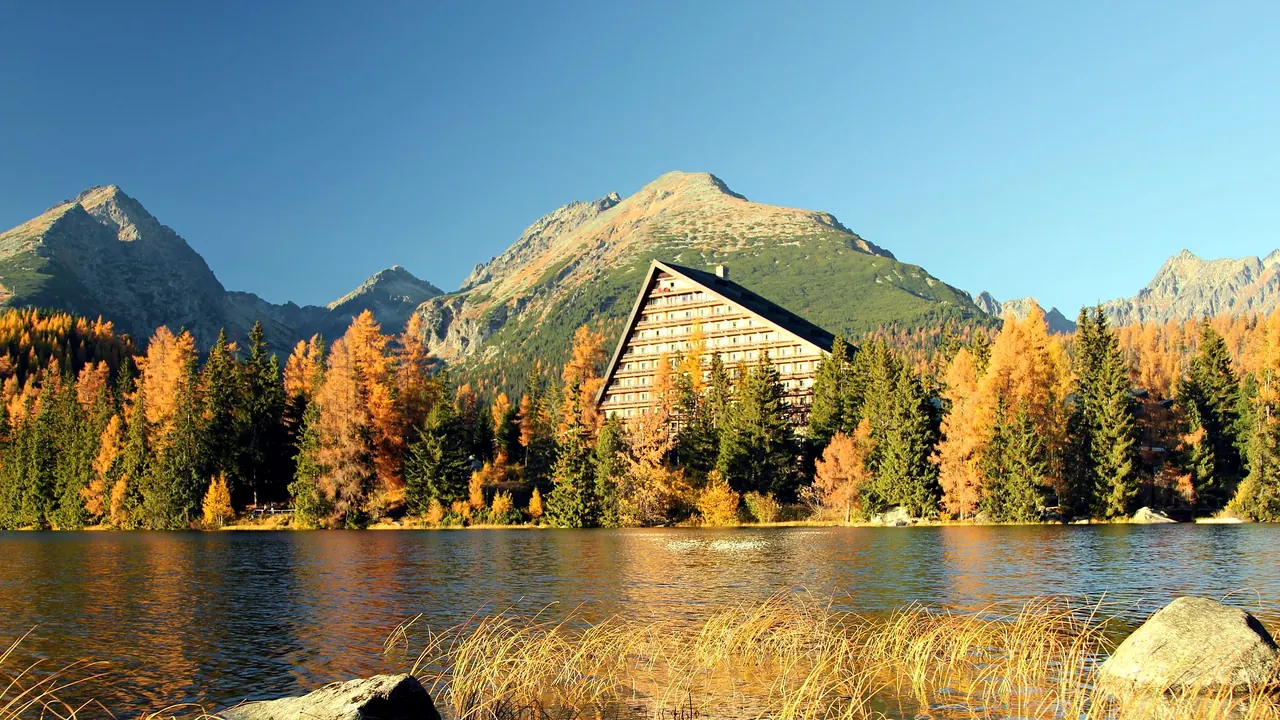
Photos: Bratislava by C.Stadler/Bwag, CC BY-SA 4.0, cropped; High Tatras by Marián Moravčík, Pexels License.
Bratislava or High Tatras?
Our verdict in twelve categories, each scored against the same fixed benchmark cities, and the climate month by month, so you can choose for your trip.
Choose Bratislava for
- live music and the arts
- culture and sights
- nightlife
Bratislava suits a city break built around old streets, an evening at the opera, Small Carpathian wine and a day out to Vienna. It is the better base for travellers who want restaurants, bars and sights a short walk apart. Its wooded hills make a pleasant afternoon out, but they are not the reason to go.
Choose High Tatras for
- nature and the outdoors
- wellness
- families
Walkers, climbers and skiers belong in the High Tatras, where granite peaks, tarns and hut-to-hut trails start a short walk from the resort stops. Families who want fresh air do well here, and so do travellers looking for a restful week of forest paths and hotel pools. Expect early nights, plain mountain food and next to nothing in the way of theatre or shopping.
Scoreboard
Twelve categories on one fixed scale from 0 to 100. The shaded stretch is the gap between the two.
Your match
Pick a travel style or drag the sliders, and both match scores follow your weighting.
Wins on live music and the arts and culture and sights with your weighting.
Wins on nature and the outdoors and wellness with your weighting.
What matters to you?
Category by category
What the scores mean for a trip.
Beaches & swimming
Neither place is for a swimming vacation, but Bratislava at least has lakes. Zlate piesky is a tram ride away, with a sandy shore and warm water in high summer, and the bigger Senec lakes are half an hour out.
In the Tatras the tarns are cold and swimming in them is banned inside the national park. Swimming there means the geothermal pools around Poprad or the Liptov water parks, which work as a break between hikes rather than a lazy afternoon by a lake.
Food & drink
Both serve the same Slovak base of bryndzove halusky and cabbage soup, but Bratislava builds more around it. It has brewpubs, poppy-seed and walnut rolls in old bakeries and, above all, wine bars pouring Veltliner and Frankovka from vineyards at the city's edge.
In the Tatras the menu sticks to game, grilled meat and dumplings in timbered kolíba taverns. Often the best meal is soup at a mountain hut after a climb. The choice soon runs out, and Poprad adds more places to eat, though none of them stand out.
Culture & sights
Bratislava is far ahead here. Its compact Old Town holds St Martin's, where Hungarian kings were crowned, as well as the Primate's Palace and the Blue Church. The castle museum, the National Gallery and the ruins of Devin are close by, enough for a full day or two.
The Tatra resorts have timber and Art Nouveau spa villas, grand hotels and the national park museum in Tatranská Lomnica. For real history you have to drive down to the Spiš towns below the mountains.
Nightlife
On Friday and Saturday nights Bratislava's Old Town fills up with pubs, wine bars and cocktail bars that run into one another. It gets lively enough to draw stag groups, though a night out means a pub crawl rather than clubbing.
The Tatras have nothing like it. Evenings mean dinner, a beer or a borovička, and an early night before the next hike. In the ski season a few après-ski and hotel bars in Tatranská Lomnica and Starý Smokovec stay open later.
Nature & outdoors
Bratislava has pleasant green edges: beech-wood trails up to Kamzik, the steppe meadows of Devinska Kobyla, Danube floodplain forest and a flat cycle route into Austria. These are gentle hills, good for half a day.
The High Tatras are a true alpine range, with granite peaks above 2,600m, more than a hundred tarns and the Tatranská magistrála trail linking huts along the whole chain. Cable cars and the Hrebienok funicular lift walkers high, winter brings skiing, and Slovak Paradise and the Pieniny are within an hour.
Day trips
Bratislava has the wider reach, mainly because Vienna is about an hour away by train or a boat ride up the Danube. Add the Small Carpathian wine villages, Trnava, Roman Carnuntum and the chateaux of Lednice-Valtice, and you have three countries within easy range, mostly by rail.
The Tatras answer with the medieval Spiš towns: Levoča's square and Gothic altar, the huge ruins of Spiš Castle and Kežmarok's wooden church, with Košice and Zakopane further off. These are small places, well worth seeing but easiest to combine with a hire car.
Good for families
The Tatras give children more to do. There is the funicular to Hrebienok and its waterfalls, the pushchair-friendly path around Štrbské Pleso, Belianska cave and summer bobsled runs. Winter brings ski schools and sledging, and the water parks are there for wet days.
Bratislava is safe and easy to walk. Spotting the bronze statues, the Kamzik chairlift, the zoo and the Senec water park fill a couple of days, but you run out of ideas sooner.
Getting around
In Bratislava almost everything a visitor wants is within a short walk, and trams and buses on a single ticket reach Kamzik, the zoo and Devin. Only the lack of a metro slows down longer trips.
The Tatra resorts are spread over about 30km and joined by a narrow-gauge electric railway, with funiculars and cable cars climbing from there. That works well for reaching trailheads, but services are infrequent and the Spiš towns are far easier by car.
Shopping & style
Bratislava's shopping is modest but has some substance. The folk-craft centre sells Modra majolica, lace and blue-print cloth, there are a few design stores and some riverside malls, and Small Carpathian wine makes the best thing to take home. Vienna is close for fashion.
In the Tatras shopping comes down to outdoor gear, souvenirs, smoked sheep's cheese and bottles of local spirit, with plain shopping centres down in Poprad.
Affordability
Costs are much the same in both places and reasonable by Western standards. The difference is where the money goes. In Bratislava cheap beer, transport and pub lunch menus keep daily spending low, and prices only climb on the main squares and along the glass-fronted riverfront.
In the Tatras meals and guesthouses cost far less than in the western Alps, but cable cars and ski passes add up. The large spa hotels cost more, and July, August and Christmas are the dearest times. Staying in Poprad keeps costs down.
Live music & performing arts
Bratislava has a real evening programme. The Slovak National Theatre stages opera and ballet on Hviezdoslav Square, the Slovak Philharmonic plays in the Reduta, and tickets are easy to get from autumn to spring. An autumn music festival and a jazz festival add to the year.
The Tatras have no theatre and no concert hall. Live performance means the occasional folk ensemble in summer and over Christmas, or music with dinner in a tavern.
Wellness & relaxation
The Tatra resorts began as climatic spas, and that slow pace survives. It shows in the big hotels' wellness floors, the geothermal pools at Poprad and Vrbov, and quiet forest walks, which are best outside July and August.
Bratislava has no thermal baths of its own. Relaxing there means hotel spas, slow afternoons in cafés and strolls along the Danube embankment. For proper bathing, take a trip to the Senec water park or the train to the old spa town of Piestany.
When should you go?
Pick your month. The climate figures are measured averages, not a forecast.
Bratislava in July
High Tatras in July
Daytime high, °C
Rainfall in the month, mm
Where the figures come from
Bratislava has no rain gauge within 25 km of the centre, so its rainfall comes from a gridded climate dataset read at the destination rather than from a gauge further away.
Bratislava's sunshine is measured 56 km from the centre, at Wien / Hohe Warte.
High Tatras's station stands 272 m below the city centre, so the centre is likely a little cooler than the figures say.
Temperature and rainfall are climate normals, averaged over the years shown. Bratislava: 1991-2020 normals, Bratislava Ivanka (8.6 km from centre). High Tatras: 1991-2020 normals, Poprad / Tatry (8.4 km from centre).
Bratislava is warmest in July and August, with highs around 27°C and more summer sunshine than the mountains. Summer is also its wettest stretch. May, June and September are the most comfortable months for walking the Old Town and the vineyards. Winters are grey and cold, with highs of only a few degrees and little sun, but that is also when the opera season is in full swing.
The Tatras stay several degrees cooler and peak at about 24°C in August, which is good hiking weather. July is the wettest month in either place, at about 101mm, and weather on the ridges can change fast. The high trails are open from mid-June until November, so late June to early October is the time to walk. September is drier than high summer. From December the resorts turn to skiing, and the mountains get a little more winter sun than Bratislava does.
Which traveller are you?
For an outdoors trip, the High Tatras are the clear choice: alpine peaks, glacial tarns and hut-to-hut trails reached by funicular and cable car, with skiing in winter and Pieniny rafting nearby. Bratislava's forest hills and Danube cycle route are pleasant but gentle.
On a culture and arts trip, Bratislava wins: a coronation cathedral, baroque palaces and a castle museum within a short walk, opera and the Philharmonic in the evening, and Vienna an hour away. The Tatra resorts offer spa villas and little more.
On a family trip with children, the High Tatras fill the days better: the Hrebienok funicular and its waterfalls, a show cave, bobsled runs, ski schools and water parks for rainy days. Bratislava is safe and easy, but after two or three days it runs short of things to do.
Before you go
| Measure | Bratislava | High Tatras |
|---|---|---|
| Official language | Slovak | Slovak |
| Currency | Euro (EUR) | Euro (EUR) |
| Sockets | CE230 V, 50 Hz | CE230 V, 50 Hz |
| Driving side | Right | Right |
| Time zone | UTC+1, UTC+2 in summer | UTC+1, UTC+2 in summer |
| Emergency number | 112 | 112 |
| Elevation | 152 m | 966 m |
| Main airport | M. R. Štefánik Airport (BTS)8 km from centre70 non-stop destinations | Poprad-Tatry Airport (TAT)8 km from centre4 non-stop destinations |
| Public holidays this year | 15 days | 15 days |
By the numbers
| Measure | Bratislava | High Tatras |
|---|---|---|
| Population | 480,902 | 3,749 |
| People per km² | 1,308 | 10 |
| Museums within 10 km | 22 | 1 |
| UNESCO World Heritage sites within 50 km | 2 | 4 |
Where else could you go?
Every comparison below shares a destination with this one, so you can follow Bratislava or High Tatras somewhere new.
- Zakopanevs High Tatras
- Viennavs Bratislava
- Krakowvs High Tatras
- Brnovs Bratislava
- Budapestvs Bratislava
- Grazvs Bratislava