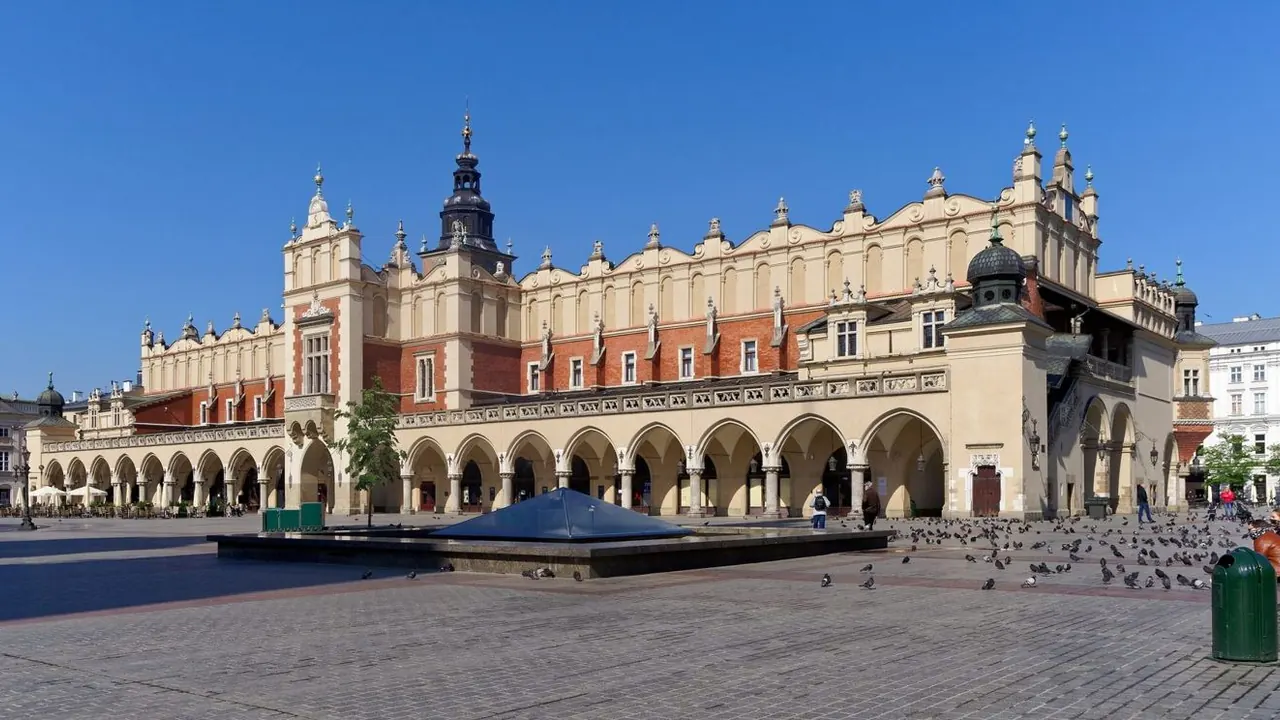
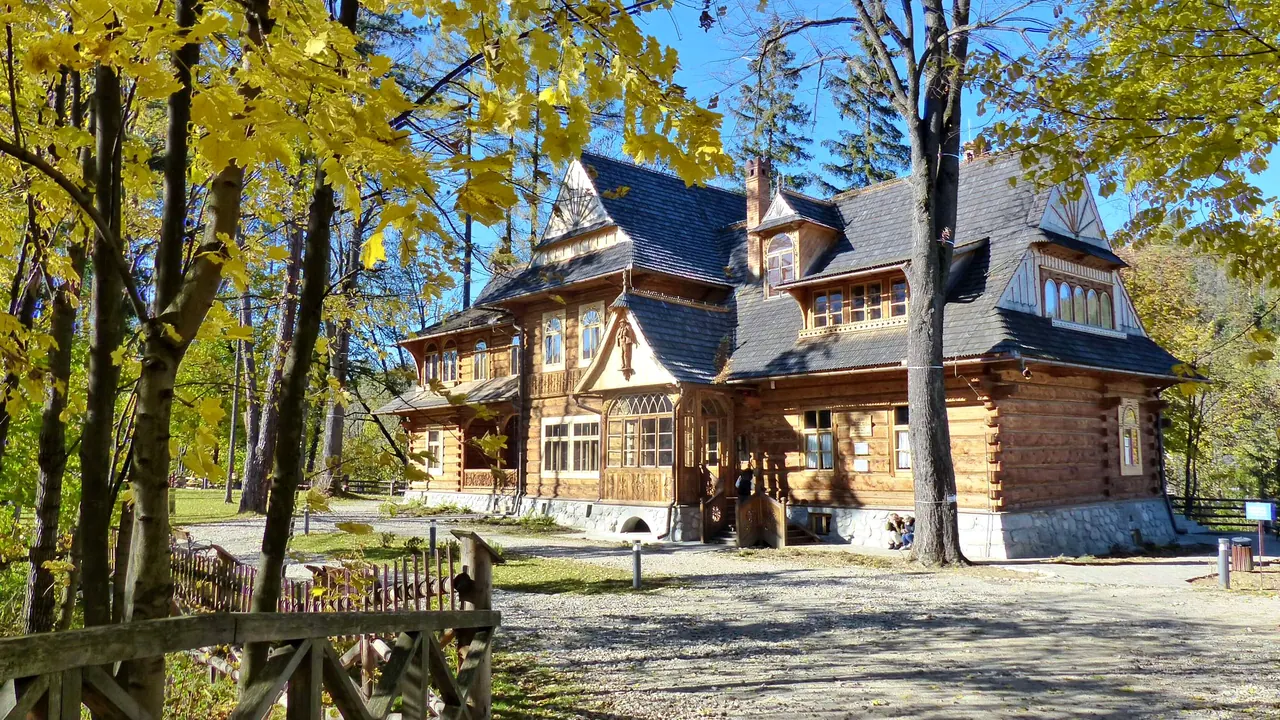
Photos: Krakow by Jakub Hałun, CC BY-SA 4.0, cropped; Zakopane by Wojciech Grzegorz Domagała, CC BY-SA 4.0, cropped.
Krakow or Zakopane?
Our verdict in twelve categories, each scored against the same fixed benchmark cities, and the climate month by month, so you can choose for your trip.
Choose Krakow for
- culture and sights
- nightlife
- live music and the arts
Krakow is the choice for a city trip built around history, food and evenings out. Its medieval centre came through the war intact. Wawel, Kazimierz and the Main Market Square sit within walking distance of each other, and the cellar bars stay open long after the sights close. It is also the better base for Wieliczka and Auschwitz, and the cheaper of the two.
Choose Zakopane for
- wellness
- nature and the outdoors
- families
Zakopane suits travellers who want the mountains to fill the days. The Tatra national park starts where the town's streets end, so a stay means trails, valleys and the cable car up to the ridges, with skiing in winter. After that comes a soak in the thermal pools and a highland supper by an open fire. The town's own sights and nightlife are modest, but that is not why people go there.
Scoreboard
Twelve categories on one fixed scale from 0 to 100. The shaded stretch is the gap between the two.
Your match
Pick a travel style or drag the sliders, and both match scores follow your weighting.
Wins on culture and sights and nightlife with your weighting.
Wins on wellness and nature and the outdoors with your weighting.
What matters to you?
Category by category
What the scores mean for a trip.
Beaches & swimming
Neither place has a beach, and both are far from the Baltic, so the difference lies in the kind of swimming on offer. Krakow has the Zakrzowek quarry, a turquoise lake below limestone cliffs a short tram ride from the centre, with fenced bathing areas open only in summer.
In Zakopane, the glacial lakes are off limits for swimming, and the Czorsztyn reservoir is an hour's drive away. The outdoor thermal pools are warm all year, though, so you can still swim in January there in a way you cannot in Krakow.
Food & drink
Krakow offers more variety. You can eat pierogi and zurek in bread, have lunch in a milk bar, buy zapiekanki at Plac Nowy late at night and drink craft beer or flavoured vodka in Old Town cellar cafés. The top end is thin in both places.
Zakopane's highland cooking is different from Krakow's lowland food: grilled oscypek with cranberry jam, kwaśnica with smoked rib and lamb, often served in timber inns with live fiddlers. The choice is narrow, though. Menus along Krupówki repeat each other, so the best meals are in small family inns on the side streets.
Culture & sights
Here the gap is large. Krakow has one of Central Europe's best-preserved medieval centres, with the Cloth Hall, St Mary's Basilica and its hourly bugle call, Wawel's castle and coronation cathedral, and Jewish Kazimierz. Add the Schindler Factory museum and you have two or three full days of major sights.
Zakopane's heritage is a small local story by comparison: the Zakopane style of wooden architecture, the Tatra Museum, Szymanowski's Villa Atma and the carved grave markers of the Pęksowy Brzyzek cemetery. It is charming, and one day covers it.
Nightlife
Krakow is the place for nights out. Its large student population keeps the brick-vaulted Old Town cellars busy past midnight. Kazimierz's courtyards and shabby-chic bars give the most atmospheric bar crawl, and cheap drinks make bar-hopping the usual evening. Stag groups crowd parts of the Old Town at weekends.
Zakopane's evenings centre on Krupówki, with pubs, a few clubs and inns that get loud during après-ski on winter weekends and at New Year. Outside those peaks, and midweek, the town quietens down, and hikers planning an early start rarely stay out late.
Nature & outdoors
Zakopane is far ahead here. Granite peaks, cirques and glacial lakes begin at the edge of town. Choices range from crocus meadows in Kościeliska to the walk to Morskie Oko, Giewont's cross and Rysy, and the Kasprowy Wierch cable car opens up the high ridges without the climb. The popular trails get very crowded in high season.
Krakow's green spaces are gentle ones: the Planty, the Blonia meadow, the Wolski Forest and the Kosciuszko Mound, plus river cycle paths. Ojcow's limestone valley is close, but for real mountains Krakow visitors make the two-hour trip to the Tatras that Zakopane has on its doorstep.
Day trips
Krakow has the stronger list, because two of Poland's most visited sites are close by. The Wieliczka salt mine, with its underground church, is half an hour away, and Auschwitz-Birkenau, which needs a full day, is about an hour and a half. Kalwaria Zebrzydowska, Wadowice and Czestochowa add pilgrimage and history.
Zakopane's outings are more rural: the painted larch-wood church at Dębno, the log houses of Chochołów, and the Niedzica and Czorsztyn castles facing each other across the reservoir. Across the border, Spiš Castle and Levoča are a strong Slovak day, but weekend traffic can make any of these drives long.
Good for families
Both work well for children, in different ways. Krakow keeps them busy with the car-free square, the fire-breathing Wawel dragon and its cave, the zoo and an indoor water park, and Energylandia is about an hour away. The drawbacks are cobbles that are hard on pushchairs and sights too heavy for younger children.
Zakopane suits families who like being outdoors. They can take the funicular up Gubałówka for slides and the summer toboggan run, walk the flat Kościeliska valley with a pushchair, go sledging and try the nursery slopes in winter, and spend wet days in the thermal water parks.
Getting around
Krakow is easier to get around. The Old Town, Wawel, Kazimierz and Podgorze are all within walking distance, trams cover the rest, and a train runs from the airport. Day trips go by train or bus without a car.
Zakopane's centre is small and Krupówki is pedestrianised, and minibuses run to Kuźnice and the valley trailheads. Getting there and away is the problem: the road jams badly in peak seasons, the train from Krakow winds slowly through the hills, and parking in town is difficult.
Shopping & style
Krakow has more to offer shoppers. Amber, lace and carved boxes fill the medieval Cloth Hall, blue-patterned Boleslawiec pottery is the classic thing to take home, and Kazimierz adds vintage shops and a weekend flea market. Neither town has much in the way of luxury fashion.
Zakopane's shopping is narrower but more particular to the place. The market below Gubałówka sells sheep's-wool sweaters, sheepskins, felt slippers and wheels of oscypek, and Krupówki is the place for outdoor gear. Look for the handmade pieces among the trinkets.
Affordability
Both are cheap by Western European standards, and Krakow is a little cheaper day to day. Milk-bar lunches, trams and city museums cost little. Prices go up mainly around the Main Square and on summer weekends, and dropping into Kazimierz brings them down again.
Zakopane is good value for a mountain resort, with family guesthouses, filling inn meals and cheap minibuses. It does, however, follow the resort calendar: Christmas, New Year and the winter school breaks push room prices up sharply, while spring and autumn are clearly the cheapest times to go.
Live music & performing arts
Krakow gives visitors far more to hear. The Philharmonic and the opera run regular seasons, there are Chopin recitals in churches most evenings, jazz plays in brick cellars through the week, and klezmer fills Kazimierz, ending each summer with the Jewish Culture Festival on Szeroka Street. Its well-known theatre is mostly in Polish.
Zakopane's live culture is small and rooted in folk tradition: the Witkacy Theatre, highland string bands fiddling in the inns, and the August folklore festival with its dance troupes and parades.
Wellness & relaxation
Zakopane is the clear choice for unwinding. It grew up as a health resort, and geothermal water feeds the outdoor pools at Chochołów, Białka Tatrzańska, Bukowina and Szaflary, all within half an hour. A soak there after a day on the trails is part of the routine for many visitors. For quiet, stay on the upper slopes rather than near Krupówki.
Krakow has no bathing culture of its own, and the hot springs it points visitors to are the ones next to Zakopane. Inside the city, relaxing means hotel spas, the water park saunas or a salt-air session deep in Wieliczka.
When should you go?
Pick your month. The climate figures are measured averages, not a forecast.
Krakow in July
Zakopane in July
Daytime high, °C
Rainfall in the month, mm
Where the figures come from
Zakopane has no rain gauge within 25 km of the centre, so its rainfall comes from a gridded climate dataset read at the city rather than from a gauge further away.
Zakopane's sunshine is measured 34 km from the centre, at Poprad / Tatry.
Temperature and rainfall are climate normals, averaged over the years shown. Krakow: 1991-2020 (sunshine 1961-1990) normals, Krakow (10.1 km from centre). Zakopane: 1999-2020 (sunshine 1991-2020, rainfall 1991-2020) normals, Zakopane (0.2 km from centre).
Krakow is warmer and drier. From late May to early September, days reach the low to mid twenties, about 25°C in July. That is pleasant weather for walking the Old Town and sitting by the Vistula, and it is also when the quarry lake opens for swimming. Rain in Krakow peaks in summer at about 100mm in July. Winter is near freezing and very grey, with only a few hours of sunshine a day, so it suits museums and cellars more than strolling.
Zakopane runs a few degrees cooler all year, at about 21°C at the height of summer. That is good hiking weather, but this is also when the mountains are wettest, with about 176mm of rain in July, so plan the high routes for settled mornings. September is drier and still mild, which makes it a good month for the trails. January is around 0°C, the snow season for skiing and steaming outdoor pools. The town also gets clearly more sunshine than Krakow in every month, especially in winter.
Which traveller are you?
On a culture and arts trip, Krakow is the clear pick. It has Wawel's royal cathedral, the Veit Stoss altarpiece, Kazimierz's synagogues and Leonardo's Lady with an Ermine, and in the evenings there are Chopin recitals and jazz. Zakopane's wooden villas and museums fill about a day.
For an outdoors trip, Zakopane wins easily. You can walk from town into the Tatras, from easy valley walks to Rysy and the chained Orla Perć ridge. Krakow's best outdoor options are city parks or long day trips south.
On a relaxing and wellness trip, Zakopane is the better choice. Outdoor thermal pools steam with views of the peaks within half an hour of town, and the place began as a mountain health resort. Krakow offers hotel spas and salt-air sessions underground at Wieliczka.
Before you go
| Measure | Krakow | Zakopane |
|---|---|---|
| Official language | Polish | Polish |
| Currency | Zloty (PLN) | Zloty (PLN) |
| Sockets | CE50 Hz | CE50 Hz |
| Driving side | Right | Right |
| Time zone | UTC+1, UTC+2 in summer | UTC+1, UTC+2 in summer |
| Emergency number | 112 | 112 |
| Elevation | 219 m | 837 m |
| Main airport | Kraków John Paul II International Airport (KRK)11 km from centre132 non-stop destinations | Kraków John Paul II International Airport (KRK)87 km from centre132 non-stop destinations |
| Public holidays this year | 14 days | 14 days |
By the numbers
| Measure | Krakow | Zakopane |
|---|---|---|
| City population | 804,237 | 25,770 |
| People per km² | 2,459 | 306 |
| Museums within 10 km | 113 | 18 |
| UNESCO World Heritage sites within 50 km | 4 | 2 |
Where else could you go?
Every comparison below shares a destination with this one, so you can follow Krakow or Zakopane somewhere new.