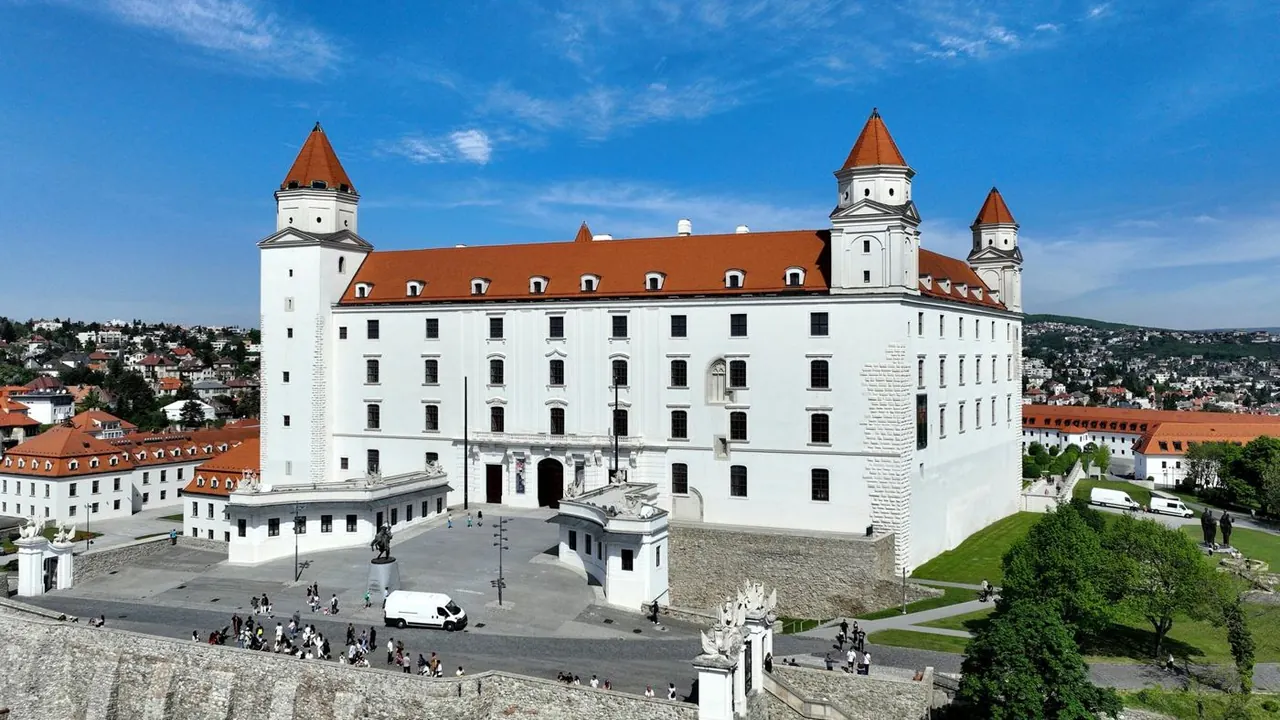
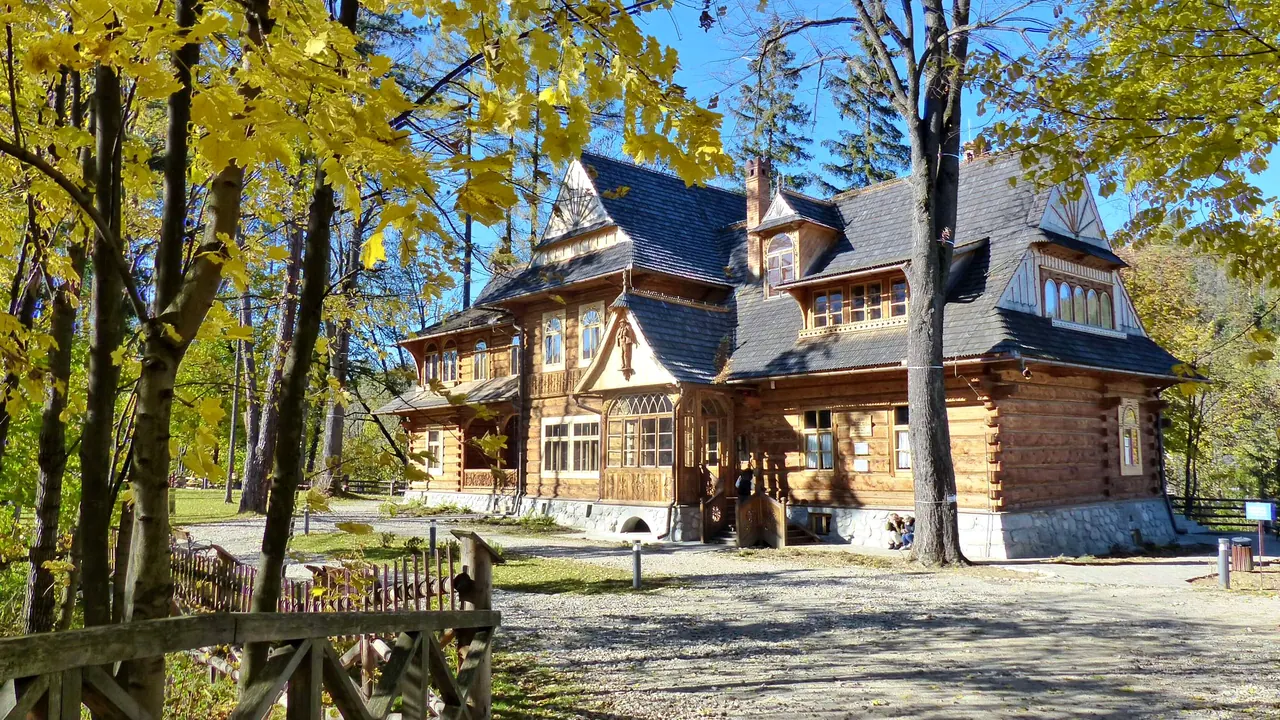
Photos: Bratislava by C.Stadler/Bwag, CC BY-SA 4.0, cropped; Zakopane by Wojciech Grzegorz Domagała, CC BY-SA 4.0, cropped.
Bratislava or Zakopane?
Our verdict in twelve categories, each scored against the same fixed benchmark cities, and the climate month by month, so you can choose for your trip.
Choose Bratislava for
- day trips
- live music and the arts
- getting around
Bratislava suits a relaxed city vacation where the town is the base and the region is the attraction. Its baroque Old Town, castle and opera fill a couple of days. After that it works as a launch pad: Vienna is an hour away, and wine villages and castles lie just beyond the tram lines. It is the easier choice for people who want to stay on foot, eat and drink well and travel without a car.
Choose Zakopane for
- nature and the outdoors
- wellness
- families
Zakopane is for people who come for the mountains and care less about the town. The Tatras start at the end of the streets, so hiking, skiing and the evening thermal soak shape every day, and children have more to do outdoors than in Bratislava. The cost is a smaller cultural offer, a wetter summer and roads that jam at peak times, but anyone who wants trails over townscapes will find the trade worthwhile.
Scoreboard
Twelve categories on one fixed scale from 0 to 100. The shaded stretch is the gap between the two.
Your match
Pick a travel style or drag the sliders, and both match scores follow your weighting.
Too close to call, 1 point apart
Wins on day trips and live music and the arts with your weighting.
Wins on nature and the outdoors and wellness with your weighting.
What matters to you?
Category by category
What the scores mean for a trip.
Beaches & swimming
Neither city is anywhere near the sea, but Bratislava at least offers easy summer swimming. Zlate piesky is a sandy lake reached by tram, and the bigger Senec lakes are half an hour away, warm in July and August.
Zakopane's glacial lakes are off limits for bathing, and the nearest open water is the Czorsztyn reservoir, an hour's drive away. In practice, swimming there means the heated outdoor thermal pools, which have the advantage of working in January too.
Food & drink
The two are evenly matched, both serving hearty regional cooking with a narrow range beyond it. What sets Bratislava apart is drink: Small Carpathian Veltliner and Frankovka from vineyards at the city's edge, brewpubs, and walnut and poppy-seed rolls from old bakeries.
Zakopane's character comes from the setting. Grilled oscypek with cranberry jam is sold from street stalls, while kwaśnica and lamb are served in timber inns with open fires and fiddlers. In both places the best meals are away from the main tourist streets, which in Zakopane means away from Krupówki.
Culture & sights
Bratislava has the deeper sightseeing, mostly because it was once a royal city. Hungarian kings were crowned at St Martin's, and the baroque palaces, the castle museum, the national gallery and the Most SNP bridge together cover several centuries in a compact Old Town.
Zakopane's heritage is smaller and more specialised: the steep-roofed villas of the Zakopane style, the Tatra Museum and the carved grave markers at Pęksowy Brzyzek. It is distinctive and well worth an afternoon, but people come for the mountains, not the museums.
Nightlife
Bratislava has the livelier and steadier going-out scene. On weekends the Old Town fills with wine bars, cocktail bars and pubs, helped by students and visiting groups. It is a pub crawl rather than a clubbing city.
Zakopane's evenings depend on the season. Krupówki gets rowdy with après-ski crowds on winter weekends and around New Year, but it goes quiet midweek and out of season, and hikers with dawn starts rarely stay out late.
Nature & outdoors
This is Zakopane's biggest advantage. It sits under the only truly alpine part of the Carpathians, with granite peaks, glacial lakes like Morskie Oko and routes ranging from flat crocus meadows in Kościeliska to the chained ridge of Orla Perć. Winter adds skiing and ski touring, and summer brings rafting in the Pieniny gorge.
Bratislava's outdoors is gentler and closer to town. There are beech-wood trails up to Kamzik, steppe meadows on Devinska Kobyla, floodplain forests and the flat Danube cycle route into Austria. It is good for an active afternoon, but the hills never become mountains.
Day trips
Bratislava has the stronger range of outings, starting with Vienna an hour away by train or by boat up the Danube. Add the Small Carpathian wine villages, Roman Carnuntum, Lednice-Valtice and Pannonhalma, and you have three countries within easy reach.
Zakopane's best outings are worth making but take more effort. Kraków and the Wieliczka salt mine are two hours away by road. Nearer options include the painted wooden church at Dębno, the log houses of Chochołów and Spiš Castle across the Slovak border. Weekend traffic can stretch any of these trips badly.
Good for families
Zakopane gives children more to do. The Gubałówka funicular has a toboggan run at the top, the valley paths are flat enough for pushchairs, and winter brings sledging and nursery slopes. The thermal water parks rescue any rainy day.
Bratislava is safe and easy to manage with children, and the bronze statues, the zoo, the Kamzik chairlift and the Senec water park make good outings. Little is built specifically for children, though, and most families will have run through it in two or three days.
Getting around
Bratislava is the simpler place to arrive in and get around. The Old Town, castle and riverfront are within a short walk, and one ticket covers the trams and buses out to Devin and the lakes. Only longer trips across the river feel slow without a metro.
Zakopane's centre is just as walkable, and minibuses run reliably to Kuźnice and the valley trailheads. The problem is getting there: the road jams on winter weekends and in summer, the train from Kraków is slow, and parking is a struggle.
Shopping & style
Neither is a shopping destination, though Bratislava offers slightly more. It has a state folk-craft centre selling Modra majolica and blue-print cloth, riverside malls for the usual chains, Small Carpathian wine to take home and Vienna's boutiques a train ride away.
Zakopane's shopping is mostly souvenirs, with one real strength: the market below Gubałówka sells thick wool sweaters, sheepskins, felt slippers and wheels of oscypek, alongside outdoor-gear shops on Krupówki.
Affordability
Day to day, the two cost much the same. Beer, local transport and a hearty pub or inn lunch are cheap in both, well below Western European prices. The real difference is when prices go up. In Bratislava the rises are milder and limited to a few peaks: rooms cost more on the busiest summer weekends and during big events. The main squares and the glass-fronted riverside complexes also charge more, but a street or two away prices drop back.
Zakopane works like a resort, so when you go matters more than where you eat. Rooms fill up and cost noticeably more at Christmas, New Year, the winter school breaks and on long summer weekends, and they need booking early. Spring and autumn are the cheapest seasons.
Live music & performing arts
Bratislava is the place for a night out at a performance. The Slovak National Theatre stages opera and ballet in its ornate house on Hviezdoslav Square, and the Philharmonic plays in the Reduta. Tickets are easy to get, and an autumn music festival adds to the season.
Zakopane's stage life is folk-based and on a smaller scale: the Witkacy Theatre, highland string bands fiddling in the inns, and the mountain folklore festival filling the streets each August. It is charming, but formal concerts are rare.
Wellness & relaxation
Rest in Bratislava is a city kind of rest: a late breakfast, a slow walk along the Danube embankment, a glass of Small Carpathian wine on an Old Town square as the light goes. It is good for the mind more than the body, and anyone after hot water gives up a day to travel for it.
Zakopane is the better place to unwind, because recovery is part of the daily routine there. It grew up as a health resort for its mountain air, and a typical day runs from effort to ease: a morning in the valleys, then an evening in open-air water facing the peaks, which works as well in falling snow as in July. The catch is that the centre is crowded and noisy in peak season, so the calm is found on the edges of town rather than in it.
When should you go?
Pick your month. The climate figures are measured averages, not a forecast.
Bratislava in July
Zakopane in July
Daytime high, °C
Rainfall in the month, mm
Where the figures come from
Bratislava has no rain gauge within 25 km of the centre, so its rainfall comes from a gridded climate dataset read at the city rather than from a gauge further away.
Bratislava's sunshine is measured 56 km from the centre, at Wien / Hohe Warte.
Zakopane has no rain gauge within 25 km of the centre, so its rainfall comes from a gridded climate dataset read at the city rather than from a gauge further away.
Zakopane's sunshine is measured 34 km from the centre, at Poprad / Tatry.
Temperature and rainfall are climate normals, averaged over the years shown. Bratislava: 1991-2020 normals, Bratislava Ivanka (8.6 km from centre). Zakopane: 1999-2020 (sunshine 1991-2020, rainfall 1991-2020) normals, Zakopane (0.2 km from centre).
Bratislava has a proper lowland summer. June to August are warm, with highs around 27°C, the lakes are swimmable and the long sunny evenings suit café terraces. Rain is moderate all year and peaks only gently in midsummer. May and September are the most comfortable months for walking the Old Town and the vineyard hills, while December to February are cold and grey, and better spent indoors at the opera.
Zakopane stays cooler all year, which helps hikers. July only reaches about 21°C, but summer is also the wettest season, with around 176mm in July, often as heavy mountain showers, so walkers should plan early starts and keep a day spare. September and early October are often the steadiest for the high trails. From December to March daytime highs sit near 0°C, which brings the skiing, sledging and steaming outdoor pools that Bratislava has no answer to.
Which traveller are you?
On an outdoors trip, Zakopane is the clear pick. The Tatra national park begins at the edge of town, with valley walks, the Kasprowy Wierch cable car and serious summits like Rysy. Bratislava's wooded hills and Danube cycle paths are pleasant but gentle.
For a relaxing and wellness trip, Zakopane also comes out ahead. Several thermal complexes with outdoor pools facing the peaks lie within half an hour, and a soak there is a daily habit. Bratislava has hotel spas and calm cafés, and the proper baths need a day trip.
On a culture and arts trip, Bratislava is the better base. It has the coronation cathedral, the castle, the national gallery and evenings of opera or the philharmonic, with Vienna's museums an hour away. Zakopane's wooden architecture and folk music are charming but fill only a day.
Before you go
| Measure | Bratislava | Zakopane |
|---|---|---|
| Official language | Slovak | Polish |
| Currency | Euro (EUR) | Zloty (PLN) |
| Sockets | CE230 V, 50 Hz | CE50 Hz |
| Driving side | Right | Right |
| Time zone | UTC+1, UTC+2 in summer | UTC+1, UTC+2 in summer |
| Emergency number | 112 | 112 |
| Elevation | 152 m | 837 m |
| Main airport | M. R. Štefánik Airport (BTS)8 km from centre68 non-stop destinations | Kraków John Paul II International Airport (KRK)87 km from centre132 non-stop destinations |
| Public holidays this year | 15 days | 14 days |
By the numbers
| Measure | Bratislava | Zakopane |
|---|---|---|
| City population | 480,902 | 25,770 |
| People per km² | 1,308 | 306 |
| Museums within 10 km | 22 | 18 |
| UNESCO World Heritage sites within 50 km | 2 | 2 |
Where else could you go?
Every comparison below shares a destination with this one, so you can follow Bratislava or Zakopane somewhere new.
- Viennavs Bratislava
- Krakowvs Zakopane
- Brnovs Bratislava
- Budapestvs Bratislava
- Grazvs Bratislava
- Budapestvs Zakopane