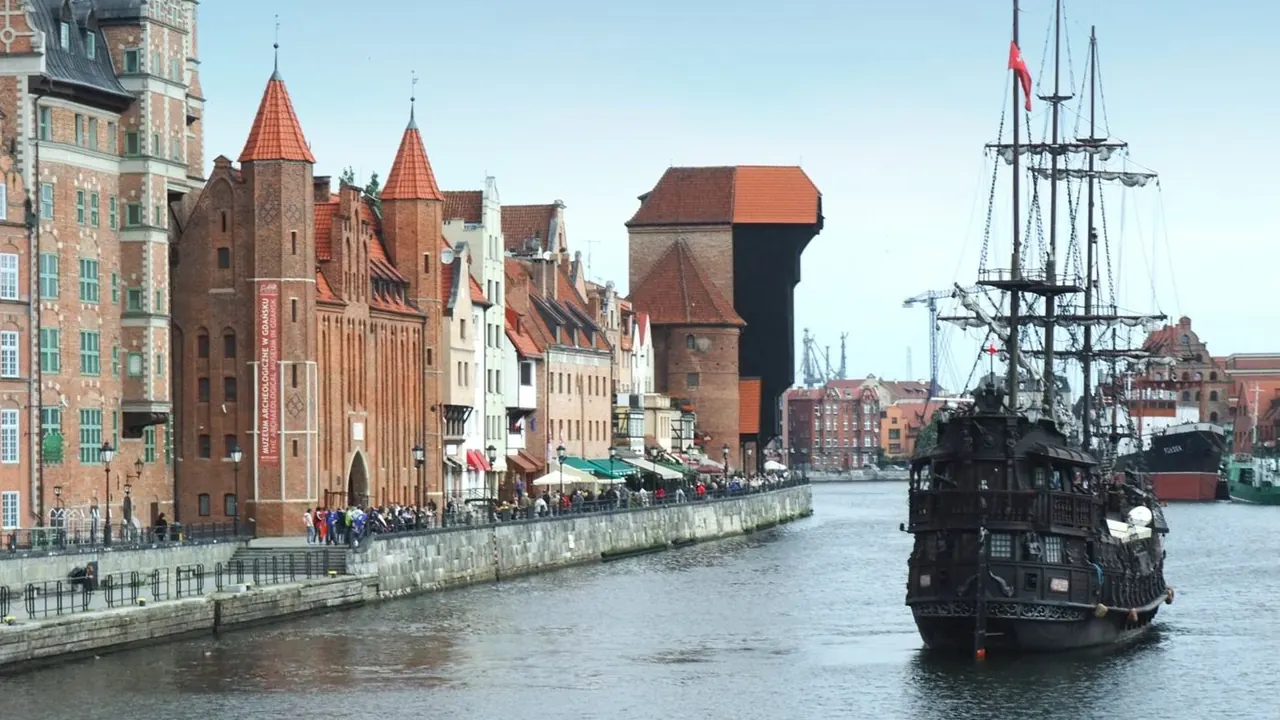
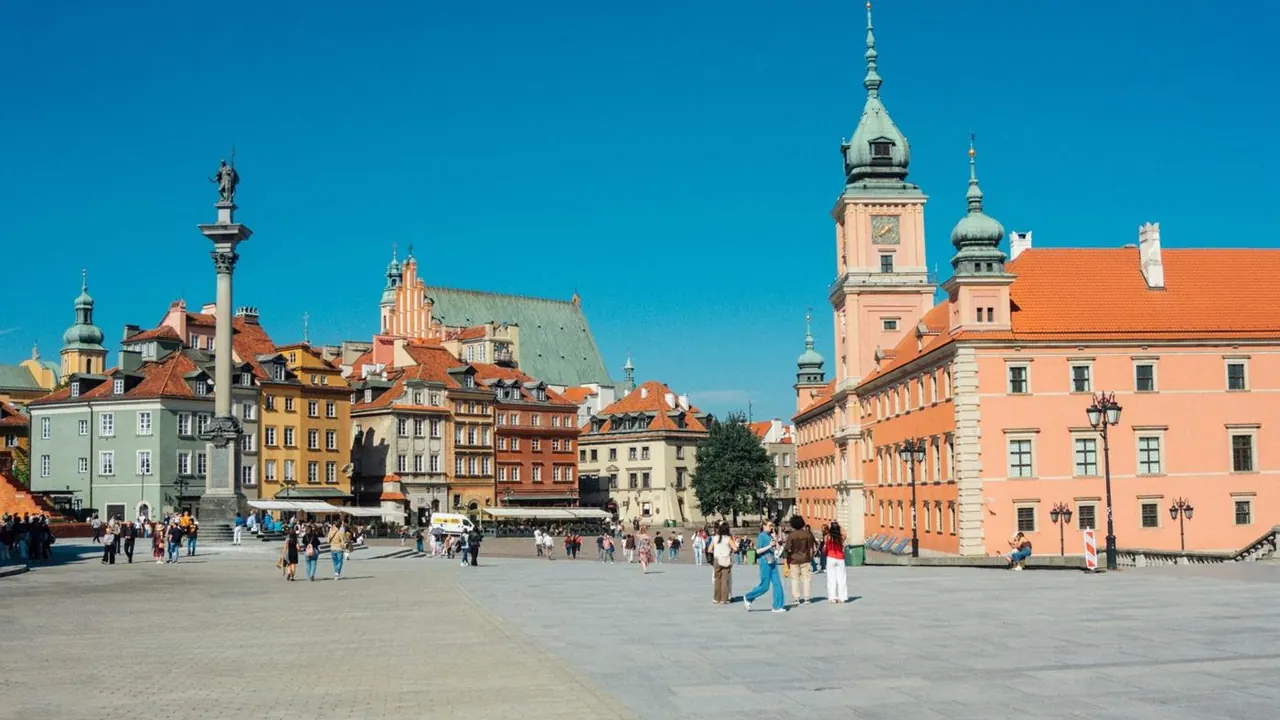
Photos: Gdansk by Nikater, CC BY-SA 3.0, cropped; Warsaw by Raymond Petrik, Pexels License.
Gdansk or Warsaw?
Our verdict in twelve categories, each scored against the same fixed benchmark cities, and the climate month by month, so you can choose for your trip.
Choose Gdansk for
- beaches
- nature and the outdoors
- day trips
Gdansk suits a summer trip that mixes a historic port town with the sea. You get Hanseatic streets, the shipyard where Solidarity began, sandy Baltic beaches a tram ride away, forest trails behind Oliwa and Sopot, and Malbork Castle for a day out. It is the better choice if you want the coast and the countryside as part of your stay, and a quieter evening at the end of it.
Choose Warsaw for
- nightlife
- shopping
- live music and the arts
Warsaw is for travellers who want a capital. The meals are more ambitious and the nights out run later. Music has real weight here too, from the national opera to Chopin recitals in palaces. Its museums on war, uprising and Jewish history match anything in Gdansk. The trade-off is that there's no sea and the countryside is flat, so this is a trip about the city itself.
Scoreboard
Twelve categories on one fixed scale from 0 to 100. The shaded stretch is the gap between the two.
Your match
Pick a travel style or drag the sliders, and both match scores follow your weighting.
Too close to call, level with your weighting
Wins on beaches and nature and the outdoors with your weighting.
Wins on nightlife and shopping with your weighting.
What matters to you?
Category by category
What the scores mean for a trip.
Beaches & swimming
This is the biggest gap between the two. Gdansk has real Baltic beaches within the city: fine sand from Brzeźno to Sopot, quieter Stogi backed by pines, and the Hel Peninsula further out. The sea stays cool, but in summer an afternoon on the shore fits easily into a city stay.
Warsaw has no coast within easy reach. Its summer beaches are the sandbanks of the Vistula, which are for lounging and drinks rather than swimming. A real swim means the Zegrze reservoir or an outdoor pool.
Food & drink
Both cities serve the same Polish basics, from pierogi and żurek to cheap milk-bar lunches, but Warsaw takes the cooking further. Its chefs build tasting menus from game, forest mushrooms and fermented vegetables, and the converted factories and market halls hold food courts and wine bars.
Gdansk has its strength in the sea. Smoked and fried fish, herring and Kashubian country cooking are the things to order, and Goldwasser is the local liqueur. Skip the restaurants along Długa, which mostly serve visitors, and eat in Wrzeszcz, the shipyard area or Sopot.
Culture & sights
The two are closely matched, and both tell the story of a city rebuilt after 1945. In Gdansk the attraction is a merchant port. You walk the Royal Way past Artus Court and the Neptune Fountain to the medieval crane, with the vast brick bulk of St Mary's above. The twentieth century is told on the spot: the war began at Westerplatte, and Solidarity started in the shipyard.
Warsaw has the grander, royal side. There is the UNESCO-listed rebuilt Old Town and Royal Castle, and the Royal Route runs on to Łazienki and Wilanów. It also has more of the great museums, with the Warsaw Rising Museum and POLIN alongside the National Museum and the Chopin Museum.
Nightlife
Warsaw is the stronger city for going out, and it keeps going all year. Weekends fill Mazowiecka Street and the streets around Nowy Świat, the pavilion bars run cheap drinks until morning, and the courtyards and factories of Praga host techno nights.
Gdansk spreads its evenings across the Tricity. There are quiet pubs in the Main Town, student bars in Wrzeszcz and warehouse nights at the shipyard. It only really comes alive in summer, when the clubs on Sopot's Monte Cassino street fill up.
Nature & outdoors
Gdansk has more variety. Wooded hills rise straight behind Oliwa and Sopot, and a coastal cycle path runs to Gdynia. The Kashubian lakes lie to the west, and the Bay of Puck draws kitesurfers and windsurfers.
Warsaw offers space rather than scenery. Kampinos National Park, with its inland dunes, marshes and elk, begins at the city's edge, and the wild eastern bank of the Vistula is unusual for a capital. Beyond that it is flat lowland with no sea or hills.
Day trips
Gdansk has the stronger day trips, led by Malbork, the Teutonic Knights' castle, about 35 minutes away by train. Sopot and Gdynia make easy half-days. Frombork, Pelplin and the Kashubian villages add more, and in summer boats run to Hel.
From Warsaw the choice thins out sooner. Łódź's factory palaces and Lublin's old town work as day trips, and Chopin's birthplace at Żelazowa Wola and the Nieborów and Arkadia gardens are closer. Toruń, though, is better as an overnight stay from Warsaw, while from Gdansk it makes a long but manageable day.
Good for families
Both are safe, easy cities with children, and both have a large zoo. What sets them apart is the season. Gdansk is a summer place for families, with shallow, sandy beaches, Gdynia's aquarium, the Hevelianum hilltop fort and boat trips to the Sopot pier.
Warsaw holds up better year-round. The Copernicus Science Centre and its planetarium can fill a whole day, and indoor water parks take families through the winter. In both cities the major war museums suit older children better.
Getting around
Both are easy to get around without a car. Gdansk has a small, flat, pedestrian centre that you see on foot. The SKM commuter trains then run along the coast through Oliwa and Sopot to Gdynia, so the main effort is the length of the Tricity.
Warsaw's sights are spread out across wide post-war avenues. Trams and two metro lines do the work there, and you'll ride them more often.
Shopping & style
Warsaw is the better city for shopping, though neither has great shopping streets. It has the big malls, a luxury department store and the designer boutiques of Mokotowska Street, along with Hala Mirowska and weekend flea markets selling communist-era objects.
Gdansk's real draw is amber, sold in the workshops along Mariacka Street. In summer the centuries-old St Dominic's Fair fills the old town with crafts and antiques.
Affordability
Both are good value by Western European standards, with cheap transport, modest museum tickets and inexpensive meals. The difference is when room rates rise. In Gdansk they climb in July and August, when Poles crowd to the coast and Sopot charges seaside rates. In Warsaw business travel pushes up central hotels on weekdays and during trade fairs, so weekends there are the cheaper time.
Live music & performing arts
Warsaw has the deeper programme. The national opera and ballet play the Grand Theatre's huge stage, and the National Philharmonic runs a full season. Chopin recitals run all year, with free concerts at his monument in Łazienki on summer Sundays, and the jazz cellars have a long history.
Gdansk has a decent season on a smaller scale. There is the Baltic Opera, the Philharmonic in its old power station, and a Shakespeare festival at the theatre with the opening roof. Organ recitals in Oliwa Cathedral are the local tradition to catch.
Wellness & relaxation
Neither city is a place to come for wellness, and both rely on hotel spas and saunas. Gdansk has Sopot's grand old spa hotels by the sea, plus morsowanie, the winter sea-dipping that locals take up on cold weekend mornings. Warsaw has the towel-waving sauna rituals of its water parks, the graduation tower at Konstancin-Jeziorna, and slow mornings in Łazienki to offset a brisk capital pace.
When should you go?
Pick your month. The climate figures are measured averages, not a forecast.
Gdansk in July
Warsaw in July
Daytime high, °C
Rainfall in the month, mm
Where the figures come from
Gdansk has no rain gauge within 25 km of the centre, so its rainfall comes from a gridded climate dataset read at the city rather than from a gauge further away.
Gdansk's sunshine is measured 55 km from the centre, at Elblag.
Temperature and rainfall are climate normals, averaged over the years shown. Gdansk: 1991-2020 normals, Gdansk-Rebiechowo (12.7 km from centre). Warsaw: 1991-2020 normals, Warszawa-Okecie (7.7 km from centre).
Both cities are at their best from late May to early September. December to February is the cold heart of the year in both, with daytime highs near freezing and short, dark days. November and March are chilly rather than freezing, fine for museums but raw for long walks. In summer Gdansk stays a few degrees cooler and breezier, peaking at about 22°C, so sightseeing stays comfortable even in midsummer. Warsaw is the warmer, sunnier inland city. It reaches about 25°C in July and August, and its long bright days suit walking the streets and evenings on the Vistula boulevards.
Only Gdansk has a sea, and the Baltic reaches just 19°C in August, so swimming there really means July and August. July is the wettest month in both cities, with around 85mm in Gdansk and a little less in Warsaw. In September and October Gdansk has more rain and less sun, which makes late spring the better shoulder season on the coast. In Warsaw, September is still a good month for exploring on foot.
Which traveller are you?
On a beach and sun trip, Gdansk is the clear pick. Wide, pale sand runs from Brzeźno through Jelitkowo to Sopot, and shallow water makes it easy for children. Warsaw is inland and only offers sunbathing on the Vistula's sandy banks.
For a food and nightlife trip, choose Warsaw. Its modern chefs cook tasting menus from forest and river produce, and the pavilion bars and Praga's techno nights keep people out until morning. Gdansk mostly offers hearty cooking and a nightlife that peaks in Sopot in summer.
On an outdoors trip, Gdansk gives you more variety. There are beech woods and ravines in the Tricity Landscape Park, the Kashubian lakes are about an hour away, and kitesurfing water lies off the Hel Peninsula. Warsaw has Kampinos forest, but around it the land is flat lowland.
Before you go
| Measure | Gdansk | Warsaw |
|---|---|---|
| Official language | Polish | Polish |
| Currency | Zloty (PLN) | Zloty (PLN) |
| Sockets | CE50 Hz | CE50 Hz |
| Driving side | Right | Right |
| Time zone | UTC+1, UTC+2 in summer | UTC+1, UTC+2 in summer |
| Emergency number | 112 | 112 |
| Elevation | 11 m | 118 m |
| Main airport | Gdańsk Lech Wałęsa Airport (GDN)13 km from centre72 non-stop destinations | Warsaw Chopin Airport (WAW)8 km from centre172 non-stop destinations |
| Public holidays this year | 14 days | 14 days |
By the numbers
| Measure | Gdansk | Warsaw |
|---|---|---|
| City population | 487,834 | 1,862,402 |
| People per km² | 714 | 3,601 |
| Museums within 10 km | 34 | 117 |
| UNESCO World Heritage sites within 50 km | 2 | 1 |
| Swim season, months above 21 °C | None | - |
Where else could you go?
Every comparison below shares a destination with this one, so you can follow Gdansk or Warsaw somewhere new.