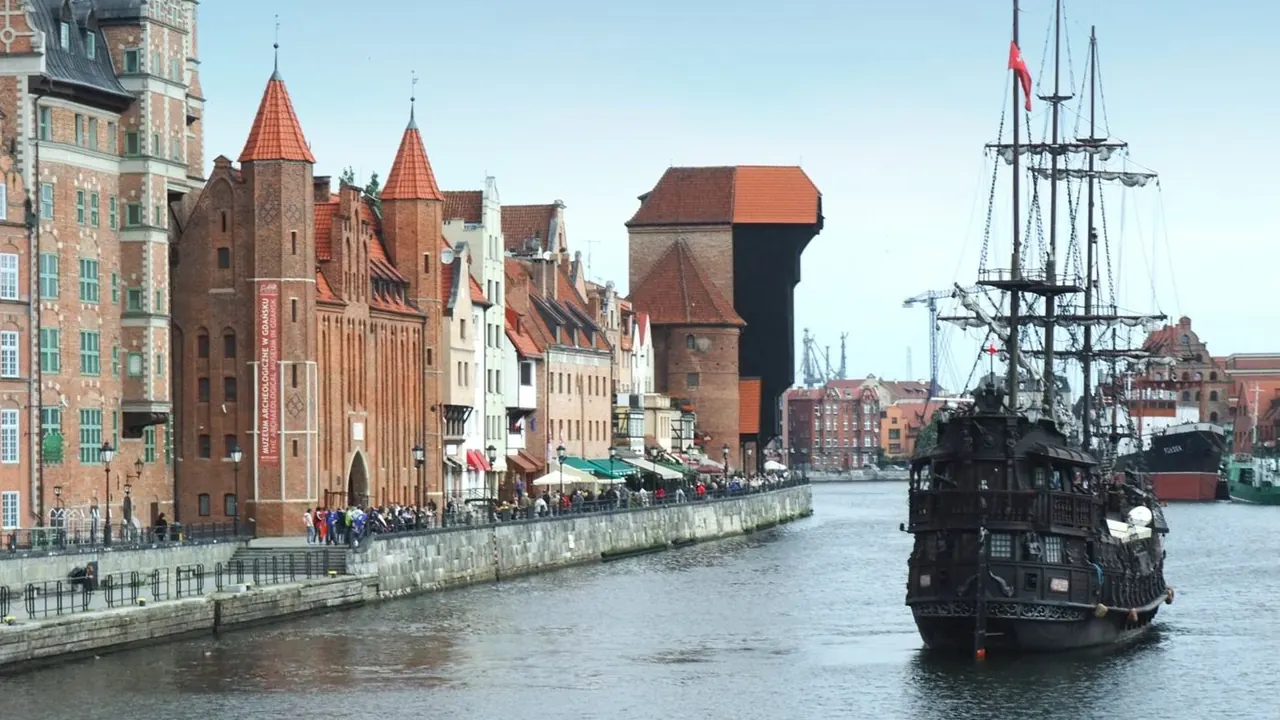
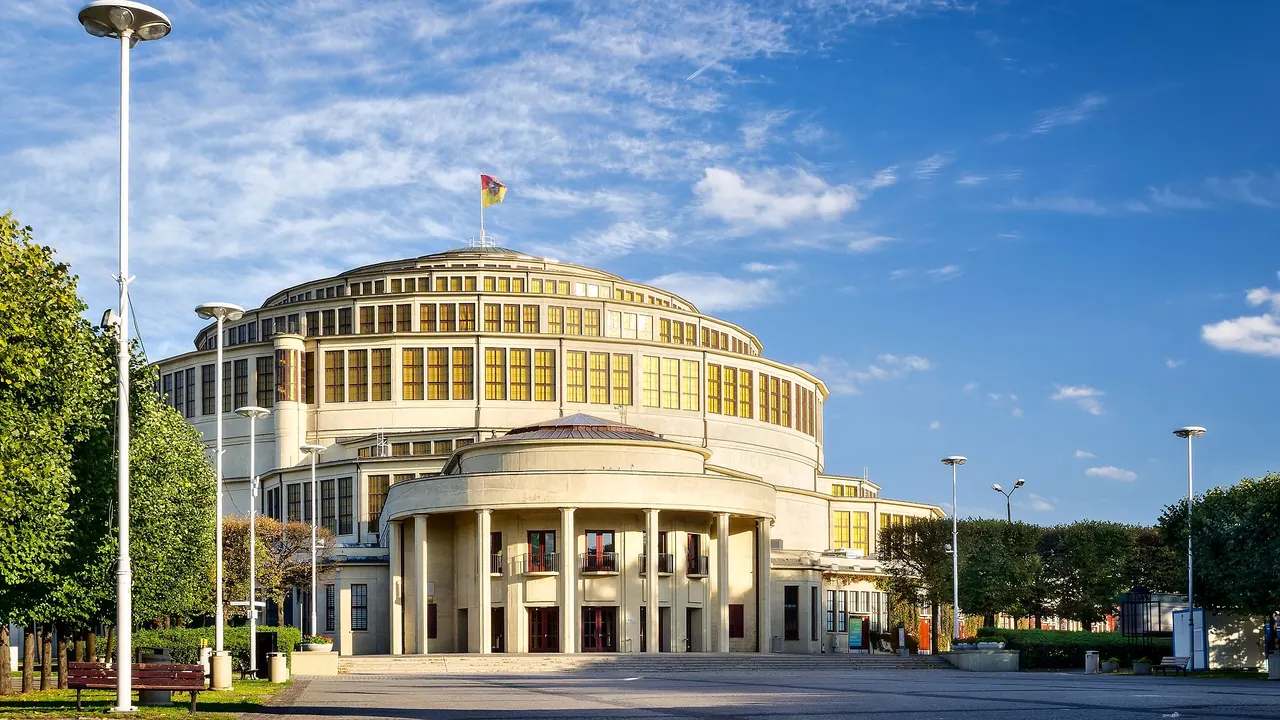
Photos: Gdansk by Nikater, CC BY-SA 3.0, cropped; Wroclaw by Jar.ciurus, CC BY-SA 3.0 PL, cropped.
Gdansk or Wroclaw?
Our verdict in twelve categories, each scored against the same fixed benchmark cities, and the climate month by month, so you can choose for your trip.
Choose Gdansk for
- beaches
- getting around
- wellness
Gdansk is the choice for a summer city trip that also reaches the sea. Its Hanseatic Main Town sits a tram ride from long sandy beaches, the Tricity strings Sopot and Gdynia along the same coast, and its twentieth-century museums at Westerplatte and the shipyard give it historical weight. Come for the brick port city, the Baltic air and Malbork by train.
Choose Wroclaw for
- nightlife
- prices
- live music and the arts
Travellers who care more about evenings out, concerts and keeping costs down will get more from Wroclaw. Its student bars cluster in the cellars and courtyards around one great Market Square, the National Forum of Music anchors a serious concert life, and rooms and meals are a little kinder on the wallet. It also has castles and the Sudetes mountains within reach, though those are easier to reach by car.
Scoreboard
Twelve categories on one fixed scale from 0 to 100. The shaded stretch is the gap between the two.
Your match
Pick a travel style or drag the sliders, and both match scores follow your weighting.
Wins on beaches and getting around with your weighting.
Wins on nightlife and prices with your weighting.
What matters to you?
Category by category
What the scores mean for a trip.
Beaches & swimming
This is the clearest difference between the two. Gdansk is on the Baltic, with pale sand running almost continuously from Brzeźno and Jelitkowo to Sopot, pine-backed Stogi for quieter days and the Hel Peninsula beyond. The water is shallow and gentle, but it is only warm enough for swimming for a few weeks in midsummer.
Wroclaw is inland. Its summer beaches on the Oder are places to lounge with a drink, and anyone wanting to swim heads for a pool or a country lake. If sea and sand matter to your trip, choose Gdansk.
Food & drink
The two eat much alike, with pierogi, żurek and cheap milk bars in both, but Gdansk adds the sea: smoked and fried fish, herring, Kashubian country cooking and Goldwasser liqueur. Its better meals are found in Wrzeszcz, the shipyard area, Sopot and Gdynia rather than along Długa.
Wroclaw's strength is in its glass more than on the plate, with brewpubs in old cellars and plenty of craft taps. A handful of bistros just off the Market Square give Polish dishes a lighter touch.
Culture & sights
Both are carefully rebuilt historic centres, and the difference lies in what they emphasise. Gdansk is a merchant port of tall gabled houses along the Royal Way, dominated by St Mary's. Its real weight is twentieth-century history, with the Museum of the Second World War, Westerplatte and the European Solidarity Centre.
Wroclaw centres on a vast Market Square and the Old Town Hall, with the quiet lanes of the cathedral island and the gilded Aula Leopoldina nearby. It adds the Centennial Hall, the Racławice Panorama and the bronze dwarfs to find around town.
Nightlife
Wroclaw has the livelier and easier night out, thanks to its large student population and a compact scene in the cellars and courtyards around the Market Square. The bar-packed passage off Ruska Street is busy until late at weekends. It does go quiet between university terms.
Gdansk spreads its evenings across the Tricity: quieter bars in the Main Town, student haunts in Wrzeszcz and warehouse nights in the shipyard. In summer the action shifts to the clubs of Sopot, linked by late trains. Out of season it is a modest, local scene.
Nature & outdoors
Both offer plenty, but of very different kinds. Gdansk has the sea and the wooded hills of the Tricity Landscape Park right behind it, a coastal cycle path, the Kashubian lakes about an hour inland, and kitesurfing on the Bay of Puck.
Wroclaw is flat, but the Oder's islands, Szczytnicki Park and riverside paths keep it green. It also has real uplands: Ślęża for a half-day climb, and the Karkonosze and Table Mountains about two hours away for hiking and winter skiing, which Gdansk cannot match.
Day trips
The day trips are about equally rewarding, but they work differently. Gdansk's highlight is Malbork castle, a short train ride away, with Sopot and Gdynia as easy half-days and Torun, Frombork and summer boats to Hel further afield.
From Wroclaw, Lower Silesia offers a whole circuit of castles, abbeys and palaces: Książ, the wooden Churches of Peace, Krzeszów and the Jelenia Góra valley. A car makes it much easier to combine several in one day.
Good for families
Summer with children in Gdansk means the beach: soft sand and shallow, gentle water from Brzeźno to Sopot. The forested Oliwa zoo, Gdynia's aquarium and science centre and the Hevelianum in its hilltop fort fill the days off the sand. Many of the city's headline museums deal with war, though, and suit older children better.
Wroclaw has no sea, so it relies on a game that runs across the whole city: hunting the bronze dwarfs keeps younger children busy for hours. Its zoo, with the walk-through shark tunnel of the Afrykarium, is the strongest single attraction of the two, and there is a water science centre and summer evening fountain shows by the Centennial Hall. Both cities have flat, safe, largely car-free centres, and in the cold months both come down to indoor options.
Getting around
You can walk Gdansk's Main Town from end to end, and the SKM commuter railway handles everything beyond it, running through Wrzeszcz, Oliwa and Sopot to Gdynia, with a rail link to the airport. Trams go out to the beaches at Brzeźno and Jelitkowo, so you will rarely need a car despite the length of the coast.
In Wroclaw, more of what visitors want sits close together, from the Market Square to the cathedral island. Riverside bike lanes and a city bike system make cycling an easy alternative. Its tram network is bigger but slower at rush hour, and the Lower Silesian castles and mountain villages are far easier to reach by car.
Shopping & style
Neither is a shopping destination, and both sell Baltic amber. Gdansk is the true amber city, with workshops lining Mariacka Street, and its St Dominic's Fair fills the old town with stalls each summer.
Wroclaw's best buys are Bolesławiec stoneware and dwarf figurines. The 1930s Renoma department store and the riverside market hall are worth a visit for themselves, not just for what they sell.
Affordability
Day to day, the two cost much the same. Trams, museum tickets, beer and coffee are modest in both, and both have milk bars for very cheap meals. The real difference is the rooms. Gdansk follows the seaside calendar: in July and August, when Poles head for the coast, hotels in the Main Town and above all in Sopot fill up and charge resort rates. Come in late spring or early autumn and you get the same city for noticeably less.
Wroclaw works out a little cheaper overall, with comfortable central hotels and apartments costing a fraction of what they would in Western capitals. Its rises are milder. Summer weekends and big events push room rates up, and the Market Square terraces charge for the view, but a few streets away the city is cheap again. Gdansk wins some of that back on outings, since Malbork and Sopot are simple train rides, while Wroclaw's castles are easiest to reach with a hire car.
Live music & performing arts
Wroclaw has the stronger programme, built around the acoustics of the National Forum of Music, a historic opera house and festivals such as Wratislavia Cantans and Jazz on the Oder. Its theatre has a serious pedigree through Grotowski, though nearly all of it is in Polish.
Gdansk has an opera and ballet company, a philharmonic orchestra in a converted power station, and the Shakespeare Theatre with its opening roof. Organ recitals in Oliwa Cathedral and Gdynia's large summer rock festival add variety.
Wellness & relaxation
Neither city has a bathing tradition, so relaxation mostly means hotel spas. Gdansk's version is by the sea, in the grand spa hotels of Sopot, a resort founded for that purpose. Hardy visitors can join the locals for a winter dip in the Baltic.
Wroclaw has an indoor aquapark with saunas. For the real Central European cure, visitors can take a day out to Szczawno-Zdrój and the other Lower Silesian spa towns.
When should you go?
Pick your month. The climate figures are measured averages, not a forecast.
Gdansk in July
Wroclaw in July
Daytime high, °C
Rainfall in the month, mm
Where the figures come from
Gdansk's sunshine is measured 55 km from the centre, at Elblag.
Temperature and rainfall are climate normals, averaged over the years shown. Gdansk: 1991-2020 (rainfall 1971-2000) normals, Gdansk-Rebiechowo (12.7 km from centre). Wroclaw: 1991-2020 (rainfall 1961-1990) normals, Wroclaw Copernicus Airport (10.5 km from centre).
Both cities are at their best from late May to September and cold, grey and short of daylight from November to March. Gdansk stays cooler all summer, with highs of about 22°C in July and August. Only then does the Baltic warm to around 19°C, which makes those weeks the real beach season. The sea breeze keeps it comfortable for walking, and autumn rain arrives in October.
Wroclaw, inland, runs a few degrees warmer, reaching about 26°C in July, and gets a little more sunshine. The trade-off is that its wettest stretch falls in high summer, with over 80mm in July, mostly as showers. Late spring and September are ideal for exploring either city on foot, and Wroclaw's warmer spring and autumn give it a slightly longer season for sitting outside.
Which traveller are you?
On a beach and sun trip, Gdansk is the only real option of the two. Wide, fine sand runs from Brzeźno to Sopot by tram or train, while Wroclaw's river beaches are for deckchairs, not swimming, and the sea is most of a day away.
For a food and nightlife trip, Wroclaw has the edge. Its bars, brewpubs and cocktail cellars pack into the streets around the Market Square, so evenings flow easily on foot, whereas going out in Gdansk is spread along the coast and peaks only in summer.
On a tight budget, Wroclaw stretches your money slightly further. Central rooms, milk-bar lunches, beer and trams are all cheap, and it has no seaside surge to match Gdansk's July and August room prices in the Main Town and Sopot.
Before you go
| Measure | Gdansk | Wroclaw |
|---|---|---|
| Official language | Polish | Polish |
| Currency | Zloty (PLN) | Zloty (PLN) |
| Sockets | CE50 Hz | CE50 Hz |
| Driving side | Right | Right |
| Time zone | UTC+1, UTC+2 in summer | UTC+1, UTC+2 in summer |
| Emergency number | 112 | 112 |
| Elevation | 11 m | 111 m |
| Main airport | Gdańsk Lech Wałęsa Airport (GDN)13 km from centre73 non-stop destinations | Copernicus Wrocław Airport (WRO)11 km from centre84 non-stop destinations |
| Public holidays this year | 14 days | 14 days |
By the numbers
| Measure | Gdansk | Wroclaw |
|---|---|---|
| City population | 487,834 | 673,531 |
| People per km² | 714 | 2,299 |
| Museums within 10 km | 34 | 42 |
| UNESCO World Heritage sites within 50 km | 2 | 2 |
| Swim season, months above 21 °C | None | - |
Where else could you go?
Every comparison below shares a destination with this one, so you can follow Gdansk or Wroclaw somewhere new.