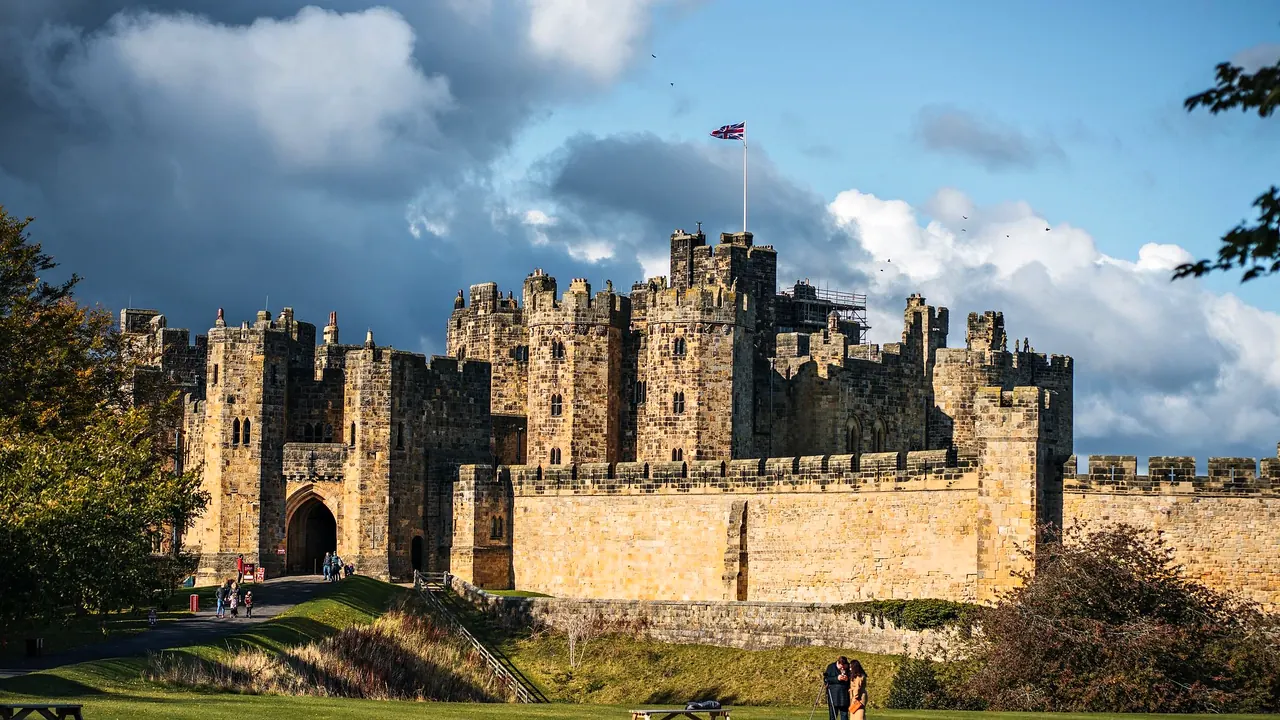
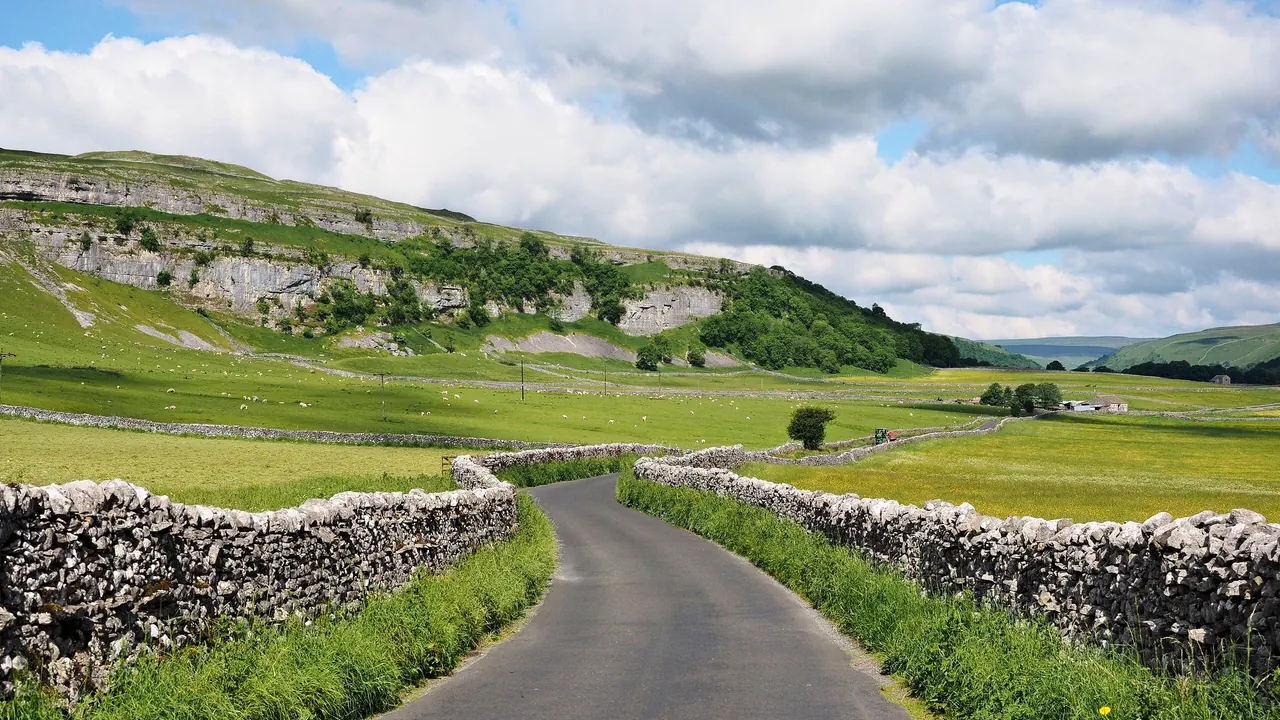
Photos: Northumberland by Clément Proust, Pexels License; Yorkshire Dales by Kreuzschnabel, CC BY-SA 3.0, cropped.
Northumberland or Yorkshire Dales?
Our verdict in twelve categories, each scored against the same fixed benchmark cities, and the climate month by month, so you can choose for your trip.
Choose Northumberland for
- culture and sights
- beaches
- getting around
Northumberland is the better choice if you want the sea and a long history in the same trip. Castles stand right on the shore at Bamburgh and Dunstanburgh, Holy Island is reached across a tidal causeway, and Hadrian's Wall crosses the moors to the south. In between are wide, empty beaches and the seabird colonies of the Farne Islands. It suits a slow coastal cottage stay with a car, built around big sights and long walks on the sand.
Choose Yorkshire Dales for
- wellness
- day trips
- shopping
The Yorkshire Dales are for walkers who want hills under their feet and plenty of good towns within reach. Malham's limestone, the Three Peaks and the caves around Ingleton make the days outdoors. York, Fountains Abbey, Harrogate and Haworth are close enough for wet days or a change of pace. You give up the coast and the grander monuments, and in return you get a landscape made for walking from the door.
Scoreboard
Twelve categories on one fixed scale from 0 to 100. The shaded stretch is the gap between the two.
Your match
Pick a travel style or drag the sliders, and both match scores follow your weighting.
Too close to call, 2 points apart
Wins on culture and sights and beaches with your weighting.
Wins on wellness and day trips with your weighting.
What matters to you?
Category by category
What the scores mean for a trip.
Beaches & swimming
This is no contest. Northumberland has some of the finest sand in Britain, at Bamburgh, Embleton Bay, Beadnell and along the length of Druridge Bay, and its beaches are rarely busy. The cold North Sea limits swimming to the hardy, but as places to walk, picnic and dig, the beaches are a real reason to come.
The Dales are inland and have no beach. The nearest sand is a long drive away. What they offer instead are cold river pools on the Wharfe near Burnsall and the falls around Keld, which make a brisk summer dip rather than a day by the water.
Food & drink
The two are broadly level, and in both the best meals are found in pubs and country inns. Northumberland's food comes from the coast: oak-smoked kippers from Craster, crab sandwiches in Seahouses and Amble, and oysters from the flats off Holy Island.
The Dales lean towards the farm and the brewery, with Wensleydale cheese eaten with fruit cake in Hawes, bitter brewed in Masham and curd tart in the tea rooms. When you want more choice, Northumberland sends you to Newcastle, while the Dales have Harrogate and York.
Culture & sights
Northumberland is far stronger here. Bamburgh on its rock, Alnwick's state rooms, Warkworth and Lindisfarne's priory are all major sights, and Housesteads and Vindolanda show the Roman frontier at its most impressive. Berwick's walls and Cragside add to a list that fills a week of driving between sites.
The Dales have good castles at Skipton, Bolton and Richmond and ruins at Bolton Priory and Jervaulx, but they are smaller in scale. Much of their interest lies in the working landscape: the Ribblehead Viaduct, old lead mines and field barns, explained at the museum in Hawes.
Nightlife
Neither has much of a night out, and in both an evening means a pint by a pub fire. Skipton stays slightly livelier at weekends than anywhere in Northumberland. For anything bigger, Northumberland has Newcastle a train ride away, while from the Dales it means the trip into Leeds.
Nature & outdoors
Both are superb for being outdoors, but the landscapes are very different. Northumberland's highlights are coastal and wild: puffins and grey seals on the Farne Islands, the coast path past castles and dunes, the open Cheviots, and the dark skies over Kielder Forest.
The Dales have the more concentrated walking country. Malham Cove, Gordale Scar and the limestone pavement are close together, and the Three Peaks make a famous long day's hike. The Dales also have a draw Northumberland can't match: some of Britain's best caving around Gaping Gill, plus steep road passes for cyclists.
Day trips
The Dales have the richer choice, with good towns on every side. Fountains Abbey, Ripon and Harrogate are close to the eastern valleys, and York is about an hour away. Haworth and Saltaire are near the southern edge, and the Lake District is within reach from the west.
Northumberland's best outings are excellent but more spread out. Edinburgh is under an hour by train from Berwick and the Borders abbeys are near the north. Newcastle, Durham and Beamish suit a base in the south, so what you can easily reach depends on which end of the county you stay in.
Good for families
The two are evenly matched, and both suit children who like being outdoors more than theme parks. Northumberland's highlights are broomstick training at Alnwick Castle, boat trips to see seals and puffins, and rockpooling on the wide beaches.
The Dales offer show caves near Ingleton, a steam railway near Skipton and river paddling at Bolton Abbey. Older children can try caving or gorge scrambling. In both places you will need a car, and a wet day is hard to fill.
Getting around
There is little between them, and in both most visitors drive. Northumberland has the better rail links, with main-line stops at Morpeth, Alnmouth and Berwick, the Tyne Valley line for Hadrian's Wall, and the A1 running up the coast. The one thing to plan around is the tide on the Holy Island causeway.
The Dales' walled lanes are narrower and fill up at Malham and Bolton Abbey on summer weekends. On the other hand, the Settle to Carlisle line drops walkers right at the trailheads, and many walks start from the village door.
Shopping & style
Neither is a shopping destination, but the Dales have a little more to browse. Skipton has a busy street market, Richmond and Hawes have weekly markets, and there are outdoor-gear shops, antiques and galleries, with Harrogate and York close by.
Northumberland's shopping centres on the high streets of Hexham and Alnwick, where the old railway station houses a huge second-hand bookshop. Beyond that it is mostly farm shops and smokehouse counters.
Affordability
Both cost what you would expect in rural England, and in both the walking is free. In Northumberland, the coastal cottages near Bamburgh are the most expensive and the Tyne Valley is cheaper, and the many castles add up in admission fees. The Dales have more campsites, bunkhouses and youth hostels, so a group or family can keep costs lower there, especially outside the school summer break.
Live music & performing arts
The two are about level, and in both live performance is small and local. Northumberland's distinctive sound is the smallpipes, heard at folk sessions, and Hexham and Berwick have modest arts centres. The Dales have a real gem in Richmond's tiny Georgian Theatre Royal of 1788, and summer brings the Swaledale and Grassington festivals. For major concerts, Northumberland looks to Newcastle and Gateshead, while the Dales look to Harrogate, York or Leeds.
Wellness & relaxation
The Dales are the better choice for a restful trip, mainly because Harrogate's Victorian Turkish Baths are a short drive from Nidderdale and Wharfedale. Several inns and country-house hotels also have spas.
Northumberland has no bathing tradition and only a few hotel spas. What it offers is quiet: empty coast, villages that go to sleep early and the slow rhythm of the tides.
When should you go?
Pick your month. The climate figures are measured averages, not a forecast.
Northumberland in July
Yorkshire Dales in July
Daytime high, °C
Rainfall in the month, mm
Where the figures come from
Northumberland has no rain gauge within 25 km of the centre, so its rainfall comes from a gridded climate dataset read at the destination rather than from a gauge further away.
Yorkshire Dales's temperatures are measured 40 km from the centre, at Leeming.
Yorkshire Dales's station stands 153 m below the place it is measured for, so that place is likely a little cooler than the figures say.
Yorkshire Dales has no rain gauge within 25 km of the centre, so its rainfall comes from a gridded climate dataset read at the destination rather than from a gauge further away.
Temperature and rainfall are climate normals, averaged over the years shown. Northumberland: 1991-2020 normals, Boulmer (7 km from centre). Yorkshire Dales: 1991-2020 normals, Leeming (39.7 km from centre).
Both are at their best from May to September, and both are cold and dark in winter, with daytime highs around 7°C from December to February. On the Northumberland coast, summer highs reach about 18°C in July and August, which is pleasant for walking but rarely beach weather. The sea peaks at around 15°C, so most people paddle rather than swim. Rain is moderate all year. Spring is the driest stretch, with about 51mm in April, and autumn and early winter are the wettest.
The Dales are a little warmer in summer, reaching about 21°C in July, but much wetter in every month. Rainfall climbs to 144mm in December, which makes winter fell walking hard going. May is the sunniest month and one of the drier ones, so late spring is the best time for long walks on the hills. July and August are warmer but bring more rain.
Which traveller are you?
On a culture and arts trip, Northumberland is the clear pick. Bamburgh, Alnwick and Lindisfarne, Berwick's Elizabethan walls and the best-preserved stretch of Hadrian's Wall give it far bigger sights than the Dales' smaller castles and priories.
For a beach and sun trip, only Northumberland has a coast at all. Bamburgh, Embleton Bay and Druridge Bay have long, uncrowded sand for walks, kites and rockpools. Just don't expect warm water, while the Dales offer only cold river pools.
On a relaxing and wellness trip, the Yorkshire Dales come out ahead. The villages are just as quiet and the nights just as dark, and Harrogate's Victorian Turkish Baths are a short drive away to round off a few days of walking.
Before you go
| Measure | Northumberland | Yorkshire Dales |
|---|---|---|
| Official language | English | English |
| Currency | Pound Sterling (GBP) | Pound Sterling (GBP) |
| Sockets | G230 V, 50 Hz | G230 V, 50 Hz |
| Driving side | Left | Left |
| Time zone | UTC, UTC+1 in summer | UTC, UTC+1 in summer |
| Emergency number | 112 or 999 | 112 or 999 |
| Main airport | Newcastle International Airport (NCL)80 non-stop destinations | Leeds Bradford Airport (LBA)69 non-stop destinations |
| Public holidays this year | 8 days | 8 days |
By the numbers
| Measure | Northumberland | Yorkshire Dales |
|---|---|---|
| Population | 323,820 | - |
| People per km² | 65 | - |
| Swim season, months above 21 °C | None | None |
Where else could you go?
Every comparison below shares a destination with this one, so you can follow Northumberland or Yorkshire Dales somewhere new.
- Lake Districtvs Yorkshire Dales
- Peak Districtvs Yorkshire Dales
- Edinburghvs Northumberland
- Lake Districtvs Northumberland
- Snowdoniavs Yorkshire Dales
- Cotswoldsvs Yorkshire Dales