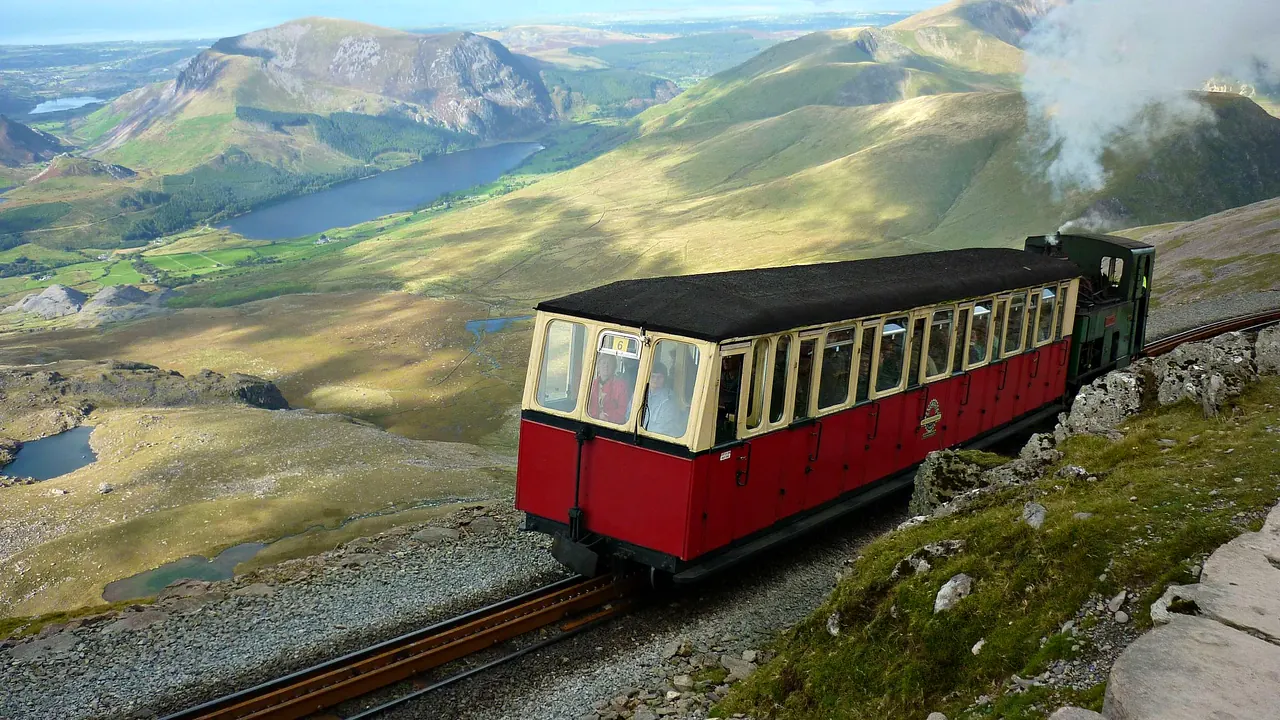
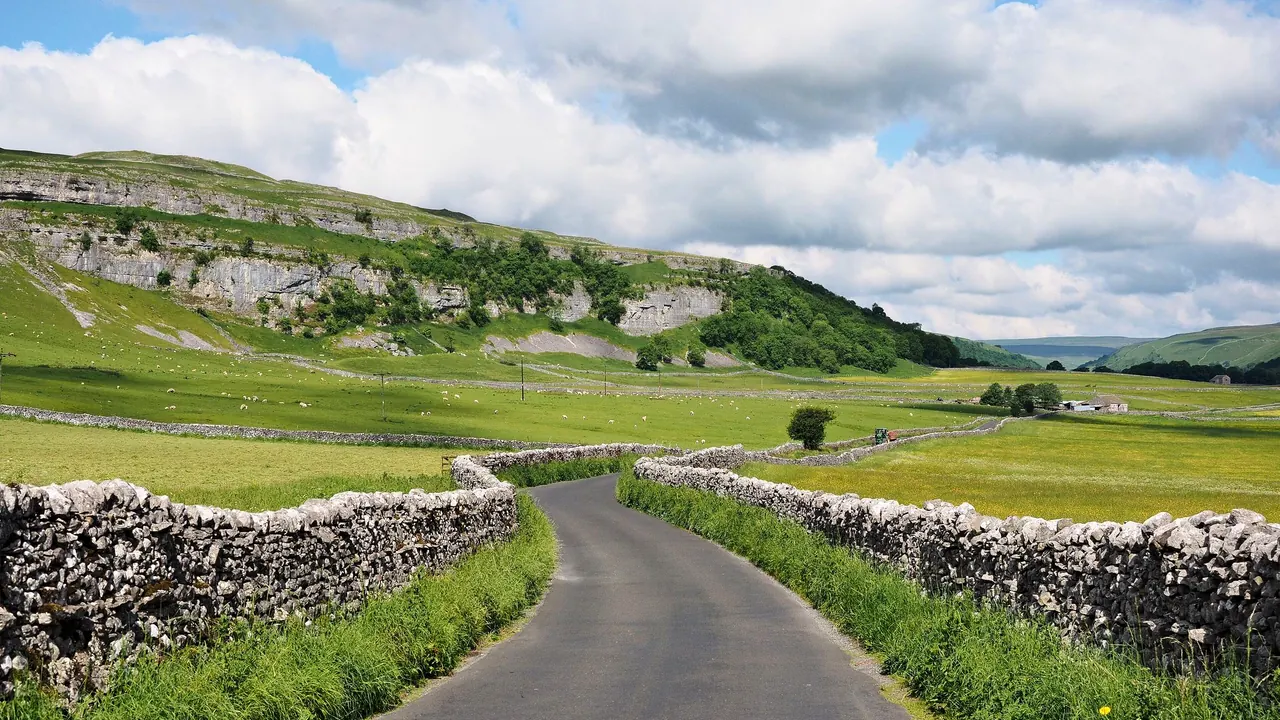
Photos: Snowdonia by Porius1, CC BY-SA 3.0, cropped; Yorkshire Dales by Kreuzschnabel, CC BY-SA 3.0, cropped.
Snowdonia or Yorkshire Dales?
Our verdict in twelve categories, each scored against the same fixed benchmark cities, and the climate month by month, so you can choose for your trip.
Choose Snowdonia for
- beaches
- culture and sights
- nature and the outdoors
Snowdonia is the choice for anyone who wants real mountains and the sea in one trip. Yr Wyddfa, the scrambles on Tryfan and the climbing crags of the Llanberis Pass give it the harder, higher ground, and the sands at Harlech and Black Rock are close enough for a fine afternoon on the coast. Add the narrow-gauge railways, the slate country and villages where Welsh is the everyday language, and it feels more like a different country.
Choose Yorkshire Dales for
- wellness
- day trips
- shopping
The Yorkshire Dales suit travellers who prefer gentler fells and a better base for exploring. Malham, the Three Peaks and the caves under Ingleborough make excellent walking, and York, Fountains Abbey, Durham and Harrogate's Turkish Baths are all within an easy drive. The food is a little more rewarding, Richmond's Georgian theatre adds an evening out, and a slow week here mixes countryside with towns of real character.
Scoreboard
Twelve categories on one fixed scale from 0 to 100. The shaded stretch is the gap between the two.
Your match
Pick a travel style or drag the sliders, and both match scores follow your weighting.
Wins on beaches and culture and sights with your weighting.
Wins on wellness and day trips with your weighting.
What matters to you?
Category by category
What the scores mean for a trip.
Beaches & swimming
Snowdonia has a genuine coastline: the dune-backed sands below Harlech Castle, Black Rock Sands near Porthmadog and the river-mouth beaches at Barmouth and Aberdyfi, with the Llŷn coves close by. The Irish Sea stays cold, so swimming here means a wetsuit on a fine afternoon rather than a beach trip.
The Dales have no coast at all. Swimming there means river pools on the Wharfe near Burnsall and below the Swale falls at Keld. That is a cold dip that needs a dry spell, and the nearest sand is a long drive away.
Food & drink
Neither region is a food destination, but the Dales give a food-minded visitor more to seek out. Wensleydale cheese from Hawes, the bitter brewed in Masham and a handful of ambitious dining pubs in Wharfedale make a loose itinerary, and Harrogate and York are near enough for a better dinner.
Snowdonia's food is plainer: walkers' cafés in Llanberis and Capel Curig, pub lamb, cawl and bara brith, with Conwy mussels and Menai seafood the best of it. There are a few serious country-house kitchens on the fringes, but villages have few places to eat and they close early out of season.
Culture & sights
The two are close, and both spread their heritage across the countryside. Snowdonia's is more distinctive: Harlech Castle above the dunes, the slate quarries and terraced villages of a World Heritage landscape, the Ffestiniog line, the Italianate oddity of Portmeirion and Welsh spoken as an everyday language.
The Dales offer English medieval and market-town history instead: Skipton and Bolton castles, Richard III's Middleham, Richmond's cobbled Georgian square and the ruins of Bolton Priory and Jervaulx. The Ribblehead Viaduct and the Swaledale lead workings tell the region's working story, much as slate does in Wales.
Nightlife
In both regions the night out is the pub and little else. Snowdonia's inns at Llanberis and Capel Curig fill with climbers on summer weekends. In the Dales, Skipton has a few more bars, and Leeds is close enough for a proper night out.
Nature & outdoors
Both are among Britain's finest walking country, but the ground is different. Snowdonia is true mountain terrain. It has Yr Wyddfa at 1,085m with the Crib Goch ridge, scrambling on Tryfan and the Glyderau and historic climbing crags in the Llanberis Pass. There is also mountain biking at Coed y Brenin and white water on the Tryweryn.
The Dales are limestone and rolling fell: Malham Cove and its pavement, Gordale Scar, the Three Peaks day above Ribblesdale and long trails such as the Pennine Way. Their special strength is underground, with caving around Gaping Gill and Ingleton, and road cyclists come for steep passes such as the Buttertubs. In both regions the weather is wet and changes fast.
Day trips
The Dales make the better base for days out, with major sights all around. Fountains Abbey and Studley Royal are about half an hour from the eastern dales and York about an hour. Durham is a short drive from Richmond, and Haworth, Saltaire and the Settle to Carlisle line lie to the south and west.
Snowdonia's outings are good but fewer and more alike: the castles at Caernarfon, Conwy and Beaumaris, Llandudno and the Great Orme, Bodnant Garden and the Llŷn. Chester, the one sizeable historic city within reach, is about an hour and a half away.
Good for families
Families do about equally well, and in both regions a car and a plan for wet days matter. Snowdonia has the bigger thrills: steam railways up Yr Wyddfa and to Blaenau Ffestiniog, underground tours and long zip lines in the old slate workings, and real beaches for sandcastles.
The Dales are gentler and suit younger children: paddling at Bolton Abbey, the falls at Aysgarth, show caves near Ingleton and Clapham, and castles at Skipton and Richmond. Older children can try caving and gorge scrambling.
Getting around
Both are driving country, with narrow roads that jam on summer weekends. Snowdonia has more public transport in the hills: two scenic rail lines, the Conwy Valley and the Cambrian Coast, and the Sherpa'r Wyddfa buses to the main paths. The Dales rely on the Settle to Carlisle line in the west and sparse buses elsewhere. Even so, Grassington, Hawes and Settle make good car-free bases, with walks from the door.
Shopping & style
Neither region is for a shopping trip, but the Dales give a rainy afternoon more to browse. They have Skipton's street market, weekly markets in Richmond and Hawes, antique shops and local cheese, with Harrogate and York close by for boutiques. Snowdonia's shopping is narrower: mostly outdoor gear in Betws-y-Coed, slate crafts, Welsh tapestry blankets from the woollen mills and Portmeirion pottery.
Affordability
Costs are much the same in both. Cottages and inns are priced like the rest of rural Britain in summer, the hills cost nothing, and both are easier on the budget outside the school vacations. The difference is in the extras. In Snowdonia the zip lines and heritage railways add up for a family, while the Dales' main draws, from Malham to the waterfalls and many of the ruins, are free.
Live music & performing arts
In Snowdonia, live performance happens in the community and is mostly in Welsh. Visitors can sit in on male voice choir rehearsals in the slate towns, hear harp and poetry at a local eisteddfod or find a folk session in a pub. For staged theatre or a concert you have to drive out of the park to Bangor, Caernarfon or Llandudno.
The Dales offer a little more, and some of it is inside the region. Richmond's Georgian Theatre Royal is one of Britain's oldest theatres still in its original form. Plays and music are staged in its small period auditorium, where the audience sits close to the stage, and no town in the Welsh park has anything like it. In summer the Swaledale and Grassington festivals bring concerts to village churches and halls.
Wellness & relaxation
Both offer quiet rather than treatments: cottages, log fires and early nights. The Dales have the advantage of Harrogate just outside the park, where the tiled Victorian Turkish Baths make a fine end to a walking week. Snowdonia has only a few hotel spas and small yoga retreats. For rest there, people swim in the cold lakes or spend slow days in Beddgelert or along the Mawddach.
When should you go?
Pick your month. The climate figures are measured averages, not a forecast.
Snowdonia in July
Yorkshire Dales in July
Daytime high, °C
Rainfall in the month, mm
Where the figures come from
Snowdonia's temperatures are measured 52 km from the centre, at Valley.
Snowdonia has no rain gauge within 25 km of the centre, so its rainfall comes from a gridded climate dataset read at the destination rather than from a gauge further away.
Yorkshire Dales's temperatures are measured 40 km from the centre, at Leeming.
Yorkshire Dales's station stands 153 m below the place it is measured for, so that place is likely a little cooler than the figures say.
Yorkshire Dales has no rain gauge within 25 km of the centre, so its rainfall comes from a gridded climate dataset read at the destination rather than from a gauge further away.
Temperature and rainfall are climate normals, averaged over the years shown. Snowdonia: 1991-2020 normals, Valley (51.8 km from centre). Yorkshire Dales: 1991-2020 normals, Leeming (39.7 km from centre).
Both have the usual British upland year: May to September is the season, and winter is short-dayed, cold and wet. Snowdonia is at its best in late spring. May is its driest month at 66mm and also its sunniest, which makes it ideal for the summits. Summer highs reach about 19°C, and the sea along Cardigan Bay is warmest in August and September at around 16°C, so swimming is always brisk. Rain builds steadily from October.
The Dales are slightly warmer in midsummer, around 21°C in July, but wetter through July and August and less sunny than Snowdonia. April and May are the driest and most settled stretch for long walks. December is the wettest month in the Dales, and in both regions late autumn and winter are for well-equipped walkers rather than casual visitors.
Which traveller are you?
For a beach and sun trip, Snowdonia is the only real option. Harlech, Black Rock Sands and Barmouth have long sands on Cardigan Bay, while the Dales are inland and offer only cold river pools on the Wharfe and Swale.
On a relaxing and wellness trip, the Dales suit better. Their quiet villages, dark skies and pub fires match Snowdonia's calm, but Harrogate's Victorian Turkish Baths are a short drive away, and the Welsh park has nothing like them within easy reach.
For an outdoors trip, Snowdonia edges ahead for anyone after true mountain ground: Yr Wyddfa, the scrambles on Tryfan, climbing at Llanberis and white water on the Tryweryn. Walkers who prefer limestone fells, the Three Peaks and caving will be just as happy in the Dales.
Before you go
| Measure | Snowdonia | Yorkshire Dales |
|---|---|---|
| Official language | English | English |
| Currency | Pound Sterling (GBP) | Pound Sterling (GBP) |
| Sockets | G230 V, 50 Hz | G230 V, 50 Hz |
| Driving side | Left | Left |
| Time zone | UTC, UTC+1 in summer | UTC, UTC+1 in summer |
| Emergency number | 112 or 999 | 112 or 999 |
| Main airport | Liverpool John Lennon Airport (LPL)75 non-stop destinations | Leeds Bradford Airport (LBA)69 non-stop destinations |
| Public holidays this year | 8 days | 8 days |
By the numbers
| Measure | Snowdonia | Yorkshire Dales |
|---|---|---|
| Swim season, months above 21 °C | None | None |
Where else could you go?
Every comparison below shares a destination with this one, so you can follow Snowdonia or Yorkshire Dales somewhere new.
- Lake Districtvs Yorkshire Dales
- Peak Districtvs Yorkshire Dales
- Peak Districtvs Snowdonia
- Lake Districtvs Snowdonia
- Cotswoldsvs Snowdonia
- Cotswoldsvs Yorkshire Dales